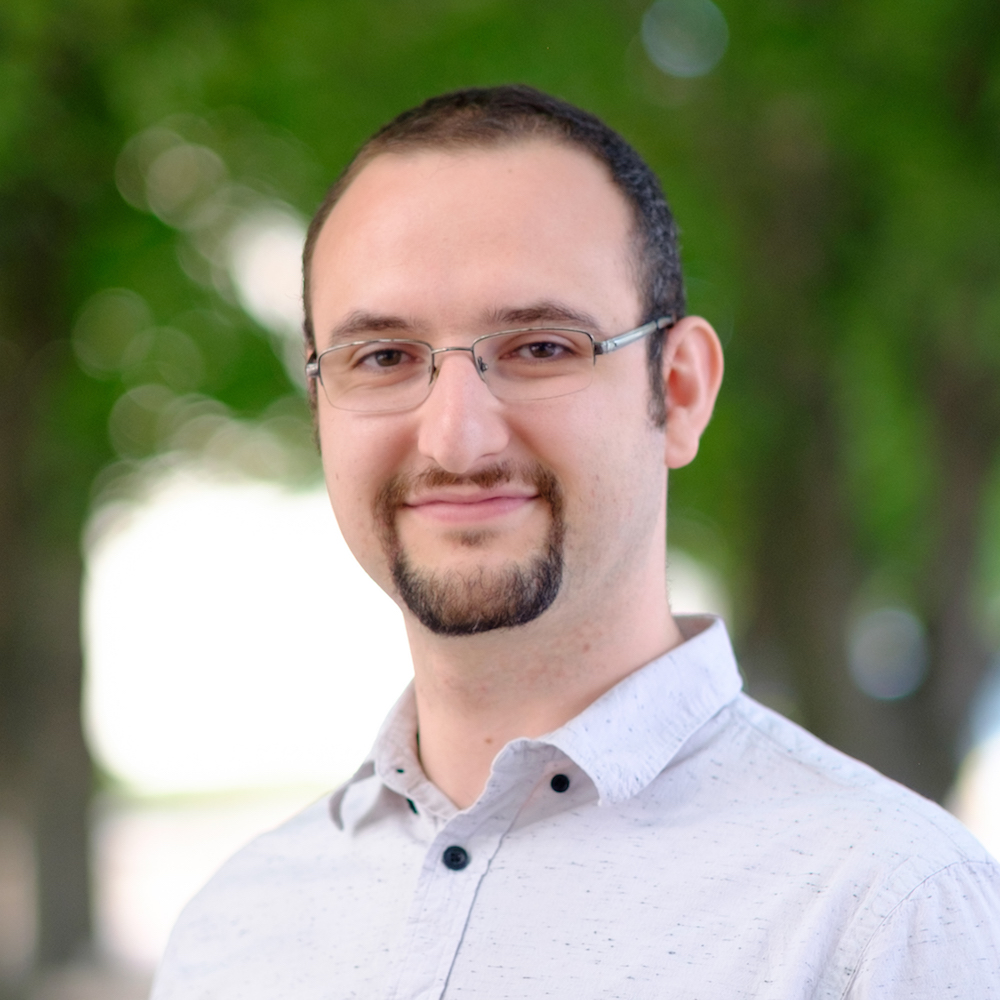
Onur Varol is an Assistant Professor at Sabanci University's Computer Science Department and leads the VIRAL Lab, which focuses on computational social science, network science, and machine learning. He has affiliations with the Center of Excellence for Data Analytics. His research spans social bot detection, misinformation analysis, and online behavior modeling.
Professor George Buchanan is a leading researcher in human-computer interaction and digital libraries at RMIT University . His work bridges information science, digital humanities, and health informatics, focusing on usability in sensitive contexts like healthcare and misinformation. Deputy Dean, Research at RMIT University Former Director, University of Melbourne iSchool Research Interests: Digital information interaction Health and aging informatics Disinformation analysis Mobile interface design Digital library systems Key Contributions: Developed mobile web usability benchmarks, spatial hypertext tools, and thermal feedback interfaces. Currently seeking PhD students for 2025 projects on digital browsing and view change dynamics. Awards: Over twenty best paper awards and Honorary Life Fellow of the Royal Society of Arts. Advising: Accepting Masters/PhD supervision in information interaction and digital health domains.
Dr. Michelle Townsend is a Senior Research Fellow at the University of Wollongong's School of Psychology and a Senior Lecturer in the Public Health Discipline within the School of Health and Society. With over two decades of expertise in responding to adverse childhood experiences, her research bridges psychology and public health, focusing on child maltreatment, mental health disorders, self-harm, suicide prevention, and improving outcomes for vulnerable children and families. Her work emphasizes collaboration with clinicians, educators, government agencies, and communities to develop impactful interventions and policies. Notable contributions include the Project Air Strategy for Schools and research on child-to-parent violence, caregiver experiences, and e-therapy for adolescents with borderline personality disorder. Dr. Townsend holds dual roles, combining research leadership with teaching in public health and psychology, and actively supervises PhD students in areas like narrative therapy and suicide risk assessment. Her funding includes grants from NSW Department of Education and the Mental Health Commission of NSW, supporting initiatives such as early intervention in schools and peer support programs for personality disorders. She also contributes to editorial roles and peer review for journals like BMC Psychology and Clinical Psychologist. Through co-design approaches, her research prioritizes ethical principles and community impact, addressing critical societal challenges in mental health and child welfare.
Jana Kainerstorfer is a Professor of Biomedical Engineering at Carnegie Mellon University (CMU), with courtesy appointments in the Neuroscience Institute and Electrical & Computer Engineering. She serves as Associate Department Head for Faculty and Graduate Affairs within the College of Engineering. Her research focuses on developing non-invasive optical imaging methods for disease detection and treatment monitoring, particularly in diffuse optical imaging. Key areas include cerebral hemodynamic monitoring in traumatic brain injury and handheld devices for breast cancer imaging. Dr. Kainerstorfer holds senior membership in the Optical Society of America and has received prestigious awards such as the NIH Trailblazer Award and AHA Scientist Development Grant. She leads the Biophotonics Lab, which bridges engineering and clinical applications, emphasizing translational research. Education: PhD from University of Vienna/NIH (2010), Postdoc at Tufts University Research Interests Her work revolves around biomedical optics , neurophotonics , and medical device innovation . Current projects include: Non-invasive cerebral hemodynamic monitoring Transabdominal fetal pulse oximetry Optical imaging in extreme environments (e.g., freediving physiology) Her lab develops tools like wearable NIRS for marine mammals and self-calibrating pulse oximetry algorithms. Research spans clinical translation and physiological mechanism discovery , with emphasis on microvascular imaging. Awards & Recognition NIH Trailblazer Award (2020) AHA Scientist Development Grant SPIE Fellow (2022) George Tallman Ladd Award (CMU) Lab & Collaborations The Biophotonics Lab collaborates with neurosurgery, oncology, and marine biology teams. Projects address clinical needs in neurocritical care and fetal monitoring, leveraging optical technologies for real-time diagnostics. Ongoing work includes: Optical assessment of cerebral metabolic rates Non-invasive intracranial pressure estimation Multi-modal EEG-NIRS fusion for neural source localization
Professor Terry Flew (BEc (Hons), MEc (Sydney), MBA (QUT), PhD (Griffith)) is a leading academic at the University of Sydney , holding the Professor of Digital Communication & Culture position within the Faculty of Arts and Social Sciences . As an Australian Research Council Laureate Fellow (2024-2029), he leads the Centre for AI, Trust & Governance , a flagship initiative involving multiple faculties. His international appointments include Research Fellow at the UK Creative Industries Policy & Evidence Centre and Honorary Professor at the University of Nottingham Ningbo China. Co-Director, Centre for AI Trust and Governance Member, SSSHARC research center International collaborations with Carleton University (Canada), Communications University of China, University of Glasgow (UK) Research Focus : Specializing in platform governance , digital policy , and mediated trust , Professor Flew bridges media economics , AI ethics , and creative industries . His work examines digital platform regulation , news media sustainability , and global internet governance , with recent projects analyzing trust mechanisms in AI systems and digital content regulation . The 2024-2028 Laureate Fellowship on "Mediated Trust" integrates these themes. Publications & Grants : With 16 authored/edited books and 129 journal articles , he has secured $11 million in research funding (including $9.9 million from ARC). Key grants include ARC Discovery projects on digital platform governance and Linkage projects on citizen journalism. Professional Leadership : Served as ICA President (2019-2020), ANZCA President (2009-10), and Lead Commissioner for the Australian Law Reform Commission. Currently sits on editorial boards of Journal of Communication , Global Media and Communication , and Media International Australia .
Professor Daniel Quevedo is a leading academic in Electrical and Computer Engineering at The University of Sydney. Previously, he held positions at Queensland University of Technology and Paderborn University, Germany, where he founded the Chair in Automatic Control. He earned his PhD from the University of Newcastle (Australia) and MSc/Ing. degrees from Universidad Técnica Federico Santa María (Chile). His research focuses on networked control systems, cyber-physical systems, and cybersecurity, with contributions to state estimation, control of power converters, and human-in-the-loop systems. He has pioneered work integrating machine learning, behavioral economics, and advanced mathematics to address challenges in interconnected digital-physical environments. Quevedo serves as Associate Editor for IEEE Transactions on Control of Networked Systems and IEEE Control Systems. He chairs the Committee of Experts for Germany’s Excellence Strategy on Digital Methods and has held leadership roles in IEEE technical committees. Notable awards include the IEEE Axelby Outstanding Paper Award (2018) and multiple fellowships. Teaching includes advanced control systems courses like Reinforcement Learning and Optimal Control. He is a Fellow of the IEEE and has published over 200 peer-reviewed articles, with recent work emphasizing privacy-preserving state estimation, resilient control systems, and energy-efficient wireless control. His research labs explore topics such as human-machine collaboration, cybersecurity in Industry 5.0, and data-driven control strategies. Current projects include secure remote state estimation frameworks and adaptive control under adversarial conditions.
Karin Roelofs is Professor of Experimental Psychopathology at the Behavioural Science Institute (BSI) and Principal Investigator at the Donders Centre for Cognitive Neuroimaging and Donders Institute for Brain, Cognition and Behaviour at Radboud University Nijmegen. She chairs the PI-group "Affective Neuroscience" and holds the chair in Experimental Psychopathology. Her research focuses on psychological and neuroendocrine mechanisms underlying social-motivational behavior in both healthy individuals and patients with stress-related and social-motivational disorders such as social anxiety and aggression. She employs various brain imaging techniques (fMRI, MEG) combined with neural stimulation (TUS, tACS) or pharmacological interventions during emotion control and decision making tasks. Her work investigates how stress influences the neural development of emotion control through longitudinal studies including the Nijmegen Longitudinal Study (NLS), BIBO, and the Police In-Action (PIA) cohort. Her key research questions address how people regulate emotional actions, whether emotion control can be improved by influencing brain activity or through real-time biofeedback, and whether psychopathology can be predicted based on acute stress reactions and recovery patterns. Her publications span high-impact journals including Nature Communications, Nature Human Behaviour, and Nature Reviews Neuroscience, demonstrating her leadership in understanding the neural basis of emotion regulation and stress responses. ERC Advanced Grant (2025) ERC Consolidator Grant (2017) ERC Starting Grant (2012) NWO VICI, VIDI, and VENI grants Elected Member of Royal Netherlands Academy of Arts and Sciences Elected Member of Academia Europaea Professor Roelofs has secured numerous significant grants including the HEART2ADAPT project (2019-2025, ERC-AdG), PIA: Police In-action longitudinal study (2015-2021), and DYNAMORE: Dynamic modelling of resilience (2017-2025). She serves on multiple boards including ALLEA (All European Academies), the Selection committee for the ERC Advanced Grant, and as Board Member of INTRESA (International Resilience Research Alliance). She is also a registered GZ psychologist (BIG) and cognitive behavioral therapist (VCGT), bridging clinical practice with cutting-edge neuroscience research.
Mikkel N. Schmidt is an Associate Professor in the Department of Applied Mathematics and Computer Science at the Technical University of Denmark (DTU). His research focuses on statistical modeling, Bayesian methods, and their applications in science and industry. He has held visiting roles at Columbia University (2007) and Cambridge University (2008-2009). His work integrates probabilistic modeling with computational inference to address complex problems in diverse fields such as molecular discovery, optical communication, and brain connectivity analysis. Education highlights include visiting scholar and postdoctoral experiences at top-tier institutions. Research interests span statistical methodology development, machine learning applications, and interdisciplinary problem-solving. Current projects involve Bayesian neural networks for molecular discovery and federated learning optimization. Advising efforts include supervising multiple PhD students in areas like molecular discovery and denoising diffusion models. Notable collaborations involve work on materials science, quantum communication, and medical signal processing. His contributions bridge theoretical advancements with practical industrial applications, emphasizing interdisciplinary innovation.
Shintaro Okazaki is a Professor of Marketing at King’s Business School, King’s College London. He holds a PhD from the Autonomous University of Madrid and has over 20 years of industry experience, including roles at a multinational corporation in Tokyo. His research focuses on marketing communications, digital marketing, social issues in marketing, international marketing strategies, and tourism marketing. He has authored over 100 articles and chapters, with a strong emphasis on advertising, AI ethics, sustainability, and consumer behavior. Research Interests: Marketing Communications: Advertising, Branded Entertainment, Cross-Cultural Advertising, Emotions in Advertising Digital Marketing: AI, Mobile Marketing, Social Media Marketing, Digital CSR Social Issues: Diversity, LGBTQ+ Inclusion, Disaster Resilience, Media Addiction, Sustainability International Marketing: Deglobalisation, Global Brand Positioning, Marketing Standardisation Travel & Tourism: Sustainable Tourism, Greenhushing, Peer-to-Peer Accommodation Awards & Roles: Former Editor-in-Chief of Journal of Advertising (2014–2019) Past-President of the European Advertising Academy Editorial Board Member for Journal of Public Policy & Marketing , International Marketing Review , and others Recipient of multiple awards, including the 2010 Journal of Advertising Best Article Award Grants & Conferences: Grant panelist for over 20 international organizations Organized/chaired 30+ academic conferences globally Labs & Teams: Research Lead of the Department of Marketing at King’s Business School, leading interdisciplinary projects on AI ethics, crisis communication, and sustainable marketing strategies.
Prof. Marzena Stor is a Professor of Strategic International HRM and Head of the Department of Human Resources Management at Wrocław University of Economics in Poland. Her work focuses on HRM practices in multinational companies (MNCs), particularly in Central Europe, emphasizing how HR strategies influence organizational performance through factors like managerial competencies, employee development, and human-centric approaches. She leads empirical research on labor market dynamics, talent management, and the mediating roles of HR outcomes in crisis and non-crisis contexts. Research Interests: - HRM in Multinational Companies - Cross-Cultural HRM - AI & Digital Transformation in HR - Managerial Competency Development - Sustainable HR Practices - Employee Engagement & Retention Recent Work Trends: Her 2023-2025 publications highlight the mediating role of HR outcomes in linking managerial/employee development to financial and operational performance, with a focus on Central European MNCs. She also explores labor shortages in V4 countries and the impact of human-centric paradigms on organizational success. Cooperation & Grants: Open to socio-economic collaborations, she advises doctoral students in international HRM and has conducted studies funded by EU regional initiatives. Her work bridges academic research and business practice, often involving multinational corporations in Poland and CEE. Labs/Teams: Leads research teams at the Department of Human Resources Management, collaborating with international partners on large-scale HRM surveys and MNC subsidiary studies.
Helena Webb is a Visiting Lecturer in the Department of Computer Science at the University of Oxford, where she contributes to research and teaching within the Human Centred Computing theme. Her work bridges social science and computer science, focusing on responsible innovation, AI ethics, and user interactions with digital technologies. PhD in Social Sciences, University of Nottingham Bachelor’s in Social and Political Sciences, University of Cambridge Former Senior Researcher, University of Oxford Department of Computer Science Researcher at Work, Interaction and Technology (WIT) Research Centre, King’s College London (2009–2014) Her research interests include human-computer interaction, algorithmic fairness, privacy in smart homes, and ethical design of social robots. She specializes in qualitative research methods and interdisciplinary collaboration to understand how technology shapes and is shaped by social practices. She has led and contributed to major projects such as Digital Wildfire , UnBias , ReEnTrust , and RoboTIPS , all focused on responsible governance and design of digital systems. Her recent publications span topics from algorithmic accountability to ethical black boxes in robotics, reflecting a strong trend toward integrating ethical considerations into the technical design of AI and interactive systems. These works emphasize participatory design, transparency, and societal impact. Scientific Awards and Recognition: Named one of the Brilliant Women working in AI Ethics She actively supervises and co-supervises students, contributes to ethics education, and is involved in outreach and diversity initiatives at Oxford. She has also served on the Departmental Equality and Diversity Committee and the Research Ethics Committee. Helena is a member of the advisory board for the ReEnTrust project and continues to develop the ethical hackathon model with colleagues. Her work exemplifies a deep commitment to interdisciplinary, socially responsible research in computing.
Onesun Steve Yoo is a Professor of Operations and Marketing Analytics at the UCL School of Management, University College London, and Co-Director of the UCL Centre for Sustainable Business. He holds a PhD from UCLA Anderson School of Management, alongside advanced degrees in Electrical Engineering and Applied Mathematics from UC Berkeley and UCLA. His research focuses on innovation and entrepreneurship, examining operational and marketing strategies for firms launching innovative products/services. Key areas include consumer behavior analysis, pricing policies, sequential product launches, and the impact of technologies like surge pricing and AI-driven data analytics on business operations. Recent work integrates sustainability initiatives with AI to enhance operational transparency in supply chains and regulatory compliance. Yoo’s research has been published in top journals such as Marketing Science , Operations Research , and Manufacturing & Service Operations Management . His findings have been cited by US policymakers and featured in media outlets like the Wall Street Journal . He serves as a senior editor at Production and Operations Management and associate editor at Manufacturing & Service Operations Management . His academic service includes grants from Innovate-UK (UKRI) to collaborate with industry on sustainable business practices. Yoo’s work bridges theoretical research with practical applications, emphasizing data-driven decision-making and interdisciplinary collaboration between operations, marketing, and sustainability domains.
Agnes Horvat is an Associate Professor of Communication (with a courtesy appointment in Computer Science) at Northwestern University. She directs the Technology and Social Behavior (TSB) joint doctoral program between the McCormick School of Engineering and the School of Communication, and leads the Lab on Innovation, Networks, and Knowledge (LINK). Her research focuses on human-centered computing, network science, and AI's impact on information production/sharing in digital platforms. She has received NSF CAREER, CRII, and collaborative awards as PI. Her work examines algorithmic bias in online spaces, AI-assisted creativity (e.g., LLMs in biomedical writing and music), and collective intelligence dynamics. Media coverage includes Nature , Washington Post , and Le Monde . Her advisees have won prestigious fellowships like the Northwestern Presidential Fellowship and best paper awards at top conferences. Research interests include: (1) algorithmic bias in social media and crowdfunding, (2) AI-driven creativity expansion, (3) network structures of scientific attention, and (4) opinion dynamics in online discussions. Current projects explore LLMs' role in scientific writing and music composition, while past work analyzed gender disparities in scholarly self-promotion and retraction paper attention patterns. Grants: NSF CAREER Award (202?), NSF CRII (202?), Collaborative Grant (202?) Labs/Teams: LINK Lab (focusing on innovation networks), TSB Program (interdisciplinary engineering/communication PhD)
Robin A. Murphy is a Professor of Experimental Psychology at the University of Oxford and a Fellow and Tutor for Admissions at Corpus Christi College. He holds a PhD from McGill University (Canada) and has contributed over 50 scientific publications on associative learning mechanisms, their role in mental disorders like depression and psychopathy, and translational neuroscientific applications. His research bridges animal and human learning, with a focus on computational psychopathology and neurochemical modulation (e.g., serotonin). Education: Undergraduate degree, Queen's University MA and PhD in Psychology, McGill University Research Interests: Dr. Murphy investigates how associative learning processes underpin mental disorders, particularly through neurochemical systems like serotonin. His work explores causal reasoning biases in depression, psychopathy's learning deficits, and translational models linking animal studies to human cognition. Key themes include agency perception, contingency judgment, and the neural substrates of prejudice. Recent projects involve peptide research in aging and computational modeling of multi-agent systems in depression. Grants and Funding: Supported by MRC, BBSRC, Wellcome Trust, and Japan Society for the Promotion of Science. He has advised UK Research Councils and NSERC (Canada). Labs and Teams: Leads a lab focusing on associative learning mechanisms, collaborating with institutions globally on computational psychopathology and translational neuroscience.
Ming Lin is a Distinguished University Professor at the University of Maryland, College Park, holding joint appointments in Computer Science (Department of Computer Science), the Institute for Advanced Computer Studies (UMIACS), Electrical and Computer Engineering (ECE), and the Maryland Robotics Center. She holds the Dr. Barry Mersky and Capital One E-Nnovate Endowed Professorships. Her research focuses on physically-based modeling, virtual environments, haptics, robotics, and AI applications in healthcare and urban computing. Education: Ph.D., M.S., and B.S. in Electrical Engineering & Computer Sciences from UC Berkeley. She previously spent 20 years at UNC Chapel Hill before joining UMD in 2018. Research interests include collision detection algorithms (e.g., Lin-Canny algorithm), real-time physics simulation, virtual/augmented reality systems, and medical imaging applications. Her work has led to over 2 million downloads of her group's software tools and licenses with 60+ companies. Notable contributions include the Oculus Rift-related VR technologies and Amazon's virtual try-on system. Awards: IEEE Fellow (2012), ACM Fellow (2011), NAI Fellow (2022), and Washington Academy of Sciences Distinguished Career Award (2020). Active in professional service, she serves on the CRA Board and chairs the Committee on Widening Participation in Computing Research. Advising: Supervises 12+ PhD/Master's students. Her lab (GAMMA Group) focuses on AI-driven robotics, autonomous systems, and physically-based simulations. Key projects include traffic simulation frameworks, medical VR applications, and 3D garment modeling.