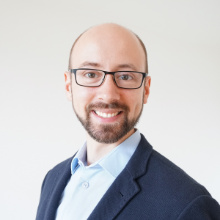
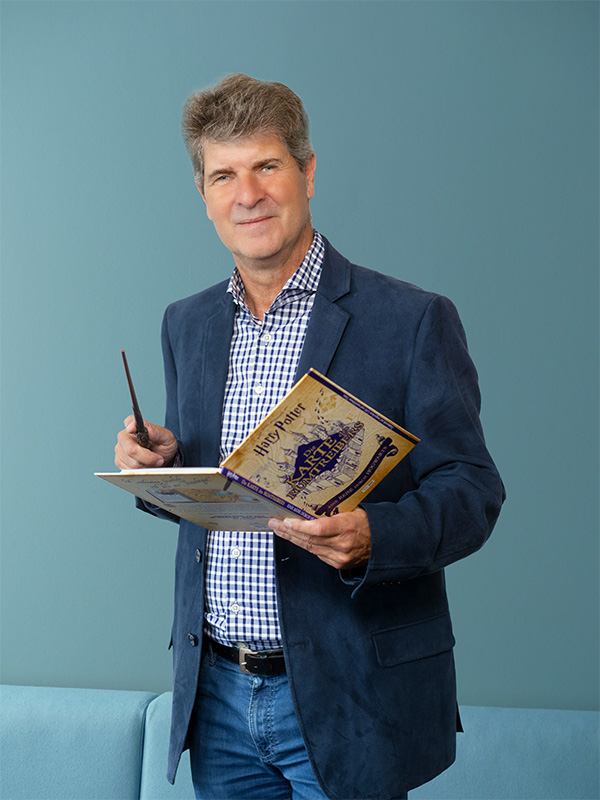
Professor Daniel Buschek leads the research group in Mobile Intelligent User Interfaces at the University of Bayreuth's Faculty of Mathematics, Physics and Computer Science. His work focuses on integrating Human-Computer Interaction (HCI) with Machine Learning/AI to design novel user interfaces that enhance the effectiveness, efficiency, and security of digital technology use. He explores both 'AI for better UIs' and 'better UIs for AI,' addressing challenges in interactive systems, generative models, and ethical considerations in human-AI collaboration. His research spans topics such as AI writing assistants, user perception of AI-generated content, and adaptive touch interfaces. Buschek's team includes prominent researchers like Florian Lehmann and Hai Dang, contributing to conferences like CHI and ACM DIS. He has published extensively on topics ranging from generative AI interaction design to behavioral biometrics and continuous authentication systems. Key contributions include frameworks for understanding intelligent systems, tools like SummaryLens and GestureMap, and studies on user behavior in AI-driven environments. Buschek's work emphasizes user-centric design, ethical AI integration, and the societal implications of emerging technologies.
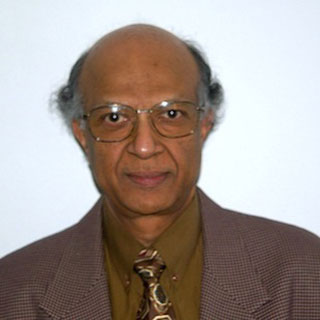
Ioannis Kougias is a Professor at the Department of Electrical & Computer Engineering, University of Peloponnese. He holds a BSc from Memorial University of Newfoundland, Canada, an MSc from York University, Toronto, and a PhD from the University of Patras. His research focuses on applied mathematical analysis, differential equations, and innovative teaching methods in mathematics. He has extensive teaching experience in Technological Educational Institutions across Greece, covering subjects like calculus, statistics, and linear algebra. He previously served as Vice President of Academic Affairs, Head of Automation at TEI Messolonghi, and President of Informatics and Media at TEI Western Greece. His research interests include IoT-driven educational frameworks, cryptography for IoT systems, and STEM career orientation through hands-on activities. He has contributed to projects like the STEAMonEdu MOOC and UMI-Sci-Ed platform, emphasizing technology integration in education. His work spans cybersecurity in IoT, privacy frameworks, and machine learning applications in education. Dr. Kougias advocates for modern educational practices, blending mathematical rigor with technological innovation. His articles explore IoT applications in teaching, STEM career guidance, and secure IoT infrastructure design. He maintains an active role in academic administration and continues to advance educational technology through interdisciplinary collaborations.
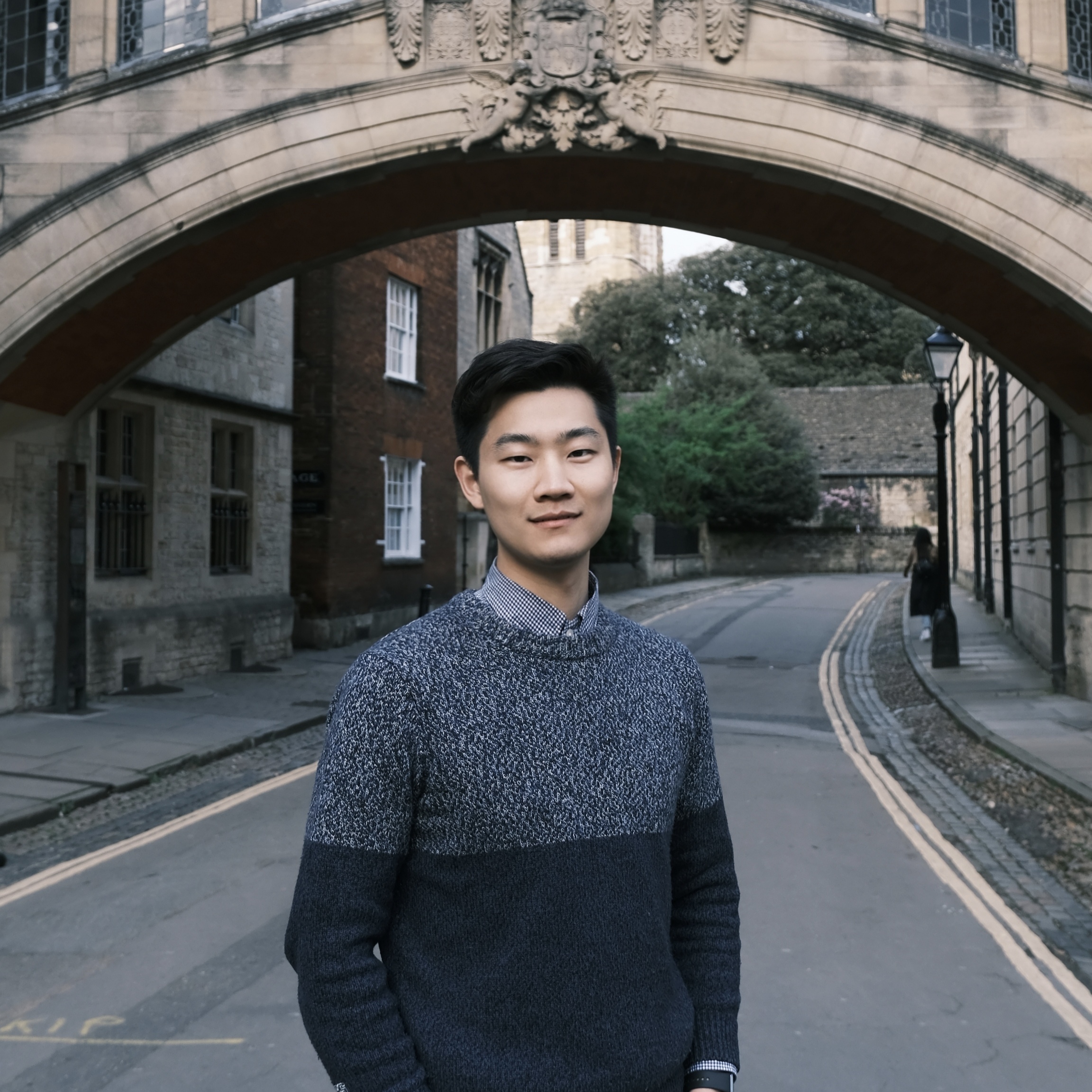
Qiang Yang is a Postdoctoral Research Associate at the Department of Computer Science and Technology , University of Cambridge, working under Prof. Cecilia Mascolo. His research focuses on mobile health , ubiquitous computing , and leveraging acoustic signals for health monitoring, IoT systems, and human-computer interaction. Key projects include gait monitoring via earables, toothbrushing tracking with in-ear sensors, and voice liveness detection for smart devices. His work bridges machine learning with sensor technologies , addressing challenges in energy retrofitting, emergency response systems, and secure IoT communications. Collaborations emphasize practical applications in healthcare, wearable tech, and environmental sustainability. Notable projects include SmarTeeth , WalkEar , and AutoIOT , showcasing innovations in acoustic-based health monitoring and AI-driven IoT programming. Publications span topics like federated learning optimization, underwater SOS detection, and mmWave radar communication via smartphone vibrations. His research has implications for improving lifestyle management, disaster response, and secure smart environments.
Angela Orebaugh is an Associate Professor in the Department of Computer Science at the University of Virginia, specializing in cybersecurity, digital well-being, and human-centered computing. She holds a Ph.D. in Cyber Security from George Mason University, an M.S. in Computer Science from James Madison University, and an M.L.A. in Sustainability from Harvard. Her research bridges technology with mindfulness, aiming to enhance digital safety and ethical tech usage. Dr. Orebaugh has over 25 years of industry experience in cybersecurity, advising organizations like NIST and the Department of Defense. She teaches courses such as Human-Centered Computing for Digital Well-Being and Cybersecurity and Elections , emphasizing practical skills and ethical practices. Her work includes co-editing the Contemplation + Technology journal special edition and contributing to NIST publications. Her research interests span cybersecurity, smart cities, and sustainability, with notable projects like the Virginia Cyber Navigator Internship Program (VA-CNIP). She has authored six books, over 30 articles, and received awards including the UVA Adelle F. Robertson Teaching Award (2020) and recognition in Women Know Cyber 's 100 Fascinating Females (2019). She advises UVA’s Women in Cybersecurity (WiCyS) and serves on multiple editorial and steering committees.
Mohammad S. Almalag is an Associate Professor at the School of Engineering and Computing at Christopher Newport University . He joined the university in 2018, bringing expertise in Computer Networks , Mobile Ad-hoc Networks , and Cybersecurity . His academic journey includes a PhD in Computer Science from Old Dominion University, MS in Computer Science from Ball State University, and BS in Computer Science from King Saud University, Saudi Arabia. Academic Rank: Associate Professor Research Focus: Network Security, IoT, Vehicular Networks, Cloud Computing Research Interests Professor Almalag's research spans Mobile Ad-hoc Networks , Vehicular Ad-hoc Networks , and Network Security . He explores Sensor Networks , Wireless Communications , and IoT applications in Cloud Computing and Smart University environments. His work addresses Cybersecurity challenges in Higher Education and develops innovative frameworks for Augmented Reality interfaces. Publication Trends His publications from 2020-2022 emphasize IoT , Cloud Computing , and Network Security using optimization algorithms and smart systems. Earlier works (2013-2016) focus on Vehicular Ad-hoc Networks (VANETs) , protocol design, and Cyber-Physical Systems for traffic management. Grants and Research He leads research projects like "Navigating Cybersecurity Compliance Challenges for the Maritime Industry in Southeast Virginia" , sponsored by COVA CCI. This project highlights his commitment to addressing real-world Cybersecurity and Compliance issues.
Babita Gupta is a Professor affiliated with the College of Business. Her research focuses on Business Intelligence, Management Information Systems, and Business Analytics, with significant contributions to cybersecurity, data privacy, and digital transformation. She explores topics like biometric authentication systems, blockchain applications in supply chains, and the societal impact of emerging technologies. Her work emphasizes interdisciplinary approaches, addressing challenges in both organizational and societal contexts. Key research areas include the intersection of technology adoption with cultural values, gender dynamics in information systems disciplines, and ethical considerations in AI and generative technologies. Her publications often highlight practical implications for policy-making and organizational practices. Gupta has contributed to understanding how digital technologies influence education, work, and governance, particularly during crises like the pandemic. Her work on mobile app user behaviors underscores the psychological dimensions of privacy protection. While no specific awards are listed, her extensive publication record indicates sustained academic contribution across multiple domains.
Prof. Thomas Gey is a Professor of Marketing and Strategic Management at Nordakademie since 1996. His academic career includes part-time lecturing at Northeastern University (USA) and IPADE Universidad Panamericana (Mexico) since 1983. He holds a Diplom-Kaufmann from Friedrich-Alexander-Universität Erlangen-Nürnberg (1980) and a Dr. rer. pol. from Universität Bayreuth (1985). Research focuses on branding, corporate development, neuromarketing, hybrid leadership, and online marketing. He advises global firms like Unilever, Siemens, and Philips, specializing in strategy execution, employee engagement, and vision alignment. His teaching includes strategic management, B2B marketing, and executive training. Publications span brand management, digitalization in logistics, and diversity management. He co-founded a consulting firm offering strategic development and leadership training. His consulting emphasizes employee involvement in organizational change, advocating 'Integration over motivation.' Key engagements include executive seminars on leadership, vision-setting, and annual goal alignment across multinational corporations.
Subhasish Mazumdar is Professor and Department Chair of Computer Science and Engineering at New Mexico Institute of Mining and Technology. With degrees in Mathematics and Computer Science, his research bridges theoretical foundations and practical applications in data management. Research focus areas: Privacy-preserving techniques for mobile and spatial data Secure logging and tamper-resistant databases Document database architectures Bioinformatics data integration Heterogeneous system interoperability Recent work examines spatial transformation-based privacy models and security vulnerabilities in mobile environments. His publications span algorithms for Hilbert curve optimizations, ad library privacy threats, and model-based classification approaches. He teaches courses in algorithms, database systems, and data science, and serves as adjunct professor in Information Technology.
Dae Wook Kim serves as Assistant Professor of Computer Information Sciences and Director of the Computer Information Systems Program at Georgian Court University within the School of Arts, Sciences, and Education and Department of Mathematics, Computer Science, & Physics. He commenced this role in September 2024 after holding assistant professor positions at Vaughn College of Aeronautics and Technology (2023-2024), Governors State University (2022-2023), and Eastern Kentucky University (2017-2022), demonstrating consistent academic progression in computer science education. His academic foundation includes a Ph.D. in Computer Science & Engineering (2017) from Wright State University with dissertation on Data-Driven Network-Centric Threat Assessment, an M.S. in Computer Science (2007) from Syracuse University, and a B.S. in Computer Science & Engineering (2003) from Michigan State University. This technical background underpins his research trajectory from network security fundamentals to applied machine learning solutions. Dr. Kim's research program integrates Machine Learning , Cybersecurity , and Data Science and Analytics through methodologically diverse approaches including deep learning, clustering algorithms, and network traffic analysis. His work bridges theoretical innovation with practical applications, particularly in DNS traffic analysis, malicious domain detection, and user behavior modeling on social media platforms. Recent publications demonstrate increasing emphasis on GPU-accelerated security tools and predictive analytics for business and educational contexts. Publication analysis reveals an evolving research arc from foundational network security (2013-2017) toward broader data science applications (2018-2023), with consistent focus on machine learning solutions for cybersecurity challenges. His recent work shows particular innovation in real-time threat detection systems and social media analytics, reflecting adaptation to emerging technological landscapes while maintaining core security expertise. Dr. Kim has secured multiple Georgian Court University research grants including a Summer Research Grant (April 2025) and two Faculty Mini Grants (November 2024, March 2025), supporting his ongoing projects. His collaborative publications indicate active mentorship of student researchers in projects ranging from GPU-accelerated security applications to social media sentiment analysis, though formal advisee lists aren't explicitly documented. While specific laboratory facilities aren't detailed, his directorship of the Computer Information Systems Program and grant-funded research suggest leadership in developing practical cybersecurity and data science applications. His work demonstrates strong interdisciplinary connections between technical security research and business/social applications through conference presentations at ACM Southeast, Kentucky Academy of Science, and National Collegiate Honors Council events.
Omar El-Gayar is a Professor of Information Systems at Dakota State University's College of Business and Information Systems. He previously served as Dean of the College of Information Technology at the United Arab Emirates University and as Founding Dean of Graduate Studies and Research at Dakota State University. He holds a Ph.D. from the University of Hawaii, an M.A. from the University of Hawaii, and M.S. and B.S. degrees from Alexandria University. Education: Ph.D. (University of Hawaii), M.A. (University of Hawaii), M.S. (Alexandria University), B.S. (Alexandria University) His research focuses on analytics, business intelligence, and decision support systems with applications in healthcare, environmental management, and security planning. He has published extensively in IT-related domains and is a member of AIS, ACM, INFORMS, and DSI. His work includes developing frameworks for healthcare IT systems, cybersecurity decision support, and environmental management information systems. Notable projects include the DSS-CMM maturity model and the ADDSS aquaculture management system. Key Contributions: Clinical decision support systems, electronic health records evaluation, and socio-technical system requirements analysis He has advised numerous interdisciplinary projects and contributed to advancing the adoption of technology in healthcare and sustainability sectors.
Ed Novak is an Associate Professor and Department Chair of Computer Science at Franklin & Marshall College. His research focuses on digital privacy/security in Android systems and computer science education innovation. He holds a Ph.D. (2016) and M.S. from The College of William and Mary, and a B.A. from Monmouth College (2010). Education: Ph.D./M.S. in Computer Science, The College of William and Mary (2016) B.A. in Computer Science & Mathematics, Monmouth College (2010) Research Interests: Explores Android security mechanisms, develops tools like Stigma for closed-source app analysis, and investigates educational strategies to counter AI-assisted cheating (e.g., LLM-resistant assignments). Also advocates for oral exams in software courses. Teaching: Regularly instructs core CS courses including CS1/CS2, Mobile App Development, Operating Systems, and Computer Organization. Active in curriculum design emphasizing hands-on learning. Technical Contributions: Maintains GitHub repositories for Stigma (Android instrumentation tool) and hush (ultrasound modem project). Published widely on IoT security, privacy-preserving systems, and educational methodologies.
Dr. Md Baharul Islam is an Associate Professor in the Department of Computing & Software Engineering at Florida Gulf Coast University (FGCU), affiliated with the U.A. Whitaker College of Engineering. He holds a Ph.D. from Multimedia University (2018), an MS from Nanyang Technological University (2012), and a BS from Rajshahi University of Engineering & Technology (2007). His research focuses on image processing, computer vision, AR/VR for vision rehabilitation, and human-centered computing. He has authored over 80 peer-reviewed publications and secured prestigious grants like the TUBITAK 2232 Outstanding Young Researchers Grant, supporting seven postgraduate students. Education : Ph.D., Multimedia University, 2018 MS, Nanyang Technological University, 2012 BS, Rajshahi University of Engineering & Technology, 2007 His work spans medical imaging applications, including retinal segmentation, acne detection, and Parkinson’s disease analysis. He has received four best paper awards and the IEEE SPS Research Excellence Award (2018). His ARVA system enhances mobility for visually impaired users, while his teams pioneered solutions for heatstroke prediction and wearable health monitoring. He actively contributes to IEEE and ACM, serving on technical committees for international conferences. Dr. Islam’s research bridges technical innovation with societal impact, addressing challenges in healthcare, accessibility, and multimedia systems through interdisciplinary approaches.
Dr. Wafa Elmannai is an Associate Professor in the Department of Electrical and Computer Engineering at Manhattan College, where she has been since 2018. She holds a Ph.D. in Computer Science and Engineering from the University of Bridgeport, following M.S. and B.S. degrees in Computer Science from the University of Bridgeport and College of Electronic Technology in Libya. Her research focuses on mobile communications, wireless sensor networks, computer vision, health assistive technologies, and quantum computing. She has received numerous awards including the AAUW grant for assistive device research, and the Best Paper Award at the 2020 IEEE Canadian Conference on Electrical and Computer Engineering. Dr. Elmannai's educational background includes a Ph.D. (2018) from the University of Bridgeport, with earlier degrees from the same institution (M.S. 2015) and Libya (B.S. 2005). Her professional roles include leadership in academic societies such as IEEE and AAUEAA, and committee positions at Manhattan College including the Diversity Committee and ABET accreditation coordination. Her research interests emphasize practical applications of technology for accessibility and healthcare, including frameworks for visually impaired navigation, emergency response systems, and robust sensor networks. She has published extensively in journals like IEEE Transactions and conference proceedings, with a focus on interdisciplinary solutions merging computer engineering and biomedical systems. Award recognition highlights her contributions to assistive technologies, cybersecurity, and academic leadership, including the UPE Outstanding President Award (2018) and multiple engineering achievement awards from the University of Bridgeport. She actively contributes to academic governance and serves as a reviewer for journals such as IEEE Access and Transactions on Neural Systems & Rehabilitation Engineering.
Fulya Acikgoz is an Assistant Professor of Marketing at the University of Sussex Business School, specializing in Technology Marketing and Innovation Management. She holds a PhD from the University of Bristol. Her research focuses on high-tech product obsolescence, blockchain applications in hospitality, AI-driven service innovation, and consumer behavior in digital environments. She has co-authored a book titled Blockchain for Tourism and Hospitality Industries , emphasizing technology adoption in service sectors. Her work spans over 40 publications in journals like Technovation , R&D Management , and Journal of Hospitality and Tourism Research . Key themes include generative AI frameworks for hospitality, crisis-driven business model innovation, and blockchain-enabled transparency in tourism. She teaches courses on Innovative Technologies in Contemporary Marketing and New Product Development Strategy . Acikgoz’s research bridges consumer behavior and technological advancements, addressing challenges like trust in AI systems, cryptocurrency adoption barriers, and sustainable innovation. Her recent work highlights the role of improvisation in R&D teams and the psychological drivers of technology curiosity.
Daniel S. Roche is a Professor in the Department of Computer Science at the United States Naval Academy . He focuses on developing efficient algorithms for mathematical problems, particularly leveraging randomization to enhance performance in terms of time, space, or communication. His research areas include polynomial computation, sparse polynomial interpolation, and applied cryptography, with a special interest in secure cloud computing and privacy-preserving technologies. Roche has contributed to advancements in oblivious RAM and sparse polynomial operations , authoring numerous publications in top-tier conferences such as CCS, NDSS, and ISSAC. His work is supported by the U.S. National Science Foundation (Award #1618269) . Roche actively collaborates with researchers like Mark Giesbrecht, Adam J. Aviv, and Seung Geol Choi. Research Trends : Recent publications highlight Roche's work on unbalanced private set union protocols, randomized prime generation in arithmetic progressions, and enhanced verification techniques for polynomial matrices. His articles from 2019–2025 emphasize sub-linear communication protocols , memory-efficient algorithms , and applied cryptographic systems . Contact : roche@usna.edu | Office: 438 Hopper Hall, USNA | Phone: (410) 293-6814