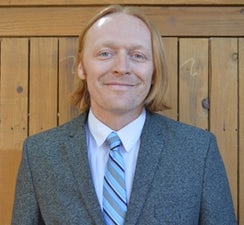
Ben Nobbs-Thiessen is an Assistant Professor of History and Chair of Mennonite Studies at the University of Winnipeg. He holds a PhD from Emory University (2016), with prior roles as a research associate at Arizona State University (2016–18) and a teaching fellow at Washington State University (2018–2020). His research focuses on Mennonite migrations across the Americas, environmental change, and indigenous-settler relations. He teaches courses on Latin American Mennonites and Mennonite Studies II. His research combines archival work, field studies, and oral histories from Bolivia, Paraguay, Mexico, Canada, and the U.S. His 2020 book Landscape of Migration examines Bolivia’s lowland colonization and its intersection with Mennonite and indigenous communities. Current projects include a century-long study of Mexico-Canada Mennonite migrations linked to water scarcity and neoliberal reforms. His publications span journals like Journal of Latin American Studies and Agricultural History , addressing topics like frontier development, foodways, and border conflicts. His transnational approach bridges environmental, migration, and colonial histories. He contributes to interdisciplinary initiatives such as the Newberry Consortium in American Indian Studies and the Centre for Rupert's Land Studies.
Ameil Joseph is an Associate Professor at McMaster University's School of Social Work, where they contribute to critical scholarship at the intersection of mental health, race, and social justice. Their work examines how ideas about difference, normalcy, sexuality, eugenics, race, ability and mental 'illness' cohere and perform within policy, law and practice, with over a decade of professional experience in mental health settings including supportive housing, settlement services, crisis respite, and forensic community treatment. Education: Ph.D in Social Work, York University (2009-2014) MSW, Wilfrid Laurier University (2005-2007) BA in Psychology, University of Waterloo (1998-2003) Dr. Joseph's research engages with critical mental health, postcolonial theory, critical race theory, and critical disability studies to examine the historical production of ideas about difference. Their scholarship particularly focuses on how these ideas manifest in mental health systems, immigration policy, and criminal justice, with attention to issues of social justice, violence, ethics, and confluence. Their work bridges theoretical frameworks with practical implications, addressing the complex interplay of colonialism, racism, sanism, and eugenics in contemporary social systems. Analysis of Dr. Joseph's recent publications reveals a sustained focus on colonial and eugenic violence within mental health, immigration, and criminal justice systems. Their scholarship consistently examines how racism, sanism, and ableism intersect to produce particular forms of state violence, particularly against racialized immigrants with mental health conditions. Recent work has expanded to address temporal dimensions of oppression, data colonialism, and community responses to grief and loss during the pandemic, demonstrating both theoretical sophistication and practical relevance to current social issues. Scientific Awards: University Scholar 2025 - Recognized for research leadership and impact among eight McMaster professors honored as University Scholars Dr. Joseph has secured significant research funding, including nearly $75,000 from the Social Sciences and Humanities Research Council (SSHRC) for community-engaged projects addressing social justice issues. Their teaching portfolio includes advanced courses on critical mental health perspectives, race and colonialism in Canadian society, and social justice theory. While specific graduate students aren't listed in available materials, their extensive co-author network suggests active mentorship and collaboration. Dr. Joseph contributes to community-based initiatives in Hamilton addressing racism in healthcare and mental health systems, connecting academic scholarship with practical community responses to systemic issues. Dr. Joseph maintains an active presence in community responses to contemporary challenges, particularly through initiatives addressing grief during the pandemic and systemic racism in healthcare. Their work exemplifies the integration of scholarly rigor with community engagement, demonstrating how academic research can inform and be informed by real-world social justice efforts.
Claire Célérier is an Associate Professor of Finance at the Rotman School of Management, University of Toronto, where she holds the Canada Research Chair in Household Finance. Her academic career spans prestigious institutions including the University of Toronto (where she advanced from Assistant to Associate Professor between 2016-2022) and the University of Zurich (2014-2016). She maintains an affiliation with the People's History Lab and actively contributes to academic discourse through conference organization including 'Race, Equity and Public Policy' (2023) and 'Banks, States and the People' (2024). Dr. Célérier's research explores how finance can benefit households through multiple lenses including behavioral economics, asset pricing, and financial history. Her work investigates innovation in finance, diversity and inclusion impacts, and historical perspectives on financial systems. She has developed significant expertise in household finance, banking, and the intersection of finance with social issues, particularly racial disparities in financial markets as demonstrated in her award-winning research on the Freedman's Savings Bank. Her scholarly output shows a clear trajectory from foundational work on security design and investor behavior toward increasingly socially relevant research on financial inclusion, racial equity, and household financial decision-making. Recent publications demonstrate her growing focus on historical contexts of financial systems and their contemporary implications, particularly regarding marginalized communities. Canada Research Chair in Household Finance (2024) Bank of Canada Governor's Award (2022) University of Toronto Top 5% Merit Award (2021) Petro Canada Young Innovators Award Program (2021) Multiple Rotman School of Management Teaching Awards (2019-2021) Ieke van den Burg Prize for Research on Systemic Risk (2015) Dr. Célérier has successfully secured substantial research funding including Insight Development Grants (CAD 54,500), Connaught Research Grant (CAD 10,000), and the Marianne and Marcus Wallenberg Foundation Grant (EUR 400,000). She mentors several PhD students including Andrada Bilan (2020), Alexey Vasilenko (2023), and Purnoor Tak (Expected 2026), and has supervised numerous master's theses at both University of Toronto and University of Zurich. Her service contributions include Rotman School of Management MBA program committee, executive committee, seminar coordination, and faculty recruiting committee.
LK Bertram is an Associate Professor in the Department of History at the University of Toronto, specializing in 19th-century North American history with a focus on migration, gender, sexuality, and colonialism. Her work bridges academic research and public engagement, particularly through social media algorithms (TikTok, Instagram) for combating digital disinformation. Clio Prize-winning author (2020) 2022 SSHRC Insight Grant recipient Public history campaign curator (9 million+ views) Her research spans colonial institutions, sex work economies, and material culture, with publications on Icelandic diaspora, Arctic militarization, and immigrant food traditions. She teaches courses like HIS199 History and Social Media and HIS417 Histories of Sex Work , emphasizing hands-on learning via exhibitions and artifact workshops. Recent projects explore how social media algorithms can amplify quality historical data, including the viral @socialforscholars initiative. Her work connects historical narratives to contemporary debates on disinformation, cultural appropriation, and legal frameworks.
Adèle Garnier is an Associate Professor at the Department of Geography, Université Laval's Faculty of Forestry, Geography and Geomatics. She serves as Director of undergraduate geography programs and the certificate in sustainable tourism. Her research focuses on political geography, migration dynamics, and humanitarian governance, particularly examining refugee labor market participation, temporary migration policies, and technological impacts on immigration systems. Education : PhD in Political Science (Macquarie University/Universität Leipzig, 2012), MA in Political Science (Universität Leipzig, 2006), Diploma in Political Science (Paris, 2002) Her research integrates political geography , migration studies , and geographies of inequality , analyzing power structures in migration governance. Recent work explores Canada's digitalization of immigration, multiscalar impacts of refugee policies, and settler-colonial migration frameworks. Current research trends focus on technological governance of migration , refugee resettlement , and marketization of humanitarian services , with interdisciplinary approaches bridging political science and geography. Research Units : Graduate School of International Studies (ESEI), Immigration Research Team (ERIQA), Cultures-Arts-Societies Center (CELAT) Collaborations : Study Group on Ethnic Relations (Flers), Center for Refugee Studies (York University), Peace Research Institute Oslo She supervises graduate students in geography and co-leads multiple funded projects, including Liberating Migrant Labour (2023-2030) and digital migration governance research (2023-2028).
David B. Lindell is an Assistant Professor in the Department of Computer Science at the University of Toronto, with affiliations to the Vector Institute and AXL. He is a founding member of the Toronto Computational Imaging Group. His research focuses on physically based intelligent sensing, integrating physical models, signal processing, and AI to advance sensing systems. Notable projects include imaging around corners, through scattering media, and developing machine learning algorithms for 3D scene reconstruction. Education: Ph.D. in Computational Imaging from Stanford University (advisor: Gordon Wetzstein). Awards include the 2024 Ontario Early Researcher Award and the Best Student Paper at CVPR 2025. His work combines computational imaging with applications in computer graphics and autonomous systems. Research interests span non-line-of-sight imaging, single-photon sensing, and neural representations. Key contributions include the Light-Cone Transform (Nature 2018), confocal diffuse tomography (Nature Communications 2020), and AutoInt (CVPR 2021). His lab develops systems for 3D reconstruction, transient imaging, and photon-efficient sensors. Selected grants and support: NSF CAREER Award, DARPA REVEAL program, and KAUST Visual Computing Center funding. Active collaborations with industry and academic institutions on autonomous driving and medical imaging applications.
Adam King is an Assistant Professor in the Labour Studies Program at the Faculty of Arts, University of Manitoba. His research focuses on labor regulation, employment standards enforcement, Indigenous labor dynamics, deindustrialization impacts, and labor market policy. He co-investigates a SSHRC Partnership Grant project on migrant labor in settler-colonial contexts. Education: PhD in Sociology (York University, 2019) MA in History (University of Toronto, 2011) BA in Sociology/History (Trent University, 2010) His research examines the political economy of labor regulation, including enforcement mechanisms in federally regulated sectors and contested Indigenous labor relations. He analyzes deindustrialization's social consequences and contributes to debates on job guarantee proposals and right-wing populism's influence on labor movements. Recent publications explore topics like Indigenous labor law frameworks, precarious creative workers' unionization, and gendered identities in deindustrializing communities. He actively engages with media outlets such as CBC, The Globe and Mail, and The Maple's 'Class Struggle' newsletter.
Rafael Grohmann is an Assistant Professor of Media Studies at the University of Toronto Scarborough (UTSC), with a graduate cross-appointment at the Faculty of Information (iSchool). He leads the DigiLabour Initiative and is a researcher with Fairwork, focusing on Critical Platform and Data Studies. His research emphasizes platform labour, the platformization of work, and resistance strategies among workers in Latin America. Grohmann holds a PhD in Communication from the University of São Paulo and has held prior academic positions at institutions in Brazil, including Unisinos University. His research interests span platform cooperativism, public policies for technology and labor, AI's impact on work, and data-driven labour practices. He is an editorial board member for Big Data & Society and Work, Employment and Society , and contributes to UCLA’s Center for Critical Internet Inquiry (C2i2). His work examines intersections of technology, labour precarity, and solidarity economies, with a focus on global South contexts. Recent publications analyze click farm labour in Brazil, gender dynamics in platform cooperatives, and global-local trends in platform worker organizing. Grohmann’s work bridges critical theory with action research, advocating for fair work standards in digital economies. He participates in initiatives like the Platform Cooperativism Consortium and the Labor Tech Research Network.
William Brown is an Associate Professor of Film in the Department of Theatre & Film within the Faculty of Arts at the University of British Columbia. He earned his D.Phil. from the University of Oxford and joined UBC in January 2022 after teaching positions at the University of Roehampton, University of St Andrews, University of Oxford, and New York University Abu Dhabi. At UBC, he serves as Graduate Advisor for Cinema and Media Studies. His research spans multiple intersecting fields including film-philosophy, digital media, posthumanism, and critical race theory. Brown approaches cinema through both theoretical scholarship and practical filmmaking, creating works that blend fiction, documentary, and video essays. His academic contributions include numerous books that have shaped contemporary film theory, particularly exploring the relationship between cinema and philosophical concepts in the digital age. Brown's publications reveal a consistent trajectory toward understanding cinema's relationship with ecological thought, nonhuman perspectives, and decolonial approaches. His recent work focuses on navigating from the 'White Anthropocene' to the 'Black Chthulucene,' examining how cinema can represent and intervene in ecological crises while challenging dominant Western perspectives. Nominated for Best Monograph by British Association of Film and Television Studies Society (2018) Book Reviews Editor for Studies in European Cinema and Film-Philosophy Conference Report Editor for Cinema: Journal of Philosophy and the Moving Image Brown has supervised five PhD dissertations to completion, four of which successfully combined practice and theory. His teaching encompasses both film production and film history/theory. As an active filmmaker, he has created approximately 15 no-budget feature films that have received recognition from prestigious critics and festivals including Sight & Sound Films of the Year and American Online Film Awards. He is a frequent keynote speaker at international conferences and has presented at venues including the British Film Institute's Philosophical Screens series.
Lyubov Zhyznomirska is an Associate Professor of Political Science at Saint Mary's University, specializing in European studies, migration governance, and democratization processes. She holds a PhD in Political Science from the University of Alberta (2012), with a focus on EU migration cooperation with Eastern neighbors. Her current research examines the reception of war-displaced Ukrainians in Canada, the UK, and Germany. She has held a Jean Monnet Post-Doctoral Fellowship and is active in research networks such as the European Community Studies Association-Canada and the Migration Research Network. Teaching focuses on comparative politics, European Union politics, and migration studies. Recent SSHRC-funded projects include studies on Ukrainian refugee integration in Nova Scotia and the impact of temporary status on newcomer youth. Awards include the Jean Monnet Post-Doctoral Fellowship (2011-2012). Research interests include forced displacement, post-war societies, and EU-Ukraine-Russia dynamics. She co-edited The Routledge Handbook of the Politics of Migration in Europe (2019) and publishes in journals such as Comparative European Politics . Professional roles include Treasurer of ECSA-Canada (2021-2024) and President of the Atlantic Provinces Political Science Association (2022-2023).
Dr. Carola Weil serves as Dean of McGill University's School of Continuing Studies and Associate Professor in the Department of Political Science since July 2018, following leadership roles as founding Dean at American University and Senior Associate Dean at USC's Annenberg School. Her educational background includes: Post-Doctoral Fellowship, University of Southern California School of International Service Post-Doctoral Fellowship, Harvard University John F. Kennedy School of Government Belfer Center Ph.D. and M.A. in Political Science, University of Maryland Master of Public Management, University of Maryland B.A. in History (Minor in Politics), Bryn Mawr College Dr. Weil's research centers on human security, migration, and conflict transformation with specialized expertise in gender dynamics in international relations and public diplomacy . Her work bridges policy analysis and practical applications in humanitarian intervention, while her recent focus explores lifelong learning systems and the impact of digital technologies on adult education , addressing evolving workforce demands through innovative educational frameworks. Her publication trajectory reveals a strategic evolution from foundational work on women in international security (1990s) to contemporary analyses of digital media diversity and global communication challenges in higher education. Early scholarship examined military intervention dilemmas in humanitarian crises, later pivoting toward systemic analyses of information ecosystems and educational accessibility in the digital age. Dr. Weil co-founded Women In International Security (WIIS) and serves on multiple non-profit boards, leveraging her dual German-American citizenship and multilingual capabilities to advance organizational development initiatives. Her peacebuilding consultancy spans Pakistan, Afghanistan, Darfur, Colombia, and the African Great Lakes region with specific attention to gender-inclusive journalism practices. Her leadership extends to advising on global strategy for technology-enhanced education and future workforce development, though no formal student advisement lists or grant details appear in the source material.
Christopher M. Overall is a Full Professor at the University of British Columbia in the Faculty of Dentistry, Department of Oral Biological and Medical Sciences . He is also a Principal Scientist at the Centre for Blood Research and holds associate memberships in UBC's Biochemistry & Molecular Biology , Obstetrics and Gynecology , and Bioinformatics Graduate Program departments. As a Canada Research Chair Laureate , he pioneered the field of degradomics to study proteases in vivo. B.D.S., University of Adelaide Ph.D., University of Toronto Postdoctoral Fellowship, UBC (with Nobel Laureate Michael Smith) Dr. Overall’s research focuses on protease proteomics and systems biology , particularly degradomics to analyze protease substrates in diseases like COVID-19 and immunodeficiency . His work on matrix metalloproteinases has revealed new therapeutic strategies for inflammatory diseases and cancer . His 15 most recent articles (2015–2008) demonstrate expertise in TAILS proteomics , protein terminomics , and protease network analysis with applications in arthritis , antiviral immunity , and precision medicine . Scientific Awards 2022 Helmut Holzer Award 2018 Royal Society of Canada Fellow 2014 Tony Pawson Canadian Proteomics Award 2013 IADR Distinguished Scientist Award Dr. Overall has mentored 61 trainees , including 9 full professors with department chairs, and received the UBC John McNeill Mentorship Award (2023). He leads the HUPO Chromosome-centric Human Proteome Project and consults for Genentech and Novartis .
Sarah Turnbull is an Associate Professor at the University of Waterloo, affiliated with the Balsillie School for International Affairs. Her work intersects criminology, sociolegal studies, and critical border/migration studies, focusing on immigration detention, deportation, punishment, and social justice through postcolonial, antiracist, and feminist lenses. Education: PhD and MA in Criminology and Socio-Legal Studies from the University of Toronto; BA from Simon Fraser University. Her current research includes: (1) a SSHRC-funded study on the National Immigration Detention Framework in Canada using Foucauldian genealogical methods; (2) the Prison Transparency Project , a comparative analysis of carceral transparency in Canada, Spain, and Argentina; and (3) a transatlantic study on pandemic impacts in prisons. She employs ethnographic and qualitative methods in her research. Selected Grants: 2023–2030: Co-Investigator, Prison Transparency Project (SSHRC Partnership Grant). 2022–2025: Principal Investigator, Reforming Detention (SSHRC Insight Grant). 2022–2023: Co-Principal Investigator, COVID-19 Justice as Penal Justice (Strathclyde-Waterloo Transatlantic Award). Turnbull’s publications and collaborations emphasize systemic inequalities, carceral mobilities, and ethical research practices. She co-founded the Prison Transparency Project and has contributed to dialogues on art as resistance in detention settings.
Nathan Nunn is a Professor at the Vancouver School of Economics at the University of British Columbia. He holds a Canada Research Chair in cultural economics and is affiliated with multiple prestigious research organizations including the Canadian Institute for Advanced Research (CIFAR), the National Bureau of Economic Research (NBER), and BREAD. His office is located in the Iona Building 172 at UBC. Professor Nunn's primary research interests span political economy, economic history, economic development, cultural economics, and international trade. His work focuses on the historical and dynamic processes of economic development, particularly examining how institutions and cultures evolve across societies. He has published extensively on historical factors crucial for economic development, including distrust, gender norms, religiosity, conflict, immigration, state formation, and support for democracy. His contemporary research examines the effects of Fair Trade certification, CIA interventions during the Cold War, foreign aid, school construction, climate shocks, and trade policies, with particular emphasis on how local context influences development policy effectiveness. Nunn's recent publications reveal a strong focus on the relationship between culture, institutions, and economic outcomes. His work increasingly examines how zero-sum thinking affects economic behavior and political divides, the persistence of traditional religious beliefs in Africa, and the historical roots of contemporary economic phenomena. His publications frequently appear in top economics journals including the Quarterly Journal of Economics, Econometrica, American Economic Review, and Science. His scientific contributions have been recognized through fellowships and editorial positions, including serving as an editor at the Quarterly Journal of Economics. He has advised numerous PhD students who have gone on to faculty positions at leading universities worldwide. Professor Nunn actively disseminates his research through various media channels, including podcasts, online courses, and public lectures. His teaching includes courses on economic history, development economics, and political economy, with a particular focus on how historical perspectives inform contemporary economic issues.
Richard Simon is an Associate Professor in the Department of Civil, Geological and Mining Engineering at Polytechnique Montréal. He holds leadership roles as Publications Director of his department and Administrative Director of the Institute for Research in Mining and Environment (IRME) UQAT-Polytechnique. His educational background includes a B.Eng. and M.Sc.A. from Polytechnique Montréal and a Ph.D. from McGill University. Dr. Simon teaches courses including Introduction to Mine Operations, Underground Mining, and Rock Mechanics I. His research focuses on rock mechanics, numerical modeling, mining engineering, and geotechnical applications in mining environments. His extensive publication record demonstrates consistent focus on numerical modeling of rock behavior, mine stability analysis, and backfill mechanics. Recent work emphasizes computational geomechanics applications in mining operations, including stress analysis in backfilled stopes, slope stability in open pits, and optimization of mining layouts. Environmental aspects of mining, particularly contaminant transport in fractured rock, also feature prominently. Dr. Simon has supervised 6 doctoral and 8 master's students working on topics ranging from numerical seismic assessment in mines to rock fracture mechanics. He secured significant research funding including $900,000 (2017) for a metals circular economy project and led three new IRME research initiatives (2015). He directs research activities at IRME UQAT-Polytechnique and collaborates extensively within the mining geomechanics research community. His expertise is regularly featured in media outlets including La Presse+ and Les Affaires.