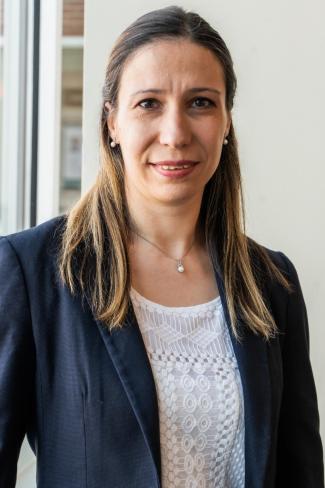
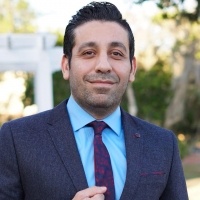
Tulay Flamand is an Assistant Professor of Business Analytics at the CU Denver Business School. She holds a PhD in Management Science from the University of Massachusetts Amherst and has expertise in retail analytics, optimization methodologies, and supply chain management. Her research focuses on business analytics applications to interdisciplinary areas, including retail analytics, sports analytics, and optimization in mining and renewable energy. She has published in top-tier journals like Operations Research , INFORMS Journal on Computing , and European Journal of Operational Research . She currently serves as an Associate Editor of INFOR . Flamand has received multiple awards, including the 2024 Outstanding Research Award and Excellence in Teaching Awards from the Colorado School of Mines. She has advised several PhD students in areas like supply chain optimization, sports team formation, and energy systems. Her grants include a NSF-funded project on modeling illicit gold supply chains in Peru. She has also contributed to teaching initiatives, including courses in business analytics, supply chain management, and operations research.
Dr. Teuku Geumpana is a Lecturer in Computing and Information Technology at the School of Information and Physical Sciences , University of Newcastle. With a PhD from the University of New South Wales and over 18 years of academic and industry experience, he focuses on pedagogical innovation, disaster response systems, and renewable energy optimization. Education: PhD in Computer Science Engineering (UNSW), BIT (Honours) from International Islamic University Malaysia Teaching: Coordinates project management and professional practice courses for cohorts exceeding 500 students annually Research Interests : Combines cloud computing, IoT, and disaster management with applications in health informatics and renewable energy. His work addresses social-technical challenges in emergency data transmission and techno-economic analysis of hybrid energy systems. Publications highlight trends in: Disaster mitigation using GIS and cloudlet architectures AI-driven healthcare monitoring (e.g., chest X-ray analysis for pandemic severity) Technopreneurship education frameworks for disaster-prone regions Optimization of solar-wind-grid hybrid systems in Indonesia Professional Contributions : Coordinates multi-campus course delivery, develops industry-linked curricula, and engages in interdisciplinary collaborations. His work bridges ICT with sustainability and humanitarian challenges.
Daniele Menniti is an Associate Professor at the Department of Mechanical, Energy and Management Engineering of the University of Calabria. His expertise spans electric power system analysis, real-time control, and automation, with focus on harmonic pollution in distribution networks and decentralized control strategies for power system stabilization. He actively contributes to research in smart grids, microgrids, and renewable energy integration. Research Interests: Power systems security, FACTS devices, demand response, energy communities, voltage control, and renewable energy market models. Leadership: Head of research units for funded projects like RES NOVAE (€23M), SCADA (PON01_02582), and renewable energy programs. Publications: Over 250 research products, including recent work on DC nanogrids, prosumer aggregation, and renewable energy communities. Labs: Leads LASEER (Laboratory of Electrical Systems for Energy and Renewables) at University of Calabria.
Rodica Loisel is an HDR Lecturer at the Graduate School of Management (IAE Nantes), University of Nantes, since September 2013. Previously, she held research positions at the European Commission's Joint Research Centre (2009-2012), Energy Regulatory Commission (2013), and CIRED-CNRS (2007-2009). Her research centers on energy economics, electricity markets, and power system modeling. Key specializations include economic evaluation of energy storage technologies, renewable energy integration, nuclear power economics, and energy transition policy. She employs general/partial equilibrium models to analyze storage valuation, V2G/G2V concepts, and sustainable development frameworks. Her publications (2025-2010) demonstrate consistent focus on French power system challenges, with growing emphasis on hydrogen storage, demand response, and market design for decarbonization. Recent work addresses load-following nuclear power, microgrid optimization in Africa, and scaling hydrogen from residual power loads. Loisel leads significant projects including REMORA (2024-2025, 50k€) on energy market solutions, ANR OSIRMEH (2025-2029) for electric mobility, NexT CARGO (2023-2025, 225k€) on shipping decarbonization, and LEAP-RE MiDiNA (2023-2024, 660k€) for North African microgrids. Total project funding exceeds 1.5 million euros across 15 initiatives since 2010. She collaborates extensively with WEAMEC marine energy cluster and research units including IREENA, LHEEA, and ECN, contributing to offshore wind (ORACLE), hydrogen (OPHARM), and tidal energy projects.
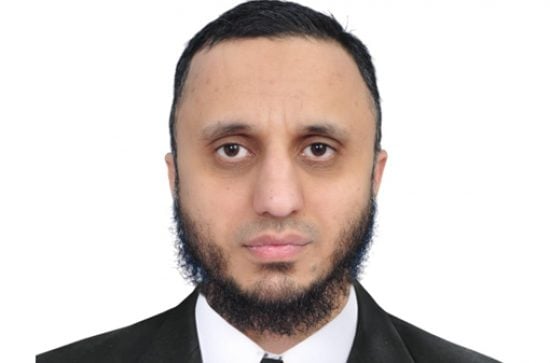
Dr. Muhammad Waseem is an Assistant Professor in Business Analytics at the School of Business, Maynooth University. He holds a PhD in Electrical Engineering from Zhejiang University (China), an MSc and BSc from University of Engineering and Technology, Taxila (Pakistan). His research focuses on sustainable energy systems, data analytics, and AI/ML integration into business models. He has held roles including Marie Skłodowska-Curie Research Fellow (2024–2025) and Postdoctoral Fellow at Hong Kong Polytechnic University (2023–2024). His work addresses smart grid optimization, renewable energy integration, and energy storage systems. Education: PhD in Electrical Engineering, Zhejiang University (2018) MSc in Electrical Engineering, UET Taxila (2014) BSc in Electrical Engineering, UET Taxila (2008) Research Interests: Sustainable Energy & Business Analytics Power & Energy Systems Optimization Smart Grids & Demand Management Distributed Energy Integration AI/ML in Energy & Business Awards: Marie Skłodowska-Curie Research Fellow (2024) Academic Research Excellence Award, Zhejiang University (2020–2021) Top 2% Global Scientists in Energy (2024) Grants & Collaborations: SYMECO project under Lero (SFI Research Centre) RTH-ITF Program, Hong Kong (2023) Labs/Groups: Innovation Value Institute (IVI), IRESI Research Group at Maynooth University.
Dr. Juan Felipe Henao Piza is an Associate Professor at Icesi University, Colombia, affiliated with the Faculty of Administrative and Economic Sciences and the Department of Organizational Management . His work bridges operations research (OR/MS) and energy systems, focusing on optimization techniques for renewable energy integration. Academic Training : PhD in Management Science (University of Warwick); Master in Systems Engineering (National University of Colombia); Bachelor in Civil Engineering (National University of Colombia). Dr. Henao's research centers on applying OR/MS to energy challenges, including modeling renewable energy sources (solar, wind, hydropower) for both on-grid and off-grid areas. He explores the impacts of emerging technologies like microgrids , electric vehicles , and large-scale renewables on electricity systems and energy markets. His work also emphasizes renewable energy complementarities and the potential of green hydrogen in off-grid regions, particularly in Colombia. Recent publications highlight his focus on optimization models for microgrids, power sector expansion, and renewable integration in Colombia. The articles span topics like grid-connected microgrids , energy policy , and off-grid electrification , reflecting a strong emphasis on renewable energy systems and sustainable infrastructure in Latin America. He teaches postgraduate courses in Modeling and Optimization for Energy Management and PhD-level Advanced Organizational Theory .
Professor Shigeru Fujimura is affiliated with Waseda University as a faculty member of the Faculty of Science and Engineering , specifically in the Graduate School of Information, Production, and Systems . With a PhD in Engineering from Waseda University, his research focuses on intelligent informatics and system engineering , particularly in scheduling, optimization, and human-robot collaboration. His research spans multiple domains including: Deep Reinforcement Learning for combinatorial optimization Energy-efficient manufacturing systems Multi-agent collaboration frameworks Augmented Reality interfaces IoT business modeling Recent publications demonstrate expertise in graph neural networks , particle swarm optimization , and generative adversarial networks applied to industrial problems. He has received multiple awards including the Invention Encouragement Prize (2003) and IEEJ Paper Presentation Award (1994) .
Dr. Scott Dwyer serves as an Associate Professor and Research Director at the Institute for Sustainable Futures (ISF) at the University of Technology Sydney (UTS). With 20 years of experience across multiple jurisdictions, he is an industry-focused leader in sustainability research and engagement, specializing in energy and transport sectors. As a senior member of the Energy Futures group at ISF and leader of its work on customer energy innovation, he delivers award-winning research through close collaboration with public and private sector partners. Dr. Dwyer holds a PhD in Engineering (Energy) from the University of Ulster, Belfast (2004-2009), an MSc in Energy Systems and the Environment from the University of Strathclyde, Glasgow (2002-2003), and a BSc (Honours) in Environment from Glasgow Caledonian University (1998-2002). His academic foundation spans electrical energy transmission, environment policy, and environmental engineering disciplines. His research focuses on the opportunities and challenges posed by disruption in energy and transport sectors, particularly regarding markets, customers, technologies, policy, and business models. Dr. Dwyer undertakes applied research primarily aimed at informing policy and practice, with expertise spanning solar, batteries, VPPs, microgrids, embedded networks, UrbanREZ, water and space heating/cooling, demand flexibility, HEMS/BEMS, fuel cell, hydrogen, electric vehicles, and related infrastructure. His work bridges technical, economic, and social dimensions of energy transition, with particular emphasis on community engagement and practical implementation pathways. Analysis of his recent publications reveals a strong focus on microgrid feasibility, community energy solutions, and the integration of distributed energy resources. His research demonstrates consistent attention to the intersection of technical possibilities and social acceptance, particularly in rural and remote communities. There's a clear pattern of investigating practical implementation challenges while developing frameworks for policy and business model innovation in the energy transition space. Dr. Dwyer regularly provides expert advice to policymakers and is a frequent media contributor on energy topics, appearing on ABC News, SBS World News, Nikkei-Asia, The Conversation, The Guardian, The Sydney Morning Herald, and The Monthly. His work involves leading transdisciplinary teams on complex research projects for diverse organizations including energy utilities, manufacturers, startups, industry bodies, communities, businesses, and government entities. As Research Director at ISF, he leads a team focused on customer energy innovation, working closely with partners to deliver research that informs real-world energy transition challenges. His approach emphasizes collaboration with communities and stakeholders throughout the research process, particularly evident in his microgrid and community energy projects across Australia.
Evangelos Spiliotis is an Assistant Professor at the National Technical University of Athens (NTUA) , affiliated with the School of Electrical and Computer Engineering and the Division of Industrial Electric Devices and Decision Systems . He serves as the Coordinator of the Forecasting & Strategy Unit at the Decision Support Systems Laboratory. Dr. Spiliotis earned both his Diploma–MSc (2013) and PhD (2017) from NTUA, specializing in Forecasting Systems. His research centers on forecasting methodologies , decision support systems , and energy optimization , with applied work in smart grids, retail, and sustainable infrastructure. Key interests include: Machine learning for time-series forecasting Energy management in buildings and microgrids Optimization of electric vehicle infrastructure Statistical and computational trade-offs in model design He has contributed to 80+ publications (cited 7,000+ times) and leads international forecasting competitions (M4, M5, M6). Editorial responsibilities include roles at the International Journal of Forecasting and Foresight: The International Journal of Applied Forecasting . Dr. Spiliotis teaches undergraduate courses: Decision Support Systems Forecasting Techniques Energy Management and Environmental Policy Management Game He has participated in multiple European/national R&D projects as a researcher and technical manager.
Masoud Barati is an Assistant Professor in the Department of Electrical and Computer Engineering at the University of Pittsburgh's Swanson School of Engineering. Previously, he held similar roles at the University of Houston and Louisiana State University. He earned his PhD in Electrical Engineering from the Illinois Institute of Technology (2009-2013) and completed a postdoctoral fellowship at the University of Chicago Booth School of Business in 2014. His research bridges pure and applied mathematics with electric power systems, focusing on resilience, quantum computing, and control systems. Barati’s academic journey includes a diverse range of studies: his doctoral work at Illinois Tech focused on electrical engineering, while his postdoctoral research at the University of Chicago explored business-related systems through a computational lens. His current role at the University of Pittsburgh allows him to advance interdisciplinary research in energy systems. Research interests span algebraic geometry and category theory for computational problem-solving in power systems, alongside applied areas like optimization, quantum computing, Bayesian statistics, and deep learning. He investigates resilience in power grids under natural hazards and cyber-attacks, with specific attention to AC optimal power flow, energy justice, and multi-interdependent infrastructure management. His work integrates smart city technologies, blockchain for energy trading, and data-driven methods such as kernel regression and neural networks for real-time grid analysis. His recent publications emphasize quantum protocols for entanglement detection, smart city energy infrastructure resilience, and machine learning-augmented approaches to power system control. These trends reflect a focus on leveraging advanced computational tools to address modern energy challenges. Barati has contributed to collaborative research projects, including a global algorithm for AC-OPF optimization funded by the National Science Foundation (NSF). While no scientific awards are explicitly listed, his research portfolio demonstrates significant contributions to energy systems and quantum computing. His advisory work includes various projects on grid resilience, though formal student advisee names are not provided in the text. Grants and funding are associated with his collaborative efforts in developing scalable optimization algorithms for power systems. Research activities involve partnerships with institutions like IBMQ for quantum simulations and local case studies in Pittsburgh. He explores innovative solutions such as mobile charging stations for EVs and blockchain-based energy trading models, reflecting a commitment to both theoretical and applied advancements in energy engineering.
Prof. Dr. Christoph M. Flath is the Chair of Business Information Systems and Business Analytics at Julius-Maximilians-Universität Würzburg's Faculty of Management and Economics (Department of Business Management). He has held this position since April 2018, previously serving as Junior Professor for Operations Management at the same institution (2014-2018). His academic journey includes leadership roles at the Karlsruhe Institute of Technology where he headed the Smart Grids and Energy Markets division. Education: Doctorate (with distinction) in Economics, Karlsruhe Institute of Technology (2013) Diploma in Industrial Engineering (with distinction), University of Karlsruhe (2008) Study abroad program at University of Toronto, Canada (2006-2007) Research Focus: Prof. Flath's work bridges business analytics, operational optimization, and information systems, with applications in energy markets, supply chains, and industrial data science. His research employs advanced quantitative methods to solve complex problems in smart grids, sharing economies, and digital innovation ecosystems. Awards and Honors: Doctoral dissertation awarded with distinction Diploma in Industrial Engineering awarded with distinction Team Leadership: Directs research group including six team members (Bianca Hartmann, Robin Derzbach, Aabhash Dhakal, Nico Elbert, Tim Lachner, Nikolai Stein), focusing on business analytics applications across industrial domains.
Cimmino Francesco Maria is a Researcher at the University of Applied Sciences and Arts Western Switzerland (HES-SO) within the School of Management. His primary roles involve energy systems research, data science applications, and econometric analysis. He leads and collaborates on projects addressing energy transition challenges, including decentralized power generation, grid stability, and renewable integration. Key projects include the Micro Stockage Intelligent Distribué (MSID) project (2019-2022), focusing on flexible load management and business models for distributed energy systems, and the Electricity Load Forecasting for Utilities (ELF4U) initiative. He also contributed to the analysis of photovoltaic market dynamics and airport security process optimization through ethological methodologies. Research interests span energy economics, smart grid technologies, and predictive modeling. His work integrates data science techniques with domain-specific challenges, such as forecasting heating demand and analyzing carbon footprints of energy imports. Collaborations involve institutions like Icare Institut, VS Computer Science Institute, and energy companies such as Sierre Energie. Publications highlight interdisciplinary approaches, including the impact of natural gas CHP plants on Switzerland’s carbon footprint and the application of blockchain for SME liquidity risk tracing during the pandemic. His work bridges academic research with practical solutions for energy system decarbonization and operational efficiency.
Dr. Ali Dehghan is an Associate Professor of Business Analytics and IT at the University of La Verne's College of Business. He holds a Ph.D. in Technology Management from Eastern Michigan University (2012), an MS in Engineering Management (2011), an MS in E-Commerce (2006), and a BS in Electrical Engineering (2003). His research focuses on service quality, customer satisfaction, renewable energy systems, and online education analytics. He has led NSF I-Corp grants and published extensively in peer-reviewed journals. Education Background: Ph.D. in Technology Management, Eastern Michigan University (2012) MS in Engineering Management, Eastern Michigan University (2011) MS in E-Commerce, Lulea University of Technology (2006) BS in Electrical Engineering, Azad University (2003) Research Interests: Business Analytics & IT Strategy Renewable Energy Microgrids Customer Loyalty & Churn Analysis Educational Technology & Online Learning Entrepreneurial Orientation in Organizations Digital Platforms & User Engagement Grant & Awards Highlights: 2018: NSF I-Corp Grant (PI) 2016: Hewlett Grant, UCR Anderson Grant Multiple fellowships from Eastern Michigan University (2010–2012) Exxon Mobile Scholarship (2011) Professional Experience: Before joining La Verne, Dr. Dehghan taught at Pepperdine University and Wesleyan. He has over 15 years of industry experience in multinational companies and has been actively involved in high-tech startups for the past four years. His work integrates academic research with practical business solutions in digital transformation and sustainability.
Professor Kevin Parton is a Strategic Professor at the Gulbali Research Institute, affiliated with the University of New England. He has held significant academic leadership roles including Dean of the Faculty of Rural Management at the University of Sydney and Chair of the Department of Agricultural Economics and Business at the University of Guelph. His career spans over 48 years across universities, government agencies, and international research organizations in countries such as Australia, Canada, China, Ethiopia, and Papua New Guinea. His educational background includes a PhD in Agricultural Economics from the University of New England, a Postgraduate Diploma in Economic Statistics from the same institution, an MSc in Agricultural Economics from the University of Newcastle, a BCom (Honours) from the University of Liverpool, and a Certificate in Theology from Moore Theological College. He has been a registered HDR supervisor and has contributed to academic training and research management extensively. Kevin Parton's research interests are centered on development economics, climate change policy, renewable energy microgrids (particularly in Australia and Nepal), e-HRM systems, and the economic impacts of mining on Indigenous communities. His work contributes to several UN Sustainable Development Goals, especially those related to affordable and clean energy, climate action, and reduced inequalities. His recent publications (2023–2024) reflect a strong focus on renewable energy microgrids in Australia, the socio-economic impacts of mining in Papua New Guinea, and the barriers to e-HRM adoption in organizations. These works show a consistent theme of applying economic analysis to real-world sustainability and development challenges, often with policy implications. Reviewed for journals: PLOS ONE, Sustainability, Natural Resources Forum, Oxford Open Energy Member: Australian Agricultural and Resource Economics Society He has received over $1.5 million in competitive grant funding and has supervised HDR students, including internal supervision of a project on business empowerment (2006–2008). His research has led to datasets on communal irrigation in Thailand, climate change attitudes, and agricultural supply chains, with documented economic impact. He has also been involved in media outreach around renewable energy research at Charles Sturt University. Kevin Parton has been active in research networks across Australia, China, and the EU, with collaboration evident in recent publications and datasets. His work bridges academic research, policy development, and practical implementation in sustainable development and energy systems.
Cristina Pop is a researcher affiliated with Babes-Bolyai University (Department of Clinical Psychology and Psychotherapy) and has contributed to interdisciplinary research spanning computer science , energy systems , and health informatics . Her work integrates machine learning and bio-inspired optimization algorithms to address challenges in renewable energy prediction , smart grid management , and health monitoring for seniors .