معرفی
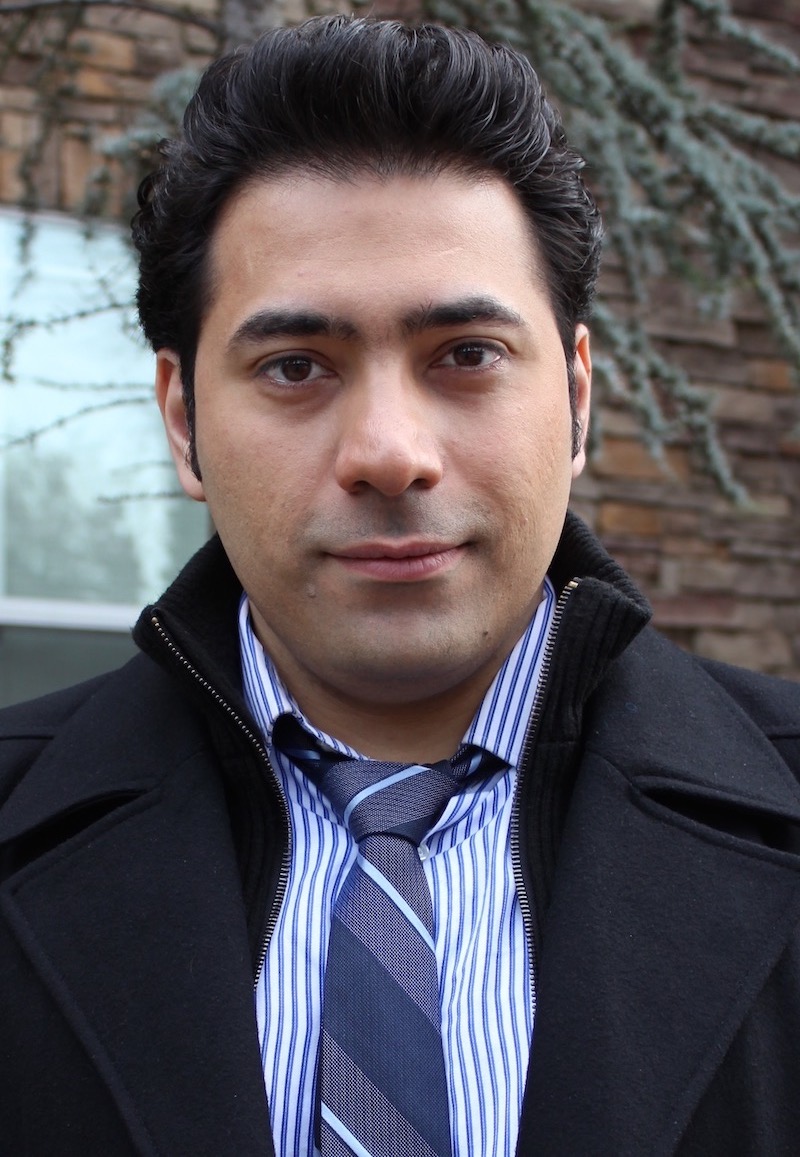
Masoud Barati is an Assistant Professor in the Department of Electrical and Computer Engineering at the University of Pittsburgh's Swanson School of Engineering. Previously, he held similar roles at the University of Houston and Louisiana State University. He earned his PhD in Electrical Engineering from the Illinois Institute of Technology (2009-2013) and completed a postdoctoral fellowship at the University of Chicago Booth School of Business in 2014. His research bridges pure and applied mathematics with electric power systems, focusing on resilience, quantum computing, and control systems.
Barati’s academic journey includes a diverse range of studies: his doctoral work at Illinois Tech focused on electrical engineering, while his postdoctoral research at the University of Chicago explored business-related systems through a computational lens. His current role at the University of Pittsburgh allows him to advance interdisciplinary research in energy systems.
Research interests span algebraic geometry and category theory for computational problem-solving in power systems, alongside applied areas like optimization, quantum computing, Bayesian statistics, and deep learning. He investigates resilience in power grids under natural hazards and cyber-attacks, with specific attention to AC optimal power flow, energy justice, and multi-interdependent infrastructure management. His work integrates smart city technologies, blockchain for energy trading, and data-driven methods such as kernel regression and neural networks for real-time grid analysis.
His recent publications emphasize quantum protocols for entanglement detection, smart city energy infrastructure resilience, and machine learning-augmented approaches to power system control. These trends reflect a focus on leveraging advanced computational tools to address modern energy challenges. Barati has contributed to collaborative research projects, including a global algorithm for AC-OPF optimization funded by the National Science Foundation (NSF).
While no scientific awards are explicitly listed, his research portfolio demonstrates significant contributions to energy systems and quantum computing. His advisory work includes various projects on grid resilience, though formal student advisee names are not provided in the text. Grants and funding are associated with his collaborative efforts in developing scalable optimization algorithms for power systems.
Research activities involve partnerships with institutions like IBMQ for quantum simulations and local case studies in Pittsburgh. He explores innovative solutions such as mobile charging stations for EVs and blockchain-based energy trading models, reflecting a commitment to both theoretical and applied advancements in energy engineering.