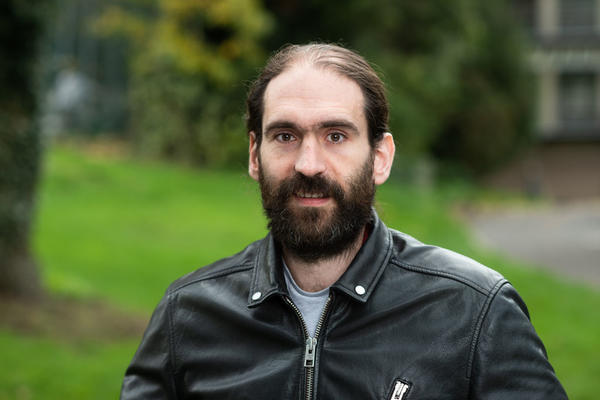
Dr. Praneet Prakash is a Researcher in the Department of Applied Mathematics and Theoretical Physics at the University of Cambridge, working under Prof. Raymond Goldstein. His research focuses on interdisciplinary approaches combining microfluidics, microscopy, and theoretical physics to study biological systems. Key areas include microbial motility, active matter dynamics, and the interplay between physics and living systems. He utilizes experimental techniques such as microfluidics and advanced microscopy to investigate phenomena like bacterial swimming, nutrient exchange in microbial communities, and growth oscillations in filamentous fungi. His work bridges Soft Matter Physics, Statistical Mechanics, and Biophysics, with applications ranging from understanding microorganism behavior to developing biosensor technologies. Recent studies explore phototactic algae behavior, ciliary surface interactions in animalcules, and adaptive motility in marine microorganisms. Publications highlight contributions to microbial ecology, active matter systems, and biophysical modeling. While no formal awards are listed, his research has been published in high-impact journals like Journal of the Royal Society Interface and Physical Review Fluids . He is affiliated with the Biological Physics and Mechanics research group and maintains an active presence on academic platforms like Twitter and LinkedIn.
Professor Fay Couceiro is a Professor of Environmental Pollution in the School of Civil Engineering and Surveying at the University of Portsmouth. She leads the Microplastics Research Group and the 'Evaluating change across the plastics lifecycle' theme for the Revolution Plastics Institute, focusing on pollution sources, interventions, and collaborations with industry. She holds editorial roles at Cambridge Prisms: Plastics and peer reviews for multiple journals and funding bodies. Education: BSc in Marine Biology (Queen's University Belfast), PhD in Biogeochemistry (funded project on Strangford Lough), postdoctoral research at the University of Plymouth. Research Interests: Contaminants' fate, microplastics' environmental and health impacts, nutrient dynamics, heavy metals, and organic pollutants like PAHs. Her work integrates pure science with civil engineering solutions. Publications span 2007–2025, emphasizing microplastic toxicity, soil-oil interactions, and pollution mitigation strategies. Over 27 peer-reviewed articles highlight her contributions to environmental science. Advising & Grants: Supervises MSc/PhD students and collaborates with companies like Southern Water. Active in STEM outreach and UK research policy, including the EU's HR Excellence in Research accreditation process. Labs/Teams: Microplastics Research Group, Revolution Plastics Institute, and interdisciplinary teams in environmental technology and resilience.
Marcos Cruz is Professor of Innovative Environments at The Bartlett School of Architecture, University College London (UCL), where he leads research in bio-integrated design. He runs Bio-ID with Dr. Brenda Parker, a multidisciplinary research platform investigating design driven by biotechnology, computation, materials, and fabrication. Previously, he served as Director of The Bartlett from 2010-2014 and founded the BiotA Lab (2014-2018). His academic career spans multiple institutions including University College London (where he ran MArch Unit 20 for 19 years), University of Westminster (2008-2010), UCLA (2010), and IAAC (2014-present). Professor Cruz holds a Licenciatura from ESAP Porto, a Masters with distinction from UCL, and a PhD from UCL (2007), sponsored by the Portuguese Foundation for Science and Technology. His doctoral research on 'Neoplasmatic Architecture' earned him the RIBA President's Research Award in 2008. He is a registered architect with both the Architects Registration Board (ARB) and the Portuguese Architecture Chamber. His primary research area is Bio-Integrated Design, which explores how biotechnology and computation can reshape our built environment in response to climate change. This work goes beyond using nature as inspiration; instead, it treats nature as the medium for a multi-layered design approach. His key research project, Poikilohydric Living Walls, investigates integrating growth systems directly on building facades using algae and mosses that can switch photosynthetic activity on and off without additional maintenance. Another significant research area is The Body in Architecture, which examines the relationship between human flesh and architectural flesh, proposing a 'thick embodied flesh' that creates truly inhabitable architectural interfaces. His recent publications demonstrate a strong progression toward integrating living systems directly into building materials and facades. The research spans from microbial to tectonic scales, with increasing focus on biomaterials, robotic fabrication, and sustainable design approaches that actively participate in urban ecosystems rather than merely responding to them. RIBA President's Research Award (2008) for 'Neoplasmatic Architecture' Multiple Best Unit awards at Bartlett Summer Show (awarded by Thom Mayne, Paul Finch, Richard Rogers, Claude Parent, and Ross Lovegrove) Work part of permanent collection at FRAC Orleans Exhibitions at Venice and São Paulo Biennales Professor Cruz has supervised numerous PhD students through UCL's Research-by-Design programme and currently directs the MArch/MSc in Bio-Integrated Design. His research has been supported by EPSRC and involves industrial partners including Laing O'Rourke, Pennine Stone Limited, and Amorim, with academic partners at UCL Biochemical Engineering, University of Coimbra, and IST Tomar. He co-founded MAM-ARCH London (formerly marcosandmarjan) in 2000, whose work has built buildings and pavilions, won international competitions including the Kunsthaus Graz, and been exhibited globally. His practice represents a significant bridge between architectural design and biological systems, positioning him at the forefront of bio-integrated architectural research.
Prof. Silvia Vignolini is a leading researcher in sustainable and bio-inspired materials. Since January 2023, she has served as Director at the Max Planck Institute of Colloids and Interfaces , where she leads the department of Sustainable and Bio-inspired Materials . Her academic career includes a Lecturer in Physics at University College London (2013-2017) and a Professor of Biomaterials and Sustainability at the University of Cambridge (2020-2022). Education: University of Florence (Physics, PhD) Postdoctoral Research: University of Florence , University of Cambridge Her research bridges chemistry , soft matter physics , optics , and biology , focusing on the self-assembly of natural materials into functional architectures. She pioneered work on cellulose-based photonic materials with applications in displays, pigments, and radiative cooling. The selected articles highlight her work on cellulose nanocrystals , structural coloration , and sustainable fabrication techniques . Key trends include mechanochromic hydroxypropyl cellulose systems, bio-inspired light management, and applications in microalgae growth and bacterial symbiosis. Scientific Awards : Philip Leverhululme Prize (2019) ACS Lectureship in Sustainable Chemistry (2018) Ipazia Prize for Women in Science (2012) PhD Thesis Award (University of Florence, 2009) At the Max Planck Institute, her interdisciplinary research group explores bio-inspired design principles for sustainable materials, combining experimental and computational approaches to create functional materials from natural resources.
Dr. Zaheer Nasar is a Reader in Atmospheric Aerosols at Cranfield University's School of Aerospace, Transport and Manufacturing. His work focuses on real-time bioaerosol characterization, indoor/outdoor air quality dynamics, and environmental health impacts of particulate matter. He leads the NERC-funded Light-Induced Fluorescence sensor project and contributes to the BioAirNet network (NE/V002171/1) as Co-I. Research Interests Physico-chemical and biological characterization of aerosols Spatio-temporal dynamics of particulate matter (PM) and bioaerosols Quantitative microbial risk assessment (QMRA) methodologies Low-cost air quality sensor networks and machine learning calibration Urban green infrastructure effects on air pollution Policy development in Hindu Kush Himalayan air quality Recent publications emphasize machine learning-enhanced sensor calibration (2024 IEEE paper), wastewater plant bioaerosol risks (2024 Water Research), and urban air quality interventions across the UK and Lahore. He has secured over £1.6M in grants from NERC, STFC, and UKRI GCRF, with significant work on BTEX exposure in Nigeria and SARS-CoV-2 risks in wastewater facilities. Scientific Recognition Fellow of the Higher Education Academy (FHEA) Co-investigator in multiple NERC/UKRI projects Active participant in BSI bioaerosol standards committee As an advisor, he mentors five postgraduate researchers including Reece Dillon and Hathaikarn Tathong, with a strong publication record in journals like Environmental Science: Atmospheres , Risk Analysis , and BJPsych Open . His work bridges environmental science, public health, and policy implementation through interdisciplinary research.
Professor Phil Purnell is a Professor of Materials and Structures at the School of Civil Engineering, University of Leeds. His expertise spans materials science, infrastructure systems, circular economy, and interdisciplinary research. He leads projects addressing decarbonization, waste-to-resource systems, and sustainable construction materials. His roles include Deputy Head of School and advisor to UKRI, DEFRA, and the UK Government’s Circular Economy Taskforce. He holds visiting positions at the Royal College of Art and University of Cambridge. Education: PhD, BEng (Civil), and teaching qualifications (PCPCE, ACTLHE). His research focuses on circular economy applications in textiles, offshore wind, and foundational industries. Notable projects include the Textiles Circularity Centre, Yorkshire Circular Economy Living Lab, and Complex Value Optimisation for Resource Recovery (C-VORR). He advocates for systemic approaches to sustainability, integrating economic, technical, and environmental values. Research outputs emphasize decarbonization pathways, material lifecycle assessments, and robotics in infrastructure management. Collaborations with industry and policy bodies drive practical solutions for resource efficiency. His work bridges engineering, economics, and environmental science to address global challenges like waste management and climate change.
Prof Jean Van Den Elsen is a Professor of Biochemistry at the University of Bath , affiliated with the Department of Life Sciences and several research centers including the Centre for Sustainable Chemical Technologies (CSCT) , Centre for Therapeutic Innovation , and Milner Centre for Evolution . They are actively accepting doctoral students and leading multidisciplinary projects at the intersection of structural biology and immunology. Education: Not explicitly mentioned Appointments: University of Bath (current), with collaborations across Chemistry, Biology & Biochemistry departments Research Focus: The laboratory investigates protein structural biology in two major areas: Complement System Interactions: Studying how pathogenic microbes like Staphylococcus aureus evade host immunity through complement system manipulation , with structural analysis of proteins such as C3d and C5 complexes. This work directly informs vaccine design and autoimmune disease treatment . Glycation Mechanisms: Developing diagnostic tools for detecting non-enzymatic sugar modifications linked to diabetes , Alzheimer's , and aging, with commercial partnerships like Abcam . Article Trends: Recent publications demonstrate: Structural analysis of complement evasion proteins (2022-2025) Engineering knob domains as miniature antibodies (2023) Evolutionary studies on cooperative behavior (2021-2025) Advancements in peptide synthesis platforms (2022-2023) Applications of AI protein folding (2020) Scientific Contributions: ORCID: 0000-0002-0367-1956 BBSRC Funding recipient (2023) 100+ citations across 76 research outputs Student Mentorship: Directly supervising 4 current PhD students and 1 postdoc, with a track record of mentoring 11 previous students including Daphne Jackson Fellows and MSCA researchers. Collaborations: Maintains active partnerships with Dr. Tony James (Chemistry), Dr. Rob Williams (Biochemistry), and industry partners UCB Celltech and Porton Biopharma Ltd. Their work contributes to UN Sustainable Development Goals 3 (Good Health), 12 (Responsible Consumption), and 13 (Climate Action).
Dr. Lesley Batty is a Reader in Ecological Education at the School of Geography, Earth and Environmental Sciences, University of Birmingham. She plays key leadership roles as Head of Wellbeing and Head of Employability and Placements within the School, reflecting her strong commitment to student development and inclusive education. Her educational background includes a PhD from the University of Sheffield, an MRes and BSc from the University of Reading, and a Postgraduate Certificate in Learning and Teaching from the University of Birmingham. She is a Senior Fellow of the Higher Education Academy and a HEFi Scholar, underscoring her excellence in teaching. Dr. Batty's research centers on the ecology of industrial pollution, particularly in post-mining landscapes. She investigates phytoremediation techniques for contaminated soils, focusing on heavy metals and polycyclic aromatic hydrocarbons (PAHs). Her work extends to ecological education, where she explores inclusive teaching practices, barriers in STEM laboratories, and the integration of employability skills into the curriculum. She is actively involved in national educational policy through her role as Lead Secretary of the British Ecological Society Special Interest Group in Teaching and Learning and as an Associate Editor for the Journal of Geochemical Exploration. Her recent publications reveal a dual focus: one stream on environmental contamination and remediation (e.g., metal and PAH pollution in brownfield sites, phytoremediation with bacteria and chelates), and another on innovative pedagogy in geography and ecology (e.g., virtual field trips, inclusive lab practices, and the future of fieldwork education). This reflects her unique position at the intersection of environmental science and educational leadership. Senior Fellow of the Higher Education Academy (HEA) HEFi Scholar Lead Secretary, British Ecological Society Special Interest Group in Teaching and Learning Dr. Batty is a dedicated educator and researcher who bridges the gap between environmental science and pedagogical innovation. She has made significant contributions to both her field of research and the national discourse on ecological education. Her leadership in student wellbeing and employability, combined with her research on pollution and inclusive learning, demonstrates a holistic approach to academic life. She actively supervises research, as evidenced by her co-authorship with doctoral researchers, and welcomes PhD applications in her areas of expertise. She is a key member of several research groups, including those focused on Physical Geography, Global Biogeochemistry, and Environmental Health Sciences at the University of Birmingham. Her collaborative work, especially in large consortia on conservation education, highlights her strong network and impact in the academic community.
Dr. Kaveh Emami is a researcher at Newcastle University , specializing in proteomics, microbiology, and biotechnology. His work spans plant biotechnology, bacterial adhesion, and marine microbiology. Key research areas: Proteomics, Microbial Genetics, Plant Biochemistry, and Environmental Microbiology. Collaborated on studies involving rice mutants, barnacle adhesion, antibiotic discovery, and algal-bacterial interactions. His recent publications (2023–2009) focus on proteomic analysis, bacterial pathways, and applications in agricultural and marine biotechnology. No explicit scientific awards are documented in the provided data. Co-authored studies with Professor Angharad MR Gatehouse , Professor Tony Clare , and Professor Jeff Errington highlight his interdisciplinary collaborations.
Harrison Steel is an Associate Professor of Engineering Science at the University of Oxford and Tutorial Fellow at Harris Manchester College. He holds a BEng in Mechanical Engineering and BSc in Physics and Mathematics from the University of Sydney, followed by a DPhil at Oxford as a Monash Scholar. His research focuses on synthetic biology, control engineering, and bioprocess optimization, with a particular emphasis on microbial systems and genetic circuit design. Dr. Steel’s work integrates computational modeling, experimental biology, and control theory to engineer robust biological systems. His contributions include advancements in genome editing via SIBR-Cas systems, cybernetic control of microbial co-cultures, and the development of open-source platforms like Chi. Bio for automated biological experimentation. His recent publications highlight innovations in directed evolution strategies, modular biomolecular control architectures, and the application of machine learning to fitness landscape analysis. He has pioneered approaches for stabilizing genetically engineered cell populations and enhancing bioprocess efficiency through adaptive control systems. Dr. Steel’s research is supported by collaborations across engineering, biology, and computational disciplines. He actively contributes to academic leadership through his role at Harris Manchester College and maintains an experimental focus on bridging theoretical models with practical biological implementations.
Dr Zoe M Harris is a Senior Lecturer and Director of the Centre for Environment and Sustainability at the University of Surrey. She specializes in sustainable land use, bioenergy systems, and vertical farming technologies. Her research focuses on minimizing environmental impacts while enhancing food and energy provision, particularly through projects like the Taeda Tech Project (aeroponic biomass cultivation) and VF-UKFSR (vertical farming resilience). She leads the Bioenergy, Land Use and Agri-Innovation Group and holds roles in international committees like the IEA Bioenergy Executive (Head of Communications). Her work spans interdisciplinary collaborations, policy advising, and science communication, including training scientists in theatre-based communication. She also champions diversity in energy research through the IVUGER network. Education: BSc Biology and PhD from the University of Southampton. Previous Roles: Research Fellow at Imperial College London, Science Officer at DEFRA, Policy Adviser at BEIS/DfT. Key Projects: Taeda Tech (£4m), Social Enterprise Food Systems, Serious Games for Energy Solutions. Teaching: Director of Practitioner Doctorate in Sustainability; Fellow of HEA; course leader for Global Sustainability, Earth System Science, and Low Carbon Transitions. Labs/Teams: Leads the Bioenergy, Land Use and Agri-Innovation Group; collaborates with industry and academia on aeroponics, biomass, and circular economy. Awards: Fellow of the Higher Education Academy (FHEA); grants from UKERC, DecarboN8, and BEIS. Her research bridges climate science, ecology, and socio-economic factors, addressing global challenges like BECCS deployment, biodiversity loss, and gender equity in STEM.
Dr. Scott Lovell is a Senior Lecturer in Chemical Biology at the University of Bath's Department of Life Sciences. He leads the Lovell Group researching covalent drug discovery at the chemistry-biology-medicine interface, focusing on cancer and antibiotic-resistant infections. His team specializes in peptide synthesis, chemical proteomics, and phage display technologies. Dr. Lovell's research interests include: Covalent phage display for undruggable proteins Targeted covalent macrocycles (TCMs) Protease-activated imaging agents Covalent fragment libraries for cancer treatment His recent publications demonstrate a focus on developing covalent inhibitors through innovative screening platforms, with applications spanning transcription factor inhibition, antimicrobial strategies, and peptide-based drug discovery. Research strongly emphasizes translational approaches combining synthetic chemistry with molecular biology. Dr. Lovell is currently PI on multiple funded projects including: Tackling the Undruggable Cancer Proteome with Covalent Macrocycles (EPSRC) Synthesis of Targeted Covalent Macrocycle Libraries (Royal Society) A Phage Display Approach for Undruggable Proteins (Academy of Medical Sciences) He welcomes doctoral students to his interdisciplinary research team investigating novel chemical modalities for disease treatment.
Melanie Jackson is an artist and researcher affiliated with the Royal College of Art (RCA), School of Arts & Humanities. Her practice spans multidisciplinary storytelling, focusing on bio-technocapitalism, milk’s sociopolitical roles, and toxicology. She holds a PhD from the University of Reading and has exhibited globally, including solo shows at Grand Union and Primary. Jackson’s research projects include 'Deeper in the Pyramid' and 'Hellmouth,' exploring bio-economies and material science. She is an external examiner at Leeds, UEL, and Camberwell College of Arts, and advises on the SPACEX EU-funded project. Awards include the AHRC Doctoral Award (2016–18) and Jerwood Drawing Prize (Winner). Education: PhD (University of Reading), RCA, LCC, Byam Shaw Key Collaborations: Esther Leslie, Arts Catalyst, Delfina Foundation Her work critiques technological and biocapitalist systems through sculpture, animation, and performance. Recent projects like 'Hellmouth' merge toxicology with digital systems, while 'Deeper in the Pyramid' examines milk’s cultural and economic significance. Jackson’s art navigates contradictions between complicity and critique, using provisional aesthetics to address complex socio-ecological issues.
Professor Frederic Coulon holds the position of Professor of Environmental Chemistry and Microbiology at the Cranfield Water Science Institute, part of Cranfield University's School of Management. His work focuses on transdisciplinary environmental science, including soil and water chemistry, bioremediation, wastewater treatment, and risk assessment. He leads research on microbial interactions in engineered systems, biodegradation of petroleum hydrocarbons, and emerging contaminants. His professional interests span soil and water chemistry, fate of chemicals in environmental systems, hazardous waste site remediation, and policy-influencing research. Key collaborators include BBSRC, NERC, Defra, and the European Commission. He has advised on contaminated land management and developed solutions for pragmatic risk-based remediation strategies. Research activities include microbial adaptations in cold environments, environmental monitoring technologies, and anaerobic digestion optimization. Over 200 peer-reviewed articles highlight his contributions to environmental engineering and science, with a focus on bioremediation, bioaerosol risk assessment, and sustainable waste management. Current projects address challenges in low-carbon remediation, landfill mining, and antimicrobial resistance in agricultural environments. He supervises multiple PhD students and collaborates internationally on initiatives like the UK-India vWa project and the REGENERATIS program for metallurgical site regeneration.
Professor Aris Katzourakis is a Professor of Evolution and Genomics at the University of Oxford, leading the Paleovirology Lab. His research focuses on viral evolution, particularly through the study of endogenous viral elements (EVEs) preserved in host genomes. He investigates retroviruses, SARS-CoV-2, HIV, and other viruses to understand long-term evolutionary dynamics. His work bridges paleovirology with modern epidemiology, addressing issues like zoonotic origins and viral adaptation. He serves as an associate editor for BMC Evolutionary Biology and editorial board member of Evolutionary Biology . Education: Background in virology and evolutionary biology, though specific qualifications are not detailed in the text. Research interests include: Endogenous retroviruses (ERVs) and their role in host immunity/evolution SARS-CoV-2 origins and epidemiology Evolutionary mechanisms of viral pathogenesis Phylogenetic analysis of viral families (e.g., hepaciviruses, papillomaviruses) Recent articles highlight his work on bat viruses ancestral to SARS-CoV-2, virophage interactions, and viral diversity in endangered species. His lab has mentored students like Charles Reuben Hugo de Souza and Nikita Trojanskis. Grants and collaborations are implied through his extensive publication record and editorial roles. The Paleovirology Lab is part of Oxford's interdisciplinary initiatives, such as Oxford Mosaic.