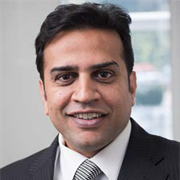
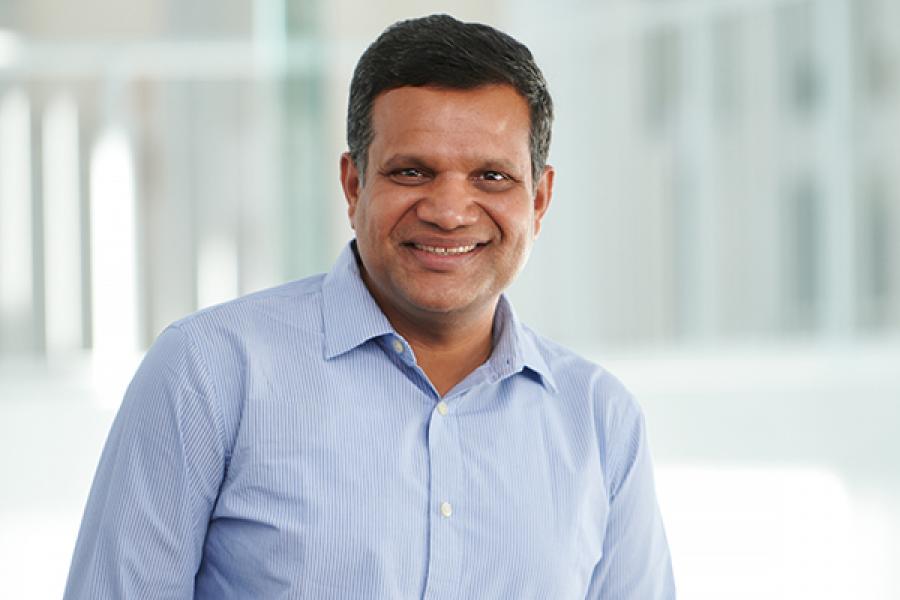
Michael Haenlein is a Professor of Marketing at ESCP Business School in Paris. He holds a Ph.D. from WHU, Otto Beisheim School of Management, and a Habilitation from Pantheon-Sorbonne University. His research focuses on the impact of emerging technologies such as AI, social media, and video gaming on businesses and consumers. He has published over 50 articles and received the 2021 Jan-Benedict Steenkamp Award for long-term academic impact. Haenlein serves on the editorial boards of journals like the Journal of Marketing and International Journal of Research in Marketing . He is actively involved in professional organizations, including the American Marketing Association (AMA) Academic Council and the European Marketing Academy (EMAC), where he chairs the Publications Committee. His work bridges academic research with industry applications, emphasizing digital transformation and strategic marketing. Recent publications explore topics like metaverse retailing, AI-driven consumer insights, and influencer marketing strategies. He advises companies across sectors such as telecommunications and finance on leveraging technology for competitive advantage.
Mark Billinghurst is a Professor and Director of the Australian Research Centre for Interactive and Virtual Environments at UniSA STEM, University of South Australia. His work focuses on Augmented Reality (AR), Virtual Reality (VR), and empathic computing, emphasizing remote collaboration, human-computer interaction, and inclusive design. He has authored influential books like Computer-Supported Collaboration: Theory and Practice (2024) and pioneered systems such as Empathy Glasses and gaze-tracking interfaces for collaborative tasks. Education & Affiliations: Mark Billinghurst is affiliated with the Empathic Computing Laboratory and has collaborated globally with institutions like Keio University, Nokia, and the University of Canterbury. His research spans AR applications in manufacturing, healthcare, and social interaction, with a focus on improving accessibility and user experience. Research Interests: Dr. Billinghurst’s research explores AR/VR for remote guidance, wearable technologies, and emotional interfaces. He investigates how gaze cues, multimodal feedback, and AI can enhance collaboration and empathy in virtual environments. His work bridges technical innovation with human-centric design, addressing challenges in industrial assembly, mental health, and workplace transformation. Publications & Impact: His 2016 study on gaze tracking in remote collaboration (cited over 100 times) and 2024 book on AR collaboration highlight his contributions. Recent projects include Vibe360 (group emotion analysis) and CAEVr (biofeedback-driven empathy systems). He actively contributes to conferences like IEEE VR and CHI, shaping the future of immersive technologies. Labs & Future Work: His lab develops tools like the SAR system for aircraft drilling and empathic agents (EMiRAs). Future directions include AI-driven emotional interfaces, inclusive metaverse design, and VR solutions for cognitive rehabilitation.
Professor Dinusha Mendis is a leading academic in Intellectual Property and Innovation Law at Bournemouth University, where she serves as Director of the Centre for Intellectual Property Policy and Management (CIPPM). Her expertise bridges copyright law with emerging technologies like 3D printing, AI, blockchain, and the Metaverse, informed by extensive research and consultation with entities such as the European Parliament, UKIPO, and corporations like HP and Chanel. She holds a PhD from Edinburgh University and has authored seminal works on the intersection of technology and IP. BSc in Law from Aberdeen University LLM and PhD from Edinburgh University Called to the Bar of England and Wales Her research focuses on copyright challenges in immersive environments , AI-generated content regulation , and blockchain/NFTs . She led major studies for the European Commission and UKIPO , including the first peer-reviewed work on 3D printing and IP. Her 2019 co-edited book with Stanford and QUT scholars established foundational frameworks for additive manufacturing legal analysis. Recent publications highlight AI copyright disputes (2024 The Conversation ), NFT legal ambiguities (2022), and pandemic-era 3D printing (2020). Trends show increasing emphasis on decentralized IP systems and machine learning's impact on creative industries . Scientific Awards & Grants JSPS Visiting Professorship (2023) Daiwa Anglo-Japanese Foundation Grant (2024) EU Commission Research Funding (2020) AHRC Grant for 3D Jewellery Study (2017) As a PhD supervisor, she mentors researchers on AI copyright (Benjamin White), crypto-art (Bahar Dagli), and music creation law (Elizabeth Bailey). She contributes to global IP policy through the World Economic Forum's Metaverse Governance Team and EU IPR Enforcement Projects .
Ki-Woong Park is a tenure-track full Professor in the Department of Computer and Information Security at Sejong University. He leads the System Security and Computer Engineering Research (SysCore) Lab, which focuses on system security research with numerous ongoing projects funded by major Korean research institutions including IITP, NRF, and KRIT. Sejong University, Department of Computer and Information Security System Security and Computer Engineering Research (SysCore) Lab Leader Member of IEEE, IEEE Computer Society, and ACM Education: Ph.D. in Electrical Engineering & Computer Science, KAIST (Advisor: Prof. Kyu-Ho Park) M.S. in Electrical Engineering & Computer Science, KAIST (Advisor: Prof. Kyu-Ho Park) B.S. in Computer Science, Yonsei University (Summa Cum Laude) Exchange Student at University of California, Los Angeles (UCLA) Professor Park's research focuses on designing, building, and analyzing secure systems, particularly for cloud computing, networked systems, and embedded systems. His work often involves reevaluating existing security mechanisms and actual system implementations with subsequent evaluation in real computing environments. He has made significant contributions to areas including cloud security, IoT security, ransomware detection, moving target defense, and metaverse security. His research approach emphasizes both theoretical foundations and practical implementation, with numerous publications in top-tier security and systems venues. His recent publications (2023-2024) demonstrate a strong focus on emerging security challenges in modern computing environments, particularly in metaverse platforms, UAV systems, and edge computing. These works span both theoretical security frameworks and practical implementations, with an emphasis on visualization techniques, hardware-based security mechanisms, and AI-enhanced security analysis. His research shows a clear progression from traditional cloud and network security toward next-generation security challenges in immersive virtual environments and cyber-physical systems. Scientific Awards: Microsoft Research Fellowship (2009-2010) Best Poster Gold Award at WISA 2020 Best Paper Award at MobiSec'18 Professor Park actively mentors numerous graduate and undergraduate students through the SysCore Lab, with current members including Ph.D. students, MS students, and undergraduate researchers. His research is supported by multiple significant grants, including the NRF Outstanding Researcher-Mid-career Researcher project, IITP Information Security Core Source Technology Development, and Defense Technology Advancement Research Institute projects. These grants total tens of billions of Korean won and address critical national security challenges in cyber defense, cloud security, and metaverse technologies. The SysCore Lab, under Professor Park's leadership, maintains a strong industry and government collaboration network, with part-time researchers from organizations including Hyundai Duty Free, Astron Security, Korea University, and various military cyber commands. This unique structure enables the lab to address both theoretical security challenges and practical implementation issues in real-world systems.
Dr. Omkar Prabhakar Dastane is a Senior Lecturer and Director of Postgraduate Studies at the Malaysia School of Business, Monash University Malaysia. He holds a PhD in Business from Curtin University and certifications including Certified Management and Business Educator (CMBE) from CABS, UK, and HRDF-approved trainer status in Malaysia. His research focuses on technological impacts on businesses, digital consumer behavior, and customer value perception, with publications in A-ranked journals like the Journal of Retailing and Consumer Services and Asia Pacific Journal of Marketing & Logistics . He has secured MYR 157,549 in research grants and received notable awards like the Best Paper Awards (2017/2018) and Emerald Literati Award (2024). Dr. Dastane has held leadership roles including Head of MBA Programs and Head of Postgraduate Studies at top-tier institutions. He actively contributes to editorial roles for journals like Arab Gulf Journal of Scientific Research and reviews for SSCI/SCIE-indexed publications. His teaching emphasizes strategic branding and services marketing, integrating AR/VR tools for immersive learning. He has also led educational visits across ASEAN countries. His research interests span metaverse applications in business, immersive technologies, and contemporary consumer behavior trends. Recent work explores AI-driven services, live-stream commerce, and digital transformation's role in achieving UN SDGs. He has advised on over 200 research projects and secured multiple teaching grants including the 2025 Learning & Teaching Grant.
Jochen Wirtz is the Vice Dean of MBA Programmes and Professor of Marketing at the National University of Singapore (NUS Business School). He holds a Ph.D. in services marketing from the London Business School and has held leadership roles, including founding director of the UCLA–NUS Executive MBA Programme and member of the NUS Teaching Academy. His research focuses on service management, intelligent automation, AI, and corporate digital responsibility. A globally recognized authority, he has authored over 20 books, including Services Marketing: People, Technology, Strategy (9th ed.) and Intelligent Automation , with translations in 26+ languages. His awards include the Christopher Lovelock Career Contributions Award (AMA) and the Academy of Marketing Science’s Outstanding Marketing Teacher Award. He advises international firms like Accenture and KPMG and is involved in start-ups such as Dataswyft and TranscribeMe. His work emphasizes ethical AI, service robots, and cost-effective excellence, contributing to both academic research and industry practice. Wirtz’s research spans service robots, platform economies, and luxury services. His recent studies explore generative AI’s impact on service encounters, corporate digital responsibility, and B2B customer experience strategies. He actively engages with industry through consulting, keynote speaking, and executive education.
James Malazita is Associate Professor of Science & Technology Studies and Associate Director of the Games and Simulation Arts and Sciences (GSAS) program at Rensselaer Polytechnic Institute (RPI). He is affiliated with the Department of Science and Technology Studies in the School of Humanities, Arts, and Social Sciences, and contributes to the GEM (Games and Experiential Media) research group. Education: Ph.D. in Communication, Culture, and Media, Drexel University (2014) BS/MS in Digital Media, Drexel University (2009) Malazita's research lies at the intersection of game studies, platform studies, feminist technoscience, and social justice in computing. He critically investigates how game engines like Unreal shape technological and cultural infrastructures, particularly through the lenses of gender, race, and power. His forthcoming book, Enacting Platforms: Feminist Technoscience and the Unreal Engine (MIT Press, July 2024), offers a groundbreaking feminist and critical analysis of one of the most influential game development platforms. His work also extends to digital humanities, critical design, and the politics of computer science education. His recent publications reveal a strong thematic focus on the co-production of technology and society, with recurring interests in epistemic cultures, disciplinary formation, localization, and critical pedagogy. These works span journals in game studies, design, digital humanities, and STS, reflecting an interdisciplinary approach that bridges technical systems and humanistic critique. Scientific Support and Affiliations: Supported by NEH Office of Digital Humanities Supported by NEH Division of Educational Programs Supported by Popular Culture Association Supported by New Jersey Historical Commission Supported by Red Hat Inc. Supported by Rensselaer’s Teaching and Learning Collaboratory Member of GEM (Games and Experiential Media) ORCID: 0000-0003-3206-3682 Malazita advises graduate students in STS and Games, with former advisees placed at Yale, NYU, and UT Austin. He teaches courses in game studies, human-centered design, interpretive methods, and critical technology studies. His current course includes STSO 2610: DSIS Studio II (Spring 2024). His research raises fundamental questions about the material and cultural limits of platforms, the analyst-platform relationship, and the future of the web as shaped by game technologies.
Christina Fawcett is an Instructor in the Department of English at the University of Winnipeg. She is an active member of the Centre for Research in Young People’s Texts and Cultures (CRYTC) and the Centre for Research in Cultural Studies (CRiCS), and holds editorial roles for Jeunesse: Young People’s Texts and Cultures as a former Book Reviews Editor and current Advisory Board member. She also participates in the Canadian Games Studies Association (CGSA/ACÉJ). Her research explores interdisciplinary intersections of narrative, ethics, and popular culture, with emphases on: Monster Theory and representations of transgression Video game analyses of gender, justice, and ludic mechanics Genre fiction (fantasy, sci-fi, horror) in legal/cultural contexts Young people’s media and digital cultures She co-leads the SSHRC-funded project "Contemporary Cozy Media," examining comfort aesthetics in fantasy, mystery, and games. Fawcett’s recent publications (2020–2025) predominantly dissect video game narratives ( Bioshock Infinite , Spiderman , Resident Evil 7 ) through frameworks of criminology, ethics, and monstrosity. Her work consistently bridges game design with cultural critique, emphasizing themes of justice, identity, and speculative futures. In teaching, she covers popular literature genres (fantasy, sci-fi, horror, mystery) and media studies.
About Vipul Jain: Associate Professor Vipul Jain leads Supply Chain and Logistics Management at RMIT University’s School of Accounting, Information and Supply Chain Management. With over 20 years of academic experience, he has held senior roles at institutions like Victoria University of Wellington (NZ) and IIT Delhi (India), contributing to curriculum development, research strategy, and academic-industry collaboration. His international collaborations span over 20 global institutions, emphasizing interdisciplinary research in supply chain resilience, sustainability, and Industry 4.0. Education & Academic Leadership: Previously served as Programme Director for Master of Technology (Industrial Engineering) at IIT Delhi, leading the establishment of the Modelling and Analysis of Supply Chain (MASC) Lab. Holds editorial roles for journals like International Journal of Intelligent Enterprise and Computers & Industrial Engineering . Research Focus: Specializes in supply chain design, sustainability, circular economy, and business analytics. His work integrates ICT and big data to address complex supply chain challenges, with notable contributions to vaccine distribution, blockchain adoption, and post-pandemic resilience. Over 145 peer-reviewed publications, including high-impact journals like OMEGA and International Journal of Production Economics , reflect his prolific output. Industry Impact: Conducted management training for organizations like JCB and IBM. Served as an expert assessor for New Zealand’s Ministry of Business and Industry and advised the Indian Railways. His research has been funded by the Department of Science and Technology (India) and EU initiatives like FP6 I*PROMS. Awards & Recognition: Ranked #7 in India’s top logistics academics (2018), recipient of Literati Awards (2024, 2020), and multiple editorial leadership roles. Active in global conferences, including co-chairing ANZAM 2023. Labs & Collaborations: Founded MASC Lab at IIT Delhi. Collaborates with Coventry University, Monash University, Hong Kong Polytechnic, and institutions in Switzerland, Spain, Canada, and the U.S. Focus areas include sustainable supply chains, digital transformation, and crisis resilience.
C. S. George Lee is a Professor of Electrical and Computer Engineering at Purdue University's Elmore Family School of Electrical and Computer Engineering, located in West Lafayette. His research focuses on Robotics, Transfer Learning, Neuro-fuzzy Systems, Automatic Controls, and Computer Engineering. He holds a BSEE (1973), MSEE (1974) from Washington State University, and a PhD (1978) from Purdue University. His work integrates computational intelligence with AI, robotics, and education technology, emphasizing human-machine co-learning models and bilingual systems. His contributions span domains like quantum computing, generative AI, and knowledge graph applications. He leads the Art Lab at Purdue and has published extensively on topics ranging from humanoid robotics to cross-cultural educational platforms. His research areas include developing intelligent agents for edutainment, robotic assistants for student learning, and advanced machine learning techniques. Notable trends in his publications involve computational intelligence applied to bilingual language models (e.g., Taiwanese/English co-learning), quantum-based AI systems, and human-centric robotics. He has explored applications in healthcare (e.g., blood donor analysis), autonomous navigation, and game AI (e.g., Go). His work often bridges theoretical advancements with real-world implementations, such as Java software tools for motor activity assessment (JKinect) and AI-driven platforms for skill evaluation. Lee's research emphasizes interdisciplinary collaboration, with contributions to IEEE conferences and cross-institutional projects. His lab develops tools for adaptive e-learning, robotic task performance evaluation, and human pose estimation using neural networks. Despite prolific publishing, no specific grants or awards are explicitly mentioned in the provided text. His work continues to explore the intersection of human intelligence and smart machines through platforms like Metaverse integration and BCI (Brain-Computer Interface) applications.
Wenjia Tang is a Post-Doctoral Research Fellow in the Department of Media and Communications at the University of Sydney's Faculty of Arts and Social Sciences, contributing to Professor Terry Flew's ARC Laureate project "Mediated Trust". Her work examines digital platforms, media policies, and transnational media dynamics with emphasis on U.S.-China comparative frameworks. Her educational background includes: BA from Sichuan University MA from University College London (UCL) PhD from the University of Sydney Dr. Tang's research spans platform regulation, streaming media business models, and transnational technology policy, with specialized focus on cultural creation in social media, recommendation algorithms, and geopolitical implications of AI, virtual reality, and metaverse technologies. She analyzes how digital platforms navigate regulatory environments while shaping global content ecosystems. Her 2023-2025 publications reveal consistent thematic focus on Chinese digital platforms' global expansion strategies (WeTV, Tencent Video), regulatory challenges in emerging technologies (NFTs, metaverse), and data sovereignty frameworks. This body of work demonstrates methodological emphasis on comparative analysis between Western and Chinese tech ecosystems, particularly regarding content localization, policy adaptation, and geopolitical tensions in digital markets. Currently working on the ARC Laureate "Mediated Trust" project investigating digital media trust mechanisms, Dr. Tang has no documented graduate student supervision. Her research directly informs policy discussions through submissions like the News Media Assistance Program response. She operates within the Mediated Trust research team, an ARC-funded initiative examining trust architectures in algorithmic media environments, with particular attention to cross-cultural regulatory approaches.
Inga Kristina Trauthig is a dual-affiliation academic serving as a Research Professor at Florida International University’s Jack D. Gordon Institute for Public Policy and a Visiting Fellow at King’s College London’s Institute of Middle Eastern Studies (IMES). She holds a PhD in War Studies from King’s College London, focusing on Libya, and an MLitt in Middle East Security from the University of St Andrews. Her research spans terrorism, disinformation, emerging technologies, and Middle Eastern political dynamics, with particular expertise in Salafism and security sector analysis. She has authored over 80 peer-reviewed publications and policy-focused articles, including work in Conflict, Security & Development and Political Research Quarterly . Her consulting work addresses causes of war and insecurity for UN bodies, governments, NGOs, and private firms. She has provided oral evidence to the UK Parliament and appeared on platforms like BBC’s Digital Human and Lawfare Blog . Trauthig convenes King’s MENA Research Group within IMES and has held student representation roles across faculty levels. Her research highlights include analyzing generative AI’s political risks, disinformation strategies in MENA, and the role of messaging apps in authoritarian governance.
Kiran Pedada is an Associate Professor of Marketing at the Asper School of Business, University of Manitoba, and holds the F. Ross Johnson Fellow and The Associates Fellow in Marketing and Inclusive Business. Previously, he was an Assistant Professor at the Indian School of Business (ISB) and a Visiting Scholar at the University of North Carolina. He has been recognized as ISB’s Teacher of the Year (2020 and 2021) and named a top MBA professor by BusinessBecause. His research focuses on marketing strategy, digital transformation, emerging markets, and inclusive business practices. Dr. Pedada earned his Ph.D. in Marketing from Texas Tech University, where he won the Helen Devitt Jones Excellence in Graduate Teaching Award. His doctoral work on international marketing alliances in emerging markets won the prestigious AMS Mary Kay Inc. Doctoral Dissertation Award. Before academia, he worked in management consulting and corporate strategy. Research Interests : Marketing strategy in digital environments Social and financial impact of marketing Global marketing expansion via digital ecosystems Emerging markets dynamics Brand competitiveness through digital orientation Key Contributions : His research has been published in top journals like Journal of Marketing Research and Journal of the Academy of Marketing Science. He co-authored cases on digital transformation for Harvard Business Publishing and serves on editorial boards of key marketing journals. His work has been featured in Forbes, Fortune, and CNN. Awards : AMS Mary Kay Inc. Doctoral Dissertation Award (2019) F. Ross Johnson Fellowship Teacher of the Year (ISB, 2020 & 2021) He actively advises on digital readiness of SMEs and ESG integration in alliances. His current projects explore metaverse applications and rural microentrepreneurship in India.
Joshua Fairfield is the William Donald Bain Family Professor of Law and Director of Artificial Intelligence Legal Innovation Strategy at Washington and Lee University's School of Law. His expertise spans digital property, data privacy, cryptocurrencies, and virtual worlds regulation. He holds a BA from Swarthmore College and a JD from the University of Chicago. Professor Fairfield's research focuses on the intersection of law and technology, particularly in digital ownership, privacy rights, and emerging technologies like IoT and blockchain. He has authored influential books, including Owned: Property, Privacy and the New Digital Serfdom (2017) and Runaway Technology: Can Law Keep Up? (2021). His work critiques corporate control over digital devices and advocates for consumer rights in the digital age. Education: BA, Swarthmore College; JD, University of Chicago Key Achievements: Fulbright Grant (2012–2013), American Law Institute Member (2013) Consulting: Advises U.S. agencies like the White House Office of Technology and Homeland Security Privacy Office His recent articles address topics such as environmental AI ethics, NFT regulation, and smart contract governance. Fairfield emphasizes the need for updated legal frameworks to protect digital rights and ensure democratic control over technology. He directs the AI Legal Innovation Strategy initiative, focusing on integrating AI into legal systems while addressing ethical and regulatory challenges.
Dr. Joshua New is a Distinguished R&D Staff Member at Oak Ridge National Laboratory (ORNL) and holds a Joint Faculty Position at The University of Tennessee since 2012. He leads research in building energy modeling, climate change science, and supercomputing. His work focuses on urban-scale energy systems, AI-driven analytics, and high-performance computing applications. Education: Ph.D. in Computer Science (University of Tennessee, 2009), M.S. in Computer Systems, B.S. in Computer Science and Mathematics (Jacksonville State University). His research interests include optimizing building energy efficiency, simulating climate impacts on urban infrastructure, and developing tools like AutoBEM and ModelAmerica to model 122.9 million U.S. buildings. He has over 150 peer-reviewed publications and led 45+ projects involving supercomputing, visual analytics, and AI for big data. Awards include the R&D 100 Award (2016), ASHRAE Distinguished Service Award (2018), and Lab-Corps (2015). His teams prioritize utility use cases and validate models against real-world data. He is a Senior IEEE member, Certified Energy Manager (CEM), and holds certifications in project management and energy efficiency. Key contributions include the Roof Savings Calculator Suite, AutoGen/AutoSim tools, and the ModelAmerica initiative. His work addresses national energy policy, heatwave resilience, and sustainable city design through interdisciplinary collaborations.