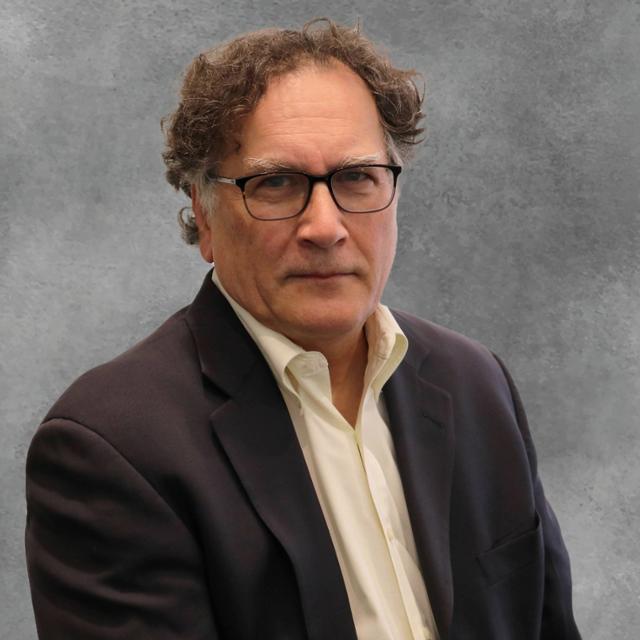
John Stolz is Professor of Environmental Microbiology and Director of Environmental and Energy Engineering at Duquesne University's School of Science and Engineering. His NASA-trained research examines microbial metal reduction, modern stromatolite ecosystems, and shale gas extraction impacts. His lab investigates arsenic/selenium biotransformation pathways, microbial communities in Shark Bay stromatolites, and environmental impacts of unconventional energy development. Recognized with multiple excellence awards including the Nobel J. Dick Endowed Chair. Over 150 publications explore microbial respiration mechanisms, biogeochemical cycling, and environmental bioremediation. Current grants support water quality testing near shale gas operations.
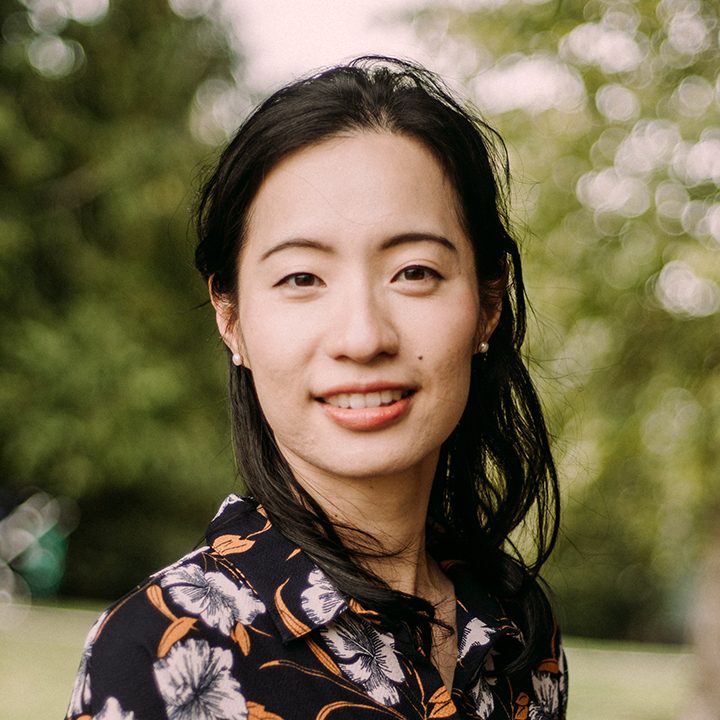
Sophie Dove is an Honorary Associate Professor at the School of Biological Sciences , University of Queensland, and an Affiliate Associate Professor at the Global Change Institute . Her research focuses on coral reef photobiology, climate change impacts, and symbiotic relationships in marine ecosystems. PhD in Biological Sciences, University of Sydney MA in Philosophy, University of Southern California MA (Hons) in Mathematics and Philosophy, University of Edinburgh Her work examines coral-dinoflagellate symbiosis , particularly how host and symbiont interactions maintain reef productivity under climate stress. Key questions include the role of symbiont parasitism, coral heterotrophy, and reef accretion-erosion balance under ocean acidification and warming. She collaborates with institutions like the Great Barrier Reef Marine Park Authority and CSIRO Publishing. Recent publications span coral bleaching mechanisms , ocean acidification effects , and biochemical adaptations in symbiotic organisms. Her studies integrate molecular biology, biogeochemistry, and ecophysiology to predict reef futures under climate stress. She has contributed to scientific consensus reports on the Great Barrier Reef and developed methodologies for analyzing coral and sponge physiology. Her interdisciplinary approach bridges marine ecology, protein biochemistry, and climate science.
Professor Awadhesh N. Jha is a Professor in Genetic Toxicology and Ecotoxicology at the School of Biological and Marine Sciences , University of Plymouth, UK. He has been a leading figure in environmental toxicology since joining the university in 1996, rising to full professorship in 2010. He leads the Environmental and Applied Biology Research Group and the Genetic Toxicology and Ecotoxicology Research Group, and served as REF UoA6 Coordinator (2014–2022). His educational background includes a PhD in Radiation Cytogenetics from Banaras Hindu University, India (1989), followed by post-doctoral work at Leiden University, Netherlands, and a role at ICI/Zeneca’s marine toxicology lab before transitioning to academia. Professor Jha’s research focuses on the genotoxic and ecotoxic impacts of environmental stressors such as radionuclides, engineered nanoparticles, PAHs, and emerging contaminants on aquatic organisms. He employs multidisciplinary and innovative methodologies, including in vitro models like fish cell spheroids (‘Virtual Fish’ project), to assess DNA damage, develop biomarkers, and reduce reliance on live animal testing. His work integrates molecular biology, chemistry, and environmental science to evaluate risks to marine ecosystems and human health. The recent research articles reflect a strong trend in marine pollution, radiation biology, and environmental risk assessment , with increasing emphasis on emerging issues like tritium release from nuclear facilities, AI-assisted landfill risk modeling, and sunscreen toxicity. His studies often involve international collaborations and real-world policy implications. Scientific Awards and Recognitions: Jim Parry Award, UKEMS (2021) Fellow of the Royal Society of Biology (FRSB, 2015) VC’s World Class Researcher Award Finalist (2010, 2012) Plymouth Pioneers Recognition UK Nominated Expert, UN WOA III (2023) Supervision and Grants: Professor Jha has supervised 26 PhD students to completion and mentored over 10 post-doctoral researchers. He has led major funded projects including TRANSAT (€5M, Horizon 2020), SPHERTOX , and TITANS , funded by EU, NERC, BBSRC, IAEA, and industry partners like AstraZeneca and Unilever. His work directly informs environmental policy and nuclear safety regulations. Laboratories and Teams: He leads the Genetic Toxicology and Ecotoxicology Research Group and is central to the Environmental and Applied Biology Research Group at Plymouth. His team collaborates internationally with institutions in France, Italy, Spain, Brazil, and India, and contributes to the South West Nuclear Hub. The lab specializes in advanced analytical methods, comet assays, and 3D cell culture models.
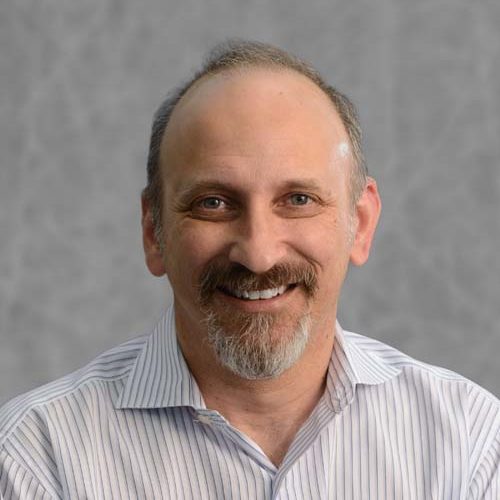
David Buchwalter is a Professor in the Department of Biological Sciences at North Carolina State University (NCSU). His research focuses on contaminants and abiotic stressors in freshwater environments, with particular emphasis on aquatic insects' physiological responses. He leads the Buchwalter Lab, studying ecological physiology and toxicology in aquatic invertebrates, linking biological organization levels to understand human impacts on aquatic life. Research interests include trace metal bioaccumulation, thermal stress, osmoregulation, and PFAS effects. His work integrates comparative physiology, ecotoxicology, and environmental monitoring. Key projects involve the NCSU Center for Environmental and Health Effects of PFAS and Center for Human Health and the Environment (CHHE). Awards: 2015 Fulbright Senior Scholar (University of Otago, New Zealand). Advising includes students like Dr. Jamie Cochran and Dr. Sara Orr. Collaborative grants include NSF-funded studies on thermal physiology and ion transport in freshwater ecosystems. The lab emphasizes experimental approaches to understand stressor impacts across physiological and ecological scales. Lab affiliations: Biological Sciences; Affiliated with Toxicology & Environmental Health Sciences, Ecology, Evolution and Conservation Biology, and Integrative Physiology and Neurobiology programs.
Mi-Ling Li serves as Assistant Professor of Environmental Chemistry and Toxicology at the University of Delaware's College of Earth, Ocean & Environment, holding joint appointments in the School of Marine Science & Policy and Department of Earth Sciences, Water Science & Policy Program. Her interdisciplinary research bridges environmental science and public health through the emerging field of GeoHealth. Her academic foundation includes: Sc.D. in Environmental Health from Harvard University M.Sc. in Aquatic Sciences and Environmental Health Sciences from the University of Michigan, Ann Arbor B.Sc. (Honours) in Environmental Science from Zhejiang University of Technology, China Dr. Li's research program investigates chemical sources, transport, and fate in aquatic ecosystems , with specialized focus on mercury biogeochemistry and PFAS contamination. She pioneers the application of stable isotope geochemistry to trace contaminant pathways and assess ecological-human health risks. Her work uniquely connects global environmental changes to contaminant dynamics in marine food webs, emphasizing bioaccumulation processes and exposure pathways. Analysis of her 15 most recent publications reveals dominant research themes in mercury cycling (73% of articles), PFAS monitoring (13%), and selenium-mercury interactions (7%). Methodologically, 87% employ stable isotope techniques, while 60% integrate ecosystem modeling. Key geographic foci include Arctic marine systems (40%), East Asian coastal zones (27%), and global fisheries (20%), demonstrating her transboundary approach to contaminant science. She leads the CHEER (Chemical Exposure and Environmental Research) group, which maintains an explicitly interdisciplinary framework connecting earth sciences, toxicology, and public health. The group's research scheme integrates field sampling, laboratory analysis, and computational modeling to address complex environmental health challenges in coastal and marine ecosystems.
Matteo Minghetti is an Associate Professor in the Department of Integrative Biology at Oklahoma State University's College of Arts and Sciences. His research focuses on fish physiology and ecotoxicology, particularly investigating the toxicity and bioavailability of metals and emerging contaminants such as nanoparticles and microplastics in fish. He leads a research group that collaborates with environmental engineers and geologists to uncover toxicity mechanisms and develop alternative testing methods to reduce animal use in toxicity testing. Dr. Minghetti obtained his PhD in Ecotoxicology from the University of Stirling in the United Kingdom in 2009 and completed his Laurea in Biotechnology from the University of Bologna, Italy in 2003. His postdoctoral training included research positions at the Swiss Federal Institute of Aquatic Science and Technology (Eawag), King's College London, and the University of Stirling, where he studied transcriptional regulation of lipid metabolism, primary gill cultures for environmental biomonitoring, and mechanisms of toxicity of metal nanoparticles. His research program centers on developing and utilizing in vitro fish cell models (particularly RTgutGC and RTgill-W1 cell lines) to study metal toxicity, nanoparticle effects, microplastic interactions, and contaminant bioavailability. He has secured multiple significant grants including NIH, NSF, Alltech, and Alternatives Research & Development Foundation funding to support this work. His publications demonstrate a consistent focus on understanding how environmental conditions, such as chloride concentration, luminal composition, and plastic aging, influence metal speciation, bioavailability, and toxicity in fish systems. Dr. Minghetti actively mentors students through undergraduate research, Niblack Research Scholars program, and graduate thesis/dissertation supervision. He teaches courses including Physiology, Environmental Physiology, and Chronicles of Extreme Physiology, emphasizing both human and comparative animal systems.
Katie Hailer is a Professor and Department Head in the Department of Chemistry and Geochemistry at Montana Technological University, part of the Lance College of Mines & Engineering. She earned her B.A. in Chemistry from West Virginia University (2001), Ph.D. in Bioinorganic Chemistry from the University of Montana (2006), and completed a postdoctoral fellowship in oncology at the Mayo Clinic (2007). She previously served on the faculty at Winona State University (2007–2010) before joining Montana Tech in 2010. Her research focuses on bioinorganic chemistry and environmental toxicology , particularly metal interactions in biological systems. Leveraging Butte, MT’s status as a major Superfund site, her work investigates human metal accumulation due to mining and environmental contamination. Her lab employs biochemical and analytical methods to study oxidative DNA damage, metal carcinogenesis, and the development of nanomaterials for biomedical applications. The most recent publications reflect a strong trend in environmental health and nanomedicine , including biomonitoring of metal exposure in newborns, nanoparticle-assisted phage therapy, and electrospun delivery systems. These studies integrate toxicology, materials science, and public health, often involving undergraduate researchers and interdisciplinary collaborations. Dr. Hailer’s research has been supported by the National Institutes of Health INBRE grant, and she holds multiple U.S. patents in antibacterial and antiviral nanomaterials. Her advising includes numerous undergraduate researchers who have co-authored publications, demonstrating her commitment to student engagement in research. She is actively involved in research innovation at Montana Tech, contributing to initiatives in environmental remediation and advanced materials processing. Her team explores both fundamental mechanisms of metal toxicity and applied solutions for environmental and biomedical challenges.
Dr. Manisha Shakya is a Postdoctoral Research Fellow specializing in Aquatic Ecology at the University of New England's School of Environmental and Rural Science. Her research focuses on freshwater ecosystems in the Murray Darling Basin, investigating carbon sources for aquatic biota and the impact of pollutants on biomolecular composition. She collaborates with UNE's Pollution Science Research Group to examine how contaminants alter nutritional landscapes in aquatic food webs. Her research interests center on: Aquatic ecotoxicology and pollution impacts Biomolecular responses to environmental stressors Spatial and temporal variation in aquatic ecosystems Food web dynamics and nutritional ecology Recent publications demonstrate her focus on copper-induced stress responses across aquatic organisms, from microalgae to fish. Her work employs proteomic and biochemical analyses to understand ecological impacts of contaminants.
Professor Enda Cummins is a faculty member at University College Dublin (UCD), serving as Professor and Deputy Head of the School of Biosystems and Food Engineering. He also holds roles as Head of Teaching and Learning and Visiting Professor at KU Leuven, Belgium. His research focuses on risk assessment, predictive modeling, food safety, and environmental contamination, with an emphasis on chemicals (e.g., acrylamide, nanoparticles) and pathogens (E. coli, Salmonella). He leads a multidisciplinary team and coordinates the EU-funded H2020 ITN project PROTECT, addressing climate change impacts on food safety. Education: BAgrSc, MEngSc, PhD from UCD. Teaching emphasizes problem-based learning and integrates research innovations. He developed the EU-funded Erasmus+ Predictive Modelling and Risk Assessment program and coordinates the MEngSc in Food Engineering. Grants include projects on antimicrobial resistance, nanoparticle toxicity, and urease inhibitor efficacy. Over 100 peer-reviewed publications and 123 conference papers highlight his work on risk assessment, food safety, and environmental modeling.
David Olefeldt is an Associate Professor and Director of Graduate Studies in the Renewable Resources Department at the University of Alberta's Faculty of Agricultural, Life and Environmental Sciences. His research focuses on catchment carbon cycling in boreal and Arctic landscapes, emphasizing wetland functions, permafrost thaw impacts, and greenhouse gas fluxes. He investigates both terrestrial and aquatic aspects of carbon dynamics, including methane emissions and dissolved organic carbon transport. Olefeldt combines fieldwork, laboratory analysis, and remote sensing to address climate change feedbacks in northern ecosystems. Affiliations: Catchment and Wetland Sciences Research Group (CAWS) Teaching: Courses include BIOL 333 (Wetland Science and Management), REN R 250 (Water Resource Management), and REN R 333 (Wetland Sciences and Management). His work bridges soil and aquatic sciences, with recent studies on permafrost carbon vulnerability, wildfire effects on carbon export, and global wetland methane synthesis. He emphasizes connecting small-scale studies to large-scale climate projections, particularly in peatland-rich regions. Labs/Teams: Active in the CAWS group, focusing on integrated catchment studies and wetland science.
Tijana Velickovic is a Lecturer at the Institute of Biology and Ecology within the Faculty of Science and Mathematics at the University of Kragujevac, Serbia. She graduated in 2015 and has established herself as a researcher specializing in freshwater ecosystems, with a particular focus on hydrobiology, water protection, phylogeography, and population biology. Her research interests center on freshwater ecology, particularly the study of fish populations in Serbian water bodies. She investigates the health status of reservoirs, population dynamics of brown trout and other freshwater species, and the impact of potentially toxic elements on aquatic ecosystems. Her work combines field studies with laboratory analysis to assess biodiversity, conservation status, and sustainability of freshwater resources in Serbia and the Balkan region. Dr. Velickovic's recent publications demonstrate a strong focus on the sustainability assessment of fish populations, particularly brown trout, using advanced models like the modified ESHIPPO framework. Her research spans from molecular-level phylogeographic studies to ecosystem-level assessments of water quality and biodiversity. She frequently examines the presence of potentially toxic elements in freshwater fish and their implications for both ecosystem health and human consumption. Her work contributes significantly to understanding the complex relationships between freshwater organisms, their habitats, and anthropogenic impacts in Serbian aquatic ecosystems. She collaborates with researchers across various disciplines to address conservation challenges and develop sustainable management strategies for freshwater resources in the Balkans.
Kevin Farley is a Professor and the Blasland, Bouck and Lee Faculty Chair in Civil & Environmental Engineering at Manhattan College, NY. He holds a PhD from MIT and has extensive experience in water quality modeling, sediment contamination, and toxic chemical bioaccumulation. Education: PhD in Civil-Environmental Engineering, MIT ME and BE in Environmental/Civil Engineering, Manhattan College Research Interests: Focuses on water quality modeling, sediment contamination (e.g., PCBs, dioxins), metal mobilization, and bioaccumulation in the Hudson River and NY-NJ Harbor. His work integrates environmental chemistry, toxicology, and engineering to address real-world contamination challenges. Professional Contributions: Served on scientific advisory panels for EPA, UNEP, and the Hudson River Foundation. Leads the Institute in Water Pollution Control at Manhattan College and teaches courses like Surface Water Quality Modeling and Environmental Fate of Toxic Contaminants. Grants & Funding: Secured over $4M in grants from agencies like EPA, NIH, and the Hudson River Foundation for projects on metal toxicity, PCB fate, and nitrogen load reduction in Long Island Sound. Labs/Teams: Directs the Institute in Water Pollution Control, fostering collaborative research on water quality and sustainable resource management.
Matthew Leybourne is an Associate Professor in the Department of Geological Science and Geological Engineering at Queen's University, affiliated with the Faculty of Arts and Science. He holds a cross-appointment at the Arthur B. McDonald Canadian Astroparticle Physics Institute. His research focuses on geochemical and isotopic investigations of ancient and modern rocks, particularly developing analytical methods for ultra-low trace element concentrations. He leads projects at the Queen’s Facility for Isotope Research, including low-level trace material determinations for astroparticle physics applications. Education: PhD (1998) in Earth Sciences from the University of Ottawa; M.Sc. (1988) in Geology from Acadia University; B.Sc. (1985) in Geology from the University of Waikato. Research interests include ore deposit geochemistry, environmental geochemistry, and quality assurance in analytical methods. Key projects involve fluid geochemistry of ore deposits, marine hydrothermal systems, and isotopic tracers for astrophysics. His work bridges geology and physics, addressing questions about Earth’s early evolution and宇宙起源. Advising includes postdoctoral fellows focused on geochemical analysis and mineral exploration. He collaborates with the McDonald Institute on interdisciplinary projects combining geology with astroparticle detection. Affiliations include the Journal of Tethys, Canadian Geosciences Education Network, and the Society of Economic Geologists.
Suresh Valiyaveettil is an Associate Professor in the Department of Chemistry at the National University of Singapore (NUS). He holds a Ph.D. from the University of Victoria and postdoctoral experience at the Max-Planck Institute Mainz and Cornell University. His research focuses on synthesizing and characterizing functional polymers, nanomaterials, and cellulose-based materials for environmental applications, including nanosafety, microplastic remediation, and sustainable material circularity. Key achievements include the Erudite Professorship from Kerala Government (2012) and NUS’s Outstanding Scientist Award (2008). He teaches CM4252 Polymer Chemistry 2 and CM5161 Advanced Chemical Laboratory Safety . His group investigates bio-inspired adhesives, nanoparticle toxicity, and renewable adsorbents for water purification, with notable contributions to understanding nanoplastics’ environmental and biological impacts. Research Highlights: Synthesized novel perylene dyes and functional polymers for 2D/3D architectures. Developed cellulose-based adsorbents for removing plastic nanoparticles from water. Explored nanoparticle interactions with biological systems, including human cells and marine larvae. He serves on editorial boards for Nanomaterials , MRS Communications , and Cancer Nanotechnology . Current projects emphasize sustainable waste conversion, eco-friendly water treatment solutions, and nanomaterial safety assessments.
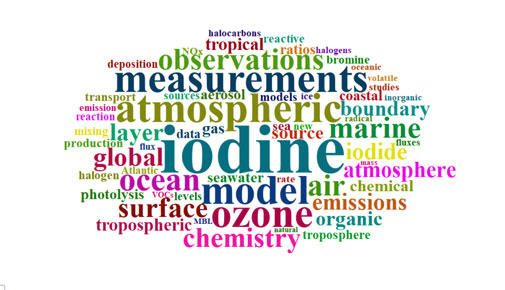
Professor Lucy Carpenter MBE, FRS, FRSC is a distinguished academic in the Department of Chemistry at the University of York. She holds current roles including Principal Investigator of the Cape Verde Observatory (WMO-GAW global station) and has held former roles such as Lecturer, Senior Lecturer, and Deputy Head of Department (Research). Her research focuses on atmospheric chemistry with emphasis on gas-phase tropospheric chemistry, ocean-air trace gas emissions, and ozone deposition mechanisms. She leads projects on atmosphere-ocean interactions, long-term atmospheric composition monitoring, and iodine emission dynamics. Research interests include multiphase chemistry on ocean surfaces, reactive halogen cycling, and climate impacts of trace gases. Notable projects include the Cape Verde Observatory’s 20-year trace gas monitoring program (funded by NERC) and investigations into ozone deposition kinetics. She has published over 190 peer-reviewed articles, contributed to IPCC assessments, and co-authored the 2018 Scientific Assessment of Ozone Depletion. Honors include the Royal Society Rosalind Franklin Award (2015) and Philip Leverhulme Prize (2006). Active in policy engagement, she advises Montreal Protocol meetings and chairs international working groups. Current grants include leadership of the £2.5M Marine VOCs (COCO-VOC) project and EPSRC funding for ozone-halogens research. She supervises PhD students and mentors early-career researchers through York’s Chemistry department.