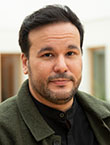
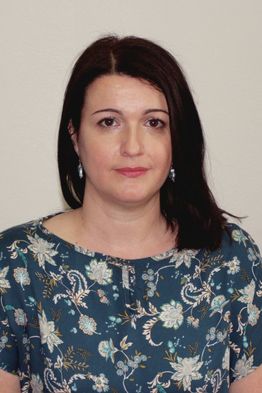
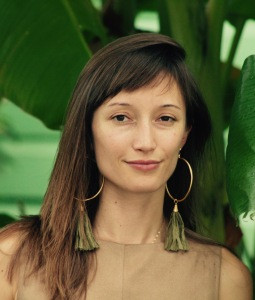
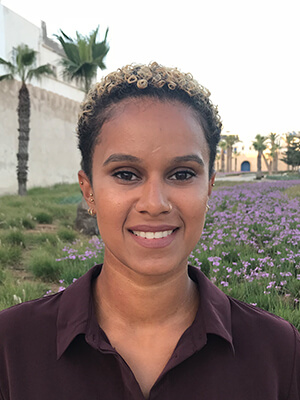
Sammyh Khan is a Senior Lecturer at Örebro University's Department of Behavioral, Social and Legal Sciences, serving as Head of Psychology since 2023. He holds a PhD from Victoria University of Wellington (2011) and has prior experience at Keele University (2015-2020), Exeter University (2012-2014), and others. His research focuses on intersections of cultural, social, political, and health psychology, particularly social identity processes in group dynamics and health behaviors. Methodologically, he combines quantitative and qualitative approaches. He co-edits the British Journal of Social Psychology and advises the Asian Journal of Social Psychology . Key research interests include: Intergroup relations and acculturation strategies Health behaviors and well-being Historical narratives and social identity His recent work explores refugee youth integration, pandemic psychology, and mass gathering dynamics. He is affiliated with the Center for Health and Medical Psychology (CHAMP) and the Center for Social Science Environmental and Sustainability Research (CESSS).
Prof. Biljana Davidović-Plavšić is a full professor at the Department of Biochemistry and Molecular Biology, Faculty of Natural Sciences and Mathematics, University of Banja Luka. Her research focuses on plant and animal biochemical responses to environmental stressors, including oxidative stress, pesticide exposure, and heavy metal toxicity. She leads projects on plant stress memory, antidiabetic potential of medicinal plants, and the effects of environmental pollutants on cellular systems. Key collaborations include studies on Balkan endemic species and interdisciplinary work with pharmacologists and ecologists. Her educational contributions include co-authoring textbooks such as *Biohemija I* and *Biohemija metabolizma*, which are core resources for students. She actively participates in international conferences, presenting on topics like antioxidant responses in aquatic organisms and the biochemical mechanisms of plant stress adaptation. Notable projects include investigating the bioaccumulation of heavy metals in aquatic macrophytes and the development of biochemical markers for renal toxicity in pediatric populations. Her work bridges fundamental biochemistry with applied research in environmental and clinical contexts.
Prof. Dr. Haike Antelmann holds the W3-Professorship for Molecular Microbiology at the Institute of Biology-Microbiology, Freie Universität Berlin since 2015. She previously served as group leader at the Ernst-Moritz-Arndt-University of Greifswald (2006-2015) and completed her Habilitation there in 2009. Her research focuses on microbial redox biology, thiol-based stress responses in Gram-positive pathogens like Staphylococcus aureus and Streptococcus pneumoniae , and proteomic analysis of bacterial adaptation mechanisms. Key contributions include elucidating bacillithiol/mycothiol roles in protein protection and redox signaling. Education: PhD (1998) and Habilitation (2009) from Ernst-Moritz-Arndt-University Greifswald, specializing in bacterial proteomics and stress physiology. Notable awards include the ERC Consolidator Grant (2013) and AcademiaNet membership (2015). She serves on editorial boards of BMC Microbiology , Molecular Microbiology , and Scientific Reports . Research interests emphasize thiol-redox regulation in pathogenesis, including protein S-thiolation under oxidative/electrophilic stress and bacterial responses to host immune defenses. Her lab investigates bacillithiol's role in virulence and antibiotic tolerance, with recent work on allicin mechanisms and neutrophil phagosome interactions. Lab members: Postdocs (Eberhard Klauck, Vu Van Loi), PhD students (Huihui Li), and technical staff (Zeynep Gümüsboga) Key techniques: Proteomics, redox biosensors, transcriptomics, bacterial physiology studies Collaborations: GBM Study Group on Redox Biology, SPP1710 projects Recent articles highlight Staphylococcus aureus adaptation to host-derived stressors (hypothiocyanous acid, itaconic acid) and mechanisms of antimicrobial resistance. Her work bridges basic microbiology with translational applications in infectious disease intervention.
Professor Gabrielle Belz is an ARC Australian Laureate Fellow at The University of Queensland's Frazer Institute within the Faculty of Health, Medicine and Behavioural Sciences. She holds a PhD and multiple advanced degrees in veterinary science and immunology. Her research focuses on understanding protective immunity, cellular differentiation, and innate immune cell development, particularly in mucosal defenses against pathogens like influenza and herpesviruses. Belz pioneered systems for tracking virus-specific T cells and identified critical roles for CD4 T cell help in antiviral responses. Her work integrates multiparameter flow cytometry, systems biology, and in vivo models to study immune pathways in health and disease. Education: Bachelor of Veterinary Biology, The University of Queensland Bachelor (Honours) of Veterinary Science, The University of Queensland Doctor of Philosophy, The University of Queensland Doctoral Diploma, The University of Queensland Research Interests: Mechanisms of protective immunity against respiratory and gastrointestinal pathogens Role of innate lymphoid cells (ILCs) and T cells in mucosal immunity Immune responses to chronic infections and tumours Epithelial- immune cell cross-talk in barrier integrity Spatial biology and multi-omics approaches to study immune landscapes Awards & Honours: Arc Laureate Fellowship (2024) Gottschalk Medal (Australian Academy of Science) Wellcome Trust Overseas Fellowship HHMI International Research Scholar Award NHMRC Elizabeth Blackburn Fellowship Grants & Funding: ARC Australian Laureate Fellowships (2025-2029) NHMRC MRFF grants for lung cancer and immunotherapy research Cure Cancer Early Career Research Grants (2024-2026) Her laboratory actively supervises PhD candidates exploring mucosal immunity, vaccine development, and innate immune cell metabolism. Belz collaborates widely, leveraging cutting-edge platforms like spatial multi-omics to advance translational immunology.
Prof Ana Filipa Vrdoljak is a Professor of Law at the University of Technology Sydney (UTS) and holds the UNESCO Chair in International Law and Cultural Heritage. She is co-coordinator of the UNESCO-UNITWIN Network on Culture in Emergencies and has authored seminal works on cultural heritage law, including International Law, Museums and the Return of Cultural Objects and Oxford Handbook on International Cultural Heritage Law . Her research focuses on international legal frameworks for cultural heritage protection, human rights, and sustainable development. She has held visiting positions at the University of Cambridge and New York University, and served as Secretary of the International Cultural Property Society. Vrdoljak has advised international organizations like UNESCO and UNIDROIT and contributed to major treaties governing cultural object trade and heritage preservation. Her work integrates legal, historical, and sociopolitical dimensions of cultural heritage, emphasizing equity and global justice. Educations: Doctor of Philosophy (Law), University of Sydney (2003) Bachelor of Arts (Honours), University of Sydney (1993) Bachelor of Laws (Honours), University of Sydney (1992) Research Interests: Prof Vrdoljak’s work bridges international law, cultural heritage, and human rights. She explores legal mechanisms for protecting cultural objects from illicit trade, the role of UNESCO conventions, and the intersection of cultural heritage with sustainable development goals. Her recent focus includes post-conflict cultural restitution, indigenous rights in heritage governance, and the impact of digital platforms on cultural object markets. Articles Overview: Her publications analyze multilateral treaties (e.g., 1970 UNESCO Convention), legal responses to cultural destruction in conflict zones, and sustainable development principles in heritage law. Key themes include customary law evolution, state obligations, and participatory governance models. Grants & Leadership: ARC Discovery Project Grant (2022–2025): Journeys and Legacies of European Émigré Lawyers in Australia UTS Chancellor’s Research Fellowship (2021): Indigenous Language Renewal UNESCO Chair initiatives on cultural heritage in emergencies Labs/Teams: Leads UTS’s cultural heritage law research cluster and collaborates with global networks like the UNESCO-UNITWIN program and Heritopolis UN-Habitat consortium. She edits the Oxford Commentaries on International Cultural Heritage Law and chairs the International Journal of Cultural Property editorial board.
Claudia Haake is a Senior Lecturer in History at La Trobe University since 2007, with prior teaching experience at University of York, University of Bielefeld, and University of Cologne. PhD from University of Bielefeld MA from Johns Hopkins University Her research focuses on Native American history with emphasis on: Transnational comparisons (Mexican Yaquis vs. US Delawares) 19th-20th century Indigenous-State relations Legal resistance through petitions and diplomacy Treaty rights and cultural sovereignty Recent scholarship examines: Wampum as diplomatic tool Trauma-informed history pedagogy Protection frameworks in Haudenosaunee petitions Legal pluralism in Seneca resistance Scientific recognition includes: University and Faculty citations Teaching grants across institutions International research fellowships As a multilingual scholar (German, Spanish), she connects hemispheric indigenous experiences through cross-cultural analysis and comparative frameworks.
Dr. Daniela Vallentin serves as a Group Leader at the Max Planck Institute for Ornithology in Seewiesen, Germany, and holds a temporary or junior faculty position with the Graduate School of Systemic Neurosciences (GSN) at Ludwig Maximilian University of Munich. Her research focuses on neural circuit mechanisms underlying vocal communication in songbirds, utilizing advanced intracellular recording techniques in behaving animals. Her primary research interests encompass vocal learning processes, social interaction dynamics in songbirds, premotor circuit functionality, and sensorimotor transformations during vocal behavior. She investigates how neural circuits generate precise temporal patterns in vocal communication, with particular emphasis on inhibition-excitation balance in premotor areas and its role in vocal turn-taking and song production. Her work bridges systems neuroscience and behavioral biology to uncover fundamental principles of learned vocal communication. Analysis of her recent publications reveals a consistent trajectory in songbird neuroscience, spanning cellular-level intracellular recordings to population dynamics. Her research demonstrates how premotor circuits encode temporal sequences, how inhibition shapes vocal timing during social interactions, and the neural mechanisms protecting learned song segments. This body of work establishes critical links between neural circuit dynamics and complex vocal behaviors, with implications for understanding vocal learning across species. Dr. Vallentin actively mentors graduate students through the GSN program, including Linda Bistere and Giacomo Costalunga. Her position as Group Leader at the Max Planck Institute indicates substantial research funding supporting her investigations into neural circuit mechanisms of vocal communication. She leads the Research Group Vallentin at the Max Planck Institute for Ornithology, which specializes in neural circuit analysis of vocal communication using zebra finches as a model system. The group employs cutting-edge electrophysiological techniques combined with behavioral analysis to dissect the neural basis of vocal learning, social communication, and sensorimotor integration in naturalistic contexts.
Paul Darby is a Senior Lecturer in the Sociology of Sport at the School of Sport, Ulster University , where he leads the Centre for Sport in Society and has been since 2002. Previously, he held a lectureship at Liverpool Hope University . His research focuses include football migration , disability inclusion in sport , Irish diaspora studies , and historical analysis of football-related disasters . Awarded PhD from Ulster University in 1997 Paul has authored over 90 peer-reviewed journal articles and three monographs: African Football Migration: Aspirations, Experiences and Trajectories , Gaelic Games, Nationalism and the Irish Diaspora in the United States , and Africa, Football and FIFA: Politics, Colonialism and Resistance . His work has been co-edited into two volumes on sport and the Irish diaspora, and football disasters. He is a founding member of the Sport Migration Network at Aalborg University and a Fellow of the Higher Education Academy . His research trends explore the intersection of sports sociology with disability studies , migration , and historical political economy . Recent publications analyze barriers to inclusion for disabled football fans , gambling marketing in sport , and child rights in global sports . He has secured grants from the ESRC , British Academy , European Union , UNICEF , and UK Sport . Honorable Mention - North American Sociology of Sport Association Outstanding Book Award (2023) Shortlisted for the 2023 Lord Aberdare Literary Prize Paul supervises doctoral students in areas such as e-sports sustainability , football gambling in Africa , and visual impairment classification in para-sport . He has served as former editor of Soccer and Society and currently sits on the editorial boards of Soccer and Society and Impumelelo: The Interdisciplinary Electronic Journal of African Sport . His work contributes to UN Sustainable Development Goals including Reduced Inequalities and Decent Work and Economic Growth .
Monica Patrice Barra is an Assistant Professor at the University of South Carolina with a joint appointment in the School of the Earth, Ocean & Environment and the Department of Anthropology within the College of Arts and Sciences. She is also a faculty affiliate in the Department of African American Studies and the Department of Geography. Her interdisciplinary scholarship bridges cultural anthropology, environmental justice, and science studies. Her research focuses on environmental racism, Black and Indigenous ecologies, political ecology, and the cultural dimensions of climate change and coastal restoration in the American South. She employs ethnographic methods to explore how racial and geographic inequalities shape environmental policy and community resilience, particularly in Black coastal communities of Louisiana. Her recent publications (2018–2024) reveal a consistent thematic trajectory centered on racial justice in environmental science, reparative restoration, and the lived experiences of communities on sinking lands. These works span journals in anthropology, geography, and environmental studies, reflecting her interdisciplinary reach. McCausland Faculty Fellowship (2024) Breakthrough Star Award (2023) Arts Research with Communities of Color Fellowship (2022–2024) Hunt Postdoctoral Writing Fellowship (2021) Early Career Fellowship (2020–2022) Innovators Fellowship (2019–2021) Rebirth Grant (2017) Monroe Fellowship (2016) Dr. Barra has secured significant research funding from the Wenner-Gren Foundation, National Academies of Sciences, NSF, and the Social Science Research Council. She has collaborated with engineers, geologists, artists, and cultural institutions such as the Water Institute of the Gulf and the Harvey B. Gantt Center. She teaches courses on environmental anthropology, decolonizing the environment, and environmental racism. She leads the Critical Ecologies Lab, which supports community-engaged research on racial and environmental justice.
Julián Carlos Ríos Martín is an Associate Professor at the Faculty of Law (ICADE), Comillas Pontifical University, where he has been teaching since 1996. He is affiliated with the Department of Public Law and is a leading figure in criminal law, penitentiary law, and restorative justice. His academic training includes a Doctor of Law from Comillas Pontifical University and a Specialist Title in Criminology from Complutense University of Madrid. He is also certified by ANECA as a Profesor Titular de Universidad , confirming his academic rank. His research centers on restorative justice, particularly in cases of terrorism, sexual abuse, and immigration detention. He explores legal mechanisms for releasing life-sentenced prisoners, the ethical dimensions of punishment, and victim-offender reconciliation. His work bridges legal theory, human rights, and practical reform. His recent publications reflect a strong focus on restorative justice applications in sensitive contexts, including the Catholic Church abuse cases and ETA-related reconciliation. These works emphasize empathy, dialogue, and institutional accountability. He is affiliated with the Research Group on Criminal Law and Criminology and has contributed to official reports, such as the Ombudsman’s report on abuse in the Church. His legal manuals are widely used in Spain. Ríos Martín has extensive teaching experience, covering criminal litigation, restorative justice, and constitutional rights. He has authored numerous books and articles, and his work appears in journals like InDret , Revista de Derecho Penal y Criminología , and Jueces para la Democracia .
Francisco Branco is an Associate Professor at the Faculty of Human Sciences, Catholic University of Portugal, where he teaches social work history, social research, and social policy. He coordinates the PhD in Social Work and is a researcher at the Católica Research Centre for Psychological, Family and Social Wellbeing (CRC-W). He is actively engaged in national and international research networks, including the European Social Work Research Association, and serves on the Editorial Advisory Board of the journal Critical and Radical Social Work . PhD in Social Work, Pontifícia Universidade Católica de São Paulo (2001) His research centers on poverty studies and public policies, with a focus on citizenship, minimum social protection, child welfare, and the role of social work in policy practice. He has led and participated in major research projects such as the “Adequate Income in Portugal” (2012–2017), the “European Reference Budgets Network” (2014–2015), and the study on “Trajectories and daily life of poverty in Portugal” (2019–2020). His recent publications explore themes like social workers’ influence on policy, foster care practices, and digital inclusion in aging populations. The trends in his scholarly output show a consistent focus on social justice, policy analysis, and the professionalization of social work. His work bridges academic research and practical policy implications, particularly in the Portuguese context. Social workers’ involvement in policy practice in Portugal “A highly demanding measure”: practitioner contributions to improving practice and policy for foster families Bridging the digital divide: insights from an umbrella review of older adults’ digital competencies Francisco Branco has supervised multiple master’s and doctoral students, including theses on alcoholism, social work history, and gender-based violence. He has been involved in numerous research and consultancy projects, such as those on CUF’s social policy and child poverty. He is a key contributor to the CRC-W, where he collaborates on interdisciplinary research related to well-being and social inclusion. He is a member of the research group on Social Work, History and Research and the Social Work and Policy Practice group of the European Social Work Research Association. He also contributes to policy development through research and advisory roles, including consultancy work for government-related initiatives.
Karis Campion is a Legacy in Action Research Fellow at the Stephen Lawrence Research Centre, De Montfort University. She is a sociologist whose research critically examines Black mixed-race identities, urban geographies of race, anti-racism in higher education, and community institutions such as barbershops. Her work is deeply interdisciplinary, intersecting sociology, geography, and critical race studies. PhD in Sociology, University of Manchester (2017, ESRC +3) MSc in Social Research Methods and Statistics, University of Manchester BSocSci in Sociology PGCert in Academic Practice (HEA Fellow) Her research focuses on the intersections of race, place, identity, and institutional racism. She explores how Black mixed-race individuals navigate belonging, rejection, and spatial identity in urban Britain, particularly in Birmingham and London. Her ethnographic work investigates Black barbershops as sites of resistance, community, and cultural preservation amid gentrification. She also critically analyzes decolonial praxis, race equality policies like the Race Equality Charter, and the experiences of BAME students in higher education. Her recent publications span journals such as Ethnic and Racial Studies , Race Ethnicity and Education , and The Sociological Review , as well as the influential monograph Making Mixed Race: A Study of Time, Place and Identity (Routledge, 2021). Her work consistently addresses structural inequalities, historical context, and lived experience, offering nuanced insights into race and identity in contemporary Britain. Scientific contributions and recognition include: Author of Making Mixed Race (Routledge, 2021) Editorial Board Member, The Sociological Review Affiliate Member, Centre on Dynamics of Ethnicity (CoDE) British Sociological Association member Karis Campion has advised and mentored students informally through teaching and research supervision. She has secured research funding via the ESRC for her PhD and currently holds a research fellowship. Her work engages with public discourse through platforms like The Conversation and Wonkhe, advocating for racial justice in education and society. She is also a school governor, contributing to educational leadership beyond academia. She leads the ethnographic project Bringing the Black Barbershop into Focus , based at the Stephen Lawrence Research Centre, which investigates barbershops in Lambeth, South London, as racialized, protective social institutions under threat from gentrification. This project exemplifies her commitment to community-engaged, critical ethnography that centers marginalized voices and spaces.
Boris Cvitanic D. is an Associate Professor in the Department of Architecture at the University of Magallanes, Chile. He holds a PhD in Architectural Projects from the Polytechnic University of Catalonia (Spain), a Master in Theory and History of Architecture, and a professional degree in Architecture from the University of Concepción, Chile. His academic and research work centers on industrial heritage, particularly in Latin America and Chile, with a focus on oil and extractive industries, urban planning, and the socio-cultural dimensions of industrial landscapes. PhD in Architectural Projects, Polytechnic University of Catalonia (2010) Master in Theory and History of Architecture, Polytechnic University of Catalonia (2013) Architect, University of Concepción, Chile (2002) His research interests include industrial heritage, architectural history, urban planning, gender and industrialization, extractivism, and the territorial impact of energy infrastructure. He explores how industrial legacies shape regional identities and how communities engage with post-industrial landscapes through memory, tourism, and conservation. The recent publications and conference presentations reflect a strong thematic coherence around industrial heritage systems, company towns, energy landscapes, and the sociopolitical dimensions of industrial decline and memory. His work often adopts comparative and global perspectives, engaging with debates on heritage policy, environmental transition, and social justice in post-industrial contexts. Boris leads the Fondecyt Regular project Nº1200469 (2020–2023) on the oil industry in Chile, focusing on architecture, territory, and the construction of a national industrial heritage. He is also a former Associate Researcher of the Conicyt Anillos Soc1403 project (2014–2017). He has authored numerous articles and book chapters on the architectural and cultural heritage of the Magallanes Region. He actively participates in international academic discourse, notably through the TICCIH network, and has presented at major forums on industrial heritage, including sessions on urban forms, technological heritage, and the future of industrial conservation in Latin America and the Caribbean.
Francisco Lobo is a lecturer in International Law, Human Rights Law, International Criminal Law, and Legal Theory at King's College London's Department of War Studies. He holds an LL.M. from New York University (Fulbright-sponsored) and a Master of Laws from the University of Chile. His work bridges legal theory with practical applications in armed conflict and human rights. Education: LL.M. (NYU), Master of Laws (University of Chile) Professional Roles: Former NYU Fellow at UN International Law Commission, Legal Advisor at Chilean Ministry of Foreign Affairs Research focuses on military honor's relation to human dignity in international humanitarian law, just war theory, and the law of armed conflict. He explores how ethical training of soldiers impacts compliance with legal norms during warfare. Publications address topics like nuclear disarmament, female genital mutilation through legal frameworks, and Latin American security dynamics. He contributes to debates on use-of-force principles and humanitarian intervention through op-eds and academic journals. Research Affiliations: War Crimes Research Group, Latin American Security Research Group Thesis Topic: Strengthening compliance with IHL through military honor and dignity
Patricia Norberg is a Professor of Marketing at Quinnipiac University, holding a BS, MBA, and PhD from the University of Rhode Island. Her office is located in The Dome 204 (Mail Drop: SB-DNF), and she can be contacted at Patricia.Norberg@quinnipiac.edu. Her educational background includes: BS, University of Rhode Island MBA, University of Rhode Island PhD, University of Rhode Island Professor Norberg's research centers on consumer behavior with specialized expertise in privacy , health marketing , and algorithmic impacts . She investigates how emotional connections (like pet attachment) influence advertising responses, the psychological mechanisms behind privacy protection failures, and the role of visual elements in pandemic health messaging. Her work bridges marketing theory with urgent real-world issues—from disaster response to payment innovation—often revealing counterintuitive consumer behaviors through rigorous experimental design. Notably, her 2024 studies expose how algorithms manipulate social ties and how learned helplessness undermines privacy efforts. Analysis of her 15 most recent publications (2011-2024) reveals three dominant trends: (1) Health crisis communication examining image/color effects in pandemic messages across cultures; (2) Digital privacy dynamics exploring algorithmic interference in social relationships and psychological barriers to data protection; and (3) Consumer cognition dissecting ratio processing biases and semantic discount interpretation. Her methodology frequently combines experimental approaches with behavioral economics frameworks, yielding actionable insights for both marketers and policymakers.