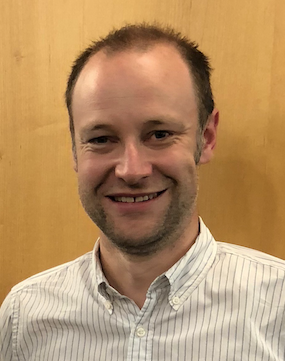
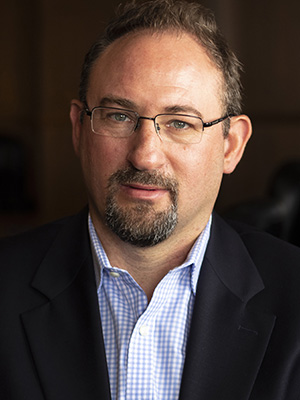
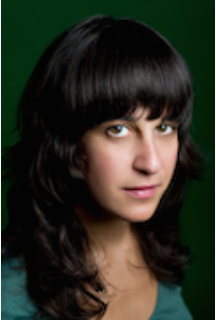
Francesca M. Kerton is Professor of Chemistry at Memorial University, researching green chemistry solutions including CO₂ utilization, sustainable polymers, and aquaculture waste valorization. She directs projects converting shellfish waste into functional materials and catalysts. Her group develops catalytic systems for cyclic carbonate synthesis, biochar applications, and mechanochemical chitin processing. Research often utilizes marine biomass like mussel shells and fish bones to create calcium acetate de-icers, nacre analogs, and hydroxyapatite nanoparticles. Kerton authored 'Alternative Solvents for Green Chemistry' (RSC Publishing) and co-edited 'Fuels, Chemicals and Materials from the Oceans'. She collaborates with CIRCUIT on carbon utilization technologies.
Christopher M. Kozak is a Professor of Chemistry at Memorial University, leading the Green Chemistry and Catalysis Group. His research develops sustainable catalytic processes for polymer synthesis and CO2 utilization. Research Focus: Designs earth-abundant metal catalysts (Cr, Zr, Fe) for ring-opening polymerizations, converting CO2/epoxides to polycarbonates and biomass to non-isocyanate polyurethanes. Emphasizes renewable feedstocks and waste valorization. Recent Publications: Highlights include zirconium-catalyzed copolymerization kinetics, chromium-mediated polycarbonate synthesis, and microwave-enhanced iron-catalyzed cross-couplings. Work bridges fundamental organometallic chemistry and green applications.
Rosario B. Jaime-Lara is an Assistant Professor at the University of California, Los Angeles (UCLA) School of Nursing. She holds advanced degrees including a PhD in Nursing from the University of Pennsylvania, MSN from Columbia University, and dual BS degrees in Nursing and Biological Sciences from University of Pennsylvania and UC Davis. Her research focuses on neurophysiological mechanisms of eating behavior, nutritional disparities in Mexican-American communities, and chemosensory science. Key themes include obesity research, sensory neuroscience, and translational clinical studies. She employs rodent models and clinical research methodologies to explore taste/smell physiology and metabolic health. Jaime-Lara has received over 17 honors including the 2022 Hommer Memorial Award and multiple diversity fellowships. Her work spans interdisciplinary collaborations in genomics, microbiome research, and health IT interventions for chronic disease management. Recent publications emphasize olfactory dysfunction in coronaviruses, fat taste mediators, and metabolic profiling. Her research bridges basic science and clinical practice, with particular attention to underserved populations.
Stephanie Posthumus serves as Associate Professor at McGill University, specializing in contemporary French and Québécois literature through the lens of ecocriticism, animal studies, and plant studies. Her research interrogates representations of the non-human across European literary traditions while examining cultural specificities in environmental discourse. Professor Posthumus develops French-specific ecocritical frameworks by engaging with thinkers like Guattari ( écosophie ), Latour ( nature-culture ), and Serres ( contrat naturel ), arguing against universal ecocritical models. Her work spans three interconnected domains: constructing French ecocriticism through monographs like French Écocritique (2017); analyzing animal representations via co-edited volumes including French Thinking about Animals (2015); and pioneering plant studies in Québécois contexts through recent works like Entre les feuilles (2024). She further bridges digital and environmental humanities through SSHRC-funded platform development. Her publication trajectory (2016-2024) reveals intensifying focus on vegetal agency and digital methodologies within ecocritical practice. Articles consistently address cultural differences in environmental representation, with increasing attention to sensory plant studies and posthumanist reconfigurations of human/non-human boundaries across French and Québécois literary landscapes. Professor Posthumus leads the Digital Environmental Humanities initiative, which functions as a research hub featuring digital exhibits, analytical tools like topic modeling, and pedagogical resources. This SSHRC Connections grant project (2013) exemplifies her commitment to interdisciplinary knowledge mobilization through digital innovation. She currently directs collaborative research networks connecting Canadian environmental humanities scholars with digital humanities practitioners, fostering experimental approaches to ecological representation through multimodal projects examining plant intelligence and sensory environmental engagement.
Eric E. Alani is a Professor in the Department of Molecular Biology and Genetics at Cornell University, part of the College of Agriculture and Life Sciences (CALS). He leads the Alani Lab, focusing on DNA mismatch repair (MMR) and genome stability mechanisms in yeast, with implications for human colorectal cancer and infertility. His research integrates genetics, biochemistry, and single-molecule approaches to study MMR protein interactions during meiosis and vegetative growth. Dr. Alani holds academic roles including former Director of Graduate Studies and NIH T32 Program Director. He teaches advanced courses like BioMG6330: DNA Biology, emphasizing experimental design and critical analysis. Over 23 PhD students, 8 postdoctoral fellows, and 28 undergraduates have completed training in his group. His work includes collaborations with biophysicists and population geneticists, funded by NIH grants. Key research projects include analyzing MLH1-MLH3 roles in crossover formation, MMR protein-DNA interactions via fluorescence microscopy, and understanding how MMR prevents recombination between divergent sequences. His lab explores genetic incompatibilities in yeast strains affecting mutation rates and adaptation, with broader implications for pathogenicity studies. Awards: 2009 Carpenter Memorial Advising Award Teaching: BioMG6330, BioMG7800, and others Labs: Located in 459 Biotechnology Building, Ithaca, NY
Professor David Bannerman is a leading academic in Behavioral Neuroscience at the University of Oxford's Department of Psychiatry. He heads the Behavioural Neuroscience Unit, focusing on neural mechanisms underlying anxiety, learning, and memory. His research integrates neurophysiological, genetic, and pharmacological approaches to study neuropsychiatric disorders such as Alzheimer’s, schizophrenia, and sleep disturbances. Education: BSc (Hons) and PhD qualifications are listed. His research interests span synaptic plasticity, neurodegenerative processes, and the neurobiology of fear/anxiety. Notable areas include the role of orexin pathways in anxiety, tau protein effects on spatial cognition, and the impact of psychedelics like 5-MeO-DMT on neural states. He also investigates sleep spindles’ role in brain state regulation and the consequences of SSRI discontinuation on serotonergic systems. Recent work emphasizes Alzheimer’s disease mechanisms (e.g., amyloid β’s synaptic effects), schizophrenia models (NMDA receptor dysfunction), and the neuroplasticity linked to working memory training. His lab employs cutting-edge techniques, including optogenetics and in vivo neural recordings, to dissect complex behaviors and circuit-level dysfunction. His publications highlight interdisciplinary approaches, bridging basic neuroscience with translational research. Key themes include: synaptic dysfunction in neurodegeneration, environmental influences on neurobehavioral outcomes (e.g., magnetic fields), and the neurobiological basis of psychiatric symptomatology.
Douglas A. Nitz is Professor and Chair of Cognitive Science at UC San Diego. His research program explores neural mechanisms underlying spatial navigation, memory formation, and decision-making processes across cortical and hippocampal circuits. Research Approach: Combines electrophysiological recordings, behavioral analysis, and computational modeling to decipher how distributed brain networks represent spatial information and support memory-guided behaviors. Current Focus: Neural coding principles in parietal-hippocampal networks during navigation tasks, with emphasis on path integration, landmark encoding, and route planning mechanisms.
Jennifer Gandhi is the Howard Wang ’95 Professor of Global Affairs and Political Science at Yale University, and Deputy Dean of the Jackson School of Global Affairs. Her research focuses on authoritarian regimes, political institutions under dictatorship, and transitions to democracy. She holds a B.A. from Columbia University and a Ph.D. in Political Science from New York University. Her work includes the award-winning book Political Institutions under Dictatorship (Cambridge University Press, 2008) and key articles in leading journals like the American Journal of Political Science and Journal of Politics. Her current projects explore electoral autocracies, data manipulation in authoritarian states, and institutional effects on democratization. Dr. Gandhi has advised numerous students and has been recognized for her contributions to comparative politics. She collaborates widely, with co-authors such as Ora John Reuter, Milan Svolik, and Jane Lawrence Sumner. Her research bridges theory and empirical analysis, examining how authoritarian institutions stabilize or destabilize regimes.
Dilian Gurov is a Professor in Computer Science at KTH Royal Institute of Technology, associated with the Digital Futures Faculty and the Division of Theoretical Computer Science. He also coordinates the Doctoral Programme in Computer Science at the CSC school. Before joining KTH in 2002, he earned a Ph.D. from the University of Victoria, Canada (1998), and worked at the Swedish Institute of Computer Science (1997-2002). His research focuses on software specification and verification, including contracts, program models, logics, and tools, as well as multi-agent strategic planning involving knowledge-based strategies in imperfect information settings. Key contributions include the CAV Distinguished Paper Award 2023 for 'Automatic Program Instrumentation for Automatic Verification' and an EASST award for 'Checking Absence of Illicit Applet Interactions: A Case Study' (2004). He leads projects funded by VR (SEFROS, ContraST) and Vinnova (AVerT2) and collaborates with industries like Scania on formal verification of C programs. His service roles span over 30 conference committees and organization roles, including PC memberships for iFM, TAP, and ISoLA. Teaching responsibilities include courses such as 'Formal Methods,' 'Program Semantics and Analysis,' and 'Knowledge in Games with Imperfect Information.' His work emphasizes practical applications of formal methods, bridging academic research with industry needs through collaborations and tool development (e.g., CVPP, ProMoVer, TriCo).
Dr. Christopher R. Jones is a Senior Lecturer in the School of Physical and Chemical Sciences at Queen Mary University of London. He holds a MSci in Natural Sciences from the University of Cambridge (2005) and a PhD in Organic Chemistry under Prof. Martin D. Smith (2009). He was a Junior Research Fellow at the University of Oxford (2009–2013) and joined Queen Mary as a Ramsay Memorial Research Fellow in 2013. He received an EPSRC Early Career Fellowship in 2015. His research focuses on developing sustainable organic synthesis methodologies, particularly leveraging aryne chemistry and functional carbon nanomaterials. Key areas include aryne-mediated C(sp³)-H bond functionalization, biologically active heterocycles, and applications in green chemistry. Current research grants include EPSRC funding for catalytic reactive intermediate studies (2015–2021), RSC grants for aryne synthesis (2018–2025), and a PAK UK Education Gateway Mobility Partnership (2023–2024). Dr. Jones supervises multiple PhD students, including co-supervision with Prof. Stellios Arseniyadis. His work has led to publications in high-impact journals like Nature Chemistry and Chemical Science , emphasizing innovations in organic synthesis and materials chemistry.
Eduardo Gildin is a Professor of Petroleum Engineering and Associate Department Head for Graduate Studies at Texas A&M University's College of Engineering. He holds the L.F. Peterson '36 Professorship and directs the university's graduate studies in petroleum engineering. His research focuses on reservoir modeling, control optimization, model reduction techniques, and CO2 sequestration. Gildin has pioneered data-driven approaches for reservoir simulation, integrating machine learning and physics-based models to enhance efficiency and accuracy. Education: Ph.D. in Aerospace Engineering, University of Texas at Austin (2006) M.S. in Mechanical Engineering, University of São Paulo, Brazil (1998) B.S. in Mechanical Engineering, Faculdade de Engenharia Industrial, Brazil (1995) Research Interests: Model reduction of large-scale dynamical systems Control and optimization of reservoir operations CO2 storage and geological carbon sequestration Machine learning applications in reservoir engineering and drilling automation Geomechanics and compaction damage evaluation Key Awards: 2020: William O. and Montine P. Head Memorial Research Award 2017-2018: Dean of Engineering Excellence Award 2013-2019: Energi Simulation Chair in Robust Reduced Complexity Modeling 2021: Distinguished Membership in Society of Petroleum Engineers Grants and Advising: Gildin has secured major funding for projects on reservoir simulation, drilling automation, and CO2 storage. He advises graduate students on topics such as surrogate modeling and reinforcement learning applications in petroleum systems. His lab collaborates with industry partners to translate research into practical tools for reservoir management and subsurface operations. Labs and Teams: He leads the Reservoir Simulation and Control Lab, focusing on advanced computational methods for reservoir optimization. His team develops open-source drilling models and collaborates globally on projects like the DREAMS (Drilling and Extraction Automated System) initiative.
Dr. Andrey Molotnikov is an Associate Professor in Additive Manufacturing and Director of the RMIT Centre for Additive Manufacturing at RMIT University's School of Engineering. His expertise spans additive manufacturing, computational materials science, and multi-material 3D printing. He leads a research team of 8 academics, multiple postdocs, and 10 PhD students, focusing on innovations like multi-material printing, high entropy alloys, and in-process quality assurance. Key research themes include architectured materials, computational modeling of solidification processes, and fatigue analysis of additively manufactured components. His work has resulted in over 80 publications (h-index 29) and several patents, with industry collaborations driving technology adoption. Recent publications (2022–2025) emphasize advancements in laser-based processes, defect detection via machine learning, and biomedical applications of additive manufacturing. He actively supervises research projects on topics such as hierarchical lattice structures and hybrid materials, supported by ARC grants and industry partnerships. Dr. Molotnikov’s labs and teams prioritize cross-disciplinary collaboration, aiming to bridge computational modeling with practical manufacturing solutions. His research addresses challenges in material compatibility, process optimization, and structural integrity of AM components.
Professor Gunter Kuhnle is a leading academic at the University of Reading, specializing in nutritional epidemiology and dietary assessment. He holds roles including Module Convenor for 'Nutritional Epidemiology and Dietary Assessment,' Undergraduate Research Project Coordinator, and Director of the Chemical Analysis Facility (CAF). He is affiliated with the Hugh Sinclair Unit of Human Nutrition, a research center focusing on human nutrition science. Education: Diplom Biochemiker (University of Leipzig), Doctor Rerum Naturalium (University of Leipzig), Postgraduate Certificate in Academic Practice (PGCAP) His research interests are centered on three key areas: developing objective measures of dietary intake and exposure to food bioactives, polyphenol metabolism and health outcomes, and investigating the association between red/processed meat consumption and cancer risk. He advocates for biomarker-based research to address biases in dietary studies. Recent work includes studies on dietary flavanols' cognitive benefits in older adults, nitrate's impact on cardiovascular health, and the role of genetic factors in lipid metabolism. His publications address methodological challenges in nutrition research and emphasize evidence-based guidelines for dietary bioactives. Awards: Fellow of the Higher Education Academy (FHEA) Professor Kuhnle's contributions extend to interdisciplinary collaborations, including the PHYTOME project to reduce dietary nitrosamine exposure through natural compounds. His work bridges basic science, clinical applications, and public health policy.
Deborah Stein is a distinguished faculty member in the Department of Theatre and Dance at the University of California, San Diego (UCSD), where she teaches playwriting and theatrical collaboration. She is also Co-Artistic Director of Stein | Holum Projects (SHP), a collaborative laboratory for creating innovative performances. Her work bridges academic scholarship and professional theatre, with national commissions and festival premieres. BA, Swarthmore College MFA, Brown University (studied with Paula Vogel) Her research and creative practice focus on playwriting, experimental performance, and interdisciplinary collaboration . She explores narrative innovation through devised theatre, often working with ensembles and MFA students to create original works that challenge traditional forms. Her work emphasizes emotional depth, physicality, and social themes. The 15 most recent creative projects reflect a strong trend in collaborative, experimental, and socially engaged theatre . They span festival productions, commissioned works, and student collaborations, often developed in residency settings. Keywords include immersive storytelling, devised creation, and political resonance, with subfields ranging from physical theatre to identity exploration. Deborah has received numerous honors and grants supporting her artistic research: Drama Desk Award Nomination (CHIMERA) National Theatre Project Award (2015) NYSCA Grant Bush Artist Fellowship Two Jerome Fellowships McKnight Advancement Grant Alumna, New Dramatists She actively mentors MFA students, having co-created THE BITTER GAME with Keith Wallace and MOVERS + SHAKERS with graduate students. Her advising integrates creative development with academic rigor. She has secured external funding from NEFA, ArtsEmerson, and foundations to support collaborative projects. Her work has been developed in partnership with institutions such as Playwrights’ Horizons, HERE, and La Jolla Playhouse. Deborah leads creative research through Stein | Holum Projects, which functions as a performance laboratory. This collective has developed work at major venues including FringeArts, the Playwrights’ Center, and Perry-Mansfield, fostering a national network of experimental theatre makers.
Gerardo Boto Varela is an Associate Professor in the Department of History and Art History at the University of Girona, where he has been a faculty member since 1995 and holds the title of 'Professor Titular d'Universitat'. He earned his PhD in Art History from the Universitat Autònoma de Barcelona in 1998 and currently serves as Director of the School of Doctoral Studies. His academic affiliations include the Institute of Historical Research and the Research Group in Cultural, Artistic, and Political Studies (9th–21st centuries). His research focuses on medieval religious architecture, particularly Romanesque cathedrals and monastic cloisters in the Iberian Peninsula. He investigates spatial organization, visual programs, liturgical practices, and memorial discourses, combining architectural archaeology with theological and historical analysis. His work emphasizes materiality, perception, and the symbolic function of sacred spaces. Boto Varela's recent publications and edited volumes explore themes such as cathedral urban contexts, episcopal memory, emerging naturalism in sculpture, and the ritual use of space. His research is supported by major grants from the Spanish Ministry of Economy, La Caixa, and the European Union (Marie Curie Project), and he leads the recognized research group 'Edificis i escenaris medieval de la Corona d'Aragó'. He is a leading figure in medieval art scholarship, serving as scientific editor of Codex Aquilarensis. Revista de Arte Medieval and on the editorial boards of several international journals. He has organized numerous international conferences and collaborative research initiatives across Europe. Scientific Editor, Codex Aquilarensis Member, Scientific Committees of Medievalista , Quintana , Cahiers de Saint Michel de Cuxa , and others Principal Investigator, TEMPLA Research Team Principal Investigator, SGR 110 Research Group Member, Catalan Society of Liturgical Studies Boto Varela has supervised interdisciplinary research projects involving scholars from Spain, France, the Netherlands, and beyond. He promotes knowledge transfer through public engagement, digital documentation (3D scanning, georadar), and the integration of technology in heritage studies. His work bridges academic research and cultural preservation, contributing significantly to the understanding of Europe’s shared medieval architectural heritage.