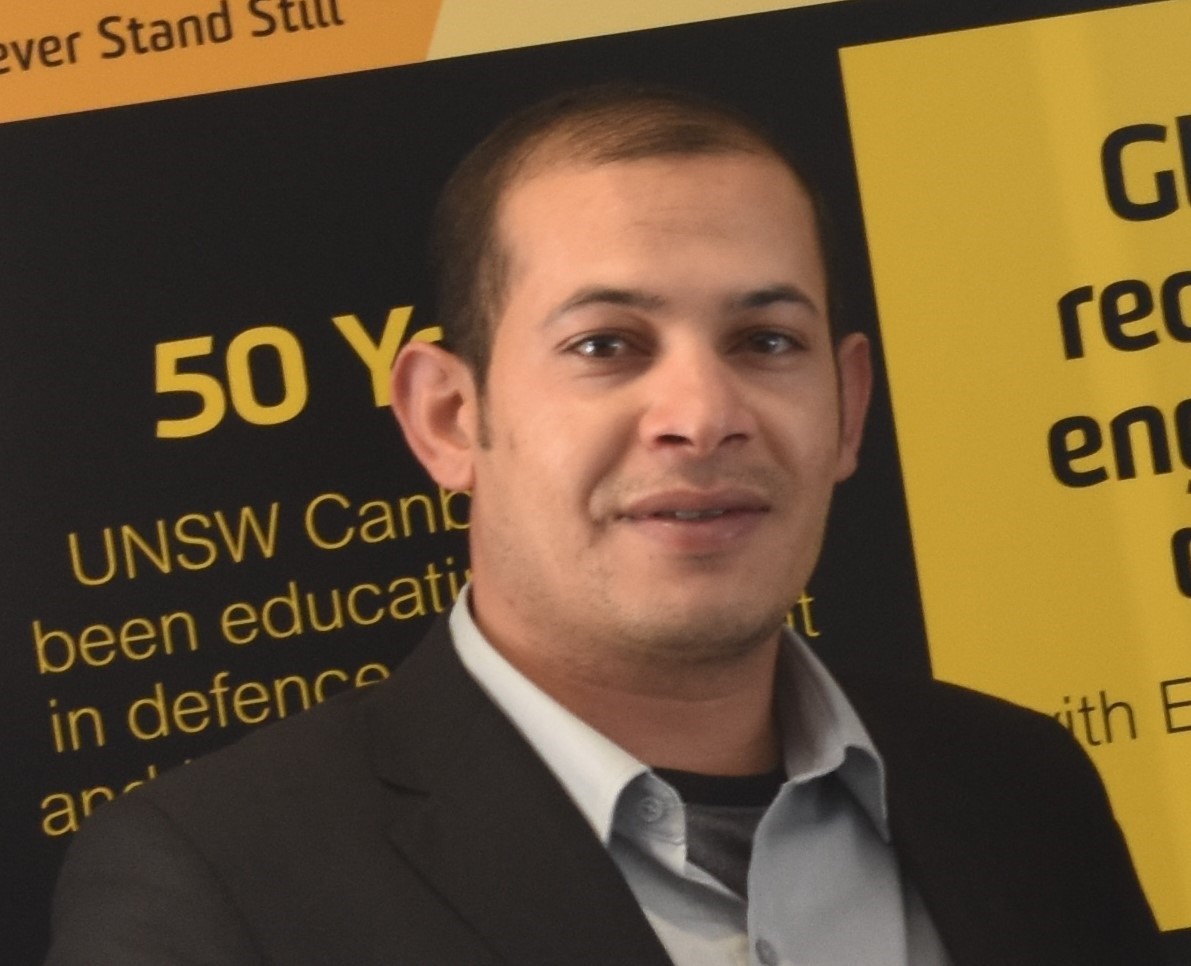
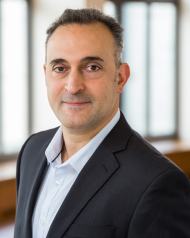
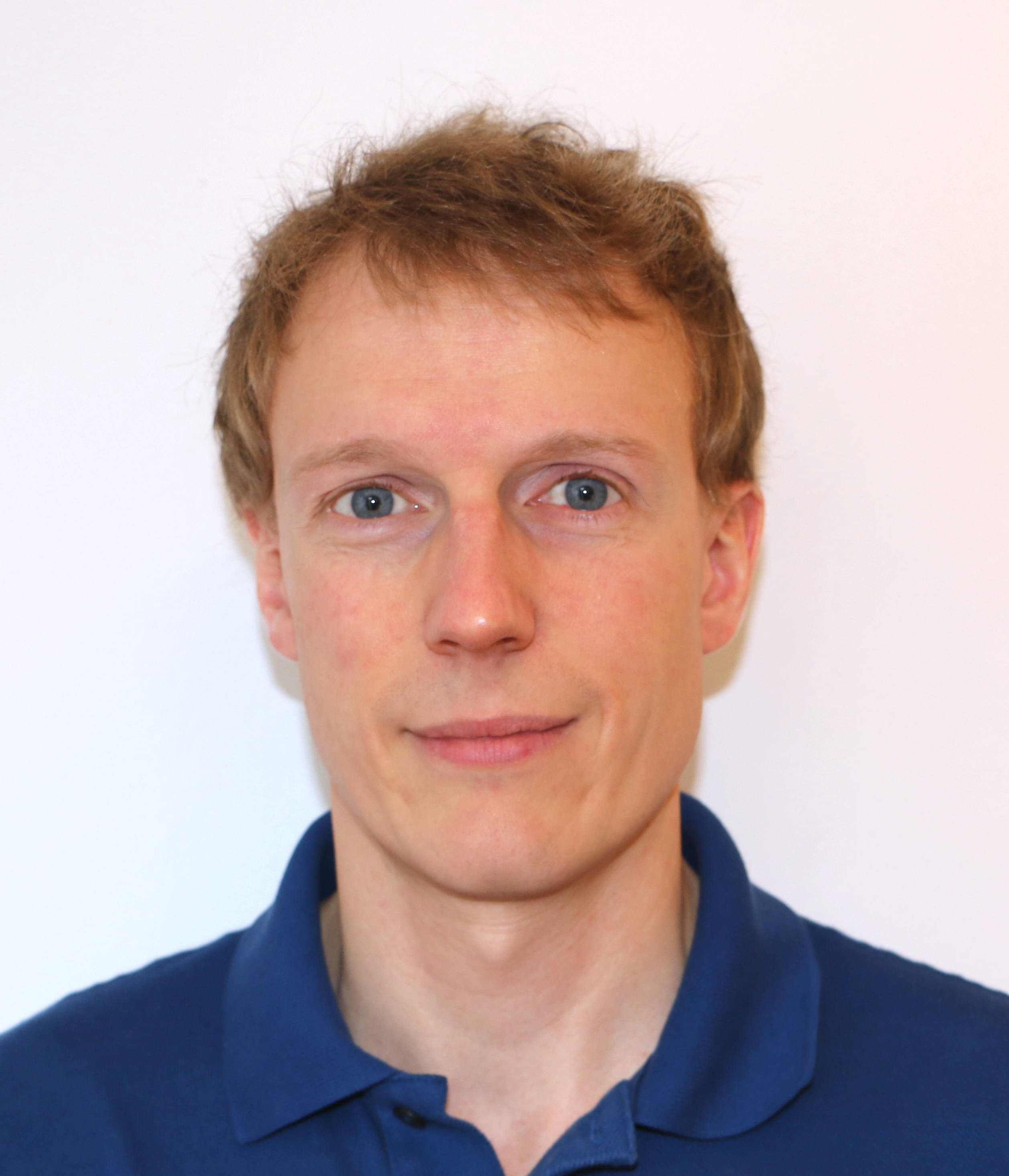
Dr. Nour Moustafa is an Associate Professor and ARC DECRA Fellow at the School of Systems & Computing (SysCom) , University of New South Wales (UNSW) Canberra , Australia. He leads the Intelligent Security Group and focuses on developing AI/ML-driven cybersecurity frameworks for smart systems. Educated at Helwan University (BSc/MSc in Information Systems) and UNSW (PhD in Cybersecurity). Research Interests include intrusion detection, threat intelligence, privacy preservation, digital forensics, and cyber resilience, with methodologies spanning statistical analysis , machine learning , and deep learning applied to IoT , Edge/Cloud , and Industrial IoT environments. His work emphasizes federated learning for privacy preservation, blockchain for secure AI, and digital twins for network self-healing. Notable contributions include the TON-IoT , Bot-IoT , and UNSW-NB15 datasets for cybersecurity evaluation. Scientific Awards : 2020 Spitfire Memorial Defence Fellowship ACM Distinguished Speaker IEEE Senior Member He has served as guest associate editor for IEEE Transactions journals and held leadership roles in conferences like IEEE TrustCom . His research bridges academia and industry, with over 75 publications in top-tier venues.
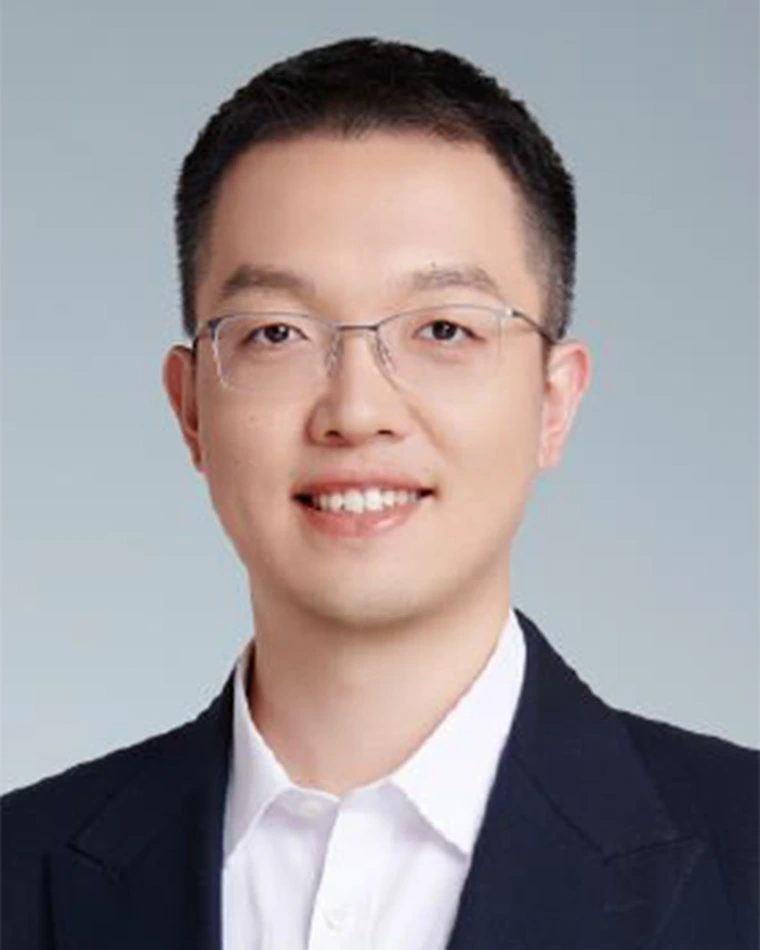
Dr. Yu Zhong is an Assistant Professor in the Department of Materials Science and Engineering at Cornell University's College of Engineering, where he leads the Yu Zhong Group. His research laboratory focuses on the design and synthesis of novel soft materials and nanomaterials for applications in electronics, energy, healthcare, and sustainability. As a principal investigator, he oversees a dynamic research team comprising postdoctoral associates, graduate students, and undergraduate researchers working on cutting-edge materials science projects. Dr. Zhong received his educational training at prestigious institutions, earning his B.S. in Chemistry from the University of Science and Technology of China (USTC) in 2011, followed by a Ph.D. in Chemistry from Columbia University in 2017 under the supervision of Prof. Colin Nuckolls. His doctoral research centered on designing contorted molecules for electronic and energy applications including organic solar cells, photodetectors, and gas sensors. He then conducted postdoctoral research at the University of Chicago in Prof. Jiwoong Park's group, where he worked on the design and synthesis of 2D polymers for ultrathin electronic circuits and energy conversion. Dr. Zhong's research program spans three primary directions: (1) the bottom-up synthesis of ultrathin nanoporous membranes using techniques like laminar assembly polymerization (LAP) for applications in water desalination, nanofiltration, and gas separation; (2) the study of transport behaviors in hybrid organic-inorganic 2D heterostructures created through layer-by-layer assembly for use in optical, electronic, and thermal management devices; and (3) the development of mixed ionic-electronic materials for bio-inspired and bioelectronic devices. His group employs advanced synthesis methods including organic/polymer synthesis, supramolecular and reticular chemistry, and 2D materials characterization to explore novel scientific phenomena and technological applications. An analysis of Dr. Zhong's recent publications reveals a strong focus on the synthesis and characterization of 2D polymers and organic-inorganic hybrid materials. His work bridges fundamental materials science with practical applications in energy conversion, electronics, and separation technologies. A notable trend is his development of innovative synthesis techniques like laminar assembly polymerization that enable precise control over material structure at the molecular level, leading to breakthroughs in areas such as lithium-ion transport, osmotic power generation, and ultra-narrowband photodetection. Dr. Zhong's scientific achievements have been recognized with several prestigious awards: Pegram Award for Meritorious Graduate Research, Columbia University (2016) Camille and Henry Dreyfus Postdoctoral Fellowship, Dreyfus Foundation (2016) Arun Guthikonda Memorial Fellowship, Columbia University (2015) Jack Miller Award for Excellence in Teaching, Columbia University (2014) As an advisor, Dr. Zhong mentors a diverse group of researchers including postdoctoral associate Qiyi Fang, multiple Ph.D. students (Yuhe Zhang, Kaushik Chivukula, William Xie), M.S. students, and undergraduate researchers. His group has secured funding for research on soft and nanomaterials, with projects spanning organic electronics, 2D materials synthesis, and biomimetic membranes. Dr. Zhong actively seeks motivated graduate students and postdoctoral fellows to join his research team, emphasizing the importance of interdisciplinary collaboration in advancing materials science. The Yu Zhong Group operates state-of-the-art laboratories in Bard Hall at Cornell University, equipped for organic synthesis, materials characterization, and device fabrication. The research team works collaboratively across disciplines, partnering with experts in physics, chemistry, and engineering to tackle complex challenges in materials science. Current projects focus on developing novel synthesis methodologies and exploring structure-property relationships in soft materials to enable next-generation electronic, energy, and healthcare technologies.
Venkatesan Guruswami is a Chancellor's Professor in the Department of Electrical Engineering and Computer Sciences and Professor in the Department of Mathematics at the University of California, Berkeley. He previously served as faculty at Carnegie Mellon University for 13 years and held a Miller Research Fellowship at UC Berkeley. His research focuses on Theoretical Computer Science , particularly in Error-Correcting Codes , Approximation Algorithms , Quantum Computing , and Hardness of Approximation . Guruswami has made groundbreaking contributions to list decoding and quantum code constructions, with works featured in Science Magazine and the Journal of the ACM (where he serves as Editor-in-Chief). Education : B.Tech (1997, IIT Madras), Ph.D. (2001, MIT), Miller Research Fellowship (2001-02, UC Berkeley) Research Areas : Theory of error-correcting codes, approximation algorithms, pseudorandomness, probabilistically checkable proofs, and quantum coding theory Guruswami's recent work explores quantum LDPC codes , parameterized inapproximability , and stream decodable codes . He has received prestigious awards including the NSF CAREER award , David and Lucile Packard Fellowship , and Sloan Research Fellowship . His advising spans a wide range of students and postdocs, with notable contributions to coding theory and computational complexity .
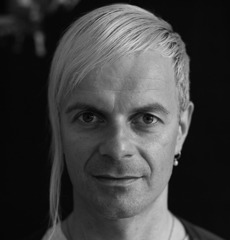
Wolfgang Mayer is a Professor for Performative Practice at the State Academy of Fine Arts Stuttgart , teaching collaborative artistic processes. He co-founded the art group Discoteca Flaming Star (DFS) in 1998 with Cristina Gómez Barrio, focusing on performative works that challenge memory and institutional frameworks. 1990–1995: Studied at Academy of Fine Arts Munich 1996–1997: DAAD scholarship at School of Visual Arts NYC 2005–2006: Whitney ISP participant Mayer’s research integrates performative practice , body theory , and collaborative art . His works interrogate memory , feminist narratives , and public space dynamics through sculptures , performances , and experimental music . Recent projects like Momentum:synthesize.r (2024) and Love Any Out of (90 Seconds) End (2023) explore temporal structures and emotional labor . Scientific honors include: 2013 Fundacion Estrenos Grant 2006–2007 Pollock-Krasner Scholarship 1993 Salzburg Summer Academy scholarship He emphasizes non-formalized artistic development through Sound & Body modules, public space interventions , and critical response protocols . Mayer’s DFS collective has shown globally at institutions like The Kitchen , Whitney Museum , and Tate Modern , often collaborating with figures like Rita McBride and Jeremiah Day.
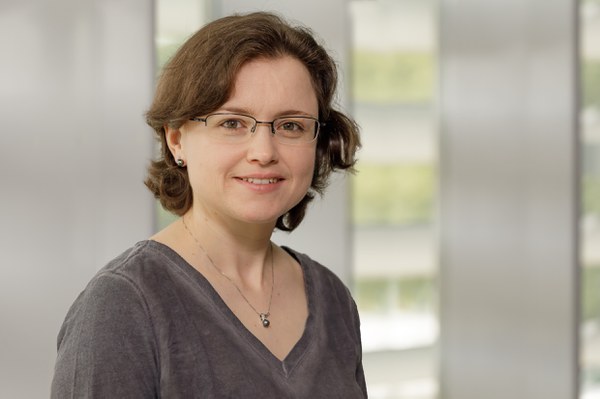
Prof. Dr. Estela Suarez is a Professor of High Performance Computing at the Institute for Computer Science, University of Bonn (W2 in the Jülich Model) and Joint Lead of the Division "Novel System Architecture Design" at the Jülich Supercomputing Centre (JSC), Forschungszentrum Jülich GmbH. She also leads the Research Group "Next Generation Architectures and Prototypes" at JSC and serves as Spokesperson of Helmholtz Information Program 1, Topic 2. Currently on sabbatical during the 2024/2025 and 2025 academic years, she remains active in research leadership roles. 2010: PhD in Physics from University of Geneva, Switzerland 2004: Master in Physics, Specialization in Astrophysics, University Complutense of Madrid, Spain Professor Suarez specializes in high performance computing with particular expertise in heterogeneous HPC system architectures and modular supercomputing architecture (MSA). Her research spans hardware prototyping and evaluation, system software development, operational data analysis, and co-design methodologies. She has pioneered approaches to address hardware heterogeneity through system-wide orchestration of diverse computing resources, enabling more efficient scientific computing across multiple domains. Her work bridges theoretical computer architecture with practical implementation challenges in exascale computing environments, focusing on real-world applications that require specialized hardware configurations. Professor Suarez's publication record shows a clear evolution from foundational work on the DEEP project (2016) through the development of modular supercomputing concepts (2019-2021) to current applications across diverse scientific domains (2022-2024). Her recent publications demonstrate how modular architectures can be effectively applied to climate modeling, neuroscience simulations, quantum chemistry calculations, and other computationally intensive fields. This trend highlights her focus on practical implementation challenges and the growing importance of adaptable computing architectures in modern scientific research. 2023/2024 Lehrpreis der Universität Bonn: UniBonn teaching award Professor Suarez has secured significant research funding through major projects including NUMERIQS (Projects A05, B02, and Z02), European Processor Initiative (EPI), DEEP-SEA (Software for Exascale Architectures), IFCES2 (optimization of simulation algorithms for exascale supercomputers), and AIDAS (virtual laboratory between Forschungszentrum Jülich and CEA on AI and data analytics). While currently not accepting new students due to sabbatical, she has previously mentored graduate students in high performance computing techniques and has delivered numerous invited lectures at international conferences. Professor Suarez leads the "Next Generation Architectures and Prototypes" research group at JSC and serves as Joint Lead of the "Novel System Architecture Design" division. She chairs the Research and Innovation Advisory Group (RIAG) from EuroHPC Joint Undertaking since 2024. Her work involves close collaboration with international research teams on advancing supercomputing architectures, including contributions to the University of Bonn's new HPC system "Marvin" which ranks on both the TOP500 and GREEN500 lists.
Sivaraman Balakrishnan is a Professor at Carnegie Mellon University with joint appointments in the Department of Statistics and Data Science and the Machine Learning Department. His research bridges statistical machine learning, algorithmic statistics, and robust inference. Education: Ph.D. in Computer Science from Carnegie Mellon University (Language Technologies Institute, advised by Jaime Carbonell); postdoctoral work at UC Berkeley (Department of Statistics, advised by Martin Wainwright and Bin Yu). Research Interests: Spanning robust statistics, domain adaptation, minimax hypothesis testing, assumption-light inference, causal inference, statistical optimal transport, non-parametric statistics, ranking, crowdsourcing, optimization, and topological data analysis. Key Research Trends: Recent work focuses on domain adaptation under label/misingness shifts, robust gradient estimation, smooth optimal transport maps, and conditional independence testing. He explores minimax optimal methods, univariate mean estimation, and high-dimensional regression with missing data. Scientific Awards: IMS Lawrence D. Brown Student Award (2021, 2020) NVIDIA Pioneer Award (2018) Franklin V. Taylor Memorial Best Paper Award (2018) Grants and Editorial Roles: NSF grants (CCF-1763734, DMS-1713003, DMS-2113684, DMS-2310632), Amazon Research Award (2021), Google Research Scholar Award (2021). Associate Editor for JASA and JRSSB ; Editorial Board member for Foundations and Trends in Statistics . Collaborative Groups: Co-organizes the Statistics and Machine Learning Reading Group and participates in the Causal Inference Working Group at CMU.
Jeff Zhang is an Assistant Professor in the School of Electrical, Computer and Energy Engineering at Arizona State University. He joined ASU in January 2023 after completing a postdoctoral fellowship at Harvard University. His research spans deep learning, computer architecture, embedded systems, and EDA, with particular emphasis on energy-efficient and fault-tolerant design for AI/ML systems and hardware accelerators. Education: Ph.D., New York University M.Eng., B.Eng., Hunan University Dr. Zhang's research bridges theoretical machine learning with practical hardware implementation, developing novel architectures that optimize performance, power consumption, and reliability. He has pioneered approaches for hardware acceleration of large language models, efficient sparse matrix operations, and novel memory technologies for AI workloads. His work has received multiple awards including IEEE Top Picks in Test and Reliability (2023) and IEEE Micro Best Paper Award (2022). His recent publications demonstrate a strong trend toward heterogeneous computing, with significant work in chiplet-based AI accelerators, photonic computing for AI, and 2.5D/3D integration techniques. The research spans from high-level compiler frameworks to circuit-level innovations, with a consistent theme of co-designing algorithms and hardware for optimal AI performance. His work on the SODA toolchain has been particularly influential in bridging Python to silicon. Scientific Awards: IEEE Top Picks in Test and Reliability, IEEE ITC, 2023 Best Paper Award, IEEE Micro, 2022 Best Paper Award Candidate, IEEE DATE, 2022 Best Presentation Award Nomination, ACM SIGDA DATE PhD Forum, 2020 Best Paper Award Nomination, IEEE VLSI Test Symposium, 2018 Ernst Weber Ph.D. Fellowship, New York University, 2015, 2016 Dr. Zhang actively mentors a diverse group of graduate and undergraduate students, with several alumni now working at leading technology companies including Apple, TSMC, and Ansys. His research is supported by prestigious grants from NSF, Sandia National Labs, and industry partners. He serves on technical program committees of numerous top conferences and has organized special sessions on emerging topics like Gen AI for Chip Design and LLM-Aided Design. Dr. Zhang leads a vibrant research group that collaborates extensively with industry partners and national laboratories. Current projects focus on next-generation AI hardware, including chiplet-based systems, photonic accelerators, and novel memory technologies for large language models. His group has developed several open-source tools and frameworks, including the SODA toolchain for bridging Python to silicon.
Abolfazl Asudeh is an Associate Professor in the Department of Computer Science at the University of Illinois Chicago and director of the Innovative Data Exploration Laboratory (InDeX Lab) . He is a Senior Member of ACM and IEEE , serving as Associate Editor for IEEE Transactions on Knowledge and Data Engineering , VLDB Ambassador , and VLDB Endowment Liaison to NSF . His research focuses on Algorithm Design for Data and AI problems , emphasizing efficient, accurate, and responsible solutions through Approximation Algorithms , Randomized Methods , and Computational Geometry . Recent work explores LLM optimization ( Needle ), fair data structures ( FairHash ), and responsible AI frameworks ( Chameleon ). Scientific awards include Communications of the ACM Research Highlight Google Research Scholar Award SIGMOD 2019 Research Highlight Best of VLDB 2020 SIGMOD 2017 Reproducibility Award Grants: NSF IIS-2348919 (2024-2027): Fairness-aware Data Structures NSF IIS-2107290 (2021-2024): Collaborative Fairness Research The InDeX Lab develops systems like Needle (image retrieval) and RSR (matrix multiplication). His work integrates fairness , reliability , and computational efficiency across data structures , LLMs , and responsible AI implementations.
Gordon Hughes is an Associate Professor of Art History in the Department of Art History at Rice University, specializing in early 20th-century European modernism with concentrated expertise in French painting and abstract art. His research significantly reinterprets foundational narratives of abstraction while extending into contemporary art and photographic history. His academic credentials include: Ph.D. in Art History from Princeton University (2004) M.A. from the University of Western Ontario (1996) M.F.A. in Studio Art from the University of Illinois at Chicago (1992) B.F.A. from the Nova Scotia College of Art and Design (1989) Professor Hughes' scholarship centers on re-examining abstract painting's origins through meticulous visual analysis, particularly focusing on Robert Delaunay's contributions to modernist vision. His work bridges pre-war European art with American conceptual practices from the 1960s-1980s, evidenced by influential publications on Fernand Léger, Georges Braque, Douglas Huebler, and Jenny Holzer. His theoretical approach integrates continental philosophy while prioritizing phenomenological engagement with artworks, reflected in his current book project Seeing Red: Murder, Abstraction, Machines which investigates intersections of art, technology, and violence. Analysis of his recent publications (2006-2022) reveals consistent scholarly engagement with French modernism's theoretical underpinnings while progressively incorporating contemporary critical frameworks. His work demonstrates evolving methodological sophistication through examinations of visual perception, medium specificity, and post-structuralist theory across diverse artistic movements from Cubism to Conceptual Art. His distinguished recognitions include: Getty Research Institute Scholar-in-Residence (2012-2013) Barr Ferree Foundation Publication Grant (2011) Terra Foundation for American Art support (2010) Professor Hughes mentors graduate students in Rice's Art History program with emphasis on close visual analysis and theoretical rigor. His research has received significant institutional support including Getty Research Institute residencies and major publication grants that facilitated his influential monograph Resisting Abstraction and editorial projects like October Files: Richard Serra .
Wang Yingji is a tenured professor and doctoral supervisor at the School of Art and Media, Tongji University. He holds a PhD in Literary Studies and has served as director of the China Culture and Art Communication Research Center, member of the China Artists Association, and editorial board member of "Media Criticism" journal. BA: Chinese Language and Literature, Renmin University of China (1995) MA: Journalism, Beijing Normal University (2004) PhD: Literary Studies, Beijing Normal University (2007) His research focuses on the intersections between Journalism and Communication, Media Phenomenology, Philosophy of Technology, and Traditional Chinese Culture. His work explores embodied cognition in media interaction, technological mediation of human perception, and historical epistemology of media systems. The articles demonstrate his expertise in media phenomenology (Hubert Dreyfus analysis), digital reading behavior studies, VR technology ideologies, and historical reconstruction of Chinese communication theories. His publications span from 2016-2022 with consistent CSSCI indexing. National Social Science Fund General Project: "Chinese Modern Public Opinion Thought History" (2021) Major Project Subtopic: "Chinese Media Archaeology in Civilizational Diversity" (2020) Ministry of Education Project: "Husserl's Media and Communication Thought" (2020) Completed NSFC Project: "Rumor Propagation and Governance in Public Emergencies" (2011) As educator, he teaches courses like "Chinese Classical Media Art", "Media Research Methods", and "Communication Theory". His administrative roles include leadership positions in the Chinese Society of Journalism History and multiple journal editorial boards.
Xiaodong Yan is an Assistant Professor in the Department of Materials Science and Engineering and an affiliated faculty member in the Department of Electrical and Computer Engineering at the University of Arizona . His research bridges materials science, nanoelectronics, and quantum computing, with a focus on developing novel quantum materials and devices for next-generation computing systems. Education : BS in Physics (Peking University, China), MS in Electrical Engineering (University of Notre Dame), PhD in Electrical and Computer Engineering (University of Southern California). Postdoctoral Training : Materials Science and Engineering, Northwestern University (2021-2023). Dr. Yan’s research explores the synthesis and physics of emerging quantum materials, particularly 2D materials and van der Waals heterostructures , to create advanced devices for neuromorphic computing , quantum sensing , and low-power electronics . His work spans nanofabrication, device characterization, and algorithm integration. His recent publications in Nature and Nature Electronics highlight breakthroughs in Moiré synaptic transistors with room-temperature neuromorphic functionality and reconfigurable heterojunction transistors for machine learning hardware. These studies emphasize 2D material integration , reconfigurable electronics , and bio-mimicking systems . Scientific Awards : MHI Ph.D. Scholar, Ming Hsieh Department of ECE at USC. Dr. Yan leads the Yan Research Group , which focuses on material and device solutions for neuromorphic computing and quantum sensing . The group actively recruits graduate and undergraduate researchers.
Elad Hazan is a Professor of Computer Science at Princeton University and co-founder/director of Google AI Princeton. His research focuses on algorithmic foundations of machine learning and optimization, with significant contributions to online learning, nonstochastic control, and adaptive gradient methods. Princeton University (Faculty) Google AI Princeton (Co-founder & Director) His work bridges mathematical optimization, control theory, and computational complexity. Key contributions include the AdaGrad algorithm, sublinear-time optimization methods, and spectral filtering techniques for sequence modeling. Recent research emphasizes efficient neural architectures and provable guarantees in online control. Scientific awards include the Bell Labs Prize, IBM Goldberg Best Paper Award (twice), Google Research Award (twice), European Research Council grant, Marie Curie fellowship, and ACM Fellowship. He has served as program chair for COLT 2015 and on the Association for Computational Learning steering committee. His publications highlight trends in online convex optimization, spectral methods for dynamical systems, and adaptive gradient algorithms. Collaborations span Princeton, Google Brain Research, and interdisciplinary projects in robotics and AI safety.
Daniel J. Sorin is a Professor of Electrical and Computer Engineering at Duke University's Pratt School of Engineering, where he also serves as Associate Chair of Education. He holds joint appointments in both the Electrical and Computer Engineering department and Computer Science department, and is recognized as a Bass Fellow for his contributions to education and research. His research focuses on computer architecture with specific expertise in memory systems, cache coherence protocols, fault tolerance, and verification-aware design. Dr. Sorin's work bridges theoretical computer architecture with practical implementations, often incorporating coding theory to solve architectural challenges. His research group has made significant contributions to automated protocol generation, hardware acceleration, and robot motion planning systems. Dr. Sorin's publications reveal a consistent focus on memory consistency models, cache coherence protocols, and verification techniques. His recent work has expanded into robot motion planning acceleration, FPGA resource management, and novel error correction techniques for emerging memory technologies. The trend shows increasing interdisciplinary work connecting computer architecture with robotics and machine learning applications. Program Chair of HiPEAC 2017 Co-chair of IEEE Micro's Top Picks selection committee (2016) Lois and John L. Imhoff Distinguished Teaching Award (2011) NSF CAREER Award recipient IEEE Micro Top Pick awards (2011, 2015) ACM Senior Member As an advisor, Dr. Sorin has mentored numerous PhD students who have gone on to successful careers at leading technology companies including Google, Microsoft, Oracle, and Nvidia. His research group maintains strong industry connections and has produced influential work in cache coherence protocols, memory systems, and fault-tolerant architectures. He has also authored the widely-used textbook 'A Primer on Memory Consistency and Cache Coherence' (2nd edition). Dr. Sorin leads an active research laboratory focused on next-generation computer architecture challenges, with ongoing projects in hardware acceleration, memory systems, and robot motion planning. His group collaborates with researchers across multiple disciplines including robotics, coding theory, and semiconductor design.
Dr Nikki Ji-Yeon Lee is a Senior Lecturer in Asian Media at Nottingham Trent University's Department of Humanities, School of Social Sciences. With prior academic appointments at Yonsei University and Korea National University of Arts in Seoul, her career bridges UK and Korean academic spheres. She co-founded the London Korean Film Festival in 2001 and maintains active industry connections as a former independent documentary filmmaker and film event interpreter. Her educational background includes: BA and MA in Sociology from Yonsei University, Seoul MA in TV Documentary from Goldsmiths College, University of London PhD in Cultural Studies from Goldsmiths College, University of London Lee's research specializes in transnational East Asian cinema with emphases on Korean and Chinese film industries, film festival circuits, and cinematic soundscapes. Her work critically examines globalization's impact on film production, auteur branding, audience reception, and co-production models, particularly investigating how cultural specificity navigates global markets. Current projects explore Korean film sound design, China-Korea media collaborations, and East Asian television drama formats. Analysis of her 2018-2025 publications reveals evolving research trajectories: early work focused on film festival politics and auteur studies (e.g., Park Chan-wook), while recent scholarship increasingly engages with sound studies and occult genres in Korean cinema. Her output consistently bridges industrial analysis with cultural criticism, demonstrating expertise in both Korean cinematic traditions and transnational media flows. Lee has significantly contributed to academic discourse through editorial projects including co-editing The Korean Cinema Book (BFI/Palgrave Macmillan) and Japanese Cinema (Routledge). Her publications in Cinema Journal and Screen establish her as a key voice in East Asian film studies, with Korea Film Council (KOFIC) recognizing her expertise through commissioned research on UK distribution patterns.
Dr. Andrea Bastoni is a Postdoctoral Researcher and Research Fellow at the Chair of Cyber-Physical Systems in Production Engineering at Technical University of Munich (TUM), Faculty of Mechanical Engineering. He is also the CTO and co-founder of Minerva Systems , developing operating system solutions for AI-ready embedded applications. His expertise spans real-time operating systems, cyber-physical systems, and predictable system design for heterogeneous platforms. His research focuses on enhancing predictability of memory hierarchies in complex SoCs through techniques like memory bandwidth regulation and cache partitioning. This work has industrial applications in safety-critical domains such as avionics and railways, where he contributes to certifiable hypervisors and operating systems. As former Software Architect of the PikeOS hypervisor at SYSGO GmbH (2012-2020), he specialized in DO-178C, IEC 61508, and EN 50128 standards. His academic background includes a Ph.D. in Computer Engineering from the University of Rome Tor Vergata (2007-2011), where he developed LITMUS^RT as part of UNC's Real-Time Systems Group during a visiting researcher period (2009-2010). His publications reflect ongoing work on Multicore Real-Time Scheduling , Mixed-Criticality Task Isolation, and Arm DynamIQ shared unit analysis. He actively participates in program committees for conferences like RTSS, DSN, and DATE.