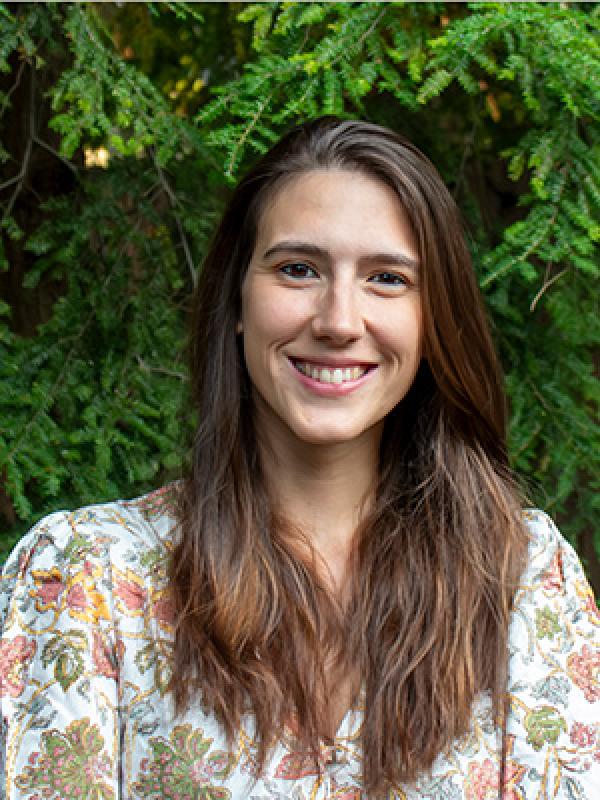
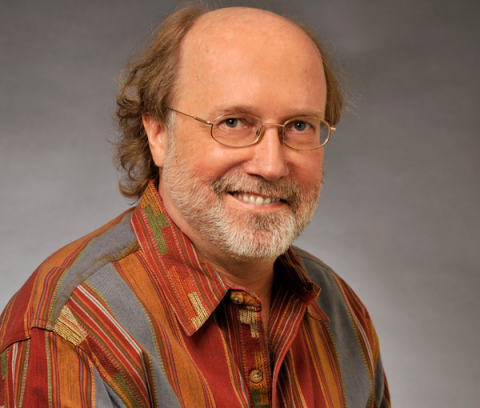
David Lentink is a Full Professor of Biomimetics at the University of Groningen , leading the Biomimetics Group within the Faculty of Science and Engineering. His research bridges biomechanics, aerospace engineering, and robotics, focusing on avian flight mechanics and bio-inspired aerial robotics . Previously at Stanford University, he pioneered the development of the Aerodynamic Force Platform and low-turbulence wind tunnels for animal flight studies. Education : PhD in Aerospace Engineering (Stanford), MSc in Mechanical Engineering (Delft), BSc in Mechanical Engineering (Delft). Research Interests : Understanding bird flight biomechanics to design advanced drones, studying evolutionary adaptations in flight, and developing biohybrid robots with real feathers. Scientific Awards : Dutch Academic Year Prize for the Flight Artists (2013). World Economic Forum Young Scientist under 40 (2013). Alumnus of the Young Academy of The Royal Netherlands Academy of Arts and Sciences. Labs : The Lentink Lab at Groningen’s Linnaeusborg campus integrates bird aviaries, wind tunnels, and maker spaces for bio-inspired robotics development. His team collaborates globally with institutions like Stanford, TU/e, and Sorama.
Jane Frankenberger is a Professor in the Department of Agricultural & Biological Engineering at Purdue University, specializing in environmental and natural resources engineering. She holds a B.A. in Physics from St. Olaf College, an M.S. in Agricultural Engineering from the University of Minnesota, and a Ph.D. from Cornell University. Her career includes eight years working in Africa (DRC and Senegal) and roles at the U.S. EPA and USDA. Currently, she serves as the Extension Water Quality Coordinator, leading projects on watershed management, drinking water protection, and TMDL compliance. Her research focuses on agricultural drainage, water quality, and climate change adaptation in drained landscapes. She teaches a graduate course on GIS applications and has contributed to over 100 peer-reviewed articles, emphasizing nutrient reduction strategies and drainage management. Education: B.A. Physics, St. Olaf College M.S. Agricultural Engineering, University of Minnesota Ph.D. Agricultural & Biological Engineering, Cornell University Key Roles: Extension Water Quality Coordinator Lead of water quality projects in Indiana Author of extension publications on watershed management Research Interests: Her work addresses watershed management, conservation drainage practices, and climate resilience in agricultural systems. She develops models to assess the effectiveness of conservation practices and integrates geospatial tools for decision-making. Recent studies focus on nitrate dynamics in tile-drained systems and climate change impacts on crop yields. Publications highlight trends in drainage water management, nutrient load reduction, and interdisciplinary approaches to sustainable agriculture. Her work bridges engineering, ecology, and policy to improve water resource management at local and global scales. Grants and collaborations include USDA-NIFA projects on transforming drainage research and international initiatives in Peru and Colombia. She emphasizes stakeholder engagement through workshops and outreach programs to enhance community-driven water management solutions.
Sally Paganin is an Assistant Professor of Statistics at The Ohio State University, affiliated with the Department of Statistics within the College of Arts and Sciences. She joined the faculty in 2023 and holds a PhD from the University of Padova (2019). Her research focuses on Bayesian statistics, computational methods, and latent variable modeling, with recent emphasis on genomic data analysis for cancer detection and software development for hierarchical models. Her expertise spans Bayesian nonparametrics, statistical computing, and domain knowledge integration in modeling frameworks. She actively contributes to the NIMBLE project, an R-based platform for hierarchical modeling, and has developed open-source tools like the compareMCMCs package for MCMC efficiency analysis. Dr. Paganin serves as an Associate Editor for the software section of The New England Journal of Statistics in Data Science and previously served as Treasurer of j-ISBA (2021–2022). Her work bridges theoretical advancements with practical applications in healthcare and computational statistics. Key research themes include Bayesian model assessment, latent variable models, and statistical methods for complex data structures. Her publications reflect contributions to MCMC algorithms, semiparametric IRT models, and prior-driven clustering techniques.
Sharon L Kagan is the Virginia and Leonard Marx Professor of Early Childhood and Family Policy and Co-Director of the National Center for Children and Families at Teachers College, Columbia University. She holds adjunct positions at Yale University and is a globally recognized leader in early childhood education policy and systems reform. Her work focuses on aligning educational policies to support low-income children and families, integrating research into public policy, and promoting systemic coherence in early childhood systems. Education: B.A., University of Michigan (English) M.A., Johns Hopkins University (Liberal Arts) Ed.D., Teachers College (Curriculum and Teaching) Research Interests: Dr. Kagan applies child and parent development research to inform public policy, emphasizing systemic governance, cultural diversity in education, and global early learning standards. She advocates for high-quality, equitable early childhood systems aligned with K-12 education. Awards: Harold W. McGraw, Jr. Prize in Education James Bryant Conant Award (2005) Fellow, American Educational Research Association (2010) Member, National Academy of Education (2012) Advising & Grants: She advises governments globally, including Colombia and Tajikistan, on early childhood policies. Her research has been funded by organizations like the Kellogg Foundation and UNICEF, focusing on system alignment, workforce development, and quality measurement. Labs/Teams: Co-directs the National Center for Children and Families, leading initiatives on early childhood governance, transition policies, and international standards development.
Professor Michelle Ellefson is a Professor of Cognitive Science at the University of Cambridge's Faculty of Education, where she serves as Director of CAM-DTP and as Undergraduate Tutor for Gonville and Caius College. She convenes the INSTRUCT Research Group (Implementing New Student Thinking Resources Using Cognitive Theory) and is affiliated with multiple interdisciplinary initiatives including Cambridge Neuroscience, Cambridge Big Data, and Cambridge Language Sciences. Her educational background includes a PhD and MA in Brain and Cognitive Sciences from Southern Illinois University and a BA in Psychology, summa cum laude, from the University of Minnesota. She is a member of several professional organizations including the Psychonomic Society, Cognitive Science Society, Women in Cognitive Science, and SPARK Society. Professor Ellefson's research integrates cognition, neuroscience, child development, and education into a multi-disciplinary program aimed at improving math and science education. Her work focuses on executive functions in school achievement, children's causal reasoning about scientific phenomena, and applying cognitive principles like simplicity and desirable difficulties to classroom learning. Her research spans laboratory-based studies paired with classroom applications to understand cognitive development mechanisms and improve educational practice. Her recent publications reveal strong trends in executive function research across cultural contexts, particularly examining East-West contrasts and the relationship between executive functions and academic achievement. Her work increasingly focuses on developing and validating assessment tools like the Zoo Task for metacognitive problem-solving, and she is committed to open science practices including registered reports and pre-registration of studies. Psychonomic Society Cognitive Science Society (CogSci) Women in Cognitive Science (WiCS) SPARK Society Professor Ellefson actively supervises PhD students through the Psychology, Education & Learning Studies program and teaches cognitive psychology and educational neuroscience in the PGCE program. She emphasizes quantitative methods and R programming for data analysis, requiring doctoral students to develop strong statistical skills. Her lab follows Cambridge's inquiry-based learning model and maintains a commitment to diversity and inclusion, welcoming researchers from varied socioeconomic, national, and cultural backgrounds. The INSTRUCT Lab also focuses on open science practices, sharing data and materials through OSF and publishing preprints in Psych-Archive.
Dr. Stephanie Dodman is an Associate Professor at George Mason University's College of Education and Human Development, specializing in teacher learning, leadership, and equity-oriented education. She serves as Assistant Dean for Academic Excellence in Student and Academic Affairs and leads the Advanced Studies in Teaching and Learning program. PhD in Curriculum, Teaching, and Teacher Education from the University of Florida Teaches master's and doctoral courses in curriculum and instruction Developed the Critical Data-Driven Decision Making (CDDDM) and Data Use for Equity (DUE) frameworks Her research focuses on leveraging teacher agency and data use to dismantle inequitable schooling systems, with publications in journals like Teaching and Teacher Education and Journal of Educational Change . Recent work emphasizes antiracist pedagogy, collaborative inquiry, and liminal spaces in teacher development. Dr. Dodman received the 2019 George Mason University Online Teaching Excellence Award. She actively engages in school-university partnerships and job-embedded professional development initiatives.
Timothy W Curby is a Professor in the Applied Developmental Psychology department at George Mason University . His research focuses on early childhood classroom experiences, teacher-child interactions, and the application of advanced statistical models to educational research. He leads the Development in School Contexts (DISC) Lab , which examines how teacher-student interactions drive children's emotional and social development, with a particular emphasis on creating observational measures like the Emotion Teaching Rating Scale (EMOTERS) . Dr. Curby is also involved in partnerships with institutions such as the University of Illinois at Chicago, supporting professional development for preschool teachers through coaching and learning communities. Education: PhD in Educational Psychology—Learning and Development (University of Virginia), MA in Teaching (University of Michigan), BS in General Biology (University of Michigan) Key Research Areas: Emotion-focused teaching, classroom quality measurement, trauma-informed practices, and statistical modeling of teacher-child interactions Grants: Co-Principal Investigator for the Chicago Early Childhood Preparation and Pathway Partnership (US Department of Education, 2019–2024); Statistician for NIH-funded studies on parent-adolescent interactions and substance use Students Supervised: Vera Hawa, Negar Fatahi, Laura Rose Elizabeth Stokes, and others Teaching: Courses in developmental psychology, longitudinal data analysis, and multivariate statistics
Thomas Widiger is a Professor in the Department of Psychology at the University of Kentucky's College of Arts and Sciences, specializing in personality disorders and diagnostic classification systems. His research develops and validates assessment tools aligned with DSM-5 and ICD-11 frameworks, with particular focus on dimensional models like the Five-Factor approach. Recent publications demonstrate international validation efforts and instrument development for borderline, schizoid, and narcissistic personality constructs. His work advances evidence-based assessment protocols and examines cross-cultural applications of diagnostic taxonomies. Research Impact Pioneered Five-Factor Model adaptations for personality disorder assessment Developed cross-culturally validated instruments for ICD-11 Authored foundational texts on personality disorder conceptualization
Lucia O'Sullivan is a Professor and Chair in the Department of Psychology at the University of New Brunswick. She holds a PhD in Experimental Psychology from Bowling Green State University, with postdoctoral research training in HIV at Columbia University. Her research focuses on the intersection of sexuality and intimate relationships, including digital technologies' impact on relationships and barriers to sexual health care. She has conducted international studies in South Africa, the UK, Guatemala, India, and the US. Dr. O’Sullivan has authored/co-authored over 175 peer-reviewed articles, a textbook on human sexuality, and serves on multiple journal editorial boards. She is currently not accepting graduate students. Education: B.A. (Hons.) and M.A. in Clinical Psychology from UNB; PhD in Experimental Psychology from Bowling Green State University; Postdoctoral training in HIV at Columbia University. Research interests include adolescent and young adult sexuality, sexual violence prevention, and the role of technology in relationships. Her work emphasizes global health perspectives and collaborative international research. Key contributions include co-editing a book on sexual coercion and developing measurement tools like the Short Sexual Subjectivity Inventory. Her recent studies explore sugar arrangements, bystander intervention in sexual aggression, and infidelity predictors.
Michael Campbell is a Professor in the Department of Environment and Geography at the University of Manitoba, part of the Clayton H. Riddell Faculty of Environment, Earth, and Resources. He holds a Ph.D. in Geography and Planning from the University of Waterloo (1996), an M.A. in Geography from the University of Manitoba (1986), and a B.A. in Geography from the University of Manitoba (1980). Research Focus: Dr. Campbell investigates relationships between nature-based tourism, outdoor recreation, and environmental conservation. Key areas include: Mitigating tourism impacts in natural ecosystems Human-wildlife conflict resolution (e.g., Manitoba's 'Bear Smart' initiative) Community-based tourism as a conservation tool in Uganda/Tanzania Park management strategies and visitor experience optimization Publication Trends: His recent work centers on sustainable tourism development, wildlife management methodologies, and community livelihood enhancement through education partnerships, with strong applications in North American and African contexts. Field Programs: Directs ongoing field courses in Banff National Park facilitating student research collaborations with Parks Canada.
Suryadipta Majumdar is an Associate Professor at the Concordia Institute for Information Systems Engineering (CIISE), part of Concordia University. His primary research interests focus on Cloud Computing Security and Privacy, Internet of Things (IoT) Security and Privacy, and Software-Defined Network (SDN) Security. He has contributed extensively to proactive security measures in containerized systems and Kubernetes environments, alongside developing tools like ACE-WARP and PerfSPEC to address real-time threats. In terms of education, he holds a PhD in a relevant field, though specific details about his academic background (e.g., institutions, thesis topics) are not explicitly mentioned in the provided text. His work bridges theoretical cybersecurity frameworks with practical implementations, emphasizing automated translation, differential privacy, and compliance auditing across cloud and IoT ecosystems. Majumdar’s research trends highlight a focus on layered security analysis, anomaly detection in IoT networks, and mitigating vulnerabilities in network functions virtualization (NFV). He has explored topics such as resilient in-band OpenFlow networks, runtime security policy enforcement in OpenStack, and privacy-preserving network data anonymization via tools like SegGuard. His recent publications reflect collaboration with international conferences and workshops, including contributions to Digital Forensics and Applied Cryptography. No scientific awards are explicitly mentioned in the text. His advising activities and grant history remain unlisted, though he has developed notable security frameworks and tools. He is affiliated with CIISE and likely contributes to its research initiatives in emerging technologies like 5G and edge-core environments.
Dr. Hamid Rabiei is an Assistant Professor in Geography at the School of History and Geography, Dublin City University. He holds a PhD in Spatial Planning and Urban Development from Politecnico di Milano, Italy. His research focuses on sustainable development, spatial inequalities, climate change, and remote sensing/GIS applications. He has secured prestigious grants like the Marie Skłodowska-Curie Fellowship and published extensively in top-tier journals such as Habitat International and Applied Geography . His work bridges engineering, social science, and data science to address global challenges like environmental degradation and urbanization patterns. Key research interests include smart cities, spatial composite indicators, gentrification, and social vulnerability to natural hazards. He has contributed to developing novel models like the Adaptive Inverse Distance Weighting (AIDW) for population estimation and the Ordered Geographically Weighted Averaging (OGWA) for composite indicators. Recent work includes spatial analysis of internal migration impacts in Iran, Afghan immigrant segregation in Tehran, and ensemble modeling of extreme temperatures. He serves on editorial boards of academic journals in environmental studies and urban planning. His research emphasizes policy relevance, collaborating with decision-makers to translate findings into actionable strategies. Publications span 2023-2025, reflecting interdisciplinary approaches to urban sustainability, disaster risk, and big data applications. Grants and fellowships highlight his international recognition, particularly in integrating geospatial techniques with socioeconomic analysis.
Peter Ireland is the Murray and Monti Professor of Economics at Boston College, specializing in Macroeconomics and Monetary Economics. He holds a B.A., M.A., and Ph.D. from the University of Chicago. His work focuses on monetary policy transmission mechanisms, inflation dynamics, and the historical evolution of central bank strategies. Ireland has contributed extensively to understanding the effects of interest on reserves, the Barnett critique, and the implications of New Keynesian models for policy analysis. His research spans topics such as money growth rules, nominal GDP targeting, and the role of monetary aggregates in policy frameworks. Ireland has published in leading journals like the Journal of Econometrics and Journal of Money, Credit, and Banking , and his recent work addresses modern challenges such as the zero lower bound and post-crisis monetary policy strategies. His teaching includes courses on Financial Economics and Mathematics for Economists. Notably, Ireland’s work often critiques traditional policy approaches, advocating for clearer nominal anchors and rule-based frameworks. He collaborates frequently with Michael T. Belongia and others on projects analyzing the Federal Reserve’s strategy, Greenbook forecasts, and historical policy decisions. His contributions highlight the importance of monetarist principles in contemporary economic debates.
Noah Weeth Feinstein is an Associate Professor in the Department of Curriculum & Instruction and the Department of Community & Environmental Sociology at the University of Wisconsin–Madison's School of Education. He also serves as Director of the Robert E. and Jean F. Holtz Center for Science and Technology Studies. His research explores how people engage with science in personal, social, and political contexts, with a focus on educational platforms like museums and schools. Feinstein holds a PhD in Science Education from Stanford University (2008) and an MS in Biological Sciences (2006). His work bridges Science and Technology Studies (STS) with education, examining issues such as environmental sociology, equity in science museums, climate change adaptation, and responses to the 'post-truth' era. He contributed to a National Academies report on science literacy and has studied how museums can become more equitable institutions. His recent publications emphasize equity in science education, climate adaptation strategies, and public engagement frameworks. Notable works include discussions on community-level environmental literacy, the paradox of public knowledge in sociology, and the role of education in addressing climate change. Feinstein frequently presents at conferences like the American Educational Research Association, focusing on topics such as racial equity in museums and structural racism in science centers. Feinstein’s research integrates theoretical frameworks from sociology, education, and STS to address practical challenges in science communication and institutional change. His work highlights the need for education systems to foster collective sensemaking rather than individual truth-seeking in a polarized society.
Professor Charles G. Smith is a prominent academic in quantum physics and nanotechnology at the University of Cambridge's Cavendish Laboratory, affiliated with the Ray Dolby Centre for Quantum Information and Control. His research focuses on semiconductor nano-devices, quantum transport, and hybrid superconductor-semiconductor systems. He pioneered work on GaAs quantum dots, single-electron charge measurement techniques, and cryogenic scanning probe methods. Smith has developed novel low-temperature measurement tools and contributed to carbon-based nanoelectronics and graphene research. He leads major grants, including EPSRC projects on quantum integrated circuits and many-body localization. He founded Cavendish-Kinetics and Cambridge Lab on Chip, leveraging his nano-mechanical and microfluidic innovations. His work bridges fundamental physics with scalable quantum technologies. Education & Research Expertise: PhD in Physics (Implied by career trajectory) Extensive post-1985 contributions to nano-device physics Research Highlights: Quantum dot arrays and cryogenic multiplexing for high-throughput analysis Hybrid superconductor-semiconductor devices for quantum applications Graphene-based electronics and magnetoresistance phenomena Scalable quantum integrated circuits and error mitigation strategies Grant Leadership & Industry Impact: EPSRC Grant EP/S019324/1: Scaling quantum devices Program Grant EP/R029075/1: Non-Ergodic Quantum Manipulation Two spin-out companies commercializing nano-technology Labs & Facilities: Active in Cavendish Laboratory’s cutting-edge nanofabrication and cryogenics facilities, supporting large-scale quantum device integration.