معرفی
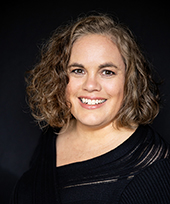
Professor Michelle Ellefson is a Professor of Cognitive Science at the University of Cambridge's Faculty of Education, where she serves as Director of CAM-DTP and as Undergraduate Tutor for Gonville and Caius College. She convenes the INSTRUCT Research Group (Implementing New Student Thinking Resources Using Cognitive Theory) and is affiliated with multiple interdisciplinary initiatives including Cambridge Neuroscience, Cambridge Big Data, and Cambridge Language Sciences.
Her educational background includes a PhD and MA in Brain and Cognitive Sciences from Southern Illinois University and a BA in Psychology, summa cum laude, from the University of Minnesota. She is a member of several professional organizations including the Psychonomic Society, Cognitive Science Society, Women in Cognitive Science, and SPARK Society.
Professor Ellefson's research integrates cognition, neuroscience, child development, and education into a multi-disciplinary program aimed at improving math and science education. Her work focuses on executive functions in school achievement, children's causal reasoning about scientific phenomena, and applying cognitive principles like simplicity and desirable difficulties to classroom learning. Her research spans laboratory-based studies paired with classroom applications to understand cognitive development mechanisms and improve educational practice.
Her recent publications reveal strong trends in executive function research across cultural contexts, particularly examining East-West contrasts and the relationship between executive functions and academic achievement. Her work increasingly focuses on developing and validating assessment tools like the Zoo Task for metacognitive problem-solving, and she is committed to open science practices including registered reports and pre-registration of studies.
- Psychonomic Society
- Cognitive Science Society (CogSci)
- Women in Cognitive Science (WiCS)
- SPARK Society
Professor Ellefson actively supervises PhD students through the Psychology, Education & Learning Studies program and teaches cognitive psychology and educational neuroscience in the PGCE program. She emphasizes quantitative methods and R programming for data analysis, requiring doctoral students to develop strong statistical skills. Her lab follows Cambridge's inquiry-based learning model and maintains a commitment to diversity and inclusion, welcoming researchers from varied socioeconomic, national, and cultural backgrounds. The INSTRUCT Lab also focuses on open science practices, sharing data and materials through OSF and publishing preprints in Psych-Archive.