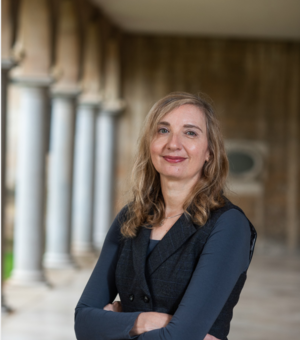
Heather Bouman is a Professor of Biogeochemistry at the University of Oxford, affiliated with St John's College. Her research focuses on understanding marine biogeochemical processes, particularly the biological carbon pump, phytoplankton ecology, and ocean carbon dynamics. She leads projects investigating the impacts of climate change on marine ecosystems and the feasibility of CO₂ storage in shelf seas. Her work integrates field observations, remote sensing, and advanced techniques like fluoro-electrochemistry to classify phytoplankton and assess biogeochemical cycles. Recent studies include analyzing geographical variability in carbon transfer efficiency and evaluating stakeholder perspectives on safe CO₂ storage practices. Bouman collaborates with international teams to develop innovative sensors and AI tools for marine monitoring, emphasizing interdisciplinary approaches to address global environmental challenges. Her research has contributed to policy-relevant insights on carbon sequestration and ocean health in regions like the Arctic, Barents Sea, and South Atlantic.
Dr. Sara Atito Ali Ahmed is a Surrey Future Fellow at the University of Surrey's Faculty of Engineering and Physical Sciences , specifically within the Centre for Vision, Speech and Signal Processing (CVSSP) . She holds a PhD in Computer Science and specializes in advanced machine learning techniques, with a focus on computer vision, medical imaging, and audio signal processing. Her research emphasizes self-supervised learning, multimodal data fusion, and deep learning ensembles for robust decision-making. Her academic journey includes contributions to healthcare AI through projects like SS-CXR for medical image pretraining and DeepChest for multi-task learning in chest X-ray diagnostics. She has also developed innovative models such as the ASiT audio-spectrogram transformer and DailyMAE for efficient masked autoencoder training. Her work spans diverse domains including robotics perception, SAR target recognition, and plant species identification via ensemble methods. Awards and recognitions are not explicitly mentioned in the provided texts, but her prolific publication record highlights her impact in top-tier venues. She has collaborated on interdisciplinary projects ranging from biomedical applications to environmental sensing, demonstrating a commitment to bridging theoretical research with real-world applications.
Kristen M. Meiburger is a Tenure-track Assistant Professor at the Department of Electronics and Telecommunications, Politecnico di Torino. She holds a Master’s in Biomedical Engineering (2010) and a Ph.D. in Biomedical Engineering (2015) from Politecnico di Torino. She has conducted research at the University of Texas at Austin (2013–2014) and the University of Toronto (2015). Her work focuses on biomedical image processing, including ultrasound and photoacoustic imaging, radiomics, deep learning, and signal reconstruction methods. Her research interests emphasize innovative imaging techniques, non-invasive vascular analysis, and dermatological applications. She leads ongoing projects like REAP (cancer imaging with optical coherence/photoacoustic tomography), AI-VASCUES (vascular dysregulation analysis), and ImPACT-AI (ethical AI in photoacoustic imaging). She teaches and proposes thesis topics at Politecnico di Torino’s DET (Department of Electronics and Telecommunications). Recent publications highlight advancements in AI-driven imaging, such as texture analysis in OCT, hybrid deep learning frameworks for microscopy, and GANs for color normalization. Her work bridges medical imaging innovation with clinical applications, focusing on disease diagnosis and treatment monitoring. Ongoing efforts integrate ethical AI practices and multi-center imaging harmonization to improve medical decision-making.
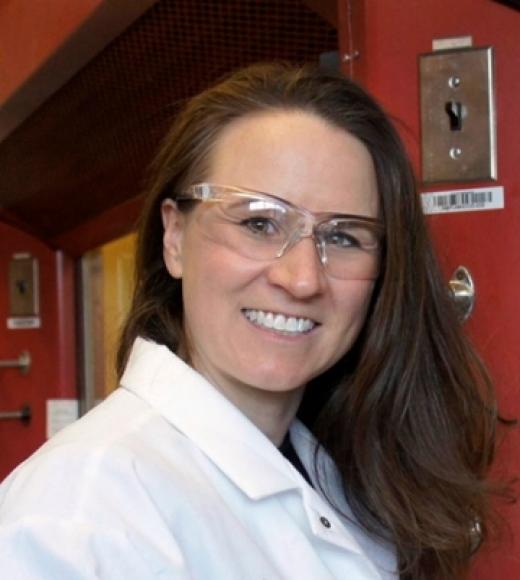
Dr. Vijaya Kolachalama is an Associate Professor at Boston University, affiliated with both the School of Medicine and the Faculty of Computing and Data Sciences, within the Department of Computer Science. Their research focuses on developing AI-driven solutions for clinical challenges, particularly in neurodegenerative diseases, digital pathology, and domain generalization in medical imaging. Key interests include dementia screening frameworks, clinical-grade software tools for pathology, and neural network advancements for data generalization. Education: B.S. from Indian Institute of Technology, Kharagpur, India; Ph.D. from University of Southampton, UK. Their lab (VKola Lab) emphasizes translational AI for healthcare, with projects addressing Alzheimer’s diagnostics, voice-based cognitive assessment, and gait analysis in osteoarthritis. Collaborations span biomedical engineering, neurology, and nephrology. Research trends in their articles highlight AI applications in healthcare, including privacy-preserving voice analysis, multimodal data fusion for diagnostics, and computational models of amyloid-tau interactions in Alzheimer’s. They also explore digital platforms for brain health monitoring and machine learning in clinical trial design. No scientific awards listed. Advising and grants details are not provided in the text. The VKola Lab website (https://vkola-lab.github.io) serves as a hub for their work, including open-source tools and datasets.
Kristie J Koski is an Associate Professor at the University of California, Davis, leading the Koski Lab. Her research focuses on low-dimensional materials, particularly 2D systems, to bridge fundamental physics with real-world applications like optoelectronics and sensors. She holds a Ph.D. from the University of California, Berkeley, and previously worked at Brown University and postdoctoral roles at Stanford and Arizona State University. Her research interests span intercalation chemistry, mechanical properties (via Brillouin spectroscopy), and environmental interactions of nanomaterials. Recent work highlights chemical tuning of acoustic phonons, phase transitions under pressure, and ultrafast carrier dynamics. She has pioneered studies on GeS nanosheets for photovoltaics and THz emission, as well as MoO3 nanoribbons for gas detection. Key Awards: NSF CAREER Award (2015), Nano Research Young Innovator (2019), JPhys50 (2017) Koski’s grants include the NSF CAREER-supported study of acoustic phonons in 2D materials. Her advising record is not explicitly listed, but her work has involved collaborations with postdocs and graduate students. She investigates biomimetic materials (e.g., marine sponge spicules) and biological interactions of nanomaterials, contributing to hazard screening frameworks. Her lab specializes in integrating experimental and computational methods to explore mechanical, electronic, and optical properties of layered materials. Ongoing projects target expanding intercalation strategies to new elements and exploring applications in sensors, energy storage, and environmental monitoring.
Geoffrey R. Hutchison is a Professor and Director of Graduate Studies in the Department of Chemistry at the University of Pittsburgh. His research focuses on materials chemistry, computational methods, and functional materials design, particularly in piezoelectric materials, organic electronics, and machine learning applications. His group develops novel materials from molecular subunits using combined experimental and computational approaches. Research Interests : Materials Chemistry, Theoretical/Computational Chemistry, Piezoelectric Materials, Organic Electronics, and Machine Learning in Chemistry. His work includes designing smart materials, optimizing semiconductor properties, and advancing open-source software like Avogadro and Open Babel. Achievements : Recipient of the Cottrell Scholar Award (2012), IBM Computational Chemistry Award (2002), and Blue Obelisk Award (2006). He has supervised students like Danielle Elsey (PhD), Brianna Greenstein, and Brett Ondich. Publications : Over 60 peer-reviewed articles since 2006, covering computational screening, genetic algorithms for material discovery, and piezoelectric phenomena. Recent work emphasizes data-driven approaches in photovoltaics and conformer generation. Grants & Software : Developed open-source tools critical to the field, including Open Babel and Avogadro. Active in NSF-funded projects exploring molecular design and quantum chemistry.
Alexander Bucksch is an Associate Professor in the School of Plant Sciences at the University of Arizona , part of the College of Agriculture, Life & Environmental Sciences . His research focuses on root phenomics, combining computational imaging and geometric/topological analysis to study plant development and environmental interactions. He develops innovative tools like the DIRT platform for root trait analysis and collaborates on cyberinfrastructure projects such as CyVerse. Education: PostDoc, Georgia Institute of Technology, USA Ph.D., Delft University of Technology, Netherlands M.Sc. and B.Sc., Brandenburg Technical University, Germany Research Interests: Root architecture and phenotypic variation Non-destructive sensing technologies (e.g., Fiber Bragg gratings) Plant-microbiome interactions 3D imaging and machine learning applications Grants & Projects: CAREER Grant (2019): Quantifying phenotypic variation in crop roots CyVerse: Cyberinfrastructure for open science Labs/Teams: Plant IT Lab (focus: computational plant biology)
Dr. Shelley Haydel is Professor in the School of Life Sciences at Arizona State University. Her research develops novel antibacterial strategies, focusing on tuberculosis therapeutics and mineral-based antimicrobials. Recent work includes diagnostic technologies for rapid pathogen detection and laser-activated wound sealants. She directs projects funded by NIH and other agencies addressing drug-resistant infections. Key Research Areas: Mycobacterium tuberculosis pathogenesis and treatment Antibacterial mechanisms of natural clay minerals Rapid diagnostic platforms for bacterial infections
Professor Paul Watton holds the position of Professor of Computational & Theoretical Modelling at the University of Sheffield's School of Computer Science, leading the Complex Systems Modelling research group. He also holds an adjunct professorship at the University of Pittsburgh's Department of Mechanical Engineering and Materials Science. His academic journey includes a BSc from the University of Newcastle, an MSc from the University of Manchester, and a PhD from the University of Leeds, followed by postdoctoral work at the Universities of Glasgow and Oxford. His research focuses on biomechanics and mechanobiology of soft tissues, particularly in cardiovascular systems, arterial mechanics, and urinary bladder dynamics. He develops theoretical/computational models to study homeostasis, aging, and disease progression, with applications to aneurysms, bladder mechanics, and vascular pathologies. Recent work includes modeling cerebral vasospasm treatments, urinary bladder compliance mechanisms, and osteoarthritis progression using chemo-mechano-biological frameworks. Key grants include the BOOM project (NIH-funded) to model bladder outlet obstruction and the SofTMech Statistical Emulation Hub (EPSRC). He has organized international symposia on aneurysm modeling and collaborates globally on interdisciplinary projects combining computational modeling with experimental data. His publications span over 80 articles in journals like Biomechanics and Modeling in Mechanobiology and Journal of Biomechanics , focusing on multiscale modeling, fluid-solid interactions, and patient-specific simulations. Current research themes include digital twin development for healthcare and mechanobiological frameworks for degenerative diseases.
Danfeng Cai, PhD, is an Assistant Professor in the Department of Biochemistry and Molecular Biology at the Johns Hopkins Bloomberg School of Public Health and the School of Medicine. Her research focuses on biomolecular condensates and their roles in transcription regulation and cancer. The Cai Lab employs advanced imaging, genomics, and proteomics to investigate phase separation in cellular processes, particularly in renal cell carcinoma and YAP/TEAD-driven transcription. PhD, Johns Hopkins University, 2014 BS, Peking University, 2009 The Cai Lab investigates how liquid-like condensates regulate transcription and chromatin organization in normal and cancer cells. Key research areas include the formation and function of YAP/TEAD transcription hubs and the role of membrane-less organelles in papillary renal-cell carcinoma (PRCC). Using super-resolution microscopy, single-particle tracking, and optogenetics, the lab explores how phase separation influences gene expression and cellular homeostasis. The lab's recent publications highlight a strong focus on phase separation, transcriptional reprogramming, and cancer progression. Articles span topics such as TFE3 fusion oncoprotein condensates, ADP-ribosylation in p62 bodies, and chemoproteomic probes, reflecting interdisciplinary research at the intersection of cell biology, cancer, and proteomics. Scientific Awards: Kavli Fellow, National Academy of Sciences Leading Edge Fellow, Leading Edge Symposium The Lorraine Flaherty Award, International Mammalian Genome Society Forbeck Scholar Award, William Forbeck Research Foundation Fellows Award for Research Excellence, National Institute of Health Damon Runyon-Dale F. Frey Award for Breakthrough Scientists, Finalist Bae Gyo Jung Award, Johns Hopkins University Danfeng Cai has secured significant research funding, including an R35 MIRA grant from the National Institute of General Medical Sciences (NIH), funding from the Department of Defense’s Kidney Cancer Research Program, and institutional support from Johns Hopkins Bloomberg School of Public Health. She actively mentors trainees in cutting-edge microscopy and proteomics techniques. The Cai Lab is interdisciplinary, fostering collaborations with physician scientists, engineers, and mathematicians. The Cai Lab is based in the Department of Biochemistry and Molecular Biology at Johns Hopkins Bloomberg School of Public Health. The lab is actively recruiting and emphasizes curiosity-driven research using advanced imaging and proteomics tools to study biomolecular condensates. The team collaborates widely across Johns Hopkins and internationally.
Dr. Joe Dahlen is an Associate Professor at the University of Georgia's Warnell School of Forestry and Natural Resources. His primary affiliation is with the Department of Forest and Natural Resources, where he focuses on wood quality, forest biology, and sustainable forestry practices. Dr. Dahlen holds a PhD in Forest Resources from Mississippi State University, an M.S. in Forest Products, and a B.S. in Wood and Paper Science from the University of Minnesota. His teaching portfolio includes courses such as FANR 1100 - Natural Resource Conservation , FORS 4530/6530 - Wood Properties and Utilization , and specialized topics like FORS 8035 - Secondary Xylem Structure and Function . His research emphasizes non-destructive evaluation techniques for wood properties, genetic engineering of tree species, and the impact of environmental factors on tree physiology. Recent work includes developing automated imaging systems for resin canal analysis, CRISPR-based genetic modifications in hybrid poplar, and predictive modeling of wood stiffness using machine learning. His studies often bridge laboratory research with field applications, addressing both fundamental biology and practical forestry challenges. Dr. Dahlen collaborates widely, with publications in high-impact journals across forestry, material science, and bioengineering. His research is supported by grants focusing on sustainable forestry practices, climate adaptation strategies, and advanced wood property assessment technologies.
Prof. Dr.-Ing. Klaus Diepold is a Full Professor and Chair of Data Processing at the Technical University of Munich (TUM), affiliated with the TUM School of Computation, Information and Technology. He earned his PhD in Electrical Engineering from TUM in 1992. His research focuses on machine learning, multimedia signal processing, moral machines, and affect modeling for cognitive systems. He actively promotes entrepreneurship through the Center for Digital Technology and Management (CDTM). Academic Career: Diepold held visiting professorships at the University of Alberta, Canada, and NICTA, Australia. He served as Dean of Studies at TUM (2005–2010) and Senior Vice President for Diversity and Talent Management (2013–2015). He has contributed to MPEG standards and led projects in telepresence (SFB-453) and cognitive systems (CoTeSys). Research Interests: His work spans ethical AI, reinforcement learning, biomedical applications of machine learning, and interdisciplinary education. Notable projects include CellFace, Sirrel, and the development of AI-driven diagnostic tools using digital holographic microscopy. Awards: He has received the TUM Teaching Prize (2004), Fellowship for Innovation in University Teaching (2012), and the 2024 IEEE German Education Conference Best Paper Award. His work on 'Komputer & Creativität' highlights innovative teaching at the intersection of engineering, AI, and theater. Labs & Teams: His team includes researchers like Sven Gronauer and Alice Hein, focusing on projects like GenAI chatbot agents, clinical applications of computational medicine, and cybersecurity. The Chair of Data Processing collaborates with industry partners like fortiss and Rohde & Schwarz.
Dr. Stefan Semrau is an Associate Professor at the Leiden Institute of Physics (LION) within the Faculty of Science at Leiden University . His research focuses on quantitative single-cell biology, particularly studying cell-fate decision-making using embryonic stem cells as a model system. Develops single-cell RNA-seq and single-molecule FISH methods Applies machine learning and mathematical modeling to decode stem cell differentiation Investigates interplay of epigenetics, cell cycle, and signaling molecules His work addresses both fundamental biological dynamics and applications in regenerative medicine and cancer stem cell eradication . Recent publications emphasize single-cell transcriptomics and gene fusion quantification . The Semrau Lab maintains collaborations across disciplines and develops tools like fuseFISH for cancer research. Scientific Awards FOM-Projectruimte Grant (2016) for stem cell dynamics research Advising & Collaborations Current advisees include PhD students studying retinoic acid-induced differentiation and lineage priming. The lab integrates computational and experimental approaches through partnerships with biotech and physics teams.
Dr. Nicolae Viorel Buchete is an Associate Professor at the University College Dublin (UCD) School of Physics . He serves as Vice Principal for Graduate Studies in the College of Science and leads UCD's Computational Physics postgraduate program . Buchete holds academic degrees from Boston University (PhD) , Al. I. Cuza University , and University of Patras . Current appointments: 2022-Present (Vice Principal), 2014-Present (MSc Program Director) Previous roles: NIH Research Fellow (2003-2008), Visiting Assistant Professor at Boston University (2009-2010) His research focuses on theoretical and computational biological physics with applications in nanoscience , molecular dynamics of biomolecular systems , and multiscale modeling of complex fluids . Recent work includes conformational kinetics of oncogenic proteins , physics-based modeling of nanocarriers , and amyloid peptide dynamics in Alzheimer's disease . Scientific Contributions: Developed advanced Markov State Models and Milestoning frameworks for long-time MD simulations Identified novel salt bridge mechanisms in kinase activation and drug resistance Explored piezoelectric properties of diphenylalanine nanostructures Teaching Innovation: Advocates for research-oriented teaching at both undergraduate and MSc levels. Coordinates modules including Computational Biophysics and Thermodynamics & Statistical Physics at UCD.
Associate Professor Ranjith Rajasekharan Unnithan is a Research Group Leader and Assistant Dean (Graduate Research Experience) at the University of Melbourne's Faculty of Engineering and Information Technology. He also serves as Director of Sensor Research at Hort-Eye Pty Ltd (precision agriculture drones) and Lead Scientific Advisor at KDH Design Co Ltd (AR technology). His academic affiliations include: Associate Professor, Department of Electrical and Electronic Engineering Advanced Sensors Spectral Image Sensors Researcher Topical Editor, Optics Letters (Optica/OSA Group) Research Focus: Spanning image sensors , augmented reality displays , nanophotonic engineering , and biomedical sensing with applications in space, agriculture, and neurological disorders. Key technologies include: Photonics and Electronics for sensor systems Machine learning integration with sensor data Miniscope Lab-on-chip Sensors Autonomous drone sensing platforms Scientific Recognition: Dean's Excellence Award in Industry Research (2024) EMI Emerging Leader Award (2020) MCN Tech Fellow Ambassador (2019) Transurban Innovation Competition Winner (2017) Academic Background: PhD in Electrical Engineering from the University of Cambridge and Executive Certificate in Management from MIT's Sloan School.