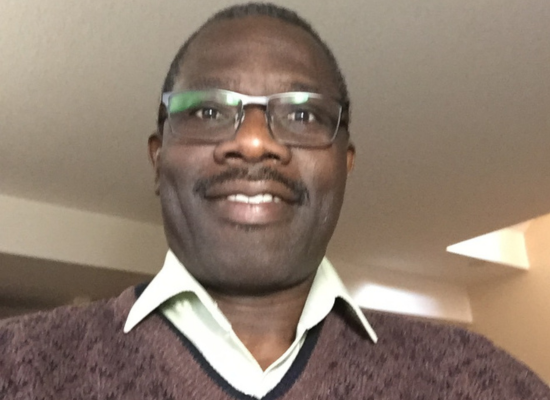
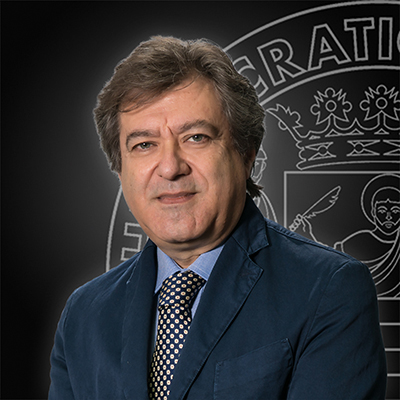
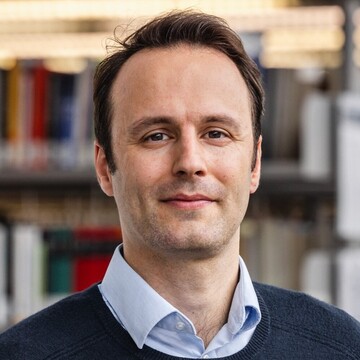
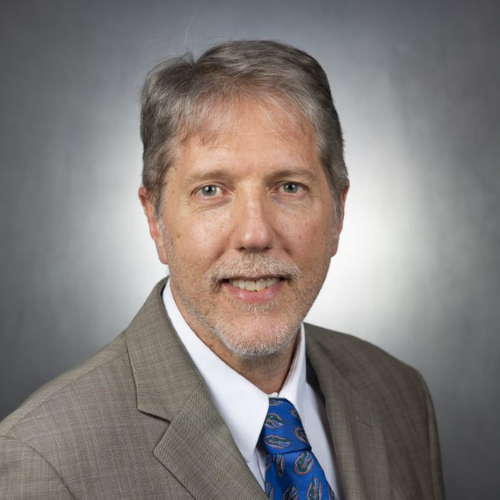
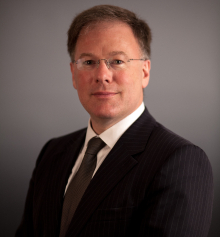
Dr. Ebenezer Asem is an Associate Professor in the Finance department at the Dhillon School of Business, University of Lethbridge. His research focuses on corporate finance, market microstructure, and behavioral finance, addressing critical areas such as dividend policy, capital structure, price momentum, and liquidity dynamics. Research Themes: Dividend policy, capital structure, market microstructure, behavioral finance, rational asset pricing. Grants: Funded by the University of Lethbridge Research Fund and Faculty of Management Seed Fund for projects on illiquidity shocks and dividend valuation asymmetries. Publications: Recent work explores liquidity, investor sentiment, and price momentum in global financial markets, with a focus on Australia and North America. Expertise: Behavioral finance, rational asset pricing, trading hours effects, and modeling fat-tailed distributions. Contact: Located on the Lethbridge campus, reachable at (403) 382-7142 or ebenezer.asem@uleth.ca .
Raffaele Cerulli is a Full Professor of Operations Research at the Department of Mathematics of the University of Salerno, Italy, where he also serves as Head of Department. He is a Member of the Scientific Committee of UMI (Unione Matematica Italiana) and Director of the Laboratory "Model and Applications of Mathematical Methods." His office is located at the Fisciano Campus, Building F2, First Floor, Room 026, with reception hours on Tuesdays from 3:00 PM to 5:00 PM and Wednesdays from 3:00 PM to 4:00 PM. Dr. Cerulli's research focuses on Operations Research, Combinatorial Optimization, and Network Theory . His work spans multiple application areas including wireless sensor networks, vehicle routing, spanning tree problems, and graph optimization. He has made significant contributions to problems involving labeled graphs, minimum branch vertices spanning trees, and maximum lifetime problems in sensor networks. His research combines theoretical developments with practical applications, particularly in transportation and network systems. Analysis of his recent publications (2022-2025) reveals continued strong activity in combinatorial optimization, with particular emphasis on flow problems, spanning tree variants, and sensor network optimization. His work demonstrates consistent methodological innovation, frequently employing exact algorithms, metaheuristics, and mathematical programming approaches to solve complex combinatorial problems. Many of his recent papers represent extensions or novel variants of classical optimization problems with practical constraints. Throughout his career, Dr. Cerulli has maintained extensive collaborations, particularly with researchers Carrabs, Gentili, and Raiconi, resulting in numerous joint publications across top-tier operations research journals. His work has contributed significantly to both theoretical developments and practical applications of optimization techniques in network systems.
Danny Raz is a Professor at the Technion - Israel Institute of Technology, specializing in computer science and networking. His work focuses on cloud computing, network function virtualization (NFV), resource allocation, and online algorithms. Institution: Technion - Israel Institute of Technology, Haifa, Israel Research interests include: Network Function Virtualization (NFV) and service chaining Stochastic and dynamic resource allocation Online algorithms in random-order models 5G/edge computing infrastructure Blockchain network analytics Over the past decade, his publications in venues like IEEE/ACM Transactions on Networking and INFOCOM address: Optimal deployment of cloud services TCAM-based classification and flow measurement Game-theoretic approaches to load balancing Cost-aware live migration and fault recovery Wireless network optimization (4G/5G) Collaborations with researchers like Yuval Shavitt, Joseph Naor, and Haim Kaplan highlight his interdisciplinary work bridging theory and practice in networking and cloud systems.
Mohanad Saad is a Senior Research Associate at the Centre of Operational Research and Decision Analysis within the School of Mathematics & Physics in the Faculty of Technology at the University of Portsmouth. His work spans operational research, logistics, and optimization frameworks. Research Focus : Developing advanced routing algorithms, multi-criteria decision-making models, and stochastic scheduling systems for diverse applications including renewable energy maintenance and emergency medical services. Key Contributions : Published 14 research outputs (including 5 articles and 9 conference abstracts) over the past seven years, with recent 2025 work on unmanned vehicle coordination and 2024 studies on MCDM for freight hubs and multi-objective EMS location problems . Thesis : Completed a doctoral thesis in 2018 on robust dynamic scheduling in manufacturing environments , supervised by Professors D. Ouelhadj and D. Jones. Technical Expertise : Specializes in multi-echelon location routing , UAV swarm scheduling , and emergency resource allocation using algorithmic optimization. Contact : Mohanad.Al-Behadili1@port.ac.uk
Professor Davud Rostam-Afshar is a Professor (W2) at the University of Mannheim Business School, where he serves as academic director of the German Business Panel. Previously, he held positions at the University of Hohenheim, Free University of Berlin, and University of Potsdam, with research stays at UC Berkeley and Harvard University. He also serves as a consultant to the European Commission and the OECD. Education: PhD (summa cum laude) in Economics, Free University of Berlin (2010-2015), Supervisors: Viktor Steiner (FU Berlin), Richard Blundell (UCL) Diploma (M.Sc. equivalent) in Economics, Free University of Berlin (2005-2010) Rostam-Afshar's research spans several interconnected fields with a focus on empirical analysis. His work in accounting and taxation examines corporate decision-making, regulatory effects, and transparency issues. In public finance, he investigates optimal taxation, tax incidence, and the relationship between taxation and economic behavior. His labor economics research explores occupational regulation, migration effects, and precautionary behavior. Methodologically, he specializes in econometrics, survey design, and experimental approaches, often combining theoretical modeling with empirical validation. His recent publications reveal a strong focus on business decision-making during economic disruptions (pandemics, wars), with particular attention to how firms respond to regulatory changes, taxation policies, and external shocks. The German Business Panel serves as a key data source for much of this research, providing insights into managerial perceptions and expectations that complement traditional accounting data. Scientific Awards: Principal Investigator, German Research Foundation (2023) University of Turin Fellowship (2020) Excellence in Reviewing Award, Labor Economics (2020) Best Teaching Award, University of Hohenheim (2019-2020 and 2019) Ph.D. Fellowship, German National Academic Foundation (2011-2013) Scholarship, German National Academic Foundation (2009-2010) Rostam-Afshar has advised numerous master's and PhD students, including Laura Arnemann (now at OECD) and Lisa Feil (now at SAP). His grant portfolio includes significant funding from the German Research Foundation and collaborations with major institutions including the European Commission. He has developed specialized Stata modules for econometric analysis, including BBANDITS for multi-armed bandit experiments. As academic director of the German Business Panel, Rostam-Afshar leads a major research initiative that collects semi-annual survey data from managers responsible for accounting and tax matters in German firms. This panel provides unique insights into firm-level decision-making processes that complement traditional financial reporting data.
Prof. Dr. Dr. h.c. Clemens Fuest is a Full Professor of Economics at the Ludwig Maximilian University of Munich (LMU) and serves as President of the ifo Institute – Leibniz Institute for Economic Research. He is also Director of the Center for Economic Studies (CES) and Executive Director of CESifo GmbH. His research focuses on public economics, corporate taxation, fiscal policy, and European economic integration. Key Roles: President (ifo Institute), Director (CES), Professor (LMU Munich) Research Themes: Taxation, fiscal policy, economic governance, profit shifting, sustainable finance Academic Contributions: Fuest has published extensively on corporate tax competition, international tax harmonization, and the economic impacts of crises (e.g., Brexit, pandemic). His work bridges theoretical models with empirical analyses, particularly using German and EU data. Key Collaborations: Regularly publishes with experts like Andreas Peichl, Florian Neumeier, and Niklas Potrafke. His articles appear in top journals including the Journal of the European Economic Association, International Tax and Public Finance, and the American Economic Review. Email Contact: fuest@econ.lmu.de
Dr. Manuel Rossetti is a University Professor in the Department of Industrial Engineering at the University of Arkansas , where he has been a faculty member since 1999. He serves as the Director of the Data Science Program for the College of Engineering, Walton College of Business, and Fulbright College of Arts & Sciences, and previously directed the Center for Excellence in Logistics and Distribution (CELDi) . Dr. Rossetti teaches courses in probability modeling, simulation, logistics, and database systems. Ph.D. in Industrial & Systems Engineering (The Ohio State University) M.S. in Industrial & Systems Engineering (The Ohio State University) B.S. in Industrial Engineering (University of Cincinnati) Dr. Rossetti’s research focuses on the design, analysis, and optimization of logistics, manufacturing, healthcare, and transportation systems through stochastic modeling, computer simulation, operations research, and heuristic techniques . His work addresses strategic challenges in inventory management, RFID technology, supply chain resilience, and emergency planning. He also emphasizes active and collaborative teaching methods to enhance student engagement and foster a research mindset. The 15 most recent publications highlight his expertise in supply chain simulation , multi-echelon inventory systems , logistics optimization , and healthcare operations . Topics include inventory cost analysis, RFID visibility, evacuation modeling, and benchmarking systems. His methodological approaches frequently involve stochastic modeling , heuristic algorithms , and discrete-event simulation frameworks like JSL and Simfone.
Kamlesh Mathur is a Professor and Chair of the Operations Department at the Weatherhead School of Management, Case Western Reserve University. He has been affiliated with the institution since his initial appointment in 1980 and contributes to supply chain logistics, vehicle routing, and service center location optimization. Education: PhD (Case Western Reserve University, 1980), MS (Wayne State University, 1976), MTech (IIT Kanpur, 1975), BE (Engineering College Jodhpur, 1972) His research focuses on supply chain distribution, emphasizing vehicle routing efficiency and service center location strategies . Recent publications highlight stochastic optimization, multi-echelon logistics, and reverse supply chain design, with applications in manufacturing and telecommunications. Key trends in his work include location-allocation modeling , heuristic algorithm development , and interactive software systems for operations research problems, reflecting interdisciplinary applications from biomedical engineering to radio frequency management. Dr. Mathur teaches courses in business statistics, predictive modeling, and global supply chain logistics. He serves on the editorial review board of the Journal of Business Logistics and is a long-standing member of INFORMS.
Dominique Geniet serves as an Associate Professor at the University of Poitiers, France, working within the College of Engineering. He is affiliated with the LIAS Laboratory (Laboratoire d'Ingénierie des Applications de la Signalétique), which maintains dual locations at ENSIP (École Nationale Supérieure d'Ingénieurs de Poitiers) and ISAE-ENSMA (École Nationale Supérieure de Mécanique et d'Aérotechnique). His research spans theoretical computer science and practical applications in real-time systems, with significant contributions to scheduling theory, system validation, and more recently, data management. Professor Geniet's research focuses on hard real-time systems with strict temporal constraints, employing formal methods including regular languages, generating functions, and discrete geometry. His early work concentrated on theoretical foundations of scheduling algorithms for uniprocessor and multiprocessor systems, evolving toward distributed real-time systems validation, and more recently expanding into data warehousing optimization and query scheduling. His interdisciplinary approach bridges theoretical computer science with practical applications in critical systems where timing constraints are paramount. Analysis of his publication trajectory reveals a consistent focus on real-time systems with evolving applications. The earliest works (1995-2005) emphasize theoretical foundations using formal language theory and mathematical models for scheduling and validation. The middle period (2005-2012) shows expansion into distributed systems and geometric approaches to validation. The most recent publications (2012-2018) demonstrate a strategic pivot toward data management problems while maintaining the core focus on timing constraints and optimization. This evolution reflects both theoretical depth and practical adaptation to emerging computational challenges. Professor Geniet has been actively involved with the Real Time Team and Data Engineering Team within LIAS Laboratory. His work demonstrates strong collaboration with researchers including Gaëlle Largeteau-Skapin, Annie Choquet-Geniet, and Ladjel Bellatreche, suggesting participation in both theoretical research groups and applied projects with potential industrial relevance. The dual affiliation with ENSIP and ISAE-ENSMA indicates work spanning broader engineering contexts beyond pure computer science.
Can Huang is an Assistant Professor of Finance at the Gies College of Business, University of Illinois Urbana-Champaign. His research focuses on entrepreneurial finance, innovation, venture capital markets, and banking. He teaches FIN 321: Advanced Corporate Finance and has received the FMA 2024 Best Paper in Financial Intermediation & Markets for his work on venture capital networks. Research interests include exploring how venture capital networks influence investment decisions and firm outcomes, analyzing differences in deposit pricing between large and small banks, and studying signaling mechanisms in venture debt financing. His work highlights themes like capital misallocation, liquidity services, and asymmetric information in financial markets. Awards: FMA 2024 Best Paper in Financial Intermediation & Markets Teaching & Advising: FIN 321: Advanced Corporate Finance
Dr. Anthony Fee is a Senior Lecturer in the Management Discipline Group at the University of Technology Sydney (UTS), within the Business School. His research focuses on global workforce dynamics, particularly expatriate experiences in international aid/development sectors, host-country nationals (HCNs) in multinational enterprises, and cross-cultural management. He has authored over 50 publications in journals like Human Relations and Harvard Business Review, with recent work addressing knowledge sharing in China, expatriate safety in hostile environments, and post-pandemic global mobility trends. Fee’s research interests span organizational behavior, human resources strategy, and institutional forces shaping international operations. His funded projects include the Longitudinal Study of Australian Volunteers (2019–2026), analyzing volunteer program impacts and policy effectiveness. He has collaborated with organizations like the Australian Volunteers Program and the Department of Foreign Affairs & Trade. His articles highlight themes such as HCN knowledge-sharing patterns, expatriate-local interaction dynamics, and safety practices in high-risk regions. Fee’s work bridges academic theory and practical organizational challenges, offering insights into global talent management, intercultural collaboration, and multinational enterprise strategies. Fee supervises Master’s and PhD students, focusing on global work contexts. His grants include contract research on volunteer program evaluations and thematic impact assessments in international development. Despite no listed awards, his prolific publication record and industry collaborations underscore his academic and professional influence in cross-cultural management studies.
Jen Rhymer is Assistant Professor in the Strategy and Entrepreneurship Group at UCL School of Management, researching the future of work and organizing paradigms. Her work examines collaboration in flexible work arrangements and technology integration in organizations. Research investigates location-independent organizations through ethnographic studies of distributed teams, analyzing coordination mechanisms across time zones and digital platforms. Current projects explore how organizations incorporate non-human entities (AI systems, environmental stakeholders) into decision-making frameworks and governance structures. Recent publications develop theory around Conjoined human-technology agency in organizational contexts Design principles for location-independent collaboration Synthetic stakeholders in sustainable decision-making Honors include the Gerardine DeSanctis Dissertation Award (2021) and AMR Best Paper Award (2022). Doctoral supervision focuses on digital transformation in organizational contexts and sustainable business models.
Robert Gilbert serves as Interim Senior Vice President for Agriculture and Natural Resources and Director of the Florida Agricultural Experiment Station at the University of Florida. As Professor and former Chair of the Agronomy Department, he oversees research programs focused on sugarcane breeding, biofuel crops, and sustainable agriculture systems. His research addresses sugarcane varietal development, nutrient cycling in agroecosystems, and climate-resilient crop management strategies. Gilbert has developed 33 commercially adopted sugarcane cultivars that dominate Florida's industry, contributing significantly to agricultural productivity and bioenergy feedstock development. Honored with the USDA/ARS Sustained Effort Technology Transfer Award and UF/IFAS International Achievement Award, he manages extensive research operations including the 9,500-acre Ordway Swisher Biological Station and Plant Science Research Unit. Gilbert leads international collaborations through the UF/IFAS Global Agronomic Center for Green Energy and serves on the executive committee of the International Society of Sugar Cane Technologists.
Friedrich Götz is an Associate Professor of Psychology in the Department of Psychology within the Faculty of Arts at the University of British Columbia. He holds a PhD (2021) and MPhil (2017) from the University of Cambridge and a BSc (2016) from the University of Konstanz. PhD, University of Cambridge (UK), 2021 MPhil, University of Cambridge (UK), 2017 BSc, University of Konstanz (Germany), 2016 Dr. Götz leads the Personality and Geographical Ambiance (PANGEA) Lab, focusing on geographical psychology and regional personality differences through interdisciplinary Big Data approaches. His research integrates social and personality psychology with behavioral science to examine real-world outcomes, including pandemic behavior, cultural shifts, and person-environment interactions. Additional interests span mobility/migration, wanderlust, courage, entrepreneurship, and experience sampling methods. He collaborates with TIME Magazine on large-scale surveys involving over 3 million participants. His publication trends reveal consistent contributions to top journals like Nature Human Behaviour and Journal of Personality and Social Psychology , with recent work emphasizing methodological rigor, geographical influences on behavior, and pandemic-related psychological responses. Key themes include spatial analysis techniques, personality-environment interactions, and the societal implications of psychological research. Rising Star Award (Association for Psychological Science), 2025 SAGE Emerging Scholar Award (Society for Personality and Social Psychology), 2025 Top 40 under 40 – Germany (CAPITAL Magazine), 2024 President’s New Researcher Award (Canadian Psychological Association), 2024 Best Dissertation Prize (German Psychological Society), 2021 Leading Scholar (Green College), 2021 Dr. Götz advises students through UBC's Psychology graduate programs and teaches undergraduate courses (PSYC 305A: Personality Psychology) and graduate courses (PSYC 528: Methods in Social Psychology and Personality; PSYC 569: Contemporary Conceptual Issues). His TIME Magazine collaboration represents a significant grant-adjacent initiative. The PANGEA Lab operates on principles of inclusivity and diversity, acknowledging its location on the unceded territory of the xʷməθkʷəy̓əm (Musqueam) people, and focuses on how humans and environments mutually shape each other.
William Regli is a Professor at the University of Maryland's Clark School of Engineering, holding appointments in Computer Science, Electrical and Computer Engineering, and the Institute for Systems Research. He also directs the Applied Research Laboratory for Intelligence and Security (ARLIS), overseeing over 75 researchers focused on defense and intelligence challenges. Regli's career spans academia, government leadership (including DARPA's Defense Sciences Office), and industry, with over 250 publications and five foundational U.S. patents in 3D CAD search. His research integrates AI, robotics, and computational modeling to address interdisciplinary problems in engineering, materials science, and national security. Education: Ph.D. and B.S. in Mathematics from the University of Maryland and Saint Joseph's University, respectively. He is a Fellow of AAAS and IEEE, recognized for contributions to 3D search and intelligent manufacturing. Research interests include AI agents, cyber-infrastructure for engineering data sustainability, advanced materials design, and robotic interoperability using category theory. His recent work emphasizes applying AI to national security, including trustworthy AI evaluation and social science integration. Awards include the DARPA Meritorious Public Service Medal (2018), AAAS Fellowship (2020), and IEEE Fellowship (2017). His articles reflect a focus on multi-agent systems, robotic task planning, and formal methods in autonomous systems. He advises multiple PhD students and has spun off two tech startups. Regli's laboratories include ARLIS, where he develops solutions for defense missions, and collaborates with the Maryland Robotics Center. His work bridges academia and government, emphasizing real-world impact through innovative computing research.