Terje Andreas Eikemo is a Professor at the Department of Sociology and Political Science , Norwegian University of Science and Technology (NTNU) , and Head of the CHAIN research center . His work focuses on the intersection of social inequality , public health , and global policy , emphasizing how socioeconomic factors like education , income , and welfare systems influence mortality , chronic diseases , and mental health . He combines theories from sociology , epidemiology , and medicine to address health disparities across diverse contexts, including pandemics , climate change , and migration . 2009: Prize for Young Researchers in the Humanities 2010: SINTEF Prize for Outstanding Research 2014: NTNU Star Program Eikemo has published extensively in top journals like The Lancet and BMJ Open , with research themes spanning social determinants of health , policy interventions , and global health equity . His work includes GBD studies , European Social Survey analyses , and refugee health assessments. He serves as Editor-in-Chief of the Scandinavian Journal of Public Health and collaborates with international bodies like WHO and UNESCO .
Scott McCabe is a Professor of Marketing at Birmingham Business School, University of Birmingham. He earned his PhD from the University of Derby in 2001, focusing on visitor motivations in the Peak District National Park, and holds an MA in Leisure and Tourism Studies from the University of North London (1993) and an HND in Leisure Studies from the University of Salford (1991). Current co-editor in Chief of the Annals of Tourism Research Editorial board member of Tourism Management Elected fellow of the International Academy for the Study of Tourism (2019+) His research spans social tourism , responsible tourism , tourist emotions , and socio-linguistic methodology , with significant work on wellbeing outcomes from supported holidays for disadvantaged families. He has contributed to Annals of Tourism Research , Journal of Travel Research , and other top-tier journals. Recent publications address topics like qualitative research sampling , tourism theory , dark tourism motivations , and smart destination engagement . His work combines tourism policy critique , consumer behavior analysis , and methodological innovation . Scientific awards include fellowships and leadership roles in international tourism research committees. He has served as VP for the International Sociological Association's Tourism Research Committee and co-chairs the Academy of Marketing's Tourism Marketing SIG.
Thomas Jaeger is a Professor of European Law at the University of Vienna’s Faculty of Law, specializing in the Internal Market and Competition within European Commercial Law. He leads the Institute for European, International and Comparative Law and serves as President of the Austrian Society for European Law (ÖGER), a member of FIDE, advocating for Austrian perspectives in EU legal developments. His research spans European Commercial Law, State Aid Law, Media Regulation , and Intellectual Property , with notable publications addressing EU legal frameworks for transport, digital markets, and gambling concessions. Recent lectures focus on state aid challenges, constitutional identity conflicts , and merger control . Jaeger supervises dissertations requiring significant scientific contribution and has organized events like the European Law Roundtable with CJEU and State Aid Law Day . He has held visiting roles at Hannover and Munich universities and previously worked at the Max Planck Institute and UNHCHR .
Victoria A. Beard is Professor of City and Regional Planning at Cornell University's College of Architecture, Art, and Planning, where she serves as Director of the Cornell Mui Ho Center for Cities. She is also a Core Faculty member of the Southeast Asia Program and was named a Global Public Voices Fellow (2021-22) for her work on urban poverty and water/sanitation inequality in developing countries. Education: Ph.D. in Community and Regional Planning, University of British Columbia (1999) M.A. in Urban Planning, University of California–Los Angeles (1995) B.A. in Urban Studies and Planning, University of California–San Diego (1992) Beard's research examines how communities in the Global South navigate formal planning systems to address urban poverty through collective action and transnational networks. Her work emphasizes water/sanitation infrastructure as critical sites of inequality, investigating how intermittency and affordability barriers perpetuate urban exclusion. She conducts comparative fieldwork in Southeast Asia (Indonesia, Thailand, Cambodia) and transnational contexts (Oaxaca/Southern California), analyzing how community-based planning can drive city-wide transformation despite institutional constraints. Her recent publications reveal a strategic shift toward infrastructure justice, with increasing focus on municipal service delivery systems and climate resilience. Beard consistently connects micro-level community practices to macro-level policy frameworks, highlighting pathways for inclusive urban development that center marginalized populations' lived experiences. Scientific Awards: Global Public Voices Fellow (2021-22) International Faculty Fellow, Global Cornell (2017) Fulbright Scholar to Indonesia (1993-94) Beard has secured major research funding including CORCL (University of California–Irvine) and Pacific Rim Research Program grants for transnational community planning projects. With 20+ years of practitioner experience, she has designed poverty-alleviation programs for the World Bank, Asian Development Bank, and RAND, specializing in community-based development, monitoring/evaluation systems, and national policy implementation. Her grant portfolio bridges academic research and on-the-ground impact through partnerships with NGOs like Mercy Corps. As Director of the Cornell Mui Ho Center for Cities, Beard leads initiatives focused on climate-resilient urban futures, including symposia on New York City resilience and Kenya's informal housing. She collaborates extensively with Cornell's Southeast Asia Program and Atkinson Center for Sustainable Future, building interdisciplinary teams that integrate planning, public health, and environmental science perspectives.
Dr. Andreas Baur is a research associate at the Institute of Ethics and Technology (IZEW) , University of Tübingen, and a PhD candidate at the Amsterdam Institute for Social Science Research (AISSR) , University of Amsterdam. He serves as fellow at the Critical Infrastructure Lab Amsterdam and contributes to the DoingIPS communication team. Education: M.A. in Peace Research and International Politics, University of Tübingen B.A. in Political Science and Economics, University of Tübingen/Universidad de Guadalajara Research Focus: Interdisciplinary analysis of IT infrastructures' political implications, particularly cloud computing's role in power dynamics, digital sovereignty (including EU's Gaia-X initiative), technology ethics, and governance of socio-technical systems. His work bridges International Relations , Science and Technology Studies , and ICT Policy . Recent Research Trends: Examines cloud infrastructure politics through lenses of sovereignty claims, hybrid cloud architectures, and material manifestations of power in digital ecosystems. Publications explore European digital governance attempts, cloud imaginaries, and multi-cloud regulatory challenges. Academic Contributions: Co-editor of Feminist Data Protection special issue ( Internet Policy Review , 2021) Participant in EU Horizon 2020 HEIMDALL project Contributor to EU FP7 SECTOR initiative Member of BMBF-funded Privacy-Arena and digilog@bw projects Teaching & Outreach: Conducts seminars on security in modern information technologies and participates in public workshops regarding AI ethics, digital sovereignty, and cyber security challenges. Regularly contributes to public debates through media appearances and policy discussions.
Kai Mesa is an Assistant Professor in the Department of Molecular Biology at Princeton University, where he leads the Laboratory of Macrophage Dynamics. His research integrates immunology, stem cell biology, and advanced imaging to study macrophage behavior in tissue regeneration and aging, primarily using mouse skin models. Education: Ph.D., Yale University B.S., University of California, Berkeley Dr. Mesa's research focuses on understanding how macrophages establish niche-specific identities, influence wound healing outcomes, and contribute to age-related tissue dysfunction. By combining multiphoton intravital microscopy with spatial transcriptomics, his lab investigates the molecular and cellular dynamics governing immune cell integration, tissue regeneration, and aging. His work has significant implications for regenerative medicine and immunosenescence. The recent publications highlight a consistent trend in studying cellular dynamics in vivo, particularly in skin and immune systems. The research spans stem cell regulation, macrophage function, and immune-microenvironment interactions, with increasing focus on aging and spatial organization. Key methodologies include intravital imaging, lineage tracing, and single-cell spatial analysis. Scientific Awards: Charles H. Revson Senior Fellowship in Biomedical Science (2021) Jane Coffin Childs Postdoctoral Fellowship (2017) Carolyn Slayman Prize in Genetics, Yale University (2017) ASCB Beckman Coulter Distinguished Graduate Student Achievement Prize (2015) National Science Foundation Graduate Research Fellowship (2014) Dr. Mesa has been supported by competitive fellowships during his graduate and postdoctoral training. He mentors research in a dynamic lab environment and is actively recruiting new members. His advising focuses on interdisciplinary approaches combining imaging, molecular biology, and systems-level analysis of tissue-immune interactions. The Mesa Lab, also known as the Laboratory of Macrophage Dynamics, utilizes cutting-edge techniques such as multiphoton intravital microscopy and spatial transcriptomics to study macrophage behavior in living tissues. The lab explores fundamental questions about immune cell niche establishment, wound-induced immune dynamics, and age-related immune dysfunction in mammalian skin.
Magnus Linnarsson is a Professor of History at Stockholm University's Department of History, specializing in political history with a focus on early modern and modern Sweden. His research examines institutional change, public-private service organization, and the evolution of the welfare city. He leads undergraduate programs and supervises students at all levels. PhD in History (2010), Lund University Associate Professor (2017), Stockholm University His research spans four centuries of political conflicts over public services, state formation, and urban development. Key works include analyses of Sweden's postal, customs, and welfare systems, comparing hierarchical and contractual state organization models. Recent publications (2024) in Nordic Welfare Cities explore urban citizenship and inclusive welfare systems since 1850, challenging national narratives by emphasizing local governance. Earlier studies (2022–2018) dissected regime shifts, mercantile-state relations, and publicness concepts in tramway and telecom debates. Current projects include: Skiftande regimer (2021–2025): State formation and administrative reform (Vetenskapsrådet-funded) Olika vägar till välfärdsstaden (2021–2025): Nordic urban welfare debates (Riksbankens jubileumsfond-funded) He advocates for interdisciplinary analysis of political economy, institutional loyalty, and spatial dynamics, connecting historical debates to modern policy challenges.
Dr Gëzim Visoka serves as Associate Professor of Peace and Conflict Studies at Dublin City University (DCU), where he also completed his PhD in Politics and International Relations. A prolific scholar, he has authored or co-edited 10 books, published 25 journal articles, and contributed 20 book chapters, establishing himself as a leading voice in critical peace studies and state recognition theory. Education: PhD in Politics and International Relations, Dublin City University Visoka's research interrogates the intersections of peacebuilding, state formation, and global governance, with particular emphasis on diplomatic recognition practices, the foreign policy of small states, and Kosovo's contested statehood. His critical approach challenges liberal peacebuilding paradigms while exploring emancipatory alternatives through concepts like 'normal peace' and 'peace multitudes,' grounded in extensive fieldwork across the Western Balkans. Analysis of his recent publications reveals three dominant trajectories: 1) Theoretical innovations in state recognition/derecognition dynamics, 2) Critical examinations of 'counter-peace' as systemic obstruction to conflict resolution, and 3) Investigations into micro-level normalization practices in post-conflict settings. His work consistently bridges high theory with empirical studies of Kosovo, demonstrating how everyday state-making practices intersect with international governance structures. Dr Visoka holds influential editorial positions including Associate Editor of Peacebuilding journal, editor of Routledge Studies in Statehood book series, co-editor of Rethinking Peace and Conflict Studies , and editor-in-chief of the Palgrave Encyclopaedia of Peace and Conflict Studies . Complementing his academic work, he maintains 15+ years of practical engagement with civil society organizations and policy institutions in post-conflict environments, providing critical insights into transitional justice implementation and peacebuilding effectiveness.
Dr. Rhiannon Firth is a Lecturer in Sociology of Education in the Department of Education, Practice and Society at the Institute of Education, University College London (UCL). She also serves as the Programme Leader for the MA in Sociology of Education. Her academic career spans interdisciplinary research at the intersection of Sociology, Education, and Politics, with a focus on utopian ideals and pedagogical practices of social and ecological movements. Dr. Firth's educational background includes: First Class BA (Hons) in Combined Studies (Politics, English Literature and Economic and Social History) from the University of Leicester ESRC-funded MA in Political Science (Distinction) from the University of Nottingham PhD in Political Sociology from the University of Nottingham Her research focuses on how grassroots social movements create knowledge and mobilize social change around global "wicked" problems including inequality, climate change, technological developments, and pandemics. She has conducted funded research with self-managed sustainable communities in the UK and USA, grassroots disaster relief movements including Occupy Sandy New York and COVID-19 Mutual Aid London, and organizations using automation technology in experimental ways. Dr. Firth's recent publications reflect her ongoing exploration of utopian and dystopian themes across multiple domains. Her work spans analyses of pandemic responses, ecological breakdown, industrial technology, and community organizing. A strong thread throughout her scholarship examines how prefigurative politics and mutual aid practices offer alternatives to mainstream approaches to social organization, particularly in times of crisis. Her research increasingly focuses on the intersection of technology, labor, and utopian thinking, particularly examining how automation and cybernetics might be reimagined through radical social movements. Among her significant recognitions: Senior Fellow of the Higher Education Academy (SFHEA), earned in 2017 ESRC funding for her MA studies Dr. Firth has secured research funding from multiple sources including ESRC, ISRF, EPSRC, HEFCE, local councils, and UCL Grand Challenges. She supervises MA dissertations annually and currently mentors one PhD student. Her professional activities include media engagement (such as appearing on BBC Radio 4's The Moral Maze), conference presentations, and serving as ECR Representative for the Utopian Studies Society of Europe. She is actively involved with research groups and networks focused on utopian studies, social movements, and critical pedagogy, contributing to the vibrant intellectual community around alternative futures and radical educational practices.
Isabel Gemma Fajardo García is an Associate Professor in the Department of Mercantile Law at the Faculty of Law, University of Valencia, Spain. She is affiliated with the Institut d'Investigació en Economia Social, Cooperativisme i Empresa (IUDESCOOP), where she conducts research on cooperative law, social economy, and related legal frameworks. Research Interests: Her work focuses on Commercial Law, Cooperative Law, Social Economy, Credit Cooperatives, Mutual Societies, and the legal regulation of solidarity-based enterprises. She explores both national and European dimensions, with comparative studies including Greece’s solidarity economy legislation. Her recent publications reflect a strong trend in analyzing the legal and institutional evolution of social economy actors across Europe, particularly in Spain and Greece. She has contributed extensively to journals such as CIRIEC España and REVESCO , and has co-authored books on worker-managed enterprises and social economy manuals. Her research emphasizes democratic governance, self-management, and the balance between economic viability and social objectives in cooperatives. Scientific Contributions: Author of numerous scholarly articles on cooperative banking, agri-food cooperatives, and legal frameworks for social economy. Co-author of the book Empresas Gestionadas por sus trabajadores and editor of Manual de economía social . Contributor to international academic networks, such as RULEESCOOP, fostering Europe-Latin America research collaboration. She advises on legal and policy aspects of cooperatives and social enterprises, though specific advisees are not listed. Her work is supported through institutional research frameworks and academic publishing. She is actively engaged in shaping legal discourse around cooperative models and social economy development. She leads and participates in research initiatives within IUDESCOOP, focusing on legal scenarios for social economy actors in the EU and member states, and exploring new perspectives for housing cooperatives and mutualist entities.
Keisuke Ishihara is an Assistant Professor in the Department of Computational and Systems Biology at the University of Pittsburgh School of Medicine. His research focuses on engineering human brain and cardiac organoids using genetic, chemical, and computational approaches to uncover novel regulatory mechanisms and physical principles underlying tissue development. His lab is located at Biomedical Science Tower 3, with an office in room 10020A. Dr. Ishihara holds a PhD in Systems Biology from Harvard University. His work bridges synthetic biology, developmental biology, and biophysics to address fundamental questions in organogenesis and cellular morphogenesis. Recent research highlights include studies on BMP-mediated neural tube patterning in organoids and the biophysical dynamics of microtubule assemblies in large cells. Publications from his lab emphasize interdisciplinary approaches to understand cell size scaling, mitotic spindle dynamics, and self-organization in synthetic tissues. His team has contributed to advancements in organoid technology, uncovering dormant genetic programs and physical principles governing tissue architecture. Laboratory activities are centered at the University of Pittsburgh, collaborating with the School of Medicine's computational and systems biology initiatives. For more details, visit his lab website linked below.
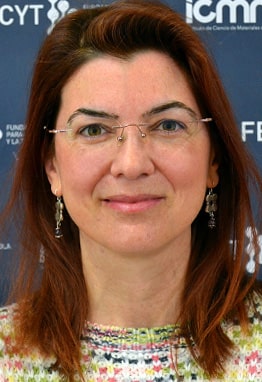
Elsa Prada Nuñez is a Senior Researcher at the Institute of Materials Science of Madrid (ICMM) under the Spanish National Research Council (CSIC) . She leads the Quantum Dynamics of Materials (QUDYMA) group and currently serves as Head of the Theory Department. Her academic career spans multiple institutions, including the Universidad Autónoma de Madrid (UAM), Karlsruhe University, and Lancaster University, with a focus on condensed matter theory and quantum materials. PhD in Physics from UAM (2006) Tenured Scientist at ICMM-CSIC (2020-2025) Senior Researcher at ICMM-CSIC (2025-present) Her research explores quantum phenomena in low-dimensional materials and nanostructures, particularly topological insulators, Majorana zero modes in hybrid nanowires, graphene and 2D crystals, disorder effects, magnetotransport, spintronics, quantum pumping, straintronics, and exciton dynamics. She has directed over 20 students across PhD, Master's, and undergraduate levels, including notable projects on full-shell hybrid nanowires and twisted bilayer graphene. Recent publications highlight advancements in Josephson junctions, Majorana detection, and topological superconductivity in full-shell nanowires. Awards include the Young Female Scientist 2021 from the Royal Academy of Sciences of Spain and Mastercard, and the 2022 Certamen Universitario 'Arquímedes' First Award as a tutor. She has secured significant grants from the Spanish government and European collaborations for projects on quantum materials and topological superconductivity. Principal Investigator for €139,150 Spanish government grant (PID2021-125343NB-I00) Lead on €5,000 ICMM-CSIC grant (2020-2021) Participant in €3.48M EU AndQC project (2019-2023)
Dr. Sylvie Albert is a Professor of Strategy and Leadership at the University of Winnipeg, former Dean of the Faculty of Business and Economics, and past Associate Dean of Laurentian University's Faculty of Management. With 15 years in academia, she has extensive experience in municipal/provincial governance, management consulting, and economic development. A leading expert in smart cities and digital urban innovation, her work bridges academia, policy, and practice through roles like Senior Advisor to Infrastructure Canada's Smart Cities Challenge and lead jurist for the Intelligent Community Forum. Her research focuses on sustainable urban development, digital governance, and community telecommunication networks, informed by activism on local-to-international boards and think tanks. She is authoring her fourth book on smart cities and has led projects nationwide through her consultancy, Planned Approach Inc. Education & Experience: 12 years in government roles 10 years in management consulting Founder/owner of Planned Approach Inc. (economic development consulting) Leadership roles in Northern Ontario economic development corporations Research Interests: Her interdisciplinary work examines strategy development , entrepreneurship , innovation ecosystems , and the intersection of digitalization with urban policy. Key themes include: Smart/intelligent/sustainable city frameworks Community wireless networks and ICT adoption Online learning pedagogy in business education Labour market barriers for immigrant professionals Grants & Advising: Her advisory contributions include: Global Forum on Digitalization in Europe (yearly participation) Infrastructure Canada's Smart Cities Challenge (Senior Advisor) UN Voluntary Local Reviews methodology development Her consultancy work emphasizes economic development projects and smart community planning across Canada. Labs & Collaborations: Engaged with global networks like the Intelligent Community Forum and cross-sectoral partnerships to advance urban innovation, digital equity, and participatory governance models.
Jennifer Brick Murtazashvili is an associate professor at the University of Pittsburgh's Graduate School of Public and International Affairs and founding director of the Center for Governance and Markets. She also serves as a nonresident scholar in the Asia Program at the Carnegie Endowment for International Peace. Her academic career bridges rigorous scholarly research with practical policy engagement across multiple international institutions. Dr. Murtazashvili's research focuses on self-governance, security, political economy, and public sector reform in the developing world, with particular expertise in Afghanistan and Central Asia. Her work examines the intersection of formal state institutions and customary governance structures, challenging conventional approaches to state-building and democracy promotion. She argues that top-down imposition of centralized governance models often undermines local legitimacy and creates unintended consequences, as documented in her award-winning book Informal Order and the State in Afghanistan . Her recent publications and media commentary analyze evolving geopolitical dynamics in Central Asia following the Russian invasion of Ukraine and the Taliban's return to power in Afghanistan. She has identified significant shifts in regional power dynamics, with Central Asian states increasingly asserting strategic autonomy while navigating complex relationships with both Russia and China. Best Book Award in Social Sciences by the Central Eurasian Studies Society Honorable mention from the International Development Section of the International Studies Association As president-elect of the Central Eurasian Studies Society and an elected board member of the Section for International and Comparative Public Administration of the American Society of Public Administration, Dr. Murtazashvili has advised numerous international organizations including USAID, the World Bank, the U.S. Department of Defense, UNDP, and UNICEF. Her policy work bridges academic research with practical governance challenges, particularly in post-conflict settings where state capacity intersects with local governance traditions.
Dusan Paredes Araya serves as Professor in the Department of Economics at the Catholic University of the North (UCN), Chile, with research expertise in regional and urban economics focusing on spatial market interactions. His work emphasizes causal mechanisms in regional labor and housing markets, supported by leadership roles as former Dean of the School of Business and Economics and Director of the Economics Department at UCN. He concurrently holds an Adjunct Professor position at Michigan State University's Department of Agricultural, Food, and Resource Economics. His research centers on spatial economic dynamics , investigating wage differentials, commuting patterns, housing demand, and economic convergence through advanced econometric methods. Key contributions include analyzing spatial inequality in Chile, migration responses to violence in Mexico, and policy impacts of mining taxes on public education. His work consistently bridges theoretical spatial economics with empirical policy analysis for Latin American contexts. Recent publications (2016-2021) reveal strong thematic continuity in spatial economics, with expanding methodological sophistication in multilevel modeling and causal inference. Dominant themes include labor market spatiality (commuting premiums, gender wage gaps), housing economics (demand attributes, price indices), and public finance (mining taxation, local service provision), increasingly incorporating international collaborations. Paredes has received significant recognition: Peter Nijkamp RSAI Award (2017) His research leadership includes: Chilean Funding: Three FONDECYT projects and multiple National Agency for Research and Development (ANID) grants International Projects: Collaborations with U.S. Department of Agriculture and Lincoln Land Institute Academic Service: Associate editor of Resource Policy (ISI Q1) and reviewer for major international journals