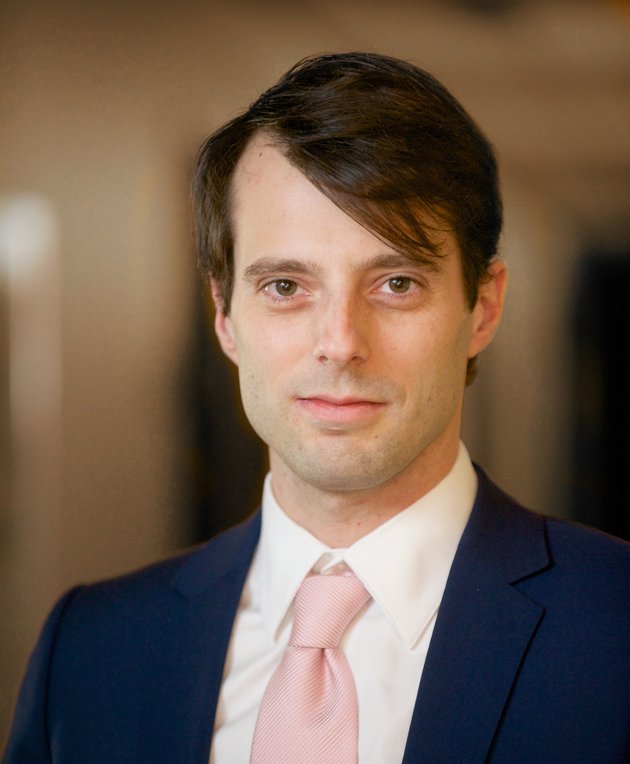
Victor M. Hansen is a Professor of Law and Director of the Criminal Practice and Procedure Certificate Program at New England Law | Boston . His expertise spans National Security Law , Military Tribunals , Legal Ethics , and Criminal Procedure , informed by his 20-year career as a U.S. Army Judge Advocate General (JAG) officer. LLM, The Judge Advocate General’s School JD, Lewis and Clark Law School BA, Brigham Young University Hansen’s research focuses on the intersection of Military Justice , Constitutional Law , and National Security Policy . Recent work analyzes the legal implications of the January 6 Capitol attack, advocating for a 9/11-style commission to address systemic vulnerabilities in democratic institutions. His publications since 2018 highlight evolving challenges in Command Responsibility , Extraordinary Renditions , and War on Terror jurisprudence. Collaborative efforts include co-authoring The Law of Armed Conflict: An Operational Approach with Geoffrey Corn and others. As a former military prosecutor and defense attorney, Hansen brings operational experience to his academic work, particularly in Military Commissions and Legal Reforms . His commentary appears in outlets like JURIST and The Hill .
Henry Noyes is a Professor of Law at Chapman University's Dale E. Fowler School of Law, where he has been a faculty member since 2005. His expertise spans Direct Democracy, Ballot Initiative processes, Litigation, Mediation, and Arbitration. Prior to joining Chapman, Professor Noyes was a partner at Pillsbury Winthrop Shaw Pittman LLP in San Francisco, specializing in complex commercial litigation. Professor Noyes earned his B.A. from Northwestern University in 1990 and his Juris Doctor, magna cum laude , from Indiana University School of Law in 1994, where he served as Senior Managing Editor of the Indiana Law Journal. Following law school, he clerked for the Honorable Jesse Eschbach on the United States Court of Appeals for the Seventh Circuit (1995-96). His research primarily focuses on rules of procedure, rules of evidence, and contractual agreements governing dispute resolution. Professor Noyes has established himself as a leading scholar in direct democracy, with significant publications on ballot initiatives and referendums. His work bridges theoretical legal scholarship with practical applications in the courtroom and electoral processes. He has taught Civil Procedure I, Civil Procedure II, and Evidence at Chapman University. Professor Noyes's scholarly publications demonstrate a consistent engagement with evolving legal standards, from federal pleading requirements (Twombly/Iqbal standards) to electronic discovery rules and evidence privileges. His recent work has increasingly focused on direct democracy mechanisms, culminating in his book The Law of Direct Democracy (2014) and numerous articles analyzing the legal frameworks governing citizen-initiated legislation. Among his notable recognitions, Professor Noyes was named a "Northern California Super Lawyer" by Law & Politics and San Francisco Magazine. He has also served as Pillsbury's pro bono coordinator and as an arbitrator in the San Francisco Bar Association's Attorneys' Fees Dispute program. Throughout his career, Professor Noyes has maintained a strong connection between academic scholarship and practical legal work, regularly contributing to legal discourse through publications, speaking engagements, and professional service. His work continues to influence both legal practitioners and policymakers in the areas of civil procedure, evidence, and democratic governance mechanisms.
Professor Michael J. Hutter is a distinguished faculty member at Albany Law School, where he has served since 1976 and is recognized as the senior member of the faculty. He holds the rank of Professor of Law and teaches core subjects including Evidence, Antitrust, Business Torts, and Trade Regulation. His expertise is nationally recognized, particularly in New York evidence law, where he serves as a legal columnist and advisor to the state judiciary. His educational background includes an A.B. from Brown University and a J.D. from Boston College Law School, where he was Editor-in-Chief of the law review and elected to the Order of the Coif. After clerking for Judge Matthew J. Jasen of the New York Court of Appeals, he practiced litigation before transitioning to academia. Professor Hutter’s research focuses on evidence, antitrust, trade secrets, and business torts. His scholarship is widely cited by courts across New York and federal circuits, and has influenced state legislation. He has authored a major reference work, Model Jury Charges in Business Torts Cases , and published over 75 bi-monthly columns in the New York Law Journal on evidence developments. The 15 most recent publications reflect a consistent focus on evidence law, judicial procedure, and torts, with recurring themes in hearsay, business records, and appellate decisions in New York. His work bridges academic scholarship and practical legal application, particularly for judges and trial attorneys. Teaching Award, Albany Law School Teaching Award, Western New England Law School Highly Qualified Rating, New York State Bar Association Elected Member, American Law Institute Fellow, American Bar Association Fellow, New York State Bar Association Professor Hutter has advised and argued in numerous appellate cases, including landmark decisions in the New York Court of Appeals. He has served on multiple state commissions, including the Commission on Judicial Nomination and the Judicial Advisory Committee on Evidence, where he was appointed Reporter. He has delivered over 200 presentations to bar associations and legal education programs. He has also held leadership roles such as President of the Albany County Bar Association and Director of the Office of Capital Defenders. He is actively involved in judicial education, regularly presenting at programs for newly appointed judges and legal staff through the New York State Judicial Institute. He was appointed by the Chief Judge to compile a comprehensive Guide to New York’s evidence law, enhancing judicial access to consolidated legal rules.
Irene Browne is an Associate Professor and Director of Graduate Studies in the Department of Sociology at Emory University. She holds a PhD in Sociology from the University of Arizona (1991), MA in Sociology from Queens College (1987), and BA in Psychology from UC Santa Cruz (1979). Her research focuses on race/class/gender intersectionality, immigration policy, labor market inequality, and racial politics. She has authored/co-authored over 30 peer-reviewed articles and edited volumes, including her forthcoming book Precarious Privilege: Race and the Middle-Class Immigrant Experience . Research Interests Her work examines social mobility strategies among Latinx immigrants, the impact of restrictive immigration policies on non-target groups (e.g., African Americans), and Black elites' engagement in immigration politics. Key projects include NSF-funded studies on Black elites and immigration (2019–2024) and Russell Sage Foundation-funded research on middle-class Latinx immigrants’ navigation of political climates (2020–2023). Awards & Grants Recipient of multiple grants including National Science Foundation awards (totaling over $200,000), Emory’s Halle Institute Collaborative Grant (2022–2024), and recognition such as the Emory Department of Sociology Teaching Award (2023). She has held fellowships at the Russell Sage Foundation and Emory’s Fox Center for Humanistic Inquiry. Teaching & Service Teaches courses on research methods, gender, and intersectionality. Served as Vice President of the Southern Sociological Society (2022–2023) and led Emory’s Survey of Graduate Student Well-being (2013). Mentored numerous undergraduates through programs like SIRE and the Sociology Research Apprenticeship.
Professor Linda McKissack Beale is a Professor of Law at the Wayne State University School of Law. She specializes in tax law, with a focus on corporate tax shelters, tax strategy patents, and tax policy reform. Her scholarship critiques aggressive tax minimization practices and advocates for heightened transparency in financial reporting. Beale received her B.S. in Chemistry (magna cum laude) from Duke University, an M.A. and Ph.D. in Linguistics from Cornell University (as a Herbert Lehman Fellow), a J.D. (summa cum laude) from Cornell Law School, and an LL.M. in Taxation from NYU. Before academia, Beale clerked for Ninth Circuit Judge Dorothy Nelson, practiced tax law at Cleary Gottlieb Steen & Hamilton, and served as a congressional staffer and Peace Corps volunteer in Colombia. Her research bridges tax law with intellectual property, corporate governance, and public policy, addressing issues like cross-border tax strategies and the implications of patenting tax advice. She maintains a blog, Ataxingmatter , exploring tax and budgetary matters through an egalitarian lens. Beale’s recent scholarship includes critical analyses of tax shelter regulation, the interplay between tax and patent law, and the role of financial institutions in tax compliance. Her work emphasizes systemic reforms to curb aggressive tax avoidance, including stricter standards for tax advisers and enhanced disclosure requirements.
Ellen S. Podgor is the Gary R. Trombley Family White-Collar Crime Research Professor of Law at Stetson University College of Law. She holds a B.S. from Syracuse University, an MBA from the University of Chicago, a JD from Indiana University Indianapolis, and an LLM from Temple University. Her academic roles include former Associate Dean of Faculty Development and Electronic Education, and current Research Chair positions. She teaches White Collar Crime, Criminal Law, and Criminal Procedure. Her research focuses on white collar crime, international criminal law, and legal ethics, with over 70 law review articles and co-authorship of books like White Collar Crime in a Nutshell . She advises the White Collar Crime Prof Blog and serves on boards of the International Society for the Reform of Criminal Law and the American Board of Criminal Lawyers. Awards include the Robert C. Heeney Award (NACDL’s highest honor) and Stetson’s Excellence in Teaching Award (2019). Podgor’s articles analyze obstruction of justice, cryptocurrency fraud, and corporate accountability, reflecting her expertise in modern legal challenges. She has held visiting professorships at multiple institutions and contributed to criminal justice reform initiatives.
Jennifer S. Hendricks is currently the Lindsley Memorial Professor of Law and Co-Director of the Juvenile and Family Law Program at the University of Colorado Boulder. She joined the faculty in 2012, after teaching at the University of Tennessee College of Law, and her academic focus spans feminist legal theory, family law, constitutional law, and civil procedure. Education: JD from Harvard Law School and BA in Mathematics and Women's Studies from Swarthmore College. Research Interests: Her work critically examines the legal interplay between genetic parenthood and caretaking relationships, particularly how the law perpetuates patriarchal privileges in declining marriage rates. She explores the implications of genetic essentialism in family law, the constitutional dimensions of reproductive rights, and equality in sports. Publications Trends: Her recent scholarship addresses the intersection of reproductive justice, constitutional law, and feminist theory. Key themes include challenges to genetic primacy in parental rights, post-Roe v. Wade abortion litigation strategies, and the legal redefinition of motherhood and fatherhood. Professional Contributions: She has advocated for progressive pay cuts at CU-Boulder and analyzed systemic legal biases against single mothers. Her work bridges practical litigation experience with academic scholarship, informed by her prior practice in constitutional, employment, and discrimination cases in Montana.
Professor Maurice R. Dyson is a scholar, attorney, and policy expert at Suffolk University Law School , with affiliations spanning Columbia University, Southern Methodist University, and international institutions. He specializes in Education Law , Artificial Intelligence , and Civil Rights , focusing on systemic inequality, algorithmic bias, and legal reform. Dyson's career bridges mergers and acquisitions practice with pro bono litigation , including a landmark $14 billion school finance judgment in New York City. Harlan Fiske Stone Scholar, Columbia Law School King's Crown Scholar, Columbia College His research explores AI's racial justice implications , constitutional law , and criminal justice reform , particularly in pre-sentencing algorithms and bias amplification. Articles highlight intersections between technology , equity , and legal frameworks . Scientific awards include the King's Crown Award , Kluge Award , and C. Clyde Ferguson Jr. Keynote . Dyson co-founded the Crawford Legal Institute Mentorship Bond (CLIMB) program, recognized by the White House and California State Bar , addressing the school-to-prison pipeline through mentorship and equity initiatives.
Tze-Tien Hsu is a Professor at the College of Law , National Cheng Kung University, with a Doctor of Law from the University of Tübingen, Germany. His research focuses on Criminal Law , Criminal Procedure Law , Medical Criminal Law , and Comparative Law . Education: Doctor of Law, University of Tübingen, Germany Research Interests include the interplay between German and Taiwanese legal frameworks , with a focus on criminal intent , evidentiary standards , and human rights in criminal proceedings . He has extensively analyzed corporate criminal liability , medical law intersections , and judicial reforms . Recent Publications (2015-2018) address corporate accountability , criminal intent classifications , and judicial precedents , reflecting his expertise in comparative criminal law and legislative reform . Service includes contributions to legal reforms and judicial training, with a focus on prosecutorial ethics and criminal procedure .
Dr John Adenitire is a Senior Lecturer in the School of Law at Queen Mary University of London and a Fellow of the Institute of Humanities and Social Sciences. He holds a PhD from the University of Cambridge and has taught at institutions including Cambridge, Durham, Birmingham, and the UCL Constitution Unit. His research focuses on conscientious exemptions, non-human animal rights, and legal theory, with a particular emphasis on balancing religious and non-religious rights in liberal democracies. Adenitire’s work explores the legal frameworks surrounding conscientious objections to anti-discrimination norms and the extension of constitutional rights to sentient animals. His book A General Right to Conscientious Exemption: Beyond Religious Privilege (2020) has been widely reviewed, including in the Cambridge Law Journal and Medical Law Review . He is currently working on a project advocating for sentience-based constitutionalism to protect non-human animals. His research interests span public law, legal theory, law and religion, and comparative constitutional law. Notable contributions include articles on no-platforming in academia, the role of religion in liberal politics, and animal law. Adenitire has also engaged in public policy work, including drafting constitutional guidelines for Libya and contributing to debates on judicial independence and Brexit constitutional issues. Adenitire’s awards include the Fellowship of the Institute of Humanities and Social Sciences. He frequently participates in interdisciplinary dialogues, such as the Knowing Animals podcast, where he discusses animal rights and legal philosophy. His work bridges academic rigor with public engagement, aiming to influence both scholarly discourse and real-world policy.
Harold J. Krent is a Professor of Law and Full-Time Faculty member at the Chicago-Kent College of Law, Illinois Institute of Technology. He joined the faculty in 1994 and served as Interim Dean (2002) and Dean (2003–2019). His expertise spans Administrative Law, Constitutional Law, Criminal Law, and U.S. Supreme Court dynamics. Krent earned his J.D. from New York University School of Law and A.B. from Princeton University. His research focuses on legal interactions between individuals and government, particularly presidential powers and administrative law. Key works include Presidential Powers and articles on executive authority, judicial review, and Fourth Amendment issues. He has advised the Biden Administration (2022) and consults for entities like the Administrative Conference of the United States. Notable media appearances include discussions on executive orders targeting law firms (2025), Supreme Court ethics reforms (2024), and presidential immunity (2024). Krent has also litigated cases with students for indigent prisoners and contributed to legal education through clinics and scholarly publications. He has received awards for excellence in legal writing and has over 58 publications, including articles in Notre Dame Law Review , Georgetown Law Journal , and Columbia Law Review .
Oliver Klein is a Consultant Lecturer at the Law School of the University of Tübingen since 2023. His academic work focuses on Constitutional Law , Criminal Procedure Law , and European Human Rights Law . Klein holds a Doctorate in Law (2002, University of Freiburg) under Prof. Dr. Andreas Voßkuhle. His professional roles include serving as a Judge at the Federal Court of Justice (Karlsruhe) since 2016, prior roles at the Federal Constitutional Court (2005–2008), and judicial positions in Baden-Württemberg (2002–2016). Research Interests : Constitutional Court Jurisprudence European Human Rights Jurisprudence Procedural Law and Evidence Evaluation Federalism and Legislative Competence Inter-jurisdictional Judicial Conflicts Publication Trends (2001–2025): Constitutional Law and Human Rights Civil and Criminal Procedure Analysis Comparative Judicial Systems Digital Evidence and Privacy Legal Commentary on German and European Courts Insurance and Tort Law Additional Roles : Ordinary Court Judge and Prosecutor in Baden-Württemberg (2002–2016) 2011–2013: Seconded to the Federal Chancellery, Berlin Since 2007: Examiner in the First State Examination for Legal Professionals
Clare Pastore serves as Professor of the Practice of Law at the USC Gould School of Law, where she teaches Poverty Law, Civil Rights, Race and Racism & Law, Suing the Government, Civil Procedure, Professional Responsibility, and the Access to Justice Practicum. While maintaining her academic position, she continues active practice as a leading member of the California public interest community, focusing on poverty, civil rights, race and justice, and access to justice issues. Professor Pastore earned her BA with Phi Beta Kappa honors from Colgate University and her JD from Yale Law School, where she served as a senior editor of the Yale Law Journal. Prior to law school, she was a Fulbright-sponsored teaching assistant in a Paris public school. She completed a judicial clerkship with Judge Marilyn Hall Patel of the U.S. District Court for the Northern District of California. Her research focuses on the intersection of poverty, civil rights, race, and justice within the American legal system. Her work examines systemic barriers to justice for low-income communities and explores legal frameworks for expanding access to counsel in civil matters. She has been a pioneer in advocating for a civil right to counsel, particularly in eviction proceedings and other critical legal matters affecting vulnerable populations. Professor Pastore's recent publications demonstrate a consistent focus on expanding access to justice, particularly through establishing a civil right to counsel in eviction proceedings and other poverty-related legal matters. Her scholarly work spans legal ethics, housing policy, workers' rights, and constitutional protections for low-income litigants. Professor Pastore has received numerous prestigious awards recognizing her excellence in both teaching and public interest law: 2024: Wage Justice Center Founder's Award 2020: Gould's Rutter Award for Distinguished Teaching 2019: Earl Johnson Equal Justice Award from the Western Center on Law and Poverty 2013: Elizabeth Hurlock Beckman Award for inspiring former students' societal contributions 2005: Wasserstein Fellow by Harvard Law School 1997: Recognized as one of nation's 45 most outstanding public interest attorneys under age 45 1999: Named one of California's top lawyers under 40 years old 2006-2009: Selected as Southern California's "Super Lawyer" 2004: Commended by official California State Assembly resolution for work on behalf of the poor While specific grant funding details aren't provided, Professor Pastore's career demonstrates significant success in securing prestigious fellowships including the Skadden Fellowship that launched her career at the Western Center on Law and Poverty. Her work has clearly influenced public policy and legal practice, particularly through her leadership on the California Access to Justice Commission's Right to Counsel Task Force. Professor Pastore serves on several influential committees and organizations that function as professional networks and advocacy teams. She is a member of USC's Center for the Changing Family and serves on the California Advisory Committee to the U.S. Civil Rights Commission. She also serves on the Board of Directors of the Wage Justice Center and the Steering Committee of the National Coalition for a Civil Right to Counsel, demonstrating her active participation in collaborative efforts to advance justice for vulnerable populations.
Professor Robert Kert is a full Professor of Criminal Law and Criminal Procedure Law at Vienna University of Economics and Business (WU Wien) since 2013. He holds a habilitation (2017) and a doctorate (2001) from the University of Vienna. His expertise spans European and Austrian criminal law, financial criminal law, and legal comparative studies. He has led significant projects, including a European Commission study on legislative reforms regarding illicit drug trafficking. Kert is actively involved in EU legal initiatives, serving as President of the Austrian Association for European Criminal Law and a member of international legal associations. His research focuses on penal sanctions, cross-border criminal proceedings, corporate liability, and environmental criminal law. Over 250 publications since 1995 highlight his contributions to legal academia. Awards include the 2001 teaching authorization award for criminal law. Kert advises on EU legal frameworks and collaborates internationally on comparative law projects, emphasizing the intersection of national and EU criminal justice systems.
Maxime St-Hilaire is a Full Professor at the Faculty of Law , Université de Sherbrooke. He holds a Doctorate in Law from Université Laval and serves as Director for French Canada at the Runnymede Society. His affiliations include the Scientific Council of the Institut de droit parlementaire et politique and an Associated Researcher role at the Centre for Constitutional Law and Legal Studies , University of British Columbia. Education: Certificat en études anciennes, Université Laval LL.D., Université Laval (avec tableau d'honneur) LL.M., Université Laval LL.B., Université Laval Research Interests span Constitutional Law , Legal Philosophy , Comparative Constitutionalism , Aboriginal Rights , and Rule of Law . His work addresses federalism, global constitutional standards, and legal epistemology. Recent Articles focus on constitutional derogation mechanisms, comparative electoral systems, global constitutionalism, and judicial interpretations of indigenous rights. These works bridge theoretical legal philosophy with practical constitutional challenges. Scientific Awards: Prix de la recherche et de la création (Université de Sherbrooke, 2020) Prix Minerve (2015) Grants: Currently researching Canadian Political Party Law with a Fondation pour la recherche juridique grant. Previously co-led Exceptional Regimes project (2021-2023) with CA$130,000 funding.