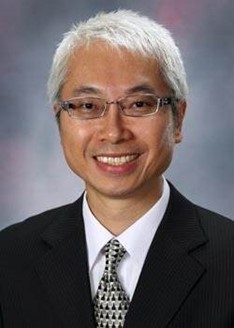
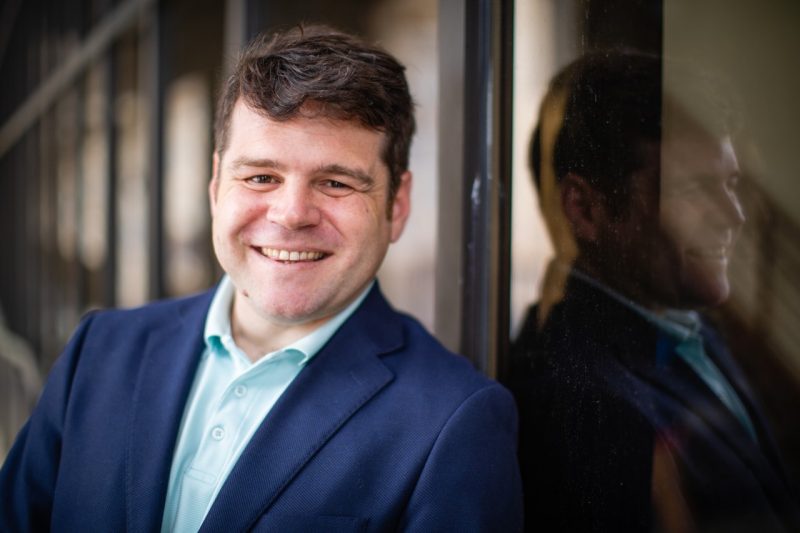
Steven Tam is a tenured Professor of Management at the College of Business and Technology , Western Illinois University . He teaches strategic management, entrepreneurship, and international business at both graduate and undergraduate levels. Education: PhD in Management, University of Surrey, UK Executive Education in Advanced Management, Haas School of Business, University of California Berkeley MBA in Business Administration, University of Central Missouri BSBA in Computer Information Systems, University of Central Missouri Research Focus: Dr. Tam’s interdisciplinary work bridges organization theory with corporate strategy, workplace learning, leadership dynamics, and organizational performance/growth. Key areas include Chinese Guanxi (ethics), interfirm alliances, process innovation, and SME development. Professional Highlights: Multi-time nominee for teaching excellence awards Publishes in reputable, high-impact scholarly journals Regularly presents at international conferences as session chair/keynote speaker Contributes editorial work to business journals Notable quotes: "A strategic mind includes not only what for but also what if ." and "A responsible decision maker is committed to a habit of comparing all foreseeable odds." Contact: Office: Stipes Hall 419 Phone: (309) 298-1535
Hasse De Meyer is a Lecturer at the National University of Singapore (NUS), where he teaches and supervises Master's level students in the Clinical Psychology program. He is a CARE Team Member and Clinical Psychologist specializing in child and adolescent mental health with expertise in ADHD assessment and treatment. His academic credentials include: Ph.D. in Clinical and Health Psychology, KU Leuven M.Sc. in Clinical and Health Psychology, KU Leuven B.Sc. in Psychology, KU Leuven Dr. De Meyer's research centers on neurodevelopmental disorders, particularly ADHD, using experimental tasks to investigate reinforcement learning deficits and remediation strategies in children. His work extends to Autism Spectrum Disorder parenting styles and pandemic-era mental health impacts. This dual clinical-research approach bridges experimental psychology with practical therapeutic interventions for youth behavioral issues. His 2021 publications reveal a concentrated focus on ADHD cognitive mechanisms, emphasizing reinforcement learning paradigms across multiple studies. The research trajectory shows expansion into pandemic-related psychosocial factors while maintaining core ADHD investigation through international collaborations. As an educator, Dr. De Meyer supervises Master's students in clinical psychology, drawing from his clinical experience at KU Leuven's academic outpatient clinic and prior lecturing role in Kuala Lumpur. His current NUS position integrates teaching with ongoing research leadership. He actively participates in the NUS CARE Team and leads reinforcement learning studies in children with ADHD through collaborative projects in Japan and Belgium.
Simon Avery is a Reader in Nineteenth-Century Literature and Culture at the University of Westminster 's School of Humanities , where he has taught since 2007. He previously held positions at the University of Hertfordshire (1999-2007) and Anglia Ruskin University (1996-1999), with additional tutoring at the University of Cambridge Institute of Continuing Education. His research spans nineteenth-century women's writing and queer literature , with particular focus on Elizabeth Barrett Browning, the Brontës, Mary Coleridge, and Thomas Hardy. MA in Victorian Literature (University of Nottingham) PhD in nineteenth-century literature and politics (Anglia Ruskin) Postgraduate Certificate in Learning and Teaching in Higher Education (University of Hertfordshire) His research interests include: Nineteenth-Century Literature and Culture : Exploring women's writing, political poetry, and intersections between literary production and historical context. Key publications include critical editions of Elizabeth Barrett Browning and Mary Coleridge, and analyses of the Brontës' Gothic techniques. Queer Literature and Cultures : Co-director of the Queer London Research Forum (2013-2023) and editor of a 2023 queer poetry anthology. His work examines queer spatial theory and historical London narratives. Recent publications highlight trends in Victorian science-poetry intersections (X-ray Gothic fears) and queer temporalities , alongside ongoing projects on queer poetry history. He has received research support from institutions including the Armstrong Browning Library and the National Endowment for the Humanities . As an advisor , Avery has directed PhDs on topics ranging from Victorian female detectives to post-devolution Scottish queer literature. His public engagement includes talks at the Brontë Parsonage Museum and Ledbury Poetry Festival.
Professor R. Lisle Baker has served at Suffolk University Law School since 1973, teaching courses on Property, Negotiation, and Positive Psychology for Lawyers. A Harvard Law School graduate and Williams College alumnus, he chairs multiple university committees and serves on Newton's City Council. His work integrates psychological principles with legal education through publications and conferences on well-being practices. Williams College, AB (1964) Harvard Law School, LLB (1968) University of Pennsylvania, Master of Applied Positive Psychology (2016) Research focuses on Professional Identity Formation and Well-being in Legal Education , including character development, compassionate lawyering, and resilience-building frameworks. Conference convenings (2016-2020) explore psychology integration in legal curricula. Scientific leadership includes: Suffolk University Award for Service (2019) International Positive Psychology Association Outstanding Practitioner Award (2023) Key contributions include co-authoring A Guide to Law Student Wellness and Well-Being and pioneering courses on professional identity. Active in Massachusetts Supreme Judicial Court committees on lawyer well-being.
Krisanne Bursik is a Professor in the Department of Psychology at Suffolk University. She holds a PhD and MA from Boston University and a BA from Villanova University. Her research focuses on personality, gender differences, and developmental psychology, particularly in adolescent and adult contexts. PhD, Boston University MA, Boston University BA, Villanova University Her work explores themes such as the intersection of religion and substance use disorders in adolescents, moral disengagement in social behavior, attachment theory in familial contexts, and gender roles in psychological constructs. Her recent publications emphasize mixed-methods approaches and longitudinal studies in personality development. Krisanne Bursik teaches courses like PSYCH-226-A: Theories of Personality and maintains office hours on Fridays at Suffolk University’s 73 Tremont St., Room 1027.
Jim Whitehead is a Professor of Computational Media in the Baskin School of Engineering at the University of California, Santa Cruz. His research bridges artificial intelligence, software engineering, and computer games, with notable contributions to procedural content generation, software bug prediction, and serious games. He serves as Associate Dean for Undergraduate Affairs, focusing on student success initiatives including equity gap reduction, retention strategies, and experiential learning programs like first-year engineering design and senior capstone sequences. Academic Leadership: Former Chair of Computer Science (2000-2014) and Computational Media (2017-2019) Community Building: Founder of Society for the Advancement of Science of Digital Games (SASDG), procedural content generation communities, and games/software engineering collaborations Research interests span AI for games , software evolution , and human-AI collaboration in creative domains. Articles highlight trends in procedural generation (2020), music sentiment modeling (2019), and code change analysis (2008-2015). Administrative expertise includes UC faculty search committees, personnel case management, and curriculum development. He pioneered UCSC's computer games major (ranked top in the US) and masters program in games/playable media. GitHub activity shows active involvement in open-source projects like smt_dungeon (SMT solver-based dungeon generator) and MovementLab (interactive media tools). His website template is based on the al-folio Jekyll theme.
Dr. Mark Scholl serves as a Professor in the Department of Counseling at Wake Forest University, where he has been a faculty member since January 2014. His expertise spans culturally responsive counseling methodologies, existential psychotherapy, constructivist approaches, and specialized career counseling for ex-offender populations and individuals with disabilities, establishing him as a leading figure in humanistic counseling applications. His educational foundation includes a Ph.D. and M.A. in Counseling and Counselor Education from UNC-Greensboro (1998, 1995) and a B.S. in Psychology from St. Andrews College (1983). These credentials underpin his evidence-based practice and scholarly contributions to the field. Dr. Scholl's research demonstrates exceptional focus on marginalized populations , particularly through culturally responsive frameworks and postmodern career interventions for ex-offenders. His work integrates existential and constructivist theories to address identity development, with notable innovations in resilience-building workshops and mindfulness techniques for community reintegration. Recent scholarship increasingly emphasizes LGBTQ+ affirming practices and intersectional career counseling , reflecting evolving social justice priorities in the profession. Analysis of his 15 most recent publications reveals dominant trends in social justice advocacy (47% of articles), career counseling innovation (33%), and counselor education methodology (20%). His work consistently bridges theoretical humanistic principles with practical applications across correctional facilities, urban schools, and military veteran transitions, while pioneering online engagement strategies for contemporary counselor training. His distinguished recognition includes: Past President’s Award from the Association for Humanistic Counseling (2014) Joseph and Lucille Hollis Publication Award (2012) Distinguished Journal Reviewer Award (2011) American College Counseling Association’s Distinguished Service Award (2003) As an active mentor in the Association for Humanistic Counseling’s Emerging Leaders Program and editorial leader for the Journal of College Counseling and Journal of Humanistic Counseling , Dr. Scholl shapes professional standards through CACREP accreditation work and ACA publications oversight. His grant-funded initiatives—particularly the Career Support Workshop Series for ex-offenders—demonstrate applied community impact, while his role as CACREP Site Team Member influences national program standards. Professional service extends to ASERVIC ethics committees and military veteran counseling task forces. Dr. Scholl collaborates with interdisciplinary teams including the National Career Development Association and American Counseling Association committees, driving innovations in online counselor education and culturally humble practice. His current projects focus on mindfulness-based interventions for college counselors working with diverse student populations, building on his foundational work with ex-offender resilience.
Dr. Adam Robertson is a Research Fellow at Griffith University's Centre for Work Organisation and Wellbeing, focusing on workplace wellbeing, construction industry challenges, and mental health interventions. He holds a PhD from Monash University (2022) and an MBA from Griffith University (2014). With 14 years of industry experience as a project manager and HR consultant in construction, he bridges academic research with practical applications. His research emphasizes psychosocial hazards, employee-manager dynamics, and innovative safety programs. Key contributions include advancing methodologies in organizational science and developing frameworks for critical incident response in high-risk industries. He collaborates with MATES in Construction on funded projects addressing mental health and suicide prevention. Grants include analyses of psychosocial hazards and blueprint tools for FIFO/DIDO operations. His work aligns with the UN’s Sustainable Development Goal 3 (Good Health and Wellbeing). Education: PhD in Organizational Behavior (Monash University, 2022), MBA (Griffith University, 2014) Industry Experience: Project Management (M-Builds Construction 2008–2013), HR Consultancy (PBS Building 2020–2023) Research Interests: Workplace wellbeing, construction industry dynamics, mental health interventions, employee-manager relationships, and safety climate. His methodologies integrate Bayesian statistics with structural equation modeling to address organizational challenges. Recent work includes validation of construction-specific safety measures and evaluating peer-based postvention programs. Grant Highlights: Multiple consultancy projects with MATES in Construction targeting mental health literacy, suicide prevention, and psychosocial hazard management. Projects focus on FIFO/DIDO operations and developing evidence-based workplace interventions. Labs/Teams: Active member of Griffith’s Centre for Work Organisation and Wellbeing, collaborating with experts like Prof. Loudoun and Dr. Biggs on industry-driven research.
David B. Knight is a Professor in the Department of Engineering Education at Virginia Tech's College of Engineering, where he concurrently serves as Chief of Strategy for the College and Special Assistant to the Provost. His leadership extends to co-Editor-in-Chief of the Journal of Engineering Education , positioning him at the forefront of scholarly discourse in the field. Education: Ph.D. in Higher Education, Pennsylvania State University, 2012 M.S. in Environmental Sciences, University of Virginia, 2009 B.S. in Environmental Sciences, University of Virginia, 2006 Dr. Knight's research operates at macro-scale systems level, leveraging large institutional and national datasets to investigate policy-organizational intersections in engineering education. His work strategically targets equity and inclusion , transfer student pathway optimization , graduate career preparation , and global engineering competency development . The Virginia Tech Data Enlightened Educational Practice (DEEP) Lab, which he founded, implements data-driven approaches to enhance educational efficiency and inclusiveness through rigorous systems analysis. Analysis of his recent publications reveals intensifying focus on systemic barriers in engineering education, particularly credit mobility challenges for transfer students, differential mentorship for academic/industry career paths, and global skill development through international experiences. His research increasingly employs mixed-methods analytics to translate large-scale data into actionable educational reforms. Scientific Awards: None explicitly referenced in source materials. As director of the DEEP Lab, Dr. Knight leads NSF-funded initiatives including IUSE grants for student-centered teaching, HBCU-UP partnerships for research entrepreneurship, and S-STEM projects supporting low-income engineering students. His ROPES Hub research briefs provide evidence-based strategies for transfer student success, while his editorial leadership shapes the Journal of Engineering Education's strategic direction. Though specific advisees aren't listed, his lab and grant projects inherently involve graduate student mentorship in engineering education research methodology.
Anthony Cordingley is a Senior Lecturer at the University of Sydney and Maître de conférences (Associate Professor) at Université Paris 8 – Vincennes-Saint-Denis , where he teaches literature, literary translation, and media studies. He is a Marie Skłodowska-Curie Fellow at the Centre for Translation Studies (CETRA) at KU Leuven, focusing on genetic translation studies and translator archives. His academic career spans institutions in Australia, France, and Belgium, with affiliations to the Transcrit Laboratory and the Équipe Multilinguisme, Traduction, Création at ITEM (Institut des Textes et Manuscrits Modernes). Education: BA (Sydney), MA (Paris 8), PhD (Sydney) Current Projects: Developing a genetics of translation methodology; second monograph on Beckett and education Associations: International Association for Translation and Intercultural Studies, Australasian Modernist Studies Network, Société d'Études Modernistes His research intersects modernist and contemporary literature , translation studies , and philosophy , with a focus on genetic criticism , self-translation , and translators' archives . He examines how authorship evolves in translation configurations and contributes to the Beckett Digital Manuscript Project . His 15 most recent publications explore genetic translation studies , collaborative translation , and Beckett's philosophical imagination , spanning disciplines like digital humanities and postcolonial theory . Scientific Awards: Marie Skłodowska-Curie Fellowship (2020–2022) Robinson Fellowship (2019) Australian Research Council DECRA (2015) French National Research Agency Labex Grants (2012, 2010) His grants include the EU Marie Curie Individual Fellowship and University of Sydney Open Access Publishing Fund . He collaborates with teams at Transcrit Laboratory and ITEM , and his full description details his transdisciplinary work, teaching roles, and editorial contributions.
Sonja Rispens is an Associate Professor at Eindhoven University of Technology (TU/e), affiliated with the Department of Human Performance Management and the EAISI Health initiative. She holds a PhD in Social and Organizational Psychology from Leiden University and previously worked at Leiden University and the University of Twente. Her research focuses on organizational culture, leadership, conflict management, and collaborative processes in the evolving workplace. She explores how technological advancements and societal challenges impact collaboration, aiming to develop interventions for future work environments. Key research interests include team dynamics, conflict resolution, and the integration of human-robot interaction in workplaces. She has contributed to over 70 publications and received awards such as the IACM Outstanding Published Article Award (2012) and the Negotiation and Conflict Management Research Article of the Year Award (2017). She serves on editorial boards for journals like Group Dynamics and Negotiation and Conflict Management Research . Recent projects include studies on resilient manufacturing systems (2023–2025), human-robot interaction (2022–2025), and ethical considerations in automation (2018–2021). Her work aligns with UN Sustainable Development Goals, particularly addressing decent work and innovation. Awards include recognition for contributions to conflict management research and interventions. She teaches courses on team dynamics, performance enhancement, and board management, reflecting her focus on practical applications of her research.
Lieve Macken is Associate Professor at Ghent University's Department of Translation, Interpreting and Communication within the Faculty of Arts and Philosophy. With 28 years of experience in language technology, she leads research in machine translation, natural language processing, and translation technology applications. Her work bridges academic research and practical implementation through the Language and Translation Technology Team (LT3). Dr. Macken's research focuses on machine translation evaluation, human-machine interaction in translation workflows, literary translation with MT, and educational applications of translation technology. Her work spans multiple dimensions including quality assessment metrics, eye-tracking studies of translation processes, syntactic difficulty prediction, and specialized applications for asylum seekers and language learners. She has pioneered research on translationese in machine translation output and developed methodologies for assessing translation quality through both process and product metrics. Her recent publications reveal a strong trend toward examining the intersection of large language models with traditional machine translation systems, particularly in literary contexts. She investigates how different translation workflows impact textual characteristics, reading effort, and translator productivity. A significant portion of her recent work addresses social applications of translation technology, particularly through the MaTIAS project serving asylum seekers, and educational applications through projects like WiLMa and IVESS. Guest editor of Special Issue 'Advances in Computer-Aided Translation Technology' in Informatics journal (2019) Extensive experience as reviewer/referee for journals, conferences, and research projects External examiner for seven PhD candidates Dr. Macken has supervised numerous PhD projects including Joke Daems' work on translation robots, Arda Tezcan's research on MT quality estimation, and Bram Vanroy's study of syntactic difficulties in translation. She currently supervises the Horizon Europe Marie Sklodovska Curie Fellowship of Paola Ruffo and multiple PhD projects including Margot Fonteyne's WiLMa project and Jasper Degraeuwe's IVESS project. Her research is funded through diverse channels including Horizon Europe, BOF UGent, FWO, and AMIF grants. She coordinates the postgraduate program Computer-Assisted Language Mediation and co-coordinates the European Master's in Technology for Translation and Interpreting (EM-TTI), teaching courses in Computer-Assisted Translation, Machine Translation, and Dissertation. As coordinator of the Language and Translation Technology Team (LT3), Dr. Macken leads a vibrant research group that regularly presents at major conferences including MT Summit, EAMT, and ICTIC. The team's work spans theoretical research in translation technology and practical implementations addressing real-world challenges in scholarly communication, language education, and social integration.
Dr. Sabrine El Baroudi is an Assistant Professor at the Department of Management and Organisation at Vrije Universiteit Amsterdam. She also serves as Coordinator of the SBE Pre-Master Programmes and Co-Director of the VU Knowledge Hub for Feedback Culture. Her academic journey includes a PhD in Organizational Behavior and Career Management (2016), a Master’s in Human Resource Management (2012), and a Bachelor’s in Policy, Communication & Organization (2008). She has held visiting research positions at the University of Toronto and teaching roles in Dubai, alongside consulting in HRM, marketing, and strategy in the Netherlands. Education Qualifications: PhD in Organizational Behavior (2016) Master’s in Human Resource Management (2012) Bachelor’s in Policy, Communication & Organization (2008) University Teaching Qualification (2020) Her research focuses on employee motivation, proactive and aggressive work behaviors, talent management, and meaningful work, with a focus on multi-level organizational impacts. She has presented at conferences like AOM and EURAM and published in journals such as Human Relations and International Journal of Hospitality Management . Her recent articles explore feedback dynamics, servant leadership, and green HRM’s role in team performance. She has received the Startersbeurs Grant (2022) and a Best HRM Paper Nomination (AOM 2022). Awards: Startersbeurs 50.000 Euro Grant (2022) AOM 2022 Best HRM Division Paper Nomination Dr. El Baroudi supervises 3 PhD students and has graduated one (Akvile Bouwens, 2023). She also coordinates academic programs and collaborates on projects like the VU Knowledge Hub for Feedback Culture, emphasizing practical and academic contributions to organizational development.
Marije Verhage is an Associate Professor at the Vrije Universiteit Amsterdam, holding dual affiliations in the Clinical Child and Family Studies department and the APH - Mental Health research group. She also contributes to the LEARN! - Child Rearing initiative. Her research focuses on developmental psychology, parent-child attachment dynamics, and meta-analytic methodologies. She leads the Zooming in on the 'transmission gap' project investigating intergenerational transmission of attachment through individual participant data. Her work addresses topics such as parenting self-efficacy, child temperament, and maternal/father sensitivity using advanced statistical techniques. Key contributions include studies on fear of childbirth’s impact on parenting behavior and the role of attachment quality in child language competence. Received the APA Early Career Outstanding Paper award (2016) Active in interdisciplinary collaborations, including international meta-analyses Teaches Wetenschappelijk Redeneren met de Gehechtheidstheorie (Scientific Reasoning with Attachment Theory) Publications span peer-reviewed journals like Developmental Psychology and Child Development , with open-access contributions emphasizing methodological rigor. Media engagement includes discussions on parenting uncertainties and child-rearing challenges.
Lorenzo Serini is an Assistant Professor (Teaching Focused) and Director of Student Experience and Progression in the Department of Philosophy at the University of Warwick. He holds a PhD in Philosophy from the same institution (2021), focusing on Nietzsche's skepticism. His research and teaching intersect, emphasizing Post-Kantian European Philosophy, History of Western Philosophy, Virtue/Vice Epistemology, and Philosophy of Emotions. Serini has received multiple teaching awards, including recognition for the Warwick Awards for Teaching Excellence (WATE) in the Social Sciences Faculty. He co-edited Practices of Truth in Philosophy: Historical and Comparative Perspectives (2023) and contributed to works on Nietzsche, skepticism, and pedagogy. His teaching roles include coordinating the Philosophy Study Skills program and the Writing Support Centre. Serini has also been affiliated with research networks like the Centre for Research in Post-Kantian European Philosophy and the Seminario Permanente Nietzscheano (SPN). His recent publications explore skepticism, digital pedagogy, and Nietzsche's stylistic approaches to philosophy.