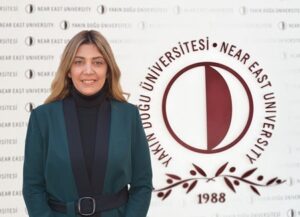
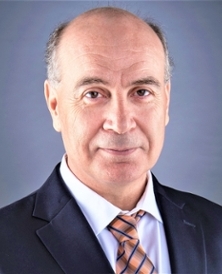
Professor Fezile ÖZDAMLI serves as the Head of the Management Information System Department at Near East University. Her research focuses on educational technology, gamification, artificial intelligence, and mobile learning. She has extensively published systematic reviews and empirical studies analyzing technology integration in education, including topics such as virtual reality, DeFi risk mitigation, and techno-skepticism in m-government. Current research areas include gamification, AI in education, and smart learning environments. Active in systematic literature reviews and bibliometric analyses of emerging technologies. Email: fezile.ozdamli@neu.edu.tr
Prof. Haluk Bingöl serves as a Professor at Yeditepe University's Faculty of Computer and Information Sciences, Department of Computer Science and Information Technologies since 2018. Previously, he held academic positions at Boğaziçi University from 2001 to 2018, progressing from Assistant Professor to full Professor in the Department of Computer Engineering. His educational background includes a PhD (1987) and MS (1985) in Electrical and Computer Engineering from Syracuse University, with doctoral research on Boolean Comparison by Simulation , and a BS in Electrical and Electronics Engineering from Middle East Technical University (1982). His research centers on Complex Networks and Evolutionary Game Theory , with significant contributions to understanding cooperation dynamics in the Iterated Prisoner's Dilemma, community detection algorithms, and epidemic modeling in urban networks. His work integrates computational modeling with real-world applications in social dynamics and information systems, often employing agent-based simulations to explore emergent phenomena. Recent publications demonstrate consistent focus on game-theoretic models of cooperation, network structure analysis, and applications in social media and epidemiology. He maintains strong publication output in high-impact journals including Physical Review E , Advances in Complex Systems , and Journal of Theoretical Biology , with increasing interdisciplinary reach into mental health informatics and computational linguistics. Multiple Publication Incentive Awards from Boğaziçi University and TÜBİTAK Interpro IT Award for industry-academia collaboration Best Poster Award at COST MP0801 United Nations Fellowship (1984-1985) and TEV International Scholarship National competition awards for student thesis supervision Prof. Bingöl has supervised 23 graduate students across master's and PhD programs, with research spanning community detection, evolutionary dynamics, and attention economics. His grant portfolio includes leadership of the TURKCELL m-learning Project ($130,000), participation in EU-funded initiatives (EUMedGrid, ASSYST), and COST actions (TD1210, MP0801) focusing on complex systems research infrastructure. He actively contributes to COST actions and collaborative networks, developing methodologies for complex systems analysis while mentoring next-generation researchers through structured academic programs and industry partnerships.
Kossova Tatyana Vladimirovna is an Associate Professor at the Department of Applied Economics, Faculty of Economic Sciences, National Research University Higher School of Economics (HSE). She has been with HSE since 1994 and has 25+ years of scientific and teaching experience. Her primary academic interests include public economics, public finance, social policy, investment analysis, and credit risk assessment. Education: Candidate of Economic Sciences (1991, specialty 08.00.05), Lomonosov Moscow State University Additional Training: Advanced programs in assessment & feedback (2019), blended learning (2016), occupational safety (2014), facilitation (2014), and e-learning tools (2011, 2010). Her research focuses on population health economics, time preferences, alcohol consumption effects, and social policy evaluation. She has published extensively on alcohol's impact on mortality, healthcare expenditures, and social discount rate modeling for public projects. Key trends in her 15 most recent articles include interdisciplinary work combining economics, demography, and public health. Scientific Awards: Diploma "Founder of Vyshka" (2022), Rector's Letter of Gratitude (2021), Medal "Recognition - 25 Years" (2020), Honorary Sign II Degree (2016), multiple publication bonuses (2014–2027). Supervision: Advised 4+ doctoral theses including Murat M. Aliroev's work on budget deficit impacts. Labs: Active member of the Laboratory for Economic Research of the Public Sector, presenting findings at international conferences like the International Panel Data Conference (2017) and Society for Benefit-Cost Analysis (2019).
Monica Martínez Blasco is a Professor in the Department of Economics and Finance at IQS School of Management. She serves as Principal Investigator for the Sustainable Finance and ESG project (2024) and is an active researcher in multiple ongoing projects including EDUParadigms-HE (2022-2026), CORPGOV Research Group on Corporate Governance (2022-2025), and ADAMIQS: Applied Data Analytics and Modeling IQS (2022-2025). Her research interests span Corporate Governance, Accounting Education, and ESG Finance with particular focus on Spanish financial markets. Her work examines digital democracy in corporate governance, inquiry-based learning methodologies in accounting education, and the relationship between environmental performance and firm value. She applies data analytics approaches to model complex financial phenomena and has developed innovative teaching methods centered on the questioning paradigm. Analysis of her recent publications reveals a strong trend toward integrating traditional finance concepts with modern ESG considerations and digital transformation in corporate governance. Her work bridges theoretical finance with practical applications in Spanish and international contexts, with increasing focus on sustainability metrics and their impact on executive compensation structures. Her educational research shows a consistent commitment to developing student-centered learning approaches in accounting and finance education. Professor Martínez Blasco leads the Applied Data Analytics and Modeling IQS research group, which focuses on Data Analytics (100%), Data Modeling (100%), Developmental Systems (33%), Engineering Applications (33%), and Active Learning (33%). She is also a key member of the CORPGOV research group dedicated to corporate governance studies. Her research has been supported by multiple funding sources including the State Research Agency, University and Research Grants Management Agency (AGAUR), and internal university grants. She collaborates extensively with researchers across Spain and internationally, with particular connections to Chinese corporate governance studies as evidenced by her recent work on online voting systems.
Anirvan M. Sengupta is a Professor at Rutgers, The State University of New Jersey, holding joint appointments in the Department of Physics and Astronomy and the BioMaPS Institute. Previously, he was a researcher at Bell Laboratories' Theoretical Physics Group. His research focuses on multi-scale integrative approaches spanning: Biological physics and quantitative biology Machine learning for neural representation Statistical field theory applications Biomolecular network design Quantum condensed matter and string theory He co-established an experimental wet lab investigating DNA-protein interactions in E. Coli. Professor Sengupta's work integrates physics, biology, and information theory, examining biological information processing in cellular systems and neural networks through both theoretical and experimental approaches.
Saïd ASSAR is a Professor of Information Systems for Management at IMT-BS, affiliated with the Information Systems Department (DSI) and the Centre de Recherche en Informatique (CRI) at Paris 1 Panthéon Sorbonne. He holds a PhD in Computer Science (Computer Systems option) from University P. & M. Curie (Paris VI) and earned his Habilitation to Supervise Research (HDR) in 2017. PhD in Computer Science, University UPMC Paris 6 (1995) Habilitation to Supervise Research (HDR), CNU 27 (Computer Science) (2017) Master of Science in Computer Science, University UPMC Paris 6 (1988) Engineering degree in Computer Science, University of Annaba (1987) His research focuses on digital transformation management, IS architecture, business models, and methods for IS design and development. He has contributed to e-learning and e-government research and published extensively on BPMN-to-smart-contract integration and AI explainability in supply chains. His work appears in proceedings like RCIS 2024 and journals such as Systèmes d'Information et Management (SIM). He serves on editorial boards of four journals and has co-chaired doctoral symposia at conferences including CBI 2016 and RCIS 2021. His teaching portfolio includes modules on IS governance, cybersecurity, data sciences, and digital transformation.
Qirun Zhang is the Catherine M. and James E. Allchin Early Career Associate Professor in the School of Computer Science at Georgia Institute of Technology. His research focuses on program analysis, compiler optimization, and formal language theory, with numerous publications in top-tier programming language and software engineering conferences including PLDI, POPL, OOPSLA, and FSE. He teaches courses on compilers, program analysis, and software testing. Dr. Zhang's research interests center on improving software reliability and security through advanced program analysis techniques. He approaches problems from perspectives including computational complexity, analytic combinatorics, graph theory, and formal languages. His work often bridges theoretical foundations with practical applications in compiler design and program verification. His recent publications show a strong focus on context-free language reachability, Dyck-language based analyses, and SMT solving techniques. His research demonstrates consistent innovation in making program analysis more precise while maintaining scalability, with applications ranging from debug information validation to software debloating and type inference. PLDI Distinguished Paper Award (2020) SIGSOFT Distinguished Paper Award (2023) OOPSLA Distinguished Artifact Award (2022) Dr. Zhang actively mentors PhD and MS students, with current advisees including Camille Bossut and Benjamin Mikek. His service to the academic community includes Artifact Evaluation Co-Chair roles for PLDI 2025 and 2026, and program committee membership for numerous top conferences including PLDI, POPL, and OOPSLA. He leads research projects including SLOT, Context-Free Language Reachability with Transitive Redundancy Elimination, and Debug Information Validation.
CHEN Yubo serves as Coca-Cola Chair Professor and Director of the Center for Internet Development and Governance at Tsinghua University's School of Economics and Management. A recipient of the National Science Fund for Distinguished Young Scholars, he ranks among Stanford/Elsevier's World Top 2% Scientists (2022) with extensive publications across premier marketing and business journals. His educational background includes: Ph.D. in Marketing, University of Florida M.Eng. in Systems Engineering, Southeast University B.Eng. in Industrial Management Engineering, Southeast University Prof. Chen's research pioneers digital economy transformation, focusing on big data innovation in networked environments and climate sustainability strategies. His work bridges theoretical marketing frameworks with China's digital evolution, examining platform economies, consumer behavior in social media ecosystems, and sustainable business models. Recent studies analyze mobile commerce dynamics, advertising spillovers in short-video platforms, and offline-online retail integration through advanced spatial analytics. His publication portfolio demonstrates consistent leadership in digital marketing research, with 15+ top-tier journal articles since 2010 spanning Journal of Marketing, Marketing Science, and Information Systems Research. Key thematic clusters include digital platform economics (35%), social media analytics (25%), sustainability marketing (20%), and retail transformation (20%), characterized by rigorous field experiments and large-scale behavioral data analysis. Major scientific recognitions include: National Science Fund for Distinguished Young Scholars Stanford/Elsevier World Top 2% Scientists (2022) INFORMS Frank M. Bass Best Paper Finalist Journal of Marketing MSI/Paul H. Root Award Finalist Journal of Interactive Marketing Best Paper Award Prof. Chen maintains active industry partnerships with Alibaba, JD.com, Baidu, and CITIC Bank through joint research initiatives, while serving on China's National Teaching Advisory Committee for Business Administration and as Editor-in-Chief of Journal of Marketing Science. His Center for Internet Development and Governance operates as a strategic hub for digital economy policy research, leveraging academic-industry collaboration to address China's technological transformation challenges.
David M Liebovitz is Professor of Medicine (General Internal Medicine) and Preventive Medicine (Biostatistics and Informatics) at Northwestern University Feinberg School of Medicine, serving as Associate Vice Chair for Clinical Informatics and Co-Director of the Institute for Augmented Intelligence in Medicine - Center for Medical Education in Data Science and Digital Health. His clinical practice focuses on adult general internal medicine across inpatient and outpatient settings. His educational background includes: BS in Electrical Engineering, University of Illinois (1986) MD with Honors, University of Illinois (1990) Internal Medicine Internship, University of Chicago (1991) Internal Medicine Residency, University of Chicago (1993) Chief Resident, University of Chicago (1994) Dr. Liebovitz's research centers on clinical informatics with emphasis on patient safety through engineering principles. His work addresses clinical decision support , patient engagement , confidentiality preservation , and predictive analytics , focusing on user-centered EHR design to prevent alert fatigue and workflow disruptions that contribute to physician burnout. His electrical engineering background informs systems approaches to healthcare complexity. Recent publications (2025) reveal trends in digital health implementation science, including EHR-based HIV prevention interventions for women, pediatric long COVID outcomes research, and digital health education frameworks. These works demonstrate cross-cutting themes of data-driven clinical decision support and human factors engineering in healthcare technology adoption. Key honors include: John X. Thomas, Jr. Best Teachers of Feinberg Award (2022) AMIA Fellow (2019) Student Teaching Excellence Award (2007) Alpha Omega Alpha membership (1988) Tau Beta Pi Engineering Honor Society (1985) Dr. Liebovitz has held significant leadership roles including Chief Medical Informatics Officer at Northwestern Medical Faculty Foundation and Chief Medical Information Officer at University of Chicago Medicine. Current advisory positions include NCCN EHR Oncology Advisory Group (2024-present), UW-Madison Clinical Informatics Program Advisory Board (2020-present), and Illinois Prescription Monitoring Program Committee (2013-present). He actively shapes national policy through AMIA and AAMC committees focused on clinician well-being and EHR standards. As Co-Director of the Center for Medical Education in Data Science and Digital Health, he leads curriculum development integrating digital health competencies into medical education. His team develops data science training frameworks for future physicians, addressing critical needs in healthcare analytics and AI literacy through the Institute for Augmented Intelligence in Medicine.
Andrea Molinari is a Contract Professor at the University of Trento since 1990 and at the Free University of Bozen since 2002. He also serves as a Visiting Professor at Lappeenranta University of Technology (2021-2025) and holds a Docent position in Decision Making at the same institution (2024-2029). Previously, he was an Adjunct Professor at Turku University/Abo Akademi in Finland (2007-2019). Education: 2022: Doctoral Degree - Doctor of Science (Technology), Engineering Science, Software Engineering research field from LUT - Lappeenranta University of Technology. Dissertation: "Integration Between eLearning platforms and Information Systems: a New Generation of Tools for Virtual Communities" 1988: Master Degree in Economics from Università degli Studi di Trento with grade 110/110. Thesis: "P.I.R.S. Personal Information Retrieval Systems" Professor Molinari's research focuses on the intersection of education technology and information systems. His primary areas include e-learning/m-learning systems, virtual communities and social media, semantic technologies and ontologies, data management with AI applications, and Enterprise Project Management. His work bridges theoretical computer science with practical applications in educational and organizational contexts, particularly examining how technology can enhance learning experiences and organizational efficiency. His recent publications reveal a strong emphasis on the evolution of Learning Management Systems in the AI era, integration of semantic technologies with educational platforms, and applications of serious games for professional training. There's a clear trajectory toward more sophisticated, AI-enhanced educational technologies that incorporate data analytics, personalized learning, and advanced user modeling. Scientific Awards: Winner of the "S. Ciancio" scholarship (1980, 1982, 1983) Outstanding Paper Award at the Ed-Media World Conference on Educational Technology (1995) Since 1994, Professor Molinari has supervised approximately 10 thesis projects annually across multiple institutions including the University of Trento (Economics, Engineering), University of Bolzano (Computer Science, Education), and Abo Akademy in Finland. His teaching spans numerous courses related to information systems, project management, and technology applications across various academic disciplines. He has coordinated numerous research projects, particularly in the areas of e-learning platforms, virtual communities, and semantic technologies for educational applications. Professor Molinari is actively involved with several research communities and has served on program committees for numerous international conferences including IEEE-STAR, SMARTGREENS, and the International Conference on Web-based Education. His work often involves interdisciplinary collaboration between computer scientists, educators, and domain specialists to develop innovative technology-enhanced learning solutions.
Dr. Aaron M. Wester serves as Associate Professor and STEM Programs Director at Alliant International University's California School of Management and Leadership (CSML) in San Diego. He directs three Master of Science programs: Data Analytics (MSDA), Healthcare Analytics (MSHA), and Information Systems Technology (MSIST), shaping curriculum for graduate students in high-demand analytics fields. His educational background includes a BS in Business Management, MBA in Technology Management, and Doctor of Management in Organizational Leadership (Information Studies and Technology), all earned at the University of Phoenix. This foundation supports his dual expertise in academic instruction and corporate applications. Dr. Wester's research spans cutting-edge domains including Artificial Intelligence (focusing on generative chatbots and hallucination metrics), calm analytics in IoT ecosystems , and behavioral engagement in machine learning environments . His professional interests extend to data science, business intelligence, VR/AR integration, and digital marketing optimization, reflecting the interdisciplinary nature of modern analytics. Analysis of his 14 recent publications reveals a clear trajectory: current work (2022-2024) addresses critical AI challenges like hallucination quantification and ethical business integration, while earlier research (2011-2018) established foundations in SEO, web analytics, and social media automation. This evolution demonstrates consistent alignment between technical analytics and real-world business applications across disrupted marketplaces. No scientific awards were documented in the provided materials. With extensive industry experience leading analytics initiatives for Fortune 500 clients including Google, Microsoft, Apple, and Disney, Dr. Wester brings practical insights to his academic mentorship. His prior teaching appointments at Brigham Young University, Southern New Hampshire University, and Chinese institutions (Ningxia University, Tianjin University) demonstrate global educational impact, though specific student advisees weren't listed. No dedicated research laboratories or specialized technical teams were referenced in the available documentation.
Dr. Chris Myers is a Professor of Marketing in the Department of Marketing and Business Analytics at East Texas A&M University's College of Business, where he has held academic positions since 2000 (progressing from Assistant to Associate to Full Professor). His educational background includes a PhD in Management Science from the University of Texas at Dallas, an MS in Administrative Science (Marketing) from the same institution, and a BS in Electrical Engineering from the United States Air Force Academy. His research explores diverse areas including: Omni-channel retail customer behavior Social media analytics and managerial impacts Corporate social responsibility integration Online education efficacy with publications in journals like the Journal of Business Research and Behavior & Information Technology . Awards recognize his academic and military service: Academic Honors: Administer of the Year (2017), Professor of the Year (2016), Frank Ashley Integrity Award (2015) Military Honors: Meritorious Service Medal, Air Medal, AF Combat Action Medal, and campaign medals for Afghanistan/Iraq service
Marcello Morresi is a Lecturer in Scenography at the Academy of Fine Arts Bologna's School of Theater, holding a tenured position since 1997. He serves as Enrico Manelli's assistant in Set Design (since 2005) and teaches Scenography I/II for the Opera and Musical Theatre program. His educational background includes: Master of Arts and High School Diploma in Applied Arts in Ceramics Diploma in Transverse Flute from G. Rossini Conservatory of Music (Pesaro) Diploma in Scenography from Academy of Fine Arts in Urbino (under Gabbris Ferrari and Nino Mangano) Morresi specializes in theatrical scenography for opera and musical performance, with research emphasizing the integration of art and music in live staging. His work explores spatial design challenges when visual elements interact with musical narratives, particularly in historical venues across Italy. He has developed over 30 productions through collaborations with the Cesena Conservatory and Teatro A. Bonci, creating regionally rooted performances that bridge academic training and professional practice. As an educator, he mentors students through laboratory-based learning and stage testing, focusing on translating conceptual designs into physical productions. His pedagogical approach cultivates adaptability for theater's evolving technical and artistic demands, with many graduates securing theater careers. Professional collaborations span major Italian institutions including Teatro Comunale di Bologna, festivals (Pesaro Rof), and regional theaters (Rovigo, Verona, Spoleto). He has worked closely with directors E. Job, A. Fiorentino, M. Palli, and G. Ferrari on opera, dance, and prose productions, while also contributing to museum projects.
Teresa M. McCarthy Byrne serves as Associate Professor of Marketing and Global Supply Chain Management at Bryant University's College of Business, where she coordinates the GSCM program with over 20 years of combined industry and academic experience. Her dual expertise bridges theoretical research and practical supply chain applications. Her educational background includes: Ph.D. in Supply Chain Management from The University of Tennessee, Knoxville M.S. in Business from the University of Rhode Island B.S. in Business Administration from University of Massachusetts at Amherst McCarthy Byrne's research investigates critical supply chain vulnerabilities through the lens of manufacturing geographic diversification as risk management , with particular focus on omnichannel retail fulfillment systems and innovation within fast-fashion supply chains . Her work examines how sales & operations planning (S&OP) frameworks and collaborative forecasting techniques can mitigate disruption risks in global networks, especially within apparel industries where speed-to-market is paramount. This research trajectory demonstrates consistent evolution from foundational supply chain integration studies toward contemporary risk management applications. Analysis of her publication history reveals three dominant thematic clusters: (1) supply chain risk mitigation through geographic and process diversification, (2) omnichannel retail transformation challenges in forecasting and fulfillment, and (3) fashion industry-specific innovations in rapid-response supply systems. These interconnected themes reflect growing scholarly attention to volatility in global supply networks. Her scientific recognition includes: Outstanding Faculty Award (2022) Excellence in Teaching Award (2019) Summer Research Grant (2015) Robert & Christine Staub Faculty Excellence Award (2007) As GSCM Program Coordinator, McCarthy Byrne has developed distinctive experiential learning opportunities including a consulting capstone course that connects students with industry partners. Her teaching portfolio spans supply chain integration, global sourcing, and B2B marketing, emphasizing real-world application through Bryant's career-focused curriculum. While no major external grants are documented beyond the 2015 Summer Research Grant, her professional engagement with Council of Supply Chain Management Professionals and Institute of Supply Management demonstrates industry integration. Though no dedicated research labs are mentioned, her work with the National Retail Federation and Academy of Marketing Science indicates active participation in industry knowledge networks focused on retail supply chain innovation.
Mansour Karkoub serves as Associate Dean of Accreditation & Assessment at Lamar University's College of Engineering, holding the Michael E. and Patricia P. Aldredge Endowed Chair while serving as Professor of Mechanical Engineering. His academic career spans leadership roles at Texas A&M University, the Petroleum Institute (Abu Dhabi), and INRIA (France), with expertise rooted in robotics and control systems. Education: Ph.D. Mechanical Engineering, University of Minnesota M.S. Mechanical Engineering, University of Minnesota B.S. Mechanical Engineering, University of Minnesota Habilitation to Direct Research (HDR), University of Versailles, France Research Focus: Dr. Karkoub pioneers Robust Control methodologies (H-infinity, adaptive, AI-based), Vibration Control for flexible structures, and Robotics applications spanning medical, inspection, and manufacturing systems. His work on Ground/Underwater Autonomous Vehicles addresses self-driving technologies and mobile robotics, while his Engineering Education research integrates ABET accreditation standards with technology-enhanced learning. Publication Trends: Recent articles (2021-2024) reveal concentrated advancements in neural network-integrated motion cueing algorithms, adaptive fuzzy control for underwater manipulators, and sustainable energy harvesting from vehicle suspensions. His work consistently bridges theoretical control frameworks with real-world applications in autonomous systems, emphasizing uncertainty handling and disturbance rejection. Scientific Recognition: Outstanding Researcher Award (2019, Texas A&M Qatar) Distinguished Achievement Award (2012, Dwight Look College) Best Teacher Award (2012, Texas A&M Qatar) Fellow of ASME, IET, and IMechE IEEE Senior Member Research Leadership: Secured over $12M in funding including a $1.2M 2022 grant for smart vehicle research. Founded and directs the Smart Systems Laboratory at Texas A&M Qatar, mentoring teams focused on autonomous vehicle innovation while leading ABET accreditation initiatives as a commissioner. Laboratory Impact: The Smart Systems Laboratory drives advancements in underwater vehicle manipulators, medical robotics, and energy-efficient transportation through cross-disciplinary collaboration, directly translating control theory into deployable autonomous systems for industrial and medical applications.