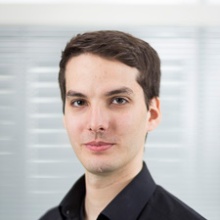
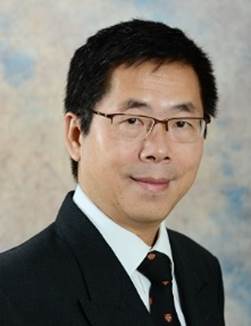
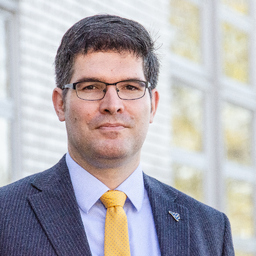
Tobias Steinle is a Researcher at the 4th Physics Institute of the University of Stuttgart. His work focuses on optical parametric amplification and nonlinear spectroscopy , with emphasis on ultrafast phenomena, quantum optics, and advanced laser systems. He specializes in developing tunable light sources and spectroscopic techniques for applications ranging from environmental monitoring to material characterization. Key research interests include ultrafast laser systems, high-order harmonic generation, laser-induced electron diffraction, and nonlinear optical processes. His contributions span innovations in fiber-feedback optical parametric oscillators, stimulated Raman scattering microscopy, and machine learning-enhanced imaging techniques. Steinle’s research also addresses challenges in microplastics detection, superconductivity studies, and 3D-printed optical components. Publications highlight advancements in ultralow-noise femtosecond lasers , ppm-level trace gas detection , and atomic-resolution molecular imaging . His work bridges fundamental physics with applied technologies, addressing needs in environmental science, biophotonics, and quantum optics.
Paul Weaver is a Professor at the University of Limerick and holds additional professorships at the University of Bristol and leadership roles in institutions like the Advanced Composites Centre for Innovation and Science (ACCIS). His work focuses on structural mechanics of composite materials, morphing composites, and buckling analysis, with applications in aerospace, wind energy, and advanced manufacturing. He leads major collaborations such as the Vestas Wind Systems Preferred Partnership and the ORE Catapult Wind Blade Research Hub. Key contributions include pioneering research on variable stiffness composites, novel manufacturing techniques like Continuous Tow Shearing, and influential models adopted by industries like Airbus and NASA. Research interests span composite material design, structural optimization, and sustainability. He has published over 140 journal articles and secured €50m in research funding. Awards include the Royal Society Wolfson Merit Award and AIAA/ASME best paper accolades. His advisory impact includes supervising 34 PhD students, many now in academia or leading roles at major firms like Airbus and Rolls-Royce. He also contributed to reorganizing research structures at the University of Bristol’s Faculty of Engineering, enhancing interdisciplinary collaboration. Publications highlight advancements in composite beam/plate analysis, topology morphing for adaptive structures, and material recycling. His work addresses challenges in lightweight aerospace components, deployable systems, and sustainable manufacturing practices.
Dr. Sithara Sreenilayam is an Assistant Professor in the School of Mechanical & Manufacturing Engineering at Dublin City University since June 2023 and a Funded Investigator at I-Form, the SFI Research Centre for Advanced Manufacturing. She holds a Ph.D. in Soft Matter Physics from Technological University Dublin and an M.Sc. in Physics from Mahatma Gandhi University, India. Her research spans nanomaterials, printed electronics, additive manufacturing, laser processing, and liquid crystals. She investigates applications in energy storage, biomedical devices, and environmental solutions. Dr. Sreenilayam has published extensively on these topics, with recent work focusing on nanoparticle synthesis, 3D-printed biomedical scaffolds, and functional materials for sensing applications.
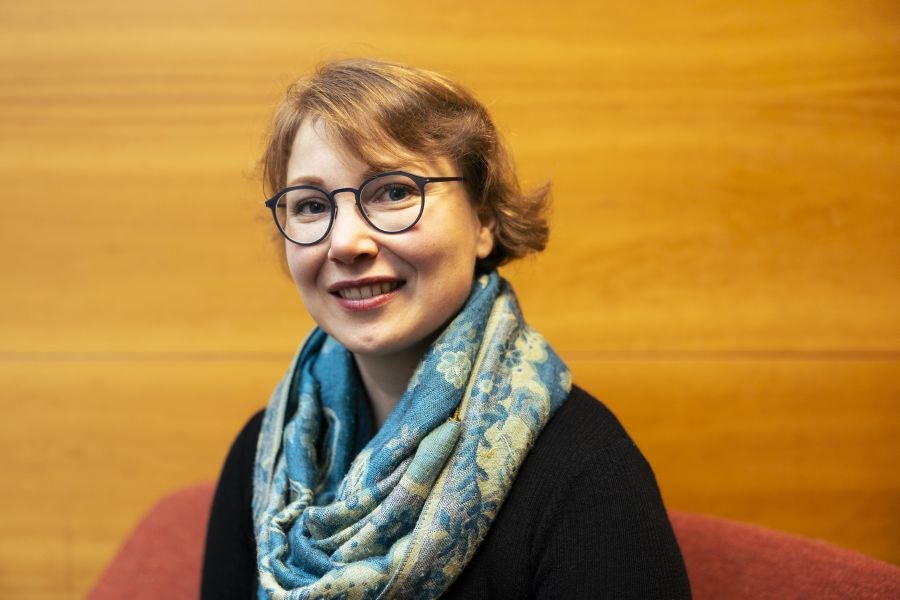
Essi Sarlin is a Professor of Materials Science at Tampere University, appointed in July 2024 within the Faculty of Engineering and Natural Sciences. She leads the Plastics and Elastomer Technology research group, focusing on polymer-based materials including plastics, rubbers, and their composites. With an 18-year career at Tampere University's Hervanta campus, she has progressed from Researcher to her current professorship, delivering her inaugural lecture on May 15, 2025. Her educational journey includes a Doctor of Science in Technology (Materials Engineering) from Tampere University of Technology in 2014, a Master of Science in Technology in 2008, and basic studies in university pedagogy from 2012-2014. She began her academic path as a Researcher, Research Assistant, and Teaching Assistant at Tampere University of Technology from 2006-2009. Professor Sarlin's research centers on sustainable development of polymer products, with particular emphasis on addressing plastics' sustainability challenges. Her work investigates the properties of polymer-based materials, recycling technologies for composites, microplastics in environmental systems, and the relationship between microscopic and macroscopic material properties. She employs advanced techniques including micro-/precision-robotic test concepts to study mechanical properties at micro scales. A strong advocate for industry collaboration, she believes engineering research achieves societal impact through partnerships with companies. Analysis of her recent publications reveals a consistent focus on sustainable materials development, particularly in polymer recycling, microplastics research, and advanced characterization techniques. Her work spans fundamental polymer science, environmental impact assessment, and practical applications for industry. Key trends include innovative recycling methods for composite materials, sophisticated analytical approaches for microplastics detection, and the development of sustainable alternatives to conventional plastics. Professor Sarlin actively supervises doctoral students and postdocs, with more than 50% of her working hours dedicated to research collaboration and supervision, and approximately 25% to teaching. She finds particular joy in working with young researchers, describing it as 'invigorating' and emphasizing how being surrounded by 'smart young people' fuels her research passion. Her leadership extends to major EU-funded projects like RECREATE (Recycling Technologies for Circular Reuse and Remanufacturing of Fibre-reinforced Composite Materials), where her team investigates optimal methods to valorize recycled fiber-reinforced composites. Her research group maintains strong collaborative networks both within academia and with industry partners. Beyond her academic work, Sarlin balances the demands of her professorship with salsa dancing, which she describes as 'extremely relaxing, joyous and uplifting,' providing essential counterbalance to her leadership responsibilities.
Dr. Jennifer Gaughran is an Assistant Professor in the School of Physical Sciences at Dublin City University (DCU) and Chair of the Physics with Biomedical Sciences degree program. She holds a BSc in Physics with Astronomy (2011) and a PhD (2016) from DCU, focusing on microfluidic devices for rapid DNA/RNA detection. Previously, she served as Centre Manager of the Advanced Processing Technology (APT) research centre (2016–2017). Phone: +353 1 700 5037 Email: jennifer.gaughran@dcu.ie Her research emphasizes Point-of-Care (POC) diagnostic devices , integrating nanotechnology into simple systems for early disease detection. She also investigates materials science for anti-biofouling, anti-corrosive, antimicrobial surfaces, and sustainable polymers. Recent work includes bio-based PLA alternatives for lab equipment and sustainable materials in food packaging. Publications highlight advancements in microfluidics (e.g., solvent-selective membranes, functional membranes for flow control), laser nano-processing in dentistry, and chemical recycling of textile waste. She has received awards like the IOPI Rosse Medal (2014) and was shortlisted for the IOP Bell-Burnell Award (2016). She currently supervises three PhD students and contributes to interdisciplinary initiatives bridging physics, biomedical sciences, and environmental applications.
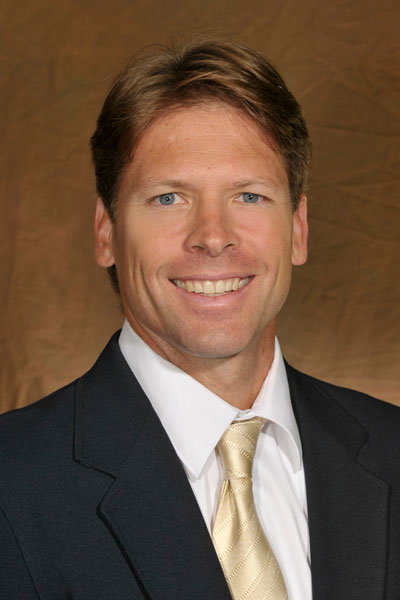
Dr. Christopher Dreyer is a Professor of Practice in Mechanical Engineering and Director of Engineering at the Center for Space Resources at Colorado School of Mines. He holds a BS from Drexel University and MS/PhD from the University of Colorado Boulder. His work focuses on space resource technology development, including lunar/asteroid/Mars resource utilization, in situ resource utilization (ISRU), and instrumentation for extraterrestrial exploration. He co-founded Mines’ groundbreaking Space Resources Graduate Program, the first of its kind globally. Research interests include regolith mechanics, resource extraction, and space manufacturing. He leads experimental facilities for prospecting instruments and resource processing, contributing to NASA missions and commercial lunar propellant architectures. His engineering expertise bridges academic research and practical applications for advancing space exploration infrastructure. Dr. Dreyer’s publications emphasize lunar regolith characterization, optical mining techniques, and solid oxide electrolysis systems for propellant production. His work frequently explores cryogenic environments and subsurface ice extraction methods in permanently shadowed regions. Collaborations include NIAC-funded projects and international asteroid science initiatives.
Jeff Squier is a Professor in the Department of Physics at the Colorado School of Mines. His research focuses on advancing optical imaging and laser technologies for applications in biomedical systems, advanced manufacturing, and material science. He leads the Squier Group and the General Research Laboratory (GRL), collaborating with biologists, engineers, and physicists to develop novel instrumentation such as femtosecond laser platforms and 3D multiphoton microscopy systems. Education : PhD, University of Rochester MS and BS, Colorado School of Mines Research Interests : Development of femtosecond laser systems for precision micromachining and imaging Creation of high-resolution microscopy techniques like SPIFI (Spatial Frequency Modulated Imaging) Integration of optical technologies into additive manufacturing and material processing Biomedical applications including minimally invasive imaging and surgery Awards : University Distinguished Professor (2023) Dean’s Excellence Award Fellow, Optical Society of America Labs & Teams : Directs the Squier Group and collaborates across disciplines through the General Research Laboratory (GRL). His work bridges physics, engineering, and biology, with a focus on translational research.
Philip D. Rack is a Professor and the Leonard G. Penland Chair at the University of Tennessee's Department of Materials Science and Engineering within the Tickle College of Engineering. He also serves as Director of the Center for Materials Processing. His career spans over two decades in academia and industry, with significant contributions to advanced materials processing and nanofabrication techniques. Dr. Rack earned his PhD in Materials Science and Engineering from the University of Florida in 1997, following a Magna Cum Laude bachelor's degree from Georgia Institute of Technology in 1993. His research program focuses on three main areas: combinatorial thin film synthesis for rapid materials discovery, materials integration and nanofabrication for advanced device applications, and nanoscale focused electron beam stimulated processing. These research directions have led to significant advances in nanofabrication techniques, particularly in electron beam induced deposition and etching. His recent publications reveal a continued evolution of his research toward advanced materials discovery using combinatorial methods, high entropy alloys, and sophisticated nanofabrication techniques. A notable trend is the integration of machine learning with microscopy and materials characterization, reflecting the growing importance of artificial intelligence in materials science. His work spans multiple disciplines including nanotechnology, electron microscopy, thin film science, and advanced manufacturing. 2020, 2016, 2013 University of Tennessee College of Engineering Research Fellow Award 2018 AVS Fellowship 2017, 2016 CNMS Division Award for Distinguished Scientific Paper, ORNL Multiple earlier Research Fellow Awards (2009, 2007, 2006) Ralph E. Powe Junior Faculty Achievement Award (2003) Dr. Rack has secured numerous research grants supporting his work in nanofabrication and materials processing, including collaborations with Oak Ridge National Laboratory where he has contributed to the development of vertically aligned carbon nanofiber arrays. His laboratory features specialized equipment including a multi-source rf magnetron sputtering system capable of combinatorial thin film deposition and a focused electron beam system for nanoscale processing. His research group has developed innovative techniques for nanoscale directed assembly, electron beam induced deposition and etching, and combinatorial materials discovery.
Dr. Rodrigo A. Bernal is an Associate Professor in the Department of Mechanical Engineering at the University of Texas at Dallas , affiliated with the Erik Jonsson School of Engineering and Computer Science . He leads the Nanomechanical Multiphysics Lab , focusing on nanomaterials characterization and advanced manufacturing techniques. Education: PhD in Mechanical Engineering from Northwestern University (2014), followed by a postdoctoral fellowship at the University of Pennsylvania (2016). Research interests include mechanical properties of nanomaterials, multiphysics phenomena at the nanoscale, nanoscale metrology, MEMS/NEMS, and electron microscopy. His work bridges experimental and computational approaches, with a focus on nanomechanical testing, additive manufacturing, and interfacial phenomena in advanced materials. Recent publications (2022–2024) highlight studies on nanowire electromigration, diamond-like carbon adhesion, and localized pulsed electrodeposition for microscale printing. His research emphasizes material reliability, failure mechanisms, and novel fabrication techniques for electronics and biomedical applications. He holds no explicitly listed scientific awards but has contributed to over 30 peer-reviewed articles. Advising and grants are not detailed in the provided text. The Nanomechanical Multiphysics Lab focuses on in situ TEM analysis and atomistic simulations to advance nanomaterial understanding.
Sundar V Atre is a Professor and Endowed Chair in Manufacturing & Materials at the University of Louisville. He leads efforts to establish an interdisciplinary program on Digital Manufacturing and Design. His research focuses on advanced materials, additive manufacturing, and powder injection molding of metals and ceramics. He earned his Ph.D. in Materials Science & Engineering from Penn State University in 1995. Dr. Atre’s research group, the Materials Innovation Guild, has produced over 200 publications and 7 licensed patents. His work emphasizes multi-scale manufacturing strategies, including green micromachining of ceramics to enable precise micro-scale features. His NSF-funded research (CMMI-1200647, CMMI-1562439) explores tool wear, material compositions, and process parameters for ceramic micromachining. Key projects include optimizing L-PBF processes for fine metal powders and analyzing green-state SiC/AlN micromachining using tungsten carbide tools. His contributions address challenges in ceramic micro-manufacturing through experimental studies on forces, surface quality, and binder effects.
Zhou Wei is an Associate Professor at Nanyang Technological University's School of Mechanical & Aerospace Engineering. His research focuses on advanced manufacturing processes including additive manufacturing, welding, and materials characterization. He has received multiple awards including the Fellowship of Singapore Welding Society and serves as Chairman of the National Mirror Committee to ISO/TC 44. Research Areas: Laser-based additive manufacturing Materials processing and characterization Fracture and fatigue analysis Advanced joining technologies Recent Research Grants: Advanced Metallization Coatings using Cold Spray (NRF-Rolls Royce) Repair and Restoration of Airfoils by Induction Brazing Development of Laser Aided Additive Manufacturing for Marine Applications Awards & Honors: Fellow, Singapore Welding Society (2015) NTU Teaching Award (2012) SPRING Singapore Merit Award (2012) Tan Chin Tuan Fellowship (1997) Laboratory & Facilities: Leads research groups focusing on advanced manufacturing processes and materials development, with collaborations across aerospace and marine industries.
Thorsten Wuest is a Full Professor in Mechanical Engineering at the University of South Carolina's Molinaroli College of Engineering and Computing. Recognized as one of SME's 20 most influential professors in smart manufacturing, he leads research in Industry 4.0 applications. Education: Ph.D. in Production Engineering, University of Bremen (Summa Cum Laude) M.Sc. in Industrial Engineering and Management, University of Bremen Master of Professional Business Studies, AUT University Auckland His research integrates AI/ML with industrial systems , focusing on smart manufacturing, digital twins, and hybrid analytics. Current projects span federated learning for distributed manufacturing, gamification in industrial assembly, and energy digital twins. Recent publications demonstrate strong emphasis on time-series analytics (40% of works) and human-centric manufacturing (30%). Research is funded by NSF, NIST, DoE, and international agencies. Honors: Sloan Fellowship NSF Career Award Statler Outstanding Researcher Award Infinite Kilometer Award Laboratory & Teams: Directs the Smart Manufacturing Lab with 15+ members including postdocs, PhD students, and undergraduates. Current collaborations involve Festo Didactic, Siemens, and international partners developing testbed-as-a-service platforms.
Victor Giurgiutiu is a Professor of Mechanical Engineering at the University of South Carolina’s Molinaroli College of Engineering and Computing. His research focuses on structural health monitoring (SHM), smart materials, and composite materials, with applications in aerospace and structural engineering. He holds a Ph.D. and B.S. in Aeronautical Engineering from Imperial College London. Giurgiutiu is a Fellow of the Royal Aeronautical Society (RAeS) and the American Society of Mechanical Engineers (ASME), serving as Associate Editor of the Aeronautical Journal. His work emphasizes innovative sensor technologies like piezoelectric wafer active sensors (PWAS) for damage detection and nondestructive evaluation. Recent research highlights include advancements in acoustic emission analysis, AI-driven crack length estimation, and SHM of nuclear dry cask storage systems. He leads the Laboratory of Active Materials and Smart Structures, exploring predictive sensing and multi-physics phenomena in composites. Giurgiutiu’s contributions span over 100 publications, including seminal books like Structural Health Monitoring with Piezoelectric Wafer Active Sensors and Structural Health Monitoring of Aerospace Composites . Education: Ph.D., Aeronautical Engineering, Imperial College London, 1977 B.S., Aeronautical Engineering, Imperial College London, 1972 Research Interests: Giurgiutiu’s work integrates theoretical and experimental approaches to SHM, focusing on composites, piezoelectric sensors, and acoustic emission techniques. Key areas include: Damage detection in aerospace composites Guided wave propagation and imaging Fatigue crack monitoring via AE waveform analysis Smart material systems for structural integrity Nuclear infrastructure SHM Publications Trends: Recent articles emphasize AI integration for damage quantification, advanced sensor arrays, and real-time monitoring systems. Themes include Lamb wave analysis, delamination detection, and radiation-resistant PWAS for nuclear applications. His work bridges fundamental mechanics with practical industrial challenges. Awards: Fellow of RAeS (2016) Fellow of ASME (2018) Advising & Grants: While specific student names are not listed, Giurgiutiu’s research groups collaborate on projects like SHM for nuclear dry casks and aerospace composites. His labs utilize cutting-edge facilities for vibration testing, in-situ microscopy, and AI-driven analysis. Labs & Teams: The Laboratory of Active Materials and Smart Structures (LAMSS) at USC develops novel SHM methodologies. Collaborative projects involve NASA, the U.S. Department of Energy, and industry partners focused on aerospace and energy infrastructure resilience.
Professor Ahmed Qureshi is a Professor and Engineering Research Chair in Advanced Manufacturing Processes and Automation at the University of Alberta's Faculty of Engineering, Department of Mechanical Engineering. He holds a PhD in Mechanical Engineering from Arts et Métiers ParisTech (2011), an M.S. in Design Innovation & Industrial Production (2007), and a B.Sc. in Mechanical Engineering from the University of Engineering and Technology, Lahore (2002). His research focuses on advanced design and manufacturing, including additive manufacturing (e.g., robotic wire-based, plasma transfer arc, and laser processes), automation, and transdisciplinary engineering design. Key projects involve ferromagnetic 3D printing, hybrid additive-subtractive systems, and geometric deviation modeling in AM. He leads the Additive Design and Manufacturing Systems Lab (ADAMS Lab), which develops next-generation manufacturing processes and materials. His teaching includes courses like MEC E 265A/B: Engineering Graphics and CAD, emphasizing 2D/3D modeling and CAD tools. His work integrates sensor fusion, digital twins, and Industry 4.0 principles for process automation and quality control. Research trends in his articles emphasize material-process interactions, optimization of AM parameters, and applications in aerospace, automotive, and biomedical fields. Professor Qureshi's lab collaborates on industrial projects such as oil sands operations and lightweight materials for high-density applications. His contributions bridge academia and industry through innovative manufacturing solutions and educational frameworks aligned with Bloom’s taxonomy for transdisciplinary design education.
Assistant Professor in Mechanical Engineering at University of Colorado Denver and Director of the Intelligent Design & Manufacturing (IDM) Lab. Research focuses on additive manufacturing of composites, lattice structures, and multi-material systems. Leads research group with 2 PhD students and 3 MS students. Developed hybrid DLP-DIW printing for continuous fiber composites and SimuLattice simulation software. Teaches courses in additive manufacturing, computational design, and statics. Manages IDM Lab with capabilities in direct ink writing, material extrusion, stereolithography, and mechanical testing equipment. Recent publications examine pre-impregnation systems for composites, gyroid structure design, and conformal cooling channel optimization. Secured multiple NSF and NASA grants for manufacturing research.