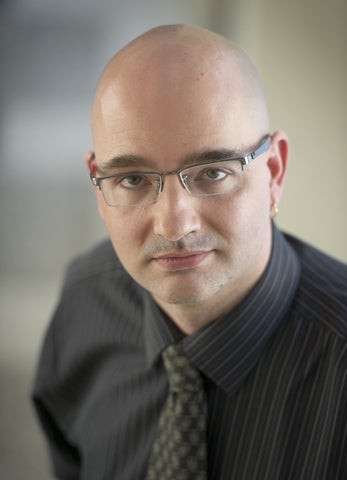
Philip Skemer is a Professor and Associate Chair of Earth, Environmental, and Planetary Sciences at Washington University in St. Louis. He directs the Rock Deformation Lab, part of the Experimental Studies of Planetary Materials (ESPM) group, affiliated with the Institute of Materials Science and Engineering (IMSE) and the McDonnell Center for the Space Sciences (MCSS). His research focuses on experimental rock deformation, mantle dynamics, and plate tectonics. He holds a PhD from Yale University. Education: PhD in Earth and Planetary Sciences, Yale University Research Interests: Skemer investigates mantle deformation, subduction zone processes, and seismic anisotropy using high-pressure rock deformation experiments. His work bridges experimental petrology, microstructural analysis, and planetary-scale tectonics. The ESPM group leverages advanced facilities like the Large Volume Torsion (LVT) apparatus and Electron Backscatter Diffraction (EBSD) to study material behavior under extreme conditions. Publications: Recent work examines phase mixing in mica, compositional controls on shear localization, and exoplanet tectonics. Findings highlight the role of microstructural damage in plate boundary formation and the importance of high-strain experiments in understanding lithospheric dynamics. Labs/Teams: The Rock Deformation Lab develops cutting-edge experimental setups, including next-gen LVT systems. Collaborations with IMSE and MCSS integrate materials science and space science perspectives. Grants/Projects: Skemer leads initiatives like CarbonSAFE Cascadia (CO₂ sequestration in basalts) and CSEDI (compositional controls on tectonics). His work also explores augmented reality for geology education and CO₂ trapping in fractured rocks.