معرفی
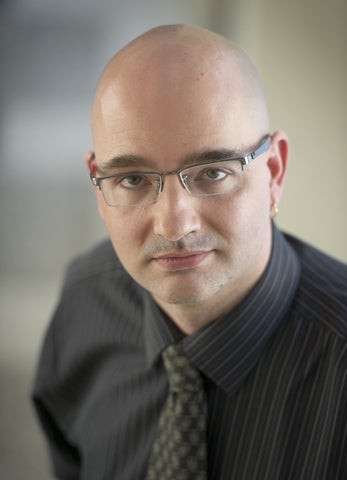
Michael Balogh is a Professor and Undergraduate Advisor in the Department of Physics & Astronomy at the University of Waterloo. His research focuses on galaxy evolution in dense environments, particularly in galaxy clusters and groups. He is a key contributor to large observational programs like the GOGREEN, GCLASS, and VESTIGE surveys, exploring environmental quenching mechanisms, stellar mass functions, and the dynamics of high-redshift clusters. Balogh leads studies using multi-wavelength data from facilities like Hubble Space Telescope (HST), Euclid, and CASTOR, investigating star formation suppression, galaxy morphology evolution, and the interplay between galaxies and their environments. His work addresses fundamental questions about how galaxy properties are shaped by cosmic environments and the timeline of galactic quenching. He is also involved in mission planning for future space telescopes and wide-field surveys, emphasizing observational strategies for extragalactic studies.
Education background and specific degrees are not explicitly detailed in the provided text. Balogh's research spans cosmology, astrophysics, and instrumentation, with a focus on cluster-scale processes and galaxy formation histories. He collaborates extensively on international projects, contributing to both observational campaigns and theoretical models of galaxy evolution.
His scientific contributions include seminal papers on quenching timescales, stellar mass distributions in clusters, and the role of environmental stripping in truncating star formation. Despite the absence of listed awards here, his prolific publication record and leadership in major surveys underscore his significant impact in the field. Balogh advises on undergraduate physics education and maintains active participation in shaping future observational capabilities through initiatives like the Maunakea Spectroscopic Explorer and Subaru Telescope partnerships.