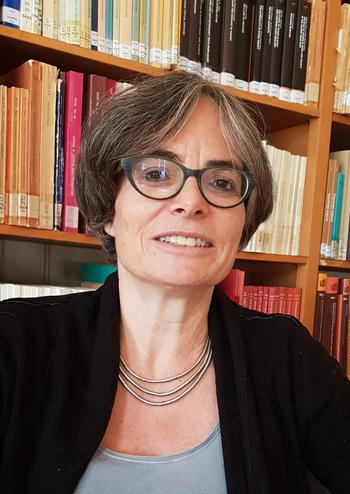
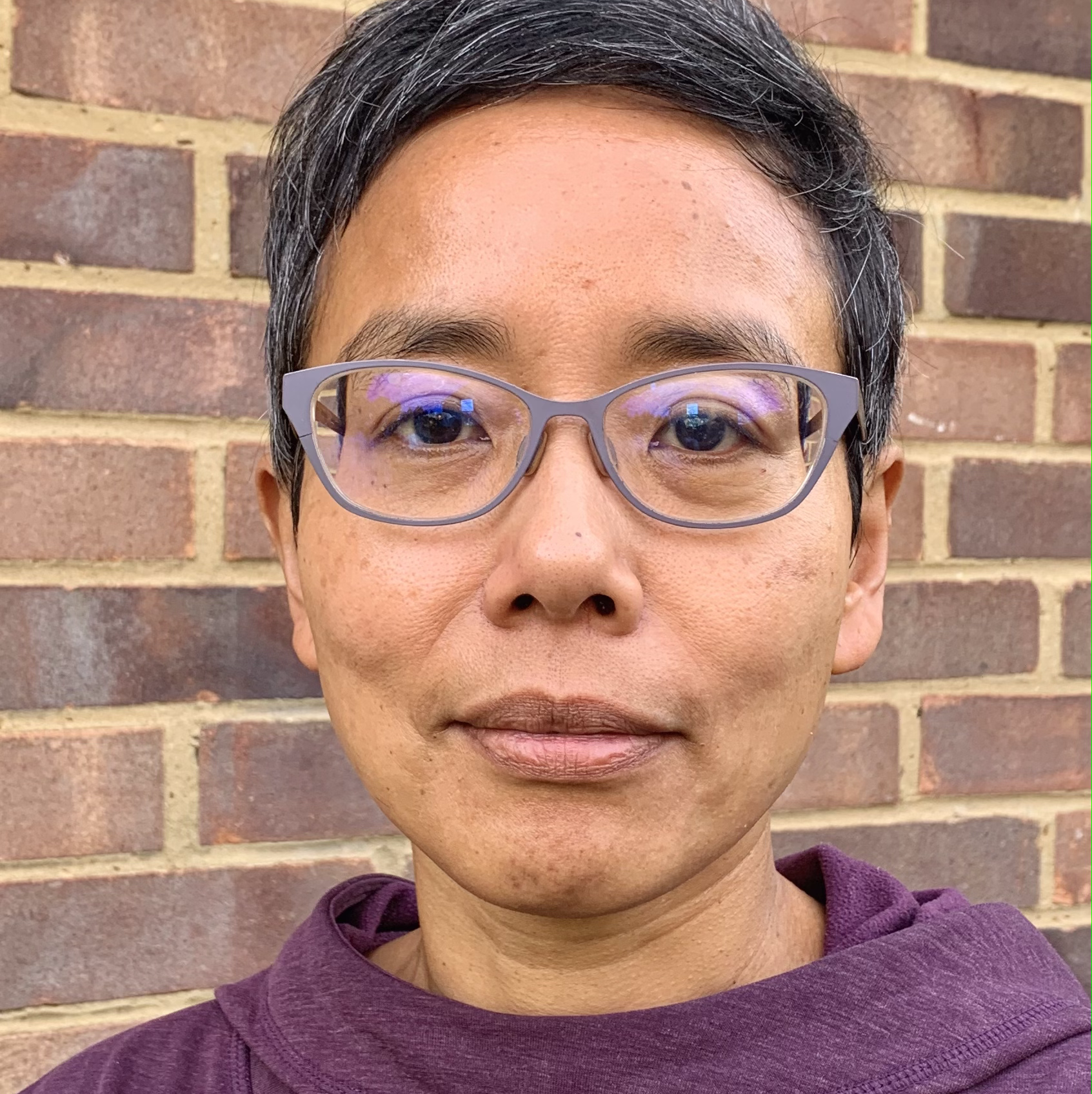
Vera Meyer-Laurin is a Lecturer for Hebrew and Aramaic at the Institute of Jewish Studies , Free University of Berlin, since 2010. She also serves as the Deputy BA representative and contributes to the institute's academic coordination. Fields of Interest: Jewish Studies, Hebrew and Aramaic languages, Talmudic exegesis, Kabbalah, codicology (study of Torah scrolls as cultural objects), and medieval Jewish history. Contact: Located at Fabeckstr. 23/25, Room 0.2065, 14195 Berlin. Email: meyerlaurin@zedat.fu-berlin.de Her work intersects with the institute’s research projects, including ToRoll: Materialisierte Heiligkeit (codicology of Torah scrolls), Patterns of Knowledge Circulation (Jewish esotericism), and the Lexicon of Jewish Names . She participates in academic events like conferences and film screenings (e.g., Back in Berlin documentary, 2025), though no specific publications or awards are mentioned in the provided texts.
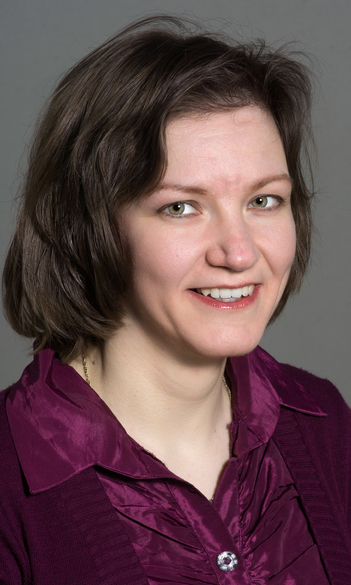
Dipl.-Ing. (FH) Marius Cysewski is a researcher at Helmholtz-Zentrum Hereon , specializing in radar hydrography and ocean surface dynamics . With a background in engineering, his work bridges technical innovation with marine environmental monitoring. Education : Diplom-Ingenieur (FH) (equivalent to MSc) in 2003, followed by a master’s thesis-equivalent knowledge assessment in 2011 His research focuses on coastal oceanography , particularly using X-band and HF radar systems to study: Wave-driven currents and vortex patterns Surf zone hydrodynamics Wave breaking detection Oil spill spread monitoring Sea surface current mapping Marine radar calibration techniques Recent publications highlight his expertise in phase-resolving numerical models and coherent radar backscatter analysis . His work contributes to operational coastal monitoring systems like COSYNA.
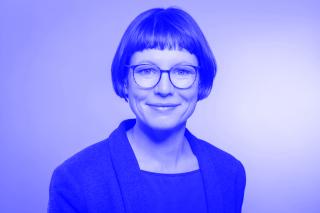
Mariann Slíz is a Professor at the Department of Hungarian Historical Linguistics, Sociolinguistics and Dialectology of Eötvös Loránd University (ELTE), where she also serves as Deputy Director of the Institute of Hungarian Linguistics and Finno-Ugric Studies. Her academic career spans teaching and research in onomastics, historical linguistics, and applied linguistics. PhD (ELTE, 2010) Habilitation (ELTE, 2016) Her research focuses on personal name systems , applied onomastics (including lexicography, translation studies, and terminology), and name theory . Recent publications analyze name translation, pseudoscientific naming practices, and medieval Hungarian anthroponymy. She teaches courses on Hungarian language history, research methodology, and editorial skills at BA, MA, and doctoral levels. Her work bridges historical and contemporary linguistic analyses, with empirical studies on name perception and cultural-political influences on naming traditions. She contributes to academic knowledge through editorial roles and international collaborations, particularly in Uralic and Slavic onomastic research. Contact: sliz.marianna@btk.elte.hu | Room A/237, ELTE BTK, Budapest
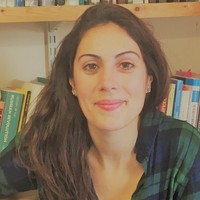
Kornélia Deres is an Associate Professor at the Department of Comparative Literature and Cultural Studies at Eötvös Loránd University (ELTE) in Budapest, Hungary. She holds a prominent position within the Faculty of Humanities and has established herself as a leading scholar in theatre and performance studies with a focus on Central and Eastern European contexts. Her academic journey includes prestigious fellowships including the Alexander von Humboldt Postdoctoral Fellowship at the University of Cologne's Institute of Media Culture and Theatre, the Junior Core Fellowship at Central European University's Institute for Advanced Study, and the Bolyai Research Fellowship awarded by the Hungarian Academy of Sciences. Deres's research interests span across theatre history, performance studies, documentary theatre, postdramatic aesthetics, media studies, and cultural studies with particular attention to how performance practices intersect with historical and political contexts in Central and Eastern Europe. Her work frequently examines the connections between archival practices and performativity, the legacy of state socialism in contemporary theatre, and the ways in which performance engages with social and political issues in Hungary. She has made significant contributions to understanding how theatre artists employ re-enactment, intermediality, and documentary methods to address historical trauma, political control, and social issues. Deres has received notable recognition for her scholarly contributions, including the 'Promising Researcher of ELTE' Award in 2022 and the prestigious habilitation title in 2024. Her publications demonstrate a consistent engagement with both Hungarian and international academic communities through journals such as Theatre Research International, New Theatre Quarterly, and Global Performance Studies. Promising Researcher of ELTE Award (2022) Bolyai Research Fellowship by Hungarian Academy of Sciences Alexander von Humboldt Postdoctoral Fellowship Junior Core Fellowship at Institute for Advanced Study at Central European University Her scholarly work has been supported by significant research grants and fellowships that have enabled her to conduct international collaborative research. Deres has demonstrated leadership in academic publishing through editing scholarly volumes and serving on editorial boards. While specific details about her advising activities are limited in the provided information, her habilitation in 2024 suggests active involvement in graduate education and mentorship at ELTE. Deres's research frequently engages with experimental theatre collectives and their archival practices, including work on the Szkéné Collective at Budapest University of Technology and the Apartment Theatre at Dohány Street. Her scholarship examines how these groups created alternative performance spaces during challenging political periods, particularly under Hungarian state socialism, and how their legacies continue to influence contemporary performance practices in Central and Eastern Europe.
Vincent Sobotka is a Full Professor at Polytech Nantes, University of Nantes, where he also serves as Deputy Director. He is affiliated with the Nantes Thermal and Energy Laboratory (UMR_C 6607) and is the Scientific Director of CAPACITES SAS. His office is located at La Chantrerie, rue Christian Pauc, CS 50609 44306 Nantes Cedex 3 in the Isitem building, offices R115 and E212. Dr. Sobotka completed his doctoral thesis at LTN, University of Nantes (2001-2004), followed by an ATER position at Polytech Nantes (2004-2005), then served as a Lecturer (2005-2017) before becoming a University Professor (2017-present). His academic journey demonstrates a steady progression within the same institution, reflecting deep institutional knowledge and commitment to his field. His research focuses on experimental approaches and modeling of heat transfer in polymer materials and composites. He specializes in characterizing thermal properties of polymers and composites, modeling heat transfers in shaping processes, and controlling/optimizing thermal properties during manufacturing. Dr. Sobotka has developed experimental apparatus for characterizing thermal properties under industrial process conditions and works extensively on thermal optimal design of forming processes. His work spans applications in additive manufacturing, composite materials, thermoplastic processing, and injection molding technologies. Analysis of his recent publications reveals a strong emphasis on thermal management solutions for composite manufacturing, with significant focus on lattice structures for enhanced heat transfer, optimization of cooling channels in molds, and characterization of high-performance polymers like PEEK. His research increasingly integrates computational methods with experimental validation to solve practical manufacturing challenges. Dr. Sobotka has supervised numerous PhD students, with several currently in progress. His research appears to be supported by various industry partnerships including CIFRE agreements with companies like Cogit Composites, Airbus, and the IRT Jules Verne institute. He has established strong connections between academic research and industrial applications, particularly in aerospace and advanced manufacturing sectors. He is affiliated with the Laboratoire de Thermique et Energie de Nantes (LTEN), where he leads research activities focused on thermal characterization of materials, process optimization, and development of innovative manufacturing technologies. His team works closely with industry partners to address real-world challenges in composite manufacturing and thermal management.
Cory A Reed is an Associate Professor of Spanish in the College of Liberal Arts at the University of Texas at Austin, specializing in early modern Spanish literature and culture. He holds a Ph.D. from Princeton University and maintains an active research and teaching profile focused on Cervantes, Spanish drama, and cognitive cultural studies. His research interests include the study of genre and performance in early modern drama; the representation of identity in sixteenth- and seventeenth-century literature; literary and cultural responses to the emergence of scientific discourse in early modern Spain; and cognitive cultural studies. Dr. Reed approaches literary analysis through interdisciplinary lenses, particularly examining how cognitive science can illuminate historical audience responses to theatrical performances. Dr. Reed serves as president of the Cervantes Society of America, the North American association of scholars in his field, and represents the University of Texas on the Representative Council of the Newberry Renaissance Consortium. He also directed the interdisciplinary Tracking Cultures Program, which analyzes the historical roots of Southwestern identity in colonial Mexico and early modern Spain. President's Associates Teaching Excellence Award at UT Austin Humanities Research Award from the College of Liberal Arts for research on "Embodied Cognition, Empathy, and Activism in Early Modern Spanish Theatrical Performance" His teaching portfolio includes courses such as SPN 351 (Don Quijote/Early Modern World), ILA 387 (Legacies of Early Modern Spain), UGS 303 (Road Movies, Quixotic Journeys), and E 316N (World Literature), demonstrating his commitment to interdisciplinary approaches connecting literature with film, cognitive studies, and transatlantic cultural exchange.
Isabelle Léglise serves as Research Director at CNRS and Deputy Director of SeDyL (UMR 8232), a joint research unit of CNRS, IRD, and Sorbonne Nouvelle University. Her work investigates multilingualism through narrative, interactional, and plurisemiotic approaches, with extensive fieldwork in French Guiana, Brazil, Suriname, and Cambodia focusing on language practices in globalization contexts. Education: Accreditation to Direct Research (2013), INALCO Doctorate in Theoretical and Formal Linguistics (1999), University of Paris 7 Denis Diderot Training in Language Sciences, French as a Foreign Language, Anthropology Her research examines language heterogeneity in education, healthcare, and transnational family dynamics, particularly how linguistic diversity intersects with citizenship and knowledge circulation in postcolonial societies. She pioneers methodologies for studying linguistic landscapes in Global South contexts, emphasizing decolonial perspectives on language policy and educational equity. Dr. Léglise leads multiple major initiatives including the InIdex Project on public spaces in the Anthropocene, AMI MITI CNRS research on overseas educational inequalities, and Cambodia-based SHS training programs. Her current work develops digital educational innovations for Guyanese schools and analyzes language practices in transnational families. As academic service, she teaches doctoral seminars at INALCO/Paris 3 on multilingualism controversies and sociolinguistics methods, directs the open-access journal Language and Society , and chairs the Contact and Multilingualism book series. She serves on editorial boards for Langage et Société and Journal of Language Contact , and participates in EUR FRAPP and INALCO scientific councils. Her laboratory leadership centers on SeDyL's research themes: 'Language practices, heterogeneity and globalization' (which she leads) and 'Social issues of multilingualism' (which she co-leads), fostering interdisciplinary collaboration across anthropology, linguistics, and social sciences.
Marie-Albane DE SUREMAIN is a Lecturer in Contemporary History at the Université Paris-Est Créteil Val de Marne (UPEC), affiliated with the ESPE (teacher training school) and the research laboratory CESSMA (Center for Social Science Studies on the African, American and Asian Worlds). She co-directs the laboratory's 'Construction and Uses of Knowledge' research axis, focusing on interdisciplinary analyses of development and globalization dynamics. Her research explores: The history of social sciences in colonial/postcolonial contexts (anthropology, geography, sociology) Historiography of Africa and colonial systems Knowledge circulation between Europe and Africa Pedagogy of socially sensitive topics like slavery and colonization Her publications predominantly examine colonial knowledge systems, postcolonial educational reforms, and transnational academic networks, with recent works analyzing the reappropriation of African historical narratives. She received the Waldo G Leland Prize (2021) for contributions to the Oxford Research Encyclopedia of African History. Key grants include coordination roles in: ANR-SUDS AFRODESC program (educational axis, 2009-2012) European EURESCL program (slave trade education, 2009-2012) She supervises MEEF master's theses in history/geography and leads teacher training on sensitive historical topics.
Bodil Axelsson is Professor of Cultural Heritage at Linköping University, affiliated with the Department of Culture, Society, Design and Media (KSFM) within the Faculty of Philosophy. Her research focuses on how museums, associations and private individuals highlight, fixate and make visible what she calls 'meaningful past units' - the processes through which history and cultural heritage are shaped through storytelling, collecting and displaying. Her academic background includes a Master's in Communication from Linköping University (1999), a PhD in Communication (2003), Associate Professor of Culture and Media Design (2014), and Professor of Cultural Heritage (2021). She teaches in bachelor's and master's programs in Communication, Society and Media Production, and in doctoral education within Theme Culture and Society (Theme Q). Professor Axelsson's research examines the complex processes of cultural heritage formation, combining participant observation, interviews, and media and archive studies. Her current work investigates museums' digital teaching resources for schools, digitization of museum collections, internal museum processes for accessibility, and social media circulation of museum objects. Previous projects have addressed historical theater plays, popular history magazines, contemporary collecting practices, and artistic expression. Her recent publications reveal a consistent focus on digital transformations of cultural heritage, particularly examining how digitization alters context and meaning of cultural objects. Her work spans from Viking jewelry circulation on Pinterest to pandemic-era handwashing practices, demonstrating her interdisciplinary approach to understanding heritage in digital contexts. Cnattingius Prize from Östergötland Museum (2024) for outstanding research on cultural heritage and museums Professor Axelsson leads significant research projects including a 1.1 million SEK study on museums' digital teaching resources for schools (2022). She collaborates extensively with Östergötland Museum and researchers including Martin Fredriksson, Wiktoria Glad, Eva Hemmungs Wirtén, and David Ludvigsson. Her work critically examines the challenges of digitization, noting that while it makes heritage accessible, it also transforms museum knowledge when materials interact with algorithms and business models. She advocates for museums to avoid cultural polarization by engaging with diverse knowledge needs while maintaining their essential role as social institutions where people experience objects and documents directly.
Dr. Katja Castryck-Naumann serves as Junior group leader and research associate at the Leibniz Institute for the History and Culture of Eastern Europe (GWZO) in Leipzig, where she has worked since 2017 in Department III "Interconnections and Globalization" and coordinates early career researchers since 2020. Educational background: Studied history, political science, and philosophy at Leipzig, Edinburgh, and Vienna universities Doctorate from University of Leipzig Visiting positions at UC Santa Barbara, Aarhus University, Sciences Po Lyon, and CNRS Paris Her research examines transnational historical frameworks through: History of international organizations and transnational actors 19th-20th century transregional interrelations in East Central Europe History and theory of area studies World historiography in US and European contexts Concepts of historical globalization and interdependence She has secured research grants from German Historical Institute (Washington DC), University of Chicago, and European Science Foundation, with current projects analyzing Polish experts in League of Nations/UN secretariats and knowledge circulation in Eastern European historiography. Leadership roles: Spokeswoman for Research Area 4 "Cultures of Internationalism" at Leibniz ScienceCampus "Eastern Europe – Global Area" Publisher of Connections. A Journal for Historians and Area Specialists Editor-in-Chief of Comparativ: Journal of Global History and Comparative Societies Chair of European Network in Universal and Global History Executive Director of Network of Global and World History Organizations Member of Leipzig Research Centre Global Dynamics Awards: Walter Markov Prize for History (2013) Doctoral award from International Commission for History and Theory of Historiography (2013)
Dora Sampaio is an Assistant Professor in the Department of Human Geography and Spatial Planning at Utrecht University's Faculty of Geosciences. She previously served as a Postdoctoral Research Fellow at the Max Planck Institute for the Study of Religious and Ethnic Diversity and held positions as an Associate Tutor and Guest Lecturer at the University of Sussex, along with a Research Fellowship at the Centre for Geographical Studies of the University of Lisbon. Dr. Sampaio earned her PhD in Human Geography from the University of Sussex. Her academic journey reflects a consistent focus on migration studies, particularly examining the intersection of ageing and transnational mobilities. Her research primarily investigates international migration, life course transitions, intergenerational relationships, socio-spatial inequalities, and urban displacement, with a geographical focus on Brazil and Portugal. She has developed innovative theoretical frameworks including 'work as affective care' and 'ageing strategically' to understand the complex dynamics of transnational families and older migrants. Her work often centers on the Azores archipelago as a microcosm of global migration patterns, examining diverse groups of older migrants including return, lifestyle, and ageing-in-place labor migrants. Analysis of her recent publications reveals a strong interdisciplinary approach bridging geography, sociology, anthropology, and gerontology. Her work consistently explores emotional dimensions of migration, the temporal aspects of transnational relationships, and the strategic decisions made by older migrants across the life course. A notable trend is her focus on understudied aspects of migration including the role of silence in transnational care, the experiences of undocumented family members, and the specific challenges faced by older adults in urban environments of low and middle-income countries. Dr. Sampaio has made significant contributions through her scholarly publications including two major monographs: Aspiring in Later Life. Movements across Time, Space, and Generations (2023) and Migration, Diversity and Inequality in Later Life: Ageing at a Crossroads (2022), along with numerous high-impact journal articles in leading publications such as the Journal of Ethnic and Migration Studies, Journal of Rural Studies, and Global Networks. Her research has been supported through various national and international projects focusing on migration studies. As an educator, she has contributed to integrating feminist perspectives into geography curricula and has examined the challenges of teaching gender studies in the context of rising postfeminist ideologies. Her work demonstrates a commitment to understanding the complex ways in which migration, ageing, and care intersect across different spatial and temporal scales. Dr. Sampaio maintains active research collaborations across multiple institutions and countries, with particular emphasis on transnational family dynamics between Brazil and the United States, and migration patterns affecting the Portuguese islands of the Azores. Her work frequently employs ethnographic methods and in-depth life narrative interviews to capture the nuanced experiences of migrants across the life course.
Porscha Fermanis is Professor of Romantic Literature at University College Dublin, where she is based in the School of English, Drama and Film. She is a leading scholar in global Romanticism, settler colonialism, and southern literary theory, directing major research initiatives such as the ERC-funded SouthHem project. Her work spans transnational literary networks, colonial book history, and the politics of historical representation. Her educational background includes a PhD from Oxford University, supported by multiple prestigious scholarships including the Oxford University English Faculty Graduate Studentship and the Australian University Postgraduate Scholarship. Her academic journey began with a BA-BL from Oxford and includes postdoctoral fellowships and teaching roles at Oxford and the University of Western Australia. Fermanis’s research centers on Romantic-era literature and its global manifestations, particularly in the southern hemisphere. She investigates how literary modernity emerged in settler colonies, the role of reading and public libraries in colonial citizenship, and the interplay between Romantic aesthetics and imperial ideologies. Her scholarship critically engages with settler nationalism, Indigenous epistemologies, and the geopolitics of literary taste. Her recent publications reveal a consistent focus on hemispheric and transnational frameworks, with recurring themes including colonial knowledge formation, humanitarianism, and the literary construction of national identity. She frequently publishes on figures such as Samuel Butler, Robert Southey, and Keats, while also advancing methodological innovations through southern and oceanic theory. IRCHSS Research Fellow IRCHSS Postdoctoral Fellow Keats-Shelley Memorial Association Essay Prize Oxford G. A. Paul Memorial Scholarship Australian University Postgraduate Scholarship Katherine Moss Prize Fermanis has supervised PhD candidates and is committed to graduate education, having served as Director of Graduate Studies and led curriculum redesigns, including the MA programmes and the 'Literary Research Skills' module. She has coordinated key modules such as 'Romanticism' and 'Dark Romanticism' and champions inclusive, skills-focused pedagogy. She leads the SouthHem research project, which fosters international collaboration and maintains an active blog and website. Her grants include major ERC funding and Irish Research Council awards, supporting work on settler subjecthood, literary modernity, and historical representation.
May Adadol Ingawanij is Professor of Cinematic Arts and Co-director of the Centre for Research and Education in Arts and Media at the University of Westminster. Her work centers on Southeast Asian contemporary art, de-westernised histories of cinematic arts, and avant-garde legacies in Southeast Asia. She is recognized for developing decolonial methods for studying cinematic and artistic practices situated in and related to Southeast Asia, with particular focus on artists' moving image. Her major research themes intersect film and media studies, art history, curatorial practice, and area studies. Ingawanij's work creatively develops decolonial methods for studying histories and genealogies of cinematic and artistic practices. She places contemporary Southeast Asian artists' moving image in constellation with the region's itinerant film projection rituals performed as offerings to powerful spirits of local territories. Her research explores the cosmological, agential, and relational characteristics of Southeast Asian artists' moving image. Ingawanij's publications and curatorial projects reveal emerging trends in Southeast Asian artistic practices that fabulate temporally heterogeneous worlds enlivened by beings of the deep past, the undead, spirits, and mythical creatures. Her work examines how such practices entangle with failures and aftermath of the region's historical vanguardism while exploring what art can do and not-do in contemporary contexts. ArtReview's 2021 Power 100 list British Academy Mid Career Fellowship (2018-19) Leverhulme Trust Early Career Fellowship (2009-2012) Multiple British Academy and Asia-Europe Foundation grants As an academic and curator, Ingawanij prioritizes supporting creative processes of filmmakers and artists working in fragile and at-risk artistic infrastructures. She has been developing a large-scale, multi-strand research initiative on speculative practices of future-making involving film and moving image creation and circulation, with strands addressing climate change and visions of Asian film futures. She serves on the Berwick Film and Media Arts Festival Board of Trustees and regularly contributes to international academic and arts institutions. Her current major project Animistic Apparatus conceptualizes Southeast Asian artists' moving image as practices that make animistic medium within circuits of global contemporary art, exploring the entanglement of historical vanguardism and contemporary art through the lens of regional animism.
Dr. Balázs József Nemes serves as Senior Lecturer in the Department for Medieval German Literature at the University of Freiburg, holding academic senior council status since 2021. His career spans two decades at the institution with significant contributions to medieval studies through research, teaching, and project leadership. His academic foundation includes: Magister Artium (2003) from Freie Universität Berlin Studies in German Literature and Catholic Theology at Cluj and Berlin Old Hungarian Literature specialization at ELTE Budapest via ERASMUS (2001/02) PhD completion in 2009 Nemes' research centers on medieval German mysticism, particularly Carthusian manuscript traditions and textual transmission. His work examines mystical texts from Erfurt Charterhouse, Gertrude of Helfta's Legatus divinae pietatis, and Mechthild of Magdeburg's Lux divinitatis. He bridges philological analysis with theological context, exploring how monastic communities preserved and adapted mystical literature through scribal practices and material culture. His recent publications reveal three key trends: systematic documentation of Carthusian libraries (especially Erfurt), digital reconstruction of mystical text traditions, and analysis of prayer book circulation in late medieval religious communities. These works demonstrate evolving methodology from traditional codicology to digital humanities approaches while maintaining focus on textual authenticity and reception history. His scientific recognition includes: Feodor Lynen Postdoctoral Fellowship (Humboldt Foundation, 2009/10) Academic Visitor award (Baden-Württemberg Graduate Funding, 2007) Internal Fellowship at Freiburg Institute for Advanced Studies (2019-2020) Nemes has secured substantial grant funding including DFG projects 'Making Mysticism' (2018-2021) and 'Mediating Mysticism' (2025-2028), plus SNF and COST Action involvement. His leadership extends to coordinating Freiburg's Centre for Medieval Studies (2017-2019) and Master's program in Mediaeval Studies, demonstrating institutional impact beyond individual research. He actively participates in CODEX (Cluj), Ons Geestelijk Erf journal advisory board, and European networks on medieval prayer practices. Current work focuses on the DFG-funded 'Mediating Mysticism' project analyzing Erfurt Charterhouse's mystical book collections through interdisciplinary methodologies combining manuscript studies, digital tools, and reception theory.
Nahyan Fancy serves as Professor of History at DePauw University in Greencastle, Indiana, where he has taught since Fall 2006. His academic focus centers on medieval Islamic science, medicine, and intellectual history, with particular expertise in Ibn al-Nafis's discovery of pulmonary blood transit and its historical significance for later European medical developments. His educational credentials include: Ph.D. (Honors) in History and Philosophy of Science/History Track from University of Notre Dame (2006) M.A. in History and Philosophy of Science and Technology from University of Toronto (1999) B.A., magna cum laude, in Mathematics and Biochemistry from Knox College (1997) Fancy's research explores critical intersections between philosophy, theology, and medical physiology in pre-1500 Islamic societies. He examines how medieval scholars navigated religious frameworks while advancing medical knowledge, particularly through commentaries on foundational texts like Avicenna's Canon. His work reveals how Islamic medical traditions influenced Renaissance Europe through Mediterranean knowledge networks, with recent investigations focusing on plague responses and evolving medical epistemology after 1250. Analysis of his 1999-2021 publications shows persistent engagement with Galenic reception, medieval reproductive theories, and the relationship between religious scholarship and medical practice. Key thematic threads include the critical reinterpretation of classical authorities, the material culture of medical manuscripts, and cross-cultural knowledge transmission dynamics across the Islamicate world and Latin Europe. His scholarly recognition includes: National Endowment for the Humanities Fellowship (2021-2022) Al-Qasimi Visiting Professorship at University of Exeter (2021) ACLS Project Development Grant (2020) Edwin L. Minar, Jr. Award for Scholarship (2020) Institute for Advanced Study Membership (2015) Bruce D. Craig Prize for Mamluk Studies (2007) Fancy has secured competitive research funding from NEH and ACLS for projects examining Islamic medical commentaries and organizing international workshops on science history in Muslim societies. His grant portfolio reflects sustained institutional support for investigating how medieval Islamic medical knowledge evolved through philosophical and theological engagement, with recent work focusing on pandemic responses and commentary traditions in post-Mongol societies.