معرفی
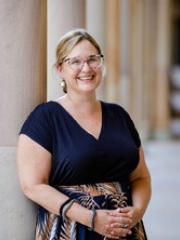
Bodil Axelsson is Professor of Cultural Heritage at Linköping University, affiliated with the Department of Culture, Society, Design and Media (KSFM) within the Faculty of Philosophy. Her research focuses on how museums, associations and private individuals highlight, fixate and make visible what she calls 'meaningful past units' - the processes through which history and cultural heritage are shaped through storytelling, collecting and displaying.
Her academic background includes a Master's in Communication from Linköping University (1999), a PhD in Communication (2003), Associate Professor of Culture and Media Design (2014), and Professor of Cultural Heritage (2021). She teaches in bachelor's and master's programs in Communication, Society and Media Production, and in doctoral education within Theme Culture and Society (Theme Q).
Professor Axelsson's research examines the complex processes of cultural heritage formation, combining participant observation, interviews, and media and archive studies. Her current work investigates museums' digital teaching resources for schools, digitization of museum collections, internal museum processes for accessibility, and social media circulation of museum objects. Previous projects have addressed historical theater plays, popular history magazines, contemporary collecting practices, and artistic expression.
Her recent publications reveal a consistent focus on digital transformations of cultural heritage, particularly examining how digitization alters context and meaning of cultural objects. Her work spans from Viking jewelry circulation on Pinterest to pandemic-era handwashing practices, demonstrating her interdisciplinary approach to understanding heritage in digital contexts.
- Cnattingius Prize from Östergötland Museum (2024) for outstanding research on cultural heritage and museums
Professor Axelsson leads significant research projects including a 1.1 million SEK study on museums' digital teaching resources for schools (2022). She collaborates extensively with Östergötland Museum and researchers including Martin Fredriksson, Wiktoria Glad, Eva Hemmungs Wirtén, and David Ludvigsson. Her work critically examines the challenges of digitization, noting that while it makes heritage accessible, it also transforms museum knowledge when materials interact with algorithms and business models. She advocates for museums to avoid cultural polarization by engaging with diverse knowledge needs while maintaining their essential role as social institutions where people experience objects and documents directly.