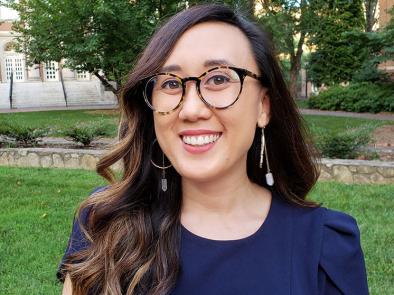
Patricia Li is an Associate Professor in the Department of Pediatrics at McGill University's Faculty of Medicine and Health Sciences, with a focus on health services research and epidemiology. She is also a Scientist at the Research Institute of the McGill University Health Centre (RI-MUHC) and holds a position in the Child Health and Human Development Program at the Center for Evaluative Research in Health. Her work emphasizes primary care, health equity, and knowledge translation, particularly in improving pediatric health outcomes through population-based studies. Patricia Li's research leverages administrative health databases, clinical cohorts, and patient engagement to address systemic gaps in care. She co-created the Montreal site of TARGet Kids!, Canada's largest primary care research network, which serves as a platform for clinical trials. Her methodologies integrate innovative trial designs, qualitative analysis, and partnerships with healthcare policymakers and clinicians. Her recent publications span organizational behavior topics such as authenticity, leadership, and code-switching, alongside health-focused studies on asthma management and health equity. While her health research directly ties to her academic role, the organizational behavior publications suggest interdisciplinary collaborations or dual research interests. Her work consistently bridges empirical findings with actionable clinical and policy recommendations. Key grants include funding from the Canadian Institutes of Health Research (CIHR) and Fonds de recherche du Québec – Santé (FRQS). She actively engages with knowledge users to influence guidelines and practices in early childhood health interventions.
Natalie Chisam serves as Assistant Professor of Marketing in the Department of Marketing at the College of Business, University of Nebraska–Lincoln, appointed in 2023 after completing her Ph.D. at the University of Washington. Her research focuses on data privacy within marketing strategy, with publications in premier journals including Journal of Marketing and Journal of the Academy of Marketing Science. Education: Ph.D., University of Washington, 2023 MS, University of Washington, 2021 MBA, University of Notre Dame, 2019 BS, Indiana University-Bloomington, 2013 Dr. Chisam's research centers on data privacy in marketing strategy, examining how firms navigate regulatory frameworks and build consumer trust through privacy stewardship. Her work bridges marketing and public policy, with emphasis on organizational responses to evolving data regulations. Key areas include: Marketing Strategy Data Privacy Marketing Law & Public Policy Marketing Research Her publications demonstrate consistent focus on privacy regulation impacts, trust-building mechanisms, and strategic organizational design. Recent work includes meta-analyses of network effects on firm performance and frameworks for regulatory compliance, revealing how authenticity indicators enhance privacy leadership and mitigate performance risks. Scientific awards and recognitions: Sheth Foundation Best Paper Award Finalist, Journal of the Academy of Marketing Science (2023) Faculty Teaching Award, Department of Marketing, University of Nebraska-Lincoln (2025) Dean’s Coin Recipient, University of Nebraska–Lincoln College of Business (2025) Certificate of Recognition for Contributions to Students (2025) Emerging Scholar Research Award Nominee (2025) Delta Sigma Pi Faculty of the Month (2025) Dr. Chisam secured the University of Nebraska–Lincoln College of Business Teaching and Learning Center Learning Community Grant (2024) and received substantial doctoral funding including the James B. Wiley Endowed PhD Fellowship ($25,000) and Forté Fellowship ($40,000/year). Her grant portfolio reflects strong support for privacy-focused marketing research. As Associate Executive Director of the Sales and Marketing Strategy (SAMS) Institute since 2019 and Vice President for Engagement of the AMA TechSIG since 2024, she leads initiatives connecting academic research with industry practice in marketing innovation and strategy.
Xin Qi is an Assistant Professor (non-tenure-track) at the School of International Liberal Studies, Faculty of International Research and Education, Waseda University. He holds a Doctor of Engineering degree from Waseda University (2019) and previously studied at Hangzhou Dianzi University (2009-2013). His educational background includes: Doctor of Engineering, Waseda University (2014.09-2019.09) Bachelor's degree, Hangzhou Dianzi University (2009-2013) Dr. Qi's research focuses on the intersection of artificial intelligence and network technologies. His primary research areas include Intelligent Informatics, with specific interests in Artificial Intelligence applications for security systems, IoT infrastructure, and Information-Centric Networking. His work bridges theoretical computer science with practical applications in public safety, disaster management, and secure communications. His research demonstrates strong interdisciplinary connections between computer science, electrical engineering, and practical security applications. Analysis of Dr. Qi's publication record (44 papers with 557 Scopus citations and h-index of 12, or 757 Google Scholar citations with h-index of 15) reveals a strong focus on practical applications of AI and blockchain technologies. His most recent work (2023-2024) centers on latency compensation in remote monitoring systems, GNSS spoofing detection using machine learning, and AI-based security screening systems. Earlier work (2021-2022) shows significant contributions to ledger-based point transfer systems for LPWAN networks and image processing techniques for secure data transmission. His research demonstrates a consistent trajectory toward solving real-world problems in security, networking, and IoT applications. Dr. Qi is an active member of professional organizations including the Institute of Electronics, Information and Communication Engineers and IEEE. His research is supported by multiple projects including "Low latency interactive zero latency video/Somatic integrated network" (2022-2024), "Dynamic Secure Network for Traffic and Logistics" (2021-2023), and "Lightweight distributed ledger technology authentication system for LPWA" (2020-2022). These projects reflect his focus on practical applications of his research in real-world scenarios, particularly in disaster management and secure communications infrastructure. He has received consistent research funding that supports both theoretical development and practical implementation of his work. Dr. Qi also contributes to educational initiatives at Waseda University, teaching courses including Data Structure and Algorithms, Human-Technology Interface, and Computerized Society, where he bridges theoretical computer science with practical applications for undergraduate students.
C.U. Ileri is a researcher at Delft University of Technology's Data-Intensive Systems department within the College of Electrical Engineering, Mathematics and Computer Science. His work focuses on blockchain systems, distributed algorithms, and wireless sensor networks. Research Areas: Blockchain, Web3, Sybil attack mitigation, fault-tolerant algorithms, wireless sensor networks Key Contributions: Developed latency-based Sybil defense mechanisms, blockchain interoperability protocols (XChange), and capacitated graph algorithms for WSNs His publications span blockchain-based federated learning, zero-knowledge identity frameworks, and distributed graph optimization techniques. Recent work explores IOTA 2.0's finality guarantees and zkSSI's privacy-preserving capabilities. Collaborations include joint datasets with Q. Stokkink and J. Pouwelse, focusing on latency measurements and reputation system prototypes. Research outputs demonstrate expertise in balancing security, efficiency, and scalability in decentralized systems.
Fernando Carcavilla Puey serves as Professor at Universidad San Jorge's Faculty of Communication and Social Sciences, teaching Advertising Creativity, Branding, and Final Degree Projects in Advertising/PR and Multimedia Design in Journalism. He concurrently holds dual administrative roles as Coordinator of University Information and International Coordinator for the Advertising and PR degree. His Doctorate in Communication from Universidad San Jorge anchors research centered on branding and territorial branding. Key focus areas include: "Marca España" media representation across political, cultural, and business contexts Digital communication strategies on YouTube/Instagram Crisis management frameworks (e.g., Rubiales case) Political influencer engagement mechanics Publication trends reveal consistent nation branding scholarship since 2014, evolving from traditional press analysis toward contemporary digital platforms. His work demonstrates methodological progression from macro-level media coverage studies to granular social media analytics, particularly examining narrative construction in politically charged environments and luxury brand identity maintenance. Scientific recognition includes: Quinquenium of Teaching Excellence (Universidad San Jorge) While specific student advisement details remain undocumented, his active conference participation and administrative leadership indicate significant mentorship capacity. Current research trajectories suggest ongoing exploration of AI-driven brand perception analytics and cross-cultural digital diplomacy frameworks within Spanish institutional contexts.
Liviu Gligor serves as Associate Professor in the Department of Technical Sciences at Ion Mincu University of Architecture and Urbanism (UAUIM) in Bucharest, Romania. With over three decades of academic and professional engagement since 1990, he has established himself as a leading specialist in architectural conservation, particularly focusing on Transylvanian heritage sites and the structural applications of metal in historical architecture. His work uniquely bridges theoretical research with hands-on restoration projects across Sibiu County. Education: Architecture Faculty, Ion Mincu Institute of Architecture, Bucharest (1981-1987) Doctor in Architecture (2002) Gligor's research centers on the conservation of religious and vernacular architecture, with particular expertise in iron structural systems (1850-1944), Saxon fortified churches, and traditional Transylvanian building techniques. His investigations extend to urban regeneration challenges in historic centers, emphasizing community-based conservation models and practical rehabilitation methodologies. The scholar advocates for adaptive reuse strategies that balance authenticity with functional requirements, as evidenced by his fieldwork in Mărginimea Sibiului and collaborative projects with German cultural institutions. His approach integrates material science with cultural anthropology to address conservation pathologies in earthquake-prone regions. Analysis of his publication record reveals consistent thematic focus on metal's structural role in Romanian architecture, with increasing attention to contemporary conservation dilemmas in post-socialist contexts. His work demonstrates methodological evolution from technical documentation (1990s) toward interdisciplinary heritage management frameworks (2010s), consistently prioritizing Transylvania's multicultural architectural legacy. Key threads include ironwork craftsmanship, church conservation diagnostics, and sustainable maintenance protocols for vernacular structures. Scientific Awards: Third Prize, Watercolor Painting Camp - OAR Vale village, Sibiu County, 2009 MTCT Prize within GTZ Sibiu Project (collective), 2004 Ministry of Culture Prize for GTZ Sibiu Project (collective), 2003 Arhitext Design Magazine Restoration Prize for Floresti Monastery project (collective), 1993 Mention by Plastic Artists for 'Casa din noi' in 'Gânduri despre casa poporului' contest (collective), 1991 As principal investigator for five CNCSIS research grants (1997-2007) on metal architecture and collective housing rehabilitation, Gligor has secured significant funding for documenting Romania's industrial architectural heritage. His mentorship extends to coordinating UAUIM's student conservation workshops since 2015, including the Schoenberg Live Studio summer programs (2021-2022) and annual restoration exhibitions (2012-2021). These initiatives train students in practical techniques through hands-on projects like the Trumpet Tower clock restoration in Mediaș and Orthodox church door rehabilitation in Vale village. His professional practice operates at the intersection of academia and field conservation, directing over a dozen major projects including the UNESCO-listed Biertan fortified church ensemble (2016) and Caraiman Peak Cross monument (2018). Current collaborations with Brukenthal National Museum and Mihai Eminescu Trust Foundation demonstrate his embeddedness in Transylvania's conservation ecosystem, where he develops context-specific solutions for Saxon heritage sites through the Romanian-German GTZ framework.
Dr. Ali Abidi serves as a sessional instructor in the Faculty of Education at the University of Calgary, specializing in curriculum development, authentic learning experiences, and educational technology. He designs and delivers dynamic courses across in-person, hybrid, and online modalities, utilizing learning management systems like Canvas and D2L to create accessible instructional materials. His primary research interests include authentic assessment design, leveraging Generative AI for instructional innovation, and enhancing learner engagement through contextually relevant tasks. Dr. Abidi investigates how digital media and online tools can transform assessment practices in language education and broader educational contexts. Analysis of his publication record (2002-2021) reveals a consistent focus on practical educational interventions. Key trends include the application of problem-based learning in mathematics and language education, the integration of mobile technologies like WhatsApp in EFL classrooms, and professional development for teachers in assessment literacy. His work bridges theoretical frameworks with actionable classroom strategies. Collaborating on SSHRC and institutional teaching grants, Dr. Abidi has co-designed educational conferences and workshops that support multidisciplinary teams in developing effective learning interventions. His grant-funded projects emphasize sustainable program development and alignment with institutional objectives to drive educational success.
Professor Shoichi Saito is a distinguished academic at Nagoya Institute of Technology, where he serves in the Department of Information Engineering within the College of Engineering. His research focuses on information security, computer systems, and software engineering, with particular expertise in IoT security, distributed systems, and network security. Professor Saito earned his Doctor of Engineering from Ritsumeikan University in March 2000. Prior to his current position, he served as Assistant Professor, Lecturer, and Associate Professor at Wakayama University's Faculty of Systems Engineering from 1998 to 2006. His research interests span multiple critical areas of modern computing: Information security with focus on IoT device protection Distributed systems and blockchain technologies Mobile application security, particularly for Android platforms Confidential information protection using virtual machine technologies Network security and anonymous communication systems Professor Saito's research outputs demonstrate a consistent focus on practical security solutions for emerging technologies. His recent work has centered on IoT security, data usage control in distributed environments, and advanced taint tracking mechanisms for mobile applications. His research bridges theoretical security concepts with practical implementation challenges. Among his notable recognitions are multiple awards from the Information Processing Society of Japan's Computer Security Research Group, including CSS2024 Student Paper Awards and Encouragement Awards. Professor Saito actively contributes to the academic community through committee memberships, including the Nagoya City Personal Information Protection Council and various program committees for the Information Processing Society of Japan. He has secured significant research funding, most recently for projects on IoT device emulation and virtual execution platform remote authentication.
Jon Anders Risvaag is an Associate Professor at the Department of Archaeology and Cultural History, Norwegian University of Science and Technology (NTNU), affiliated with the NTNU University Museum. His research focuses on medieval and early modern numismatics, monetary history, and urban archaeology, particularly in Norway. He has served as Chairman of the Board of Forskerforbundet at NTNU (2017-2021) and remains active in academic leadership. Education: Completed his PhD at NTNU in 2006 with a dissertation on Mynt og by. Myntens rolle i Trondheim by i perioden ca. 1000-1630 . Research Interests: Medieval and early modern coinage and monetary systems Urban development in medieval Scandinavia Minting technology and episcopal coin production Key Projects: Religion and Money: Economies of Salvation in the Middle Ages (Research Council of Norway, 2014–2017) Editorial work for the Sylloge Nummorum Graecorum Norway series Labs/Teams: Member of NTNU Middelaldersenter (Medieval Center), Iron Age to Historical Archaeology Research Group, and Mesolithic to Bronze Age Archaeology Group.
Dr. Marijel (Maggie) Melo is an Associate Professor at the University of North Carolina's School of Information and Library Science (SILS), specializing in equitable makerspace design and critical maker culture. She directs the Equity in Making (EITM) Lab and is a 2020 NSF CAREER Award recipient for her work on makerspaces' spatial equity. Her research focuses on creating inclusive STEM-rich learning spaces in academic libraries, particularly addressing gender and diversity inclusion through spatial analysis and pedagogical innovation. Education: B.A., California Lutheran University M.A. in English, California State University of Northridge PhD in English, University of Arizona (AAUW Fellow) Research emphasizes makerspace design's impact on user demographics, with key projects including the University of Arizona's iSpace/CATalyst Studios expansion and the Southwest's first women-only hackathon. She explores themes like 'pedagogical violence,' VR integration challenges, and post-pandemic makerspace adaptations. Awards include the Deborah Barreau Teaching Excellence Award (2020) and the Peter W. Likins Inclusive Excellence Award (2017). She co-authored Re-making the Library Makerspace and has presented at venues like the Google Developer Group Summit and MIRA conference. Teaching focuses on information literacy, diversity in services, and maker pedagogy through courses like INLS 490: Real-time Data Science in Makerspaces.
Professor Ewan Blanch is a Professor in Physical Chemistry at RMIT University's School of Science. His research focuses on spectroscopic techniques (e.g., Raman, infrared) applied to food sciences, biophysics, and nanotechnology. He specializes in using vibrational spectroscopy to analyze biomolecules, proteins, carbohydrates, and nanomaterials for applications in healthcare, environmental monitoring, and food quality assessment. Key research interests include: Raman Spectroscopy: Development of methods for meat quality analysis, fish biomarkers, and antibiotic surface coatings. Nanoscience: Design of nanosensors and lipid nanocarriers for drug delivery and antibacterial surfaces. Environmental Chemistry: Land use impact on peat soils and heavy metal pollution assessment in urban areas. Protein Aggregation: Study of amyloid fibrils and inhibitors for neurodegenerative diseases. Supervision projects span topics like SERS-based sensing, peptide synthesis, and sustainable chemical synthesis from biomass. His work bridges fundamental chemistry with industrial and clinical applications.
Fleur Diamond is a Senior Lecturer in English (L1) and Literacy Education at the School of Curriculum, Teaching and Inclusive Education, Monash University. Her academic career spans 13 years of secondary teaching in Melbourne schools before transitioning to teacher education. She holds a PhD in feminist poetics and maintains research interests in teacher professionalism, literacy education, and gender theory. Her research employs narrative, life history, and autoethnographic methods to explore teacher identities and the impact of performative educational policies. Key areas include English curriculum changes, teacher wellbeing, and the intersection of gender studies with pedagogy. She supervises qualitative research in higher education and contributes to UN Sustainable Development Goals through her work in equitable education. Teaching responsibilities include units in the Bachelor of Education, Masters of Teaching, and Masters of Education programs, focusing on English pedagogy and non-traditional texts. Recent publications (2023–2025) address teacher workload challenges, professional learning, and the role of cultural memory in sustaining pedagogical practices. Over 16 research outputs since 2011 reflect her interdisciplinary approach to education and literary studies. Media engagements include discussions on writing education and teacher well-being, emphasizing practical solutions to systemic issues. Her work bridges theory and practice, advocating for holistic teacher development amid educational reforms.
Anamaria Costache is an Associate Professor at the Norwegian University of Science and Technology (NTNU) in the Department of Information Security and Communication Technology. Previously, she held roles including a postdoc at Royal Holloway, University of London (RHUL), a Research Scientist at Intel AI Research, and a part-time position at Intel. She earned her PhD from the University of Bristol and undergraduate/master's degrees from the University of Warwick, focusing on number theory and algebraic structures like Brauer Groups. Her research interests center on fully homomorphic encryption (FHE), privacy-preserving machine learning, lattice-based cryptography, and post-quantum security protocols. Her work is supported by Intel, addressing challenges in secure computation on encrypted data. She has authored numerous publications in top venues like CRYPTO, PKC, and IEEE conferences, focusing on FHE optimizations, biometric systems, and cryptographic security analyses. Teaching includes courses on applied cryptography, network security, and quantum-safe encryption at NTNU. She co-chairs NIKT 2019 and the WAHC workshops (2022–2024), and serves on editorial boards for journals like IACR Communications in Cryptology. She actively participates in program committees for conferences such as MathCrypt and FHE.org. Professional service includes the Lattigo Advisory Committee and contributions to the Bristol Crypto Blog. Her current projects emphasize verifiable computation over encrypted data and resilient authentication mechanisms in biometric systems.
Elena Dubrova is a Professor at the Division of Electronics and Embedded Systems, KTH Royal Institute of Technology. She specializes in hardware security, cryptography, and embedded systems security. Her roles include examiner and course responsible for advanced degree projects in Computer Engineering, Communication Systems, Embedded Systems, and Machine Learning. She also teaches courses such as Design of Fault-Tolerant Systems, Hardware Security, and Internet Security and Privacy. Her research focuses on side-channel attacks, cryptographic algorithm vulnerabilities, and FPGA security. Notable work includes analyzing hardware security flaws in cryptographic implementations (e.g., CRYSTALS-Kyber, AES), RF signal leakage in chips, and mitigating threats in FPGA-based systems. Her contributions span both theoretical advancements and practical countermeasure development. Dr. Dubrova’s articles highlight trends in post-quantum cryptography vulnerabilities, machine learning-assisted security analysis, and the integration of physical unclonable functions (PUFs) for secure authentication. She emphasizes hardware-software co-design for robust security solutions. No scientific awards are explicitly listed in the provided information. Her work involves collaborative projects on cryptographic protocol design and secure embedded system architecture, though specific grants or lab affiliations are not detailed here.
Dr. Michael Gow is Lecturer in Business and Management at Edge Hill University Business School since October 2019. He holds a PhD in East Asian Studies (University of Bristol, 2013), MSc East Asian Studies (Bristol, 2007), and BA International Business (Nottingham Trent University, 2006). His research focuses on contemporary China's state-building through consumerism, private sector mobilization, and Xi Jinping's New Era governance. He speaks advanced Mandarin and has extensive China residency (2004-2018). Prior appointments include NYU, Xi'an Jiaotong Liverpool, and Coventry University. Teaching includes Marketing Communications, Global CSR, and Advertising. He actively supervises postgraduate dissertations and advises PhD candidates in China Studies, international business, and critical consumerism studies. Research specializations: Chinese state-society dynamics, CSR challenges in PRC, transnational education policies Key research sites: Beijing, Shanghai, Xi'an His work employs Bourdieusian theory to analyze cultural power structures, with notable contributions to understanding China's 'Core Socialist Values' and corporate-state relations. Recent presentations address corporate socialist responsibility frameworks and Sino-foreign decoupling impacts.