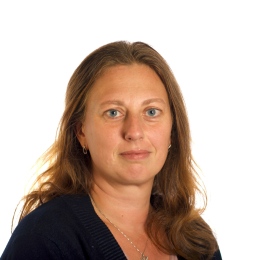
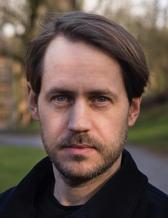
Claudia Bernhard-Oettel is a Professor and Deputy Head of Department at the Department of Psychology, Stockholm University , with a focus on work and organizational psychology . Her career spans roles at institutions like the Swedish Institute for Working Life, Södertörn University College, and Karolinska Institutet, where she coordinated interdisciplinary initiatives in the Stockholm Stress Center. She serves on editorial boards and grant review committees, including the Research Council for Health, Working Life and Welfare (FORTE) and the Academy of Finland. Education: Diplom in Psychology (equivalent to Master's) from TU Dresden (2001); PhD in Psychology from Stockholm University (2008). Her research examines changing labor markets , emphasizing temporary employment , self-employment , and gig work . Key areas include organizational justice , effort-reward imbalance , and career sustainability . She investigates how job insecurity and psychological contracts affect health, well-being, and career transitions. Recent articles highlight trends in temporary agency work narratives , illegitimate tasks , and self-employment health trajectories . Her workgroup-level analyses of leadership and task design offer practical insights into mitigating stress and turnover in the public sector. Scientific Contributions: Editorial leadership in the Scandinavian Journal of Work and Organizational Psychology (2019–2024). Coordination of the Stockholm Stress Center Graduate School (2017–2018). Membership in grant review committees for FORTE and the Academy of Finland. Advising: Supervised doctoral students in alternative employment forms , organizational justice , and workplace lock-in . Current supervisees include Louise Bergman (2025 defense) and Clara Plückelmann.
Petra Lindfors is a Professor of Psychology, specializing in work and organizational psychology, at the Department of Psychology, Stockholm University. She has held this position since December 2013 and is actively involved in multiple research projects focusing on stress, health, and well-being across various contexts including workplaces, educational settings, and home environments. Her academic journey began with her thesis defense in 2002, which focused on stress, health, and well-being among teleworking women and men as part of the Boundless Work project. She was accepted as an associate professor in psychology at the Faculty of Social Sciences, Stockholm University, in September 2006, and was hired as a lecturer at the Department of Psychology in July 2007. Throughout her career, she has maintained active research collaborations at both the Department of Psychology and the Centre for Health Equity Studies (CHESS) at Stockholm University/Karolinska Institutet. Lindfors' research interests span multiple dimensions of work and organizational psychology. Her primary focus is on self-reported and objective aspects of stress, health, and well-being among adults and young people across various contexts. She has developed significant expertise in workplace interventions related to harmful substance use, work-life balance, gender differences in work environments, and mental health promotion. Her work often examines how organizational structures and policies affect individual health outcomes, with particular attention to vulnerable populations and gender differences. Analysis of her recent publications reveals strong thematic consistency centered on occupational health psychology. Her research employs both variable-oriented and person-oriented approaches to examine job insecurity, work-home interference, stress responses, and health outcomes. A notable trend is her increasing focus on methodological innovation, particularly in studying workplace interventions and mental health among young adults. Her work bridges theoretical organizational psychology with practical workplace applications, often resulting in concrete recommendations for employers and policymakers. Two-year post-doc scholarship from the Anna Ahlström and Ellen Terserus Foundation (2005) Associate editor for the Nordic Journal of Working Life Studies (since 2021) Member of the Quality Council for the Swedish Work Environment Authority (2019-2022) As an academic supervisor, Lindfors has mentored an impressive number of doctoral students, with completions spanning from 2008 to the projected 2025 graduation of Anna S Tanimoto. She has served as main supervisor for numerous successful academics who have gone on to professorial positions, including Ulrica von Thiele Schwarz at Mälardalen University College. Her supervisory approach appears comprehensive, extending beyond thesis completion to postdoctoral mentorship and career development. Regarding research funding, she has secured significant grants from AFA Försäkring for projects examining organizational interventions for health-promoting work, and has been involved with Stockholm Stress Center, a FORTE-financed interdisciplinary research center. Her work demonstrates sustained success in attracting competitive research funding across multiple domains of occupational health. Lindfors leads the research group 'Harmful use in the workplace – prevention and intervention,' which addresses critical issues related to alcohol, drug, and gambling problems in professional settings. She has also been instrumental in shaping the Department of Psychology's strategic direction, serving as chairman of the board of the Stockholm University Department of Psychology (SUPK) from 2016-2024 and currently as a regular member of the Department's board for 2024-2026. Her collaborative approach is evident in her involvement with multiple interdisciplinary projects, including those examining natural environments, cognitive abilities in military contexts, and school environments' impact on youth mental health.
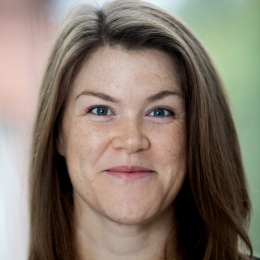
Emilie Friberg is an Associate Professor and Senior Researcher at Karolinska Institutet's Department of Clinical Neuroscience, where she leads the interdisciplinary research group focused on sickness absence, health, and living conditions. Her work spans multiple domains including multiple sclerosis, traffic injuries, mental health among students, and rehabilitation coordination. Dr. Friberg's research employs both quantitative and qualitative methodologies, utilizing nationwide registers, questionnaires, and interviews to investigate: Risk factors for and consequences of sick leave related to specific diagnoses Interactions between various stakeholders in illness and sick leave processes Systematic literature reviews in insurance medicine and related fields Her work bridges insurance medicine, public health, psychology, sociology, and health economics, addressing critical questions about work capacity, rehabilitation, and societal participation for individuals with chronic conditions. Current projects include studying sickness absence patterns in multiple sclerosis, long-term consequences of traffic injuries, the role of rehabilitation coordinators (REKO project), and mental health challenges among university students. Dr. Friberg's extensive publication record demonstrates consistent focus on sickness absence trajectories, work disability, and rehabilitation across multiple conditions. Her recent work shows increasing emphasis on register-based longitudinal studies examining the interplay between medical conditions, treatment approaches, and labor market outcomes, with particular attention to gender differences and socioeconomic factors. Her research is supported by diverse funding sources including Biogen, BMS/Celgene, Forte (Swedish Research Council for Health, Working Life and Welfare), the Swedish Social Insurance Agency, Neurofonden, and the Swedish Research Council. She supervises multiple PhD students and collaborates extensively with researchers across disciplines and institutions, including Folksam Traffic Research and Stockholm County. Dr. Friberg's research group operates as an interdisciplinary hub bringing together medical doctors, psychologists, sociologists, economists, and other professionals to address complex questions at the intersection of health and work capacity. The group frequently employs mixed-methods approaches and has established strong connections with healthcare providers, insurance agencies, and policy makers to ensure research relevance and impact.
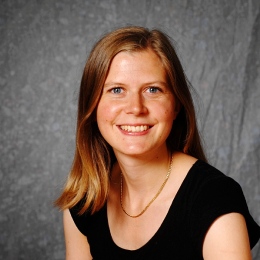
Lena Låstad is a Senior Lecturer at Stockholm University's Department of Education, specializing in organizational pedagogy and workplace learning. She coordinates the Bachelor's and Master's programmes in Personnel, Work and Organization, and serves as a thesis supervisor across academic levels. Her research focuses on job insecurity, flexible labor markets, and their impacts on employee well-being and career development. Research Group: Organization Pedagogics Projects: NOWSTARS (Forte-funded), Gendersafe Teaching: Research methods, organizational pedagogy, internship-based human resource management Her research examines job insecurity from multiple angles, including: Quantitative and qualitative job insecurity climate Career strategies of temporary agency workers Work-home interference patterns Health outcomes and psychotropic drug usage Leadership dynamics under insecure climates Recent publications highlight her work on job insecurity's associations with: Career-related outcomes (2025 meta-analysis) Employee performance metrics (2019 study) Workgroup climate effects (2018-2023 investigations) Psychological well-being (2020-2021 findings) As a program coordinator, she manages curriculum development for both bachelor's and master's level organizational pedagogy programs. Her work environment expertise includes workplace learning and professional development strategies for enhancing employee employability.
Linda Magnusson Hanson is an Associate Professor at Stockholm University within the Department of Psychology . Her research focuses on the interplay between organizational and psychosocial work characteristics (e.g., job demands, control, support, bullying, sexual harassment) and health outcomes such as mental health, pain, cardiometabolic diseases, and mortality. She manages the Swedish Longitudinal Occupational Survey of Health (SLOSH) , a key resource for her work, and collaborates internationally with cohorts from Denmark, Finland, the UK, and Australia. Academic Rank: Associate Professor Department: Department of Psychology Research Areas: Occupational Health, Workplace Stress, Psychosocial Work Environment, Mental Health, Environmental Health Her studies examine longitudinal associations using SLOSH data and other population-based cohorts, with particular attention to workplace violence, job insecurity, and social stressors. Recent work investigates the impact of the COVID-19 pandemic on work conditions and mental health, the health benefits of green and blue environments , and the role of technostress in modern workplaces. She has contributed to understanding how leadership quality and workplace policies modify the effects of stressors on health outcomes. Her research has been supported by grants from the Swedish Research Council for Health, Working Life and Welfare , Academy of Finland , Finnish Work Environment Fund , and Danish Working Environment Research Fund . She has published extensively in journals like The Lancet Public Health , Scandinavian Journal of Work, Environment and Health , and International Journal of Behavioral Medicine , focusing on topics such as workplace bullying, job insecurity, greenspace exposure, and technostress.
Erika Wall is a Professor at the Department of Health Sciences , Mid Sweden University . Her work focuses on Occupational Health Science , with particular emphasis on workplace dynamics, risk management, and employee engagement, especially in public sector and rural settings. Occupational Health Science faculty Research on activity-based workplaces, hybrid work environments, and employee net promoter scores Her research explores: Employee engagement and advocacy in public sector workplaces Transition to activity-based and hybrid work models Risk management strategies during crises like power loss or pandemics Work-life balance and mental health among young adults Recent publications highlight: Qualitative studies on leadership and organizational factors Narrative analyses of coworking spaces in rural Sweden Examinations of sense of coherence in public sector transitions Additional areas include: Informal caregiving during the coronavirus pandemic Return-to-work processes for individuals with mental disorders Visual methods for risk perception analysis
Ola Sjöberg is a Professor of Sociology at Stockholm University , affiliated with the Swedish Institute for Social Research . His work focuses on international comparative analysis of welfare states, labor markets, and health outcomes, particularly examining how social policies affect mental health, work environment quality, and health disparities across socioeconomic groups. Current projects: Forte-funded psychosocial work environment research Completed projects: Riksbankens Jubilumsfond study on work-retirement transitions His research spans multiple domains including work environment health , social protection systems , and comparative welfare policy . Key methodologies involve structural equation modeling , multilevel analysis , and longitudinal data from European and global datasets. Key findings from his 15 most recent publications show consistent relationships between generous welfare systems and improved post-retirement mental health , reduced sickness absence , and better subjective well-being during unemployment. His work challenges conventional economic theories about welfare program disincentives while documenting institutional mechanisms that produce these outcomes. Significant contributions include: Development of the SPIN database for cross-national policy analysis Identification of organizational factors in health outcomes Creation of East Asian Social Policy Dataset (SPEAD) for regional comparative studies
Helena Falkenberg is a Senior Lecturer and researcher in the Department of Psychology at Stockholm University, specializing in work and organizational psychology. Her research focuses on the intersection of work conditions, gender differences, and psychological outcomes, with particular emphasis on pay justice, work-family balance, and the psychosocial work environment. Dr. Falkenberg's research interests span several key areas in organizational psychology. She investigates how different work demands and resources affect employee attitudes, behaviors, and health outcomes, with special attention to gender differences. Her work on pay justice examines how perceptions of fairness in pay setting influence employee motivation and performance. She also studies work-family dynamics, exploring how flexibility in work arrangements affects emotional exhaustion and work-life balance, particularly among parents. Her research often employs both quantitative and qualitative methods, drawing on data from Swedish organizations and longitudinal studies. Her recent publications reveal a strong focus on the psychological aspects of pay systems, demonstrating that while performance-based pay has some impact on work performance, support for psychological needs (such as autonomy and social support) has a stronger influence. Her work on work-family balance shows that relative work flexibility compared to one's partner affects emotional exhaustion differently for mothers and fathers. These findings contribute to our understanding of how workplace structures interact with family dynamics to influence employee well-being. Dr. Falkenberg has received research funding for projects including "Handeln som attraktiv arbetsplats" (Retail as an attractive workplace) "Legitimitet i lönebildningen" (Legitimacy in pay setting) "NOWSTARS" (examining employment contracts, insecurity, union membership, and working conditions among women and men) She actively collaborates with other researchers in the field, including Magnus Sverke, Constanze Leineweber, and Sofia Malmrud, contributing to both national and international research efforts in work and organizational psychology.
Johnny Hellgren is a University Lecturer and Associate Professor at the Department of Psychology, Stockholm University, specializing in Work and Organizational Psychology. His academic profile shows active engagement in both teaching and research within organizational behavior, with a particular focus on pay systems, job insecurity, and employee attitudes. His primary research interests include: Pay justice and compensation systems Job insecurity and its effects on performance Employee voice and silence strategies Non-standard employment contracts Union membership and labor relations Personnel recruitment and selection Leadership and organizational change Hellgren's research employs both quantitative and qualitative methodologies, with substantial focus on Swedish workplaces across various sectors. His recent work has examined compensation profiles among private sector employees using latent profile analysis, revealing how combinations of pay level, perceived horizontal pay dispersion, and procedural quality affect employee outcomes. His research demonstrates that higher pay levels generally correlate with better performance and health outcomes, particularly when combined with high procedural quality. Hellgren has been actively publishing in high-impact journals including Frontiers in Psychology, International Journal of Human Resource Management, and Journal of Social Work. His work shows a consistent trajectory examining how organizational practices affect employee attitudes, behaviors, and wellbeing, with particular attention to fair treatment in pay systems and the consequences of job insecurity. He has contributed to significant research projects including "Legitimitet i lönebildningen" (Legitimacy in wage formation), which aimed to contribute to more secure knowledge about wage setting in the private sector, and "NOWSTARS," which examined employment contracts, insecurity, union membership, working conditions, and work-related attitudes and health among women and men in flexible labor markets.
Eskil Ekstedt is a Guest Researcher at the Department of Economic History, Uppsala University. His work focuses on the institutional and organizational challenges of temporary project-based work, digital transformation in interorganizational projects, and the societal impact of projectification. He collaborates with scholars like Jörg Sydow and Rolf Lundin, contributing to key publications in project management and organizational theory. Major Research Themes: Temporary organizations, project society, digitalization effects on labor. Institutional Affiliation: Uppsala University, Department of Economic History. Collaborators: Jörg Sydow, Rolf Lundin, Timo Braun.
Annika Strömberg is a Senior Lecturer at the University of Gävle within the School of Health and Occupational Studies and the Department of Business Administration. She also holds administrative responsibilities as deputy vice-chancellor for internationalisation. Research Areas: Leadership in healthcare and social work Organizational behavior and structural empowerment Ergonomics and workplace assessment Small business management and employee flexibility Quality of care and nurse turnover Recent Research Trends: Her work explores leadership models in hospital and social work settings, focusing on structural conditions, staff well-being, and quality of care. Additional research spans cost-efficiency in ergonomic assessments and dynamics of temporary employment in elderly care.
Dr. Constanze Eib is an Assistant Professor at the Department of Management and Organization (Stockholm School of Economics), specializing in organizational justice, entrepreneurial well-being, and occupational health. Her work bridges entrepreneurship, psychology, and human resource management. Research Focus : Fairness at work, psychological impacts of crises, and health outcomes for entrepreneurs. Key Projects : Leading "Opportunities and Hindrances to Conducting Business in Sweden" (Forte) and "Psychological Testing and Labor Market Outcomes" (IFAU). Publications : 2023 study on entrepreneurial well-being during the pandemic; 2022 cross-country analysis of crisis adaptation. Honors : Visiting Scholar at Syracuse University (2024), Visiting Professor at Toulouse School of Management Research (2023). Contact : Constanze.Eib@hhs.se
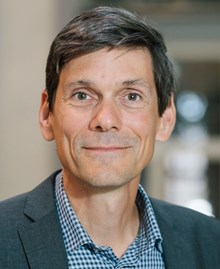
Magnus Sverke is a Professor of Work and Organizational Psychology at the Department of Psychology, Stockholm University since 2006. He has held academic roles since 11995, including Associate Professor (2000) and Full Professor (2004), after early career work in non-academic roles (healthcare, navy, education, etc.). Research focuses on psychosocial work environments, organizational change, job insecurity, employment contracts, and union dynamics. Teaching spans organizational psychology , leadership , structural equation modeling , and research methodology since 1994. Supervision includes 24 completed PhDs (12 as main adviser), 1 licentiate, 25 Master's, and 65 Bachelor's theses. Current projects: Forte-funded NOWSTARS (non-standard employment) and Retail as an Attractive Workplace . Scientific Contributions: Recipient of SEK 70 million as principal investigator from agencies like AFA Insurance , Forte , and Svenskt Näringsliv . Editorial leadership: European Journal of Work and Organizational Psychology (2007-2011), Nordic Journal of Working Life Studies (2018-), and board roles at journals like Scandinavian Journal of Work Environment and Health . Policy engagement: Board member of Forte (2009-2015), Swedish School of Sport and Health Sciences (2007-2013), and Scientific Council of the Swedish Psychological Association (2012-). Key Themes in Research: Job insecurity's impact on performance and health, non-standard employment contracts, organizational justice in pay-setting, and military leadership dynamics.
Andreas Werr is a Professor and Head of the Department of Management and Organization at the Stockholm School of Economics (SSE), holding the Lars Erik Lundberg Chair in Business Administration specializing in Human Capital Management. He chairs the Center for HRM and Knowledge Work within SSE's Research Institute (SIR). His research focuses on talent management, knowledge integration in professional teams, failure-sharing dynamics, and the role of management consultants in organizational change. Werr earned his PhD from SSE with a dissertation on methodologies in management consulting practices. Education: PhD in Management Consulting Methodologies from SSE, with prior academic training in related disciplines. Teaching expertise spans Management Consulting, Change Management, HRM, Professional Service Firm Management, and qualitative research methods. Research Interests: Werr explores how organizations leverage talent development, integrate knowledge across teams, and manage failure-sharing cultures. His work also examines the procurement and impact of management consulting services, particularly in public sector contexts. Recent studies address digital transformation in professional services and post-pandemic workplace adaptations like remote work. Publications: Over 40 peer-reviewed articles since 2011, with recent focus on collective intelligence, remote work trends, and crisis management. Key themes include knowledge-sharing mechanisms, executive influence on consulting demand, and organizational resilience strategies. Awards: No formal scientific awards listed, though his academic contributions position him as a thought leader in HRM and professional services research. Active in executive education programs linking research to practitioner needs. Labs/Teams: Leads the Center for HRM and Knowledge Work, fostering interdisciplinary research on human capital strategies and organizational knowledge systems.
Johan Alfonsson is an affiliated researcher at the University of Gothenburg's Department of Sociology and Work Science. He holds a PhD in Sociology and specializes in precarious employment, labor market dynamics, and social policy. His research examines issues such as low-wage jobs in Sweden, platform-mediated gig work, and the ideological underpinnings of labor market structures. He has conducted postdoctoral research on split shifts in elderly care funded by Forte and contributed to projects like the Forte-backed study on low-wage job proliferation (2005–2020). Alfonsson's work integrates neo-Marxist theory with empirical analysis, focusing on alienation in flexible capitalism and class structures. His publications span academic journals, books, and media articles, addressing topics like employment insecurity, power resources theory, and critiques of heritability methodologies. While no awards are explicitly listed, his extensive research output reflects significant scholarly contributions to labor studies and social policy. His advising and grants include involvement with Forte-funded projects, emphasizing applied research on labor market inequalities. Though no specific labs are mentioned, his collaborations with Halmstad University and interdisciplinary projects highlight networked research engagements.