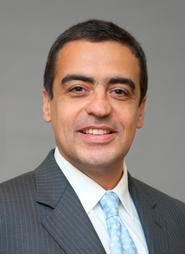
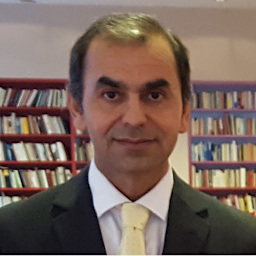
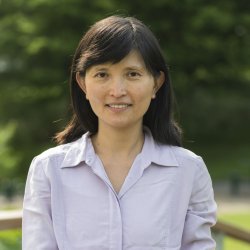
Dr. Xiaobu Yuan is a Professor at the School of Computer Science, University of Windsor. He holds a PhD from the University of Alberta (1993), an MSc from the Chinese Academy of Sciences (1984), and a BSc from the University of Science and Technology of China (1982). His research focuses on Virtual Reality, Software Product Line Engineering, Service-Oriented Architecture, and the Integration of Human and Computer Intelligence. Education: PhD, University of Alberta (1993); MSc, Chinese Academy of Sciences (1984); BSc, USTC (1982). His work spans robotics, AI-driven dialogue systems, ontology integration in software engineering, and visualization techniques. Notably, he has contributed to IEEE conferences and Lecture Notes in Computer Science publications. Dr. Yuan is a Senior Member of the Institute of Electrical and Electronics Engineers (IEEE). While no formal advisees are listed, his research collaborations include co-authors like M. Kaler and V. Mulpuri. No grants or labs are explicitly mentioned in the provided information.
Dr. Efthimios Poulis is a Senior Lecturer in Strategic Management at Middlesex University, part of the Faculty of Business and Law and the Strategy, Leadership & Operations department. With nearly 25 years of academic experience across five countries, he teaches courses in strategic management and maritime logistics, currently leading the MBA in Shipping & Logistics program and the MGT4626 module on Marine Operations Management. His research focuses on strategic management, complexity theory, dynamic capabilities, and fitness landscapes, with notable contributions to topics like agentic misfit, value migration in shipping, and ontological critiques of international business frameworks. Poulis has held senior lecturing roles at multiple UK universities including the University of East Anglia and Bournemouth University, alongside 15+ years of maritime industry experience in crew management and training, particularly in The Philippines. Publications span organizational adaptation, digitalization impacts in shipping, and cross-cultural market strategies. His work bridges academic theory and practical applications, emphasizing organizational survival in complex environments and strategic innovation in traditional sectors like shipping. Poulis holds an ORCID identifier (0000-0001-6820-1499) and actively contributes to international research networks.
Jean-Pierre Corriveau is an Associate Professor and Graduate Director at the School of Computer Science, Carleton University. He holds a Ph.D. in Natural Language Processing from the University of Toronto (1991), an M.C.S. from the University of Ottawa (1984), and a B.Sc. from the University of Ottawa. His research focuses on Object-Oriented Testing (scenario testing, test data generation) and Text Understanding (contextualized and generative comprehension), with recent emphasis on behavior-driven development and acceptance testing of systems with complex scenarios. Dr. Corriveau has extensive industry experience, including roles at Nortel where he contributed to the TELOS project, leading to the ObjecTime startup and subsequent IBM Rational Software Architect tools. His work bridges academia and industry, addressing challenges in software engineering, cybersecurity, and natural language processing. Notable contributions include frameworks for MapReduce optimization, secure localization in wireless sensor networks, and privacy-preserving data anonymization techniques. His publications span topics like AI detection in text, federated learning for NER, intrusion detection systems, and resilient network algorithms. He has advised on graduate studies as Director and contributed to teaching strategies for millennial students through innovative virtual learning environments in platforms like Second Life. His research trends reflect a blend of theoretical advancements in computational linguistics and practical software engineering solutions, with a recurring focus on system reliability, distributed computing, and privacy-preserving technologies. Grants and collaborations are implied through his tool development and industry partnerships, though specific grant details aren’t explicitly listed. Labs/teams associated with his work include the ObjecTime initiative and Carleton’s distributed systems research groups, though no dedicated lab names are mentioned. Future directions emphasize scalable testing methodologies and ethical AI integration in text analysis.
Dr. Hazem Elzarka is a Professor and Chair of the Construction Management Program at the College of Engineering and Applied Science, University of Cincinnati. He has also taught at the Burns School of Real Estate and Construction Management, University of Denver. His research focuses on sustainable construction, green buildings, and integrating advanced computing technologies into construction management. Registered Professional Engineer (PE) in Ohio LEED Accredited Professional (LEED AP) Certified Energy Manager (CEM), Carbon Reduction Manager (CRM), and Green Building Engineer (GBE) His research spans three primary areas: Green Buildings (construction waste management, energy conservation, LEED education), Advanced Construction Technologies (BIM, CAD, knowledge-based systems, object-oriented methodologies), and Total Quality Management (business process improvement, SOP development). His recent work leverages machine learning for infrastructure diagnostics (bridges, culverts), robotics in drainage maintenance, and optimization of energy systems. He has secured multiple federally funded grants (Federal Highway Administration, Ohio Department of Transportation) for drainage and bridge management systems. He has led projects on trench drain automation, bridge inspection protocols, and integrating AI/ML into cost estimation, with a focus on improving safety, efficiency, and sustainability in construction workflows.
Dr. Alexandros Chrysikos is a Senior Lecturer and researcher specializing in Cyber Security at the School of Computing and Digital Media, London Metropolitan University. His work bridges technical security domains with educational challenges, focusing on student retention strategies in computing programs and digital forensics applications. Research interests include cyber security frameworks, IoT-enabled forensic readiness, cloud computing security models, and innovative approaches to higher education assessment. He has contributed to projects analyzing student retention through lenses like learned optimism and learning community theory, while also advancing methodologies for cybercrime analysis and educational technology integration. Key research themes across publications include: (1) Cyber security frameworks for education and IoT systems, (2) Quantitative analysis of student retention factors using R, (3) Cloud computing risk assessment models, and (4) Development of competency-based assessment frameworks. His work often emphasizes real-world applicability through mixed methods approaches. Notable contributions include feasibility studies on cloud infrastructure adoption in universities and pioneering work on narrative-based cyberbullying analysis. Current research continues exploring intersections between technical security solutions and pedagogical innovation.
Muhammad Younas is a Professor of Computer Science at Oxford Brookes University's School of Engineering, Computing and Mathematics. He serves as Subject Coordinator for both MSc Data Science & AI and MSc Artificial Intelligence programs. His teaching covers Web Technologies, Data Science, E-Business Systems, and Cloud Computing. His research focuses on: Cloud Computing & Big Data Internet of Things Web/Database Systems Web Information Retrieval He co-leads the Migration and Refugees Research Network and directs projects including: Cloud Service Selection, NoSQL Transaction Management, WoT Architecture, and Web Information Extraction. Recent publications (2015-2024) demonstrate strong focus on cloud systems, blockchain, IoT security, and machine learning applications, with emerging work in intelligent transportation and metaverse technologies. He supervises postgraduate students in areas including cloud computing, big data systems, IoT, and web technologies. Professional affiliations include the Applied Software Engineering & Data Analytics Group and Cloud Computing & Cybersecurity Group. Professor Younas chairs major IEEE conferences (ICWS, SCC, BigDataService) and serves on editorial boards for multiple journals including International Journal of Service-Oriented Computing and Applications and Human-centric Computing and Information Sciences.
Lien Denoo is an Associate Professor of Entrepreneurship in the Department of Strategy and Entrepreneurship at Tilburg School of Economics and Management (Tilburg University). She holds a PhD in Management, Innovation, and Entrepreneurship from Ghent University (2015). Her research focuses on new venture resource acquisition, business model evolution in emerging industries, and founder characteristics' impact on venture growth. Prior to Tilburg, she was a postdoctoral scholar at the University of Southern California (2015–2017). Education : PhD in Management, Innovation & Entrepreneurship (Ghent University, 2015) Master’s in Business Engineering (Ghent University, 2010) Bachelor’s in Business Engineering (Ghent University, 2008) Her research interests span entrepreneurship and innovation, particularly in technology-driven sectors. She explores topics like business model adaptation, advisor networks in science-based ventures, and the interplay between market orientation and technology commercialization. Key publications include studies on advisor impacts in science-based ventures (2024), emotional regulation in entrepreneurship (2020), and customer ties in emerging industries (2022). She has received awards such as the EBS Best Paper Award (2021) and two Excellent Teacher recognitions (2021, 2023). Denoo supervises PhD students Jiahe Wang, Luuk Baltissen, and others. She contributes to editorial roles for Journal of Business Venturing and Long Range Planning , and organizes academic events like the European QCA Conference (2024).
Dr. Marcin Soniewicki is an Assistant Professor at the Department of Business Relationships and International Marketing in the University of Economics in Poznan. His research focuses on knowledge management, competitive advantage strategies, and international business dynamics. He explores how organizations leverage knowledge resources, market orientation, and technological adoption to enhance competitiveness across different industries including construction, manufacturing, and service sectors. Key research themes include: knowledge integration in R&D processes, the role of external knowledge networks in organizational performance, and the impact of big data analytics on strategic decision-making. His work also examines globalization challenges, psychic distance in international markets, and leadership approaches in B2B/B2C environments. Recent studies highlight trends such as the growing importance of market orientation in high-tech manufacturing and the critical components affecting organizational performance. He investigates how companies balance internal knowledge systems with external partnerships to achieve competitive advantage, particularly through collaborative networks and strategic alliances. Dr. Soniewicki's publications span over a decade, with a focus on empirical studies of Polish enterprises' internationalization processes and KM practices. His work bridges theoretical frameworks with practical applications, offering insights into modern business challenges like offshoring, innovation leadership, and service industry differentiation.
Prof. Dr. Matthias Gotsch holds dual roles as Professor of General Business Management at Hochschule Fresenius Heidelberg and Project Manager at Fraunhofer Institute for Systems and Innovation Research ISI, specializing in Sustainability and Infrastructure Systems. He completed his PhD at Brandenburg Technical University Cottbus in 2012, focusing on innovation measurement in knowledge-intensive services. His work bridges sustainability, digitalization, and environmental policy, emphasizing AI's role in green economy transitions. Research interests include the interplay of digital transformation with climate action, circular economy design, and policy evaluation. He leads projects such as the Federal Environment Agency study on digitalization’s green economy contributions and collaborates on initiatives like the Doughnut Model for urban sustainability. Publications span over 20 years, addressing topics like sustainable consumption, data science applications, and industrial innovation. His projects include analyzing AI-driven solutions for waste management, route optimization, and nudging consumer behavior toward sustainability. Grants and collaborations involve German federal ministries and industry partners. He actively contributes to conferences and policy dialogues on digital sustainability and circular economy strategies.
Dr. Djerdj Horvat is a Project Manager and Researcher at the Fraunhofer Institute for Systems and Innovation Research ISI, part of the Fraunhofer-Gesellschaft. He holds a PhD from the Freie Universität Berlin, focusing on absorptive capacity in multinational companies, and a Master's in Economics and Business from the University of Potsdam. His work focuses on innovation management, digital transformation, AI applications, and organizational dynamics. Current Affiliation: Fraunhofer Institute for Systems and Innovation Research ISI Department: Innovation and Knowledge Economy Key Roles: Researcher, Project Manager Research interests include Industry 4.0/5.0 strategies, AI readiness in manufacturing, organizational ambidexterity in transitional economies, and the impact of digital technologies on value chains. He leads projects like Transfer-X, I4.0 Readiness, and analyses digital platform adoption in manufacturing. Publications span empirical studies on AI adoption, resilience in manufacturing, and the dynamics of innovation ecosystems. His work bridges theoretical frameworks with practical policy recommendations for industrial competitiveness and sustainable development.
Nicole Louie is an Associate Professor in the Department of Teacher Education at the University of Wisconsin–Madison’s School of Education. Her research focuses on systemic racism and equity in mathematics education, particularly through participatory design research with youth and families of color. She holds a PhD in Mathematics, Science, and Technology Education from UC Berkeley (2015), an MA in Teacher Education from Stanford (2005), and a BA in Urban Studies from Stanford (2004). Her work challenges exclusionary views of mathematical intelligence and promotes antiracist learning communities. Key projects include advancing racial justice in middle school math through co-design with marginalized communities and examining how teachers perpetuate or disrupt racial hierarchies in classrooms. Her publications span journals like Race, Ethnicity, and Education and Journal for Research in Mathematics Education . Grants: NSF Career Award (2022–2027) Awards: AERA Division K Outstanding Dissertation (2016), Spencer Postdoctoral Fellowship (2017) Louie collaborates with educators to develop equity-oriented teaching strategies, emphasizing student agency and authority in mathematics. She has presented widely at conferences like AERA and NCTM, focusing on transformative pedagogy and systemic change in education.
Dr. Michael Pin-Chuan Lin is an Assistant Professor in the Faculty of Education at Mount Saint Vincent University (MSVU). He holds a PhD from Simon Fraser University, an MBA in Information Management from National Formosa University, and a BBA in Information Management from National Penghu University of Science and Technology. His research focuses on integrating educational technology to enhance active learning in post-secondary classrooms, particularly examining how learning analytics and AI-driven tools like chatbots can improve student engagement, writing skills, and self-regulated learning processes. His educational background spans information technology and education, with a multidisciplinary approach to technology integration in learning environments. Key research interests include peer review mechanisms, chatbot-assisted learning, and the ethical implications of AI in education. Dr. Lin has developed frameworks such as CHAT-ACTS for personalized chatbot-driven learning and contributed to tools like nStudy for tracking self-regulated learning processes. Recent publications explore AI’s role in programming education, inclusivity in AI applications, and the design of educational knowledge graphs using large language models. He currently supervises MA Education thesis students and emphasizes pedagogical strategies that leverage technology to foster equitable learning opportunities.
Michael McGillion is an Associate Professor in the School of Nursing, Faculty of Health Sciences, McMaster University, and an internationally recognised nurse-scientist in digital cardiovascular care. His programme of patient-oriented research merges remote automated monitoring, smartphone applications, and web-based self-management tools to improve peri-operative outcomes, reduce post-operative pain, and empower patients with chronic cardiac conditions. Education & clinical background: Although individual degrees are not listed in the supplied text, McGillion holds an academic nursing appointment with teaching responsibilities for graduate practica (NURSING 711, 714) and has published continuously since 2001, indicating doctoral preparation and sustained clinical research activity. Research interests: His work centres on three inter-locking themes: (1) technology-enabled remote monitoring to detect physiological deterioration after surgery, (2) digital self-management interventions for pain, angina and cancer-related symptoms, and (3) machine-learning risk prediction for cardiovascular events. Recent high-impact trials (PVC-RAM, POISE-3 substudies) show that home-based wearable monitoring significantly reduces drug errors, pain scores and hospital readmissions. Publications & impact: McGillion has authored >200 peer-reviewed outputs since 2001, including pivotal papers in the New England Journal of Medicine , The Lancet , JAMA , Circulation and Anesthesiology . His work is frequently cited in clinical guidelines and has garnered >10 000 Mendeley saves and hundreds of international news stories, underlining wide translational reach. Grants & teams: He leads or co-leads large multi-centre randomised trials funded by national agencies and industry, involving collaborations among Hamilton Health Sciences, McMaster, and multiple Canadian and international centres. His team includes engineers, data scientists, clinicians and patient partners, reflecting an inter-professional approach embedded in the McMaster Faculty of Health Sciences. Teaching & mentorship: Currently course instructor for the Advanced Practicum (NURSING 711) and Scholarly Paper (NURSING 714) graduate courses, he integrates digital-health content and patient-oriented research methods into nursing curricula.
Professor Tingting Zhu is an Associate Professor in AI for Digital Health at the University of Oxford's Department of Engineering Science. She holds affiliations with Kellogg College as a Non-Tutorial Fellow and Mansfield College as a Stipendiary College Lecturer. Her academic journey includes a DPhil in Information and Biomedical Engineering from Oxford, an MSc from University College London, and a BEng in Electrical Engineering from the University of Malta. Her research focuses on advancing AI-driven solutions for healthcare challenges, particularly in digital health technologies, electronic health record (EHR) analysis, wearable sensor applications, and interpretable machine learning models. Key areas include arrhythmia detection via ECG, predictive analytics for clinical outcomes, and improving healthcare accessibility in low-resource settings. She leads initiatives in federated learning for privacy-preserving healthcare data analysis and has pioneered frameworks like RapiD_AI for pandemic preparedness. Professor Zhu's work is supported by prestigious fellowships, including the Royal Academy of Engineering Research Fellowship and recognition as a Fellow of the Academy of Medical Sciences (2025). Her contributions span interdisciplinary collaborations, integrating engineering, computer science, and clinical expertise to address global health challenges. Recent projects include optimizing antibiotic resistance predictions, enhancing ICU mortality prediction models, and evaluating digital health adoption in Vietnamese hospitals. Her awards reflect her impactful contributions to both academic innovation and practical healthcare solutions. Current research emphasizes scalable AI systems for equitable healthcare delivery, with a focus on low- and middle-income countries. She actively mentors early-career researchers and contributes to policy discussions on ethical AI deployment and data democratization in healthcare.
Joey Sik Chun Lam is a Lecturer at the University of Surrey's School of Computer Science and Electronic Engineering, affiliated with the Computer Science Research Centre. He holds roles as CS Exams Officer (Levels 4 & 5) and School EDI Lead, contributing to institutional governance. His academic journey includes a BEng from HKUST, an MSc from the University of Aberdeen, and a PhD focused on ontology repair for the Semantic Web. Lam has held postdoctoral roles, including an EU-funded project, and teaching positions at Aberdeen and other institutions, earning the Fellowship of the Higher Education Academy. Education: BEng in Computer Engineering, Hong Kong University of Science and Technology MSc in Computing Science, University of Aberdeen PhD in Ontology Repair (Semantic Web applications), University of Aberdeen Research Interests: Lam's work centers on ontology engineering, multi-agent systems, and knowledge representation. His research addresses ontology inconsistency resolution, workflow automation, and semantic technologies. Notably, he developed tools like Retax++ for ontology revision and contributed to frameworks like ALIVE for adaptive service coordination. Awards: Fellowship of the Higher Education Academy Teaching & Responsibilities: Lam teaches courses such as Computer Logic (COM1031) and Operating Systems (COM1032). He has supervised software engineering projects and contributed to curriculum development at Aberdeen and Surrey. His roles include Athena Swan SAT Team membership, emphasizing equality, diversity, and inclusion in academia.