Anthony Masure is an Associate Professor at Geneva University of Art and Design (HEAD – Genève) , part of the University of Applied Sciences and Arts Western Switzerland (HES-SO) . His work bridges Artificial Intelligence , Blockchain , and Digital Humanities through critical design lenses. He explores tensions between creative automation and human agency , questioning how machine learning and smart technologies reshape authorship, value systems, and ecological practices in design. Key research areas: AI ethics , NFT implications , post-digital design , and technological accountability Projects like "Design et machine learning : l'automatisation au pouvoir?" (2021-2023) and "Post digital Graphic Design" (2019-2022) demonstrate his focus on critical technological engagements Advocates for open access and non-traditional research formats through initiatives like HEAD-Publishing His recent articles analyze generative AI in design, NFT governance , and circular design frameworks. Collaborations with researchers like Guillaume Helleu and Yves Citton emphasize socio-technical implications. Current projects include "L'organisation autonome automatisée (OAA)" (2024), exploring future enterprise models under climate constraints.
Lisa S. Villadsen is a Professor in the Department of Communication at the University of Copenhagen's Faculty of Humanities, specializing in rhetorical studies. She leads research on rhetorical citizenship, public debate, dissent, and official apologies, with a particular focus on political rhetoric and its societal implications. Her work bridges theoretical frameworks with practical applications in democratic discourse. Education: Ph.D. in Communication Studies, Northwestern University, USA (2000). Dissertation: "The Rhetoric of Seduction" M.A. in Communication Studies, Northwestern University, USA (1995). Thesis: "Robert G. Ingersoll's Eulogy for Walt Whitman: Toward a Popular Aesthetic of Communication" B.A. in Rhetoric with Law, University of Copenhagen, Department of Philosophy, Education and Rhetoric (1993) Lisa S. Villadsen's research centers on how rhetorical practices shape and reflect societal norms, particularly in political contexts. Her theoretical framework of "rhetorical citizenship" examines how individuals engage in public discourse as citizens. She investigates the dynamics of political debate, dissent, and the evolving norms of public argumentation, including the importance of listening in democratic dialogue. Her work on official apologies explores how societies address historical wrongs through rhetorical means, with recent focus on Denmark's potential apology for colonial slavery in the Danish West Indies. Her scholarly contributions reveal consistent engagement with contemporary political discourse, from analyzing populist rhetoric to examining leadership communication during crises like the COVID-19 pandemic. Villadsen's work demonstrates how rhetorical analysis can illuminate power dynamics in public conversations and institutional responses to societal challenges. Professional Leadership: Member and Vice-Chair of the Board of the Danish Language Council (2021-2024) Editor-in-Chief of Rhetorica Scandinavica (2011-2014) Leader of the research group "Retorikforum" at the University of Copenhagen Organizer of international conferences including "Rhetorical Citizenship and Deliberative Democracy" (2008) Member of the Board of Directors of the Rhetoric Society of America (2012-2014) Villadsen has supervised numerous students on topics ranging from Danish political rhetoric to concepts like "WOKE" and parrhesia in contemporary practice. She has taught extensively at all levels, from undergraduate rhetorical criticism to PhD courses across Scandinavia and Belgium. Her leadership extends to organizational roles including department head, study program director, and coordinator of research initiatives focused on public debate. She directs the research network "Retorisk Medborgerskab: Perspektiver på deliberativt demokrati" (Rhetorical Citizenship: Perspectives on Deliberative Democracy), which has hosted seminars, guest lectures, and international conferences exploring the intersection of rhetoric and democratic participation.
Alessandro Gori is an Associate Professor at the Department of Cross-Cultural and Regional Studies, University of Copenhagen. His research focuses on Islamic literary traditions in the Horn of Africa, classical and modern Arabic literature, Islamic manuscripts, and African cultural heritage. Specializes in Islamic manuscript cultures across Ethiopia, Eritrea, and Yemen Principal Investigator for ERC-funded project Islam in the Horn of Africa (2013-2018) Coordinator in COST Action 18129 on Mediterranean Islamic legacies Research Interests: Gori examines textual connections between Islamic and Christian traditions in the Horn of Africa, with particular emphasis on Qur'anic transmission mechanisms and multi-text manuscript structures. His work bridges historical linguistics, paleography, and interfaith dialogue studies. Publications: Recent works analyze Ethiopian zoological lists in Arabic, spiritual genealogies connecting Yemen and Africa, and manuscript-based knowledge networks across maritime boundaries. His research involves comparative approaches to Islamic legal texts and Sufi mystical traditions. Scientific Contributions: European Research Council Advanced Grant (2013-2018) Extensive publications on Islamic manuscript cultures in Africa Editorial leadership in Africana Ambrosiana series Academic Activities: Gori maintains active engagement through international conferences, manuscript workshops, and visiting research appointments at institutions like École des hautes études en sciences sociales (2025). His network spans Islamic studies, African history, and comparative religious scholarship.
Peter von Möllendorff is Professor of Classical Philology/Greek Philology at Justus Liebig University Giessen (JLU), where he has served since March 2003. He currently holds the position of Dean of Department 04 History and Cultural Studies (since WS 2015/16) and is a member of the university Senate (since summer semester 2013). Previously, he served as Managing Director of the Institute of Classical Studies (2011-2014) and Dean of the same department (2008-2011). His academic journey began with studies in Classical Philology and Romance Studies at universities in Cologne, Freiburg, and Munich. He completed state examinations in 1989 and 1990 at Ludwig Maximilian University of Munich, earned his doctorate in 1994, and completed his habilitation in winter 1998/99. Prior to his appointment at JLU, he served as Acting Professor at the University of Heidelberg (2001-2002). Von Möllendorff's research primarily focuses on Greek drama, Literature of the Imperial Period, aesthetic and poetological conceptions of antiquity, and concepts of intertextuality. His scholarly work centers on Lucian of Samosata and Aristophanes, with significant contributions to understanding ancient satire, literary theory, and the Second Sophistic. His publications demonstrate a consistent exploration of how ancient authors engaged with literary tradition through intertextual strategies and aesthetic innovation. His publication record spans from the mid-1990s to 2017, showing remarkable consistency in focus while evolving in methodological sophistication. The most recent works reveal increasing attention to metalepsis, media theory, and the intersection of pagan and Christian literary traditions during the Imperial period. His scholarship often bridges philological precision with theoretical frameworks from modern literary criticism. As an academic leader, von Möllendorff has served in multiple administrative capacities including membership on the Board of Directors of the Center for Teacher Education (since 2005) and the Department Council of FB 04 (since WS 2005/6). His editorial work includes co-founding and co-editing the Millennium series and contributing to numerous academic journals. His teaching and scholarly activities demonstrate strong engagement with both traditional philological methods and innovative digital approaches, as evidenced by his work on the e-learning unit 'Symposium 2.0' and various editorial projects documenting interdisciplinary conference proceedings.
Carmen Llamas Sáiz is a Full Professor and head of the Department of Philology at the University of Navarra , Spain. She is an internal collaborator in the GRADUN research group on public discourse at the Institute for Culture and Society (ICS). Education: PhD in Philology (2003) from the University of Navarra, thesis: 'Semantics and pragmatics of lexical meanings created from metaphor' Her research focuses on Pragmatics and Discourse Analysis , particularly the role of metaphor and discourse markers in political and journalistic contexts. She has co-directed projects on populist political discourse in Europe and contributed to methodologies for academic writing instruction. Recent publications examine clickbait headlines , transition markers in academic reviews , and populist lexical strategies . Her work spans Spanish political parties , radio communication , and linguistic ideology in media . Books: Metaphor and Lexical Creation (2005) Co-authored Academic and Professional Communication (2012) Edited Lexicon and Argumentation in Current Public Discourse (2013), The Analysis of Political Discourse (2018), and Metaphor in Political Conflict (2020). Labs/Teams: Member of GRADUN, focusing on persuasive and interpretive strategies in public discourse.
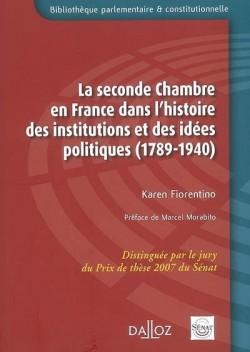
Karen Fiorentino is Professor of Legal History at the University of Burgundy (Université Bourgogne), France, where she is affiliated with the Faculty of Law and Political Science (UFR Droit et Sciences économique et politique de Dijon). She has held numerous academic leadership positions including Vice-president of the CFVU (Commission de la Formation et de la Vie Universitaire) from September 2020 to January 2024, member of the National University Council (Conseil National des Universités) from 2015 to 2023, and Secretary General of the Association of Historians of Law Faculties from 2014 to 2018 followed by Vice-president from 2018 to 2023. Professor Fiorentino's research focuses on constitutional history, family law history, and the historical relationship between medicine and law. Her scholarly output demonstrates consistent examination of how legal systems addressed issues of family, reproduction, and medical expertise throughout French history. She has made significant contributions to understanding archival practices within French judicial systems, with particular emphasis on regional archives from Côte-d'Or department. Her work frequently analyzes revolutionary periods and their transformation of legal thinking and practice. Her recent publications (2021-2025) reveal several key research trajectories: the historical relationship between religion and law during revolutionary periods, evolution of family law regarding maternity and paternity, use of medical expertise in legal contexts throughout French history, and development of archival practices within judicial systems. Her methodological approach consistently emphasizes value of regional archives in understanding broader legal historical developments. Professor Fiorentino has been actively involved in numerous academic service roles beyond her institutional positions, including serving on the Board of the Departmental Committee for the History of the French Revolution in Côte-d'Or since 2013 (as President since May 2020), and as President since 2022 of the Society for the History of Law and Institutions of the former Burgundian, Comtois and Romand countries. She has coordinated thematic research groups and served on various university governance committees related to academic formation and library systems.
Malcolm Petrie serves as Senior Lecturer in the School of History at the University of St Andrews, where he contributes to the Institute of Legal and Constitutional Research. His academic profile centers on modern Scottish political history, constitutional developments, and the political ramifications of Brexit within the UK's evolving governance framework. Dr. Petrie's research explores critical intersections of political identity and constitutional change in Scotland, with particular emphasis on post-devolution independence movements, historical party realignments, and Brexit's impact on democratic representation. His work reveals how historical narratives around unionism, nationalism, and political rhetoric continue to shape contemporary Scottish politics and constitutional debates. His publication trajectory demonstrates a clear evolution from foundational studies of mid-20th century Scottish political culture toward urgent analyses of current constitutional challenges. Recent works consistently address themes of political representation, referendum consequences, and the shifting dynamics between Scottish and UK-wide political institutions, reflecting deep engagement with both historical contexts and present-day constitutional crises. Dr. Petrie has received significant recognition for his scholarly contributions: Royal Historical Society David Berry Prize (2017) He actively mentors doctoral researchers including C. E. McKinven on Scottish legal history topics and has secured substantial research funding from major bodies including the Arts and Humanities Research Council, Carnegie Trust, and Leverhulme Trust for projects examining conservatism, unionism, and Scottish political culture. As Principal Investigator for the ongoing 'Conservatism and Unionism in the UK, 1968-1997' project (2023-2026), he collaborates within the Institute of Legal and Constitutional Research while contributing to the Scottish Magazines Network, maintaining active engagement with both academic and public discourse on Scotland's political future.
Anna Mills is a community college writing teacher, open textbook author, and advocate for critical AI literacy, Open Educational Resources (OER), and social annotation in writing instruction. She actively contributes to discussions on AI's impact on education through articles in The Chronicle of Higher Education , Inside Higher Ed , and JSTOR Daily , emphasizing strategies to balance creativity and critical analysis when integrating AI tools like ChatGPT into writing curricula. Key Projects: Co-developer of How Arguments Work (a free OER textbook), contributor to the AI Pedagogy Project at Harvard's metaLAB, and founder of the Peer and AI Review + Reflection (PAIRR) initiative for human-centered AI feedback. Collaborations: Works with teams including @pairrfeedback.bsky.social, Equity Unbound, and UC Davis researchers on AI-driven writing feedback tools. Research Focus: Explores AI's role in undergraduate writing, ethical implications of generative AI, and equitable pedagogical frameworks. Her work highlights tensions between technological adaptation and preserving human creativity, advocating for iterative prompt design and reflective writing practices. Recent Trends: Analyzes LLMs (ChatGPT, GPT-4) in assignment design, AI detection tools (Turnitin), and institutional responses to AI-driven academic integrity challenges. Advising & Outreach: Facilitates workshops on AI literacy, collaborates on open resource integration, and leads international professional development initiatives like MYFest25.
David Luebke serves as the Katherine G. Brady & Thomas A. Brady, Jr., Roger Chickering & Alison Baker Professor of Central European Histories within the Department of History at the University of Oregon's College of Arts and Sciences. His academic profile centers on the religious and social transformations of early modern Germany, with particular emphasis on the Reformation era and its enduring societal impacts. Professor Luebke's research investigates the complex interplay between religious change, political authority, and communal identity in sixteenth- and seventeenth-century Central Europe. His work examines how confessional diversity shaped local governance, spatial practices, and social relations, with recurring themes including religious coexistence in multiconfessional settings, the rhetoric of Reformation debates, and the lived experiences of rural populations navigating religious upheaval. He employs interdisciplinary methodologies drawing from cultural history, spatial analysis, and memory studies to reconstruct the nuanced realities of religious transformation. His recent scholarship reveals a consistent focus on the spatial dimensions of religious practice and the adaptive strategies communities developed amid confessional fragmentation. Publications like The Empire's Reformations: Politics and Religion in Germany, 1495-1648 (2024) demonstrate his expertise in analyzing how imperial structures interacted with grassroots religious innovations. The trajectory of his work shows increasing attention to transgressive social practices—including mixed marriages and shared sacred spaces—as mechanisms for negotiating religious difference in early modern German territories.
Dr. Soyeon Lee serves as Assistant Professor of Rhetoric and Writing Studies in the Department of English at the University of Texas at El Paso's College of Liberal Arts. Her academic work centers on transnational communication frameworks within multilingual community contexts, particularly examining disaster recovery systems and social justice initiatives through rhetorical and design lenses. Her educational credentials include: Ph.D. in English with concentration in Rhetoric, Composition, and Pedagogy (University of Houston) Graduate Certificate in Teaching Technical Communication (Texas Tech University) Dr. Lee's research explores transnational writing practices , environmental disaster rhetoric , and equitable user experience design with emphasis on community-engaged pedagogy across linguistic borders. Her current monograph investigates how multilingual writers navigate climate disaster recovery communication, revealing critical gaps in institutional accessibility frameworks. This work intersects with anti-racism advocacy, as seen in her coalition-building research addressing anti-Asian violence. Recent publications demonstrate consistent focus on disaster recovery systems (2021-2024), with growing emphasis on transnational justice frameworks. Her scholarship consistently bridges academic theory and community application, particularly through multilingual UX design for vulnerable populations. Professional recognition includes: ACM SIGDOC 2021 Best Paper Award for COVID-19 recovery research While advising activities and grant funding details aren't specified in source materials, Dr. Lee's collaborative publications indicate active engagement with community partners and interdisciplinary teams. Her work consistently emphasizes trans-border implementation, suggesting ongoing fieldwork with border communities despite no formal lab structure being mentioned.
David R. Wheeler is an Associate Professor at The University of Tampa within the Communication Department . Holding a Ph.D. from the University of Kentucky (2015), his academic career spans teaching courses like Introduction to Journalism and Multimedia Journalism I. As a journalist, Wheeler contributes to major outlets including CNN , The Atlantic , and NBC News , focusing on technology, politics, and First Amendment issues. His 2014 article on student press law was selected as lead in College Media Review , and his 2021 work on school free speech was cited in Supreme Court briefs. Research Themes : First Amendment jurisprudence, media law, and political discourse Advisory Roles : Co-director of UT’s Master of Arts in Social and Emerging Media, advisor to student newspaper The Minaret His articles reveal interdisciplinary trends across political economy , digital ethics , and sociocultural dynamics . Awards include having his work enshrined in the Supreme Court’s public record and citations in legal journals.
Eir-Anne Edgar serves as Associate Professor of Literature in English within the Department of Teacher Education at the Norwegian University of Science and Technology (NTNU), Faculty of Education. She holds leadership positions as 2022-2026 Vice President of the American Studies Association in Norway (ASANOR) and founder of NTNU's North American Studies research group. Her institutional affiliations extend to the International Research Society for Children’s Literature, ILU's Forum for Equity/Diversity/Inclusion, and editorial roles including Currents at the University of Michigan. Her educational background includes a PhD in English with focus on Critical Theory and 20th Century American Literature from the University of Kentucky (2016), preceded by faculty positions teaching grades 9-12 at Interlochen Arts Academy. Key research interests span: Gender, sexuality, and race representation in 20th/21st century American literature and film Feminist critical dystopian fiction (exemplified by her monograph Women in the Wastelands ) Global citizenship education through literature ( Developing Global Citizens in the Classroom project) Pedagogical approaches to empathy development and ethical skill-building Reproductive justice frameworks in dystopian narratives Her publication trends reveal sustained interdisciplinary engagement across American Studies, Gender Studies, and Pedagogy. Recent works increasingly integrate UNESCO's global citizenship framework with literary analysis while maintaining core commitments to feminist and queer theoretical lenses. The 2020-2025 output demonstrates strategic expansion into children's literature, graphic novels, and electoral politics while deepening dystopian fiction analyses. Notable scientific awards include: NeMLA Summer Fellowship (2024) Robert Mikkelsen Research Grant (ASANOR) Emerging Diversity Scholar designation (University of Michigan, 2016) Women’s Club Fellowship Award (University of Kentucky, 2013-2014) Edgar actively mentors student research collaborations and has secured ILU funding for her global citizenship education project. Her sabbatical year (2023-24) served as Research Associate at the Five College Consortium Women's Studies Research Center. She participates in grant-funded initiatives including the British Library/University of Edinburgh-sponsored US Politics and Gender research group and ILU's Equity/Diversity/Inclusion Forum. She leads the NTNU North American Studies research group and contributes to the International Research Society for Children’s Literature working group on Climate Change and Climate Literacy. Her collaborative projects frequently bridge Norwegian educational contexts with global literary frameworks, particularly through UNESCO-aligned pedagogical approaches.
Joshua A Page is a Professor in the Department of Sociology at the University of Minnesota Twin Cities , specializing in criminal justice, penal reform, and the social implications of carceral systems. His work critically examines punitive policies, pretrial justice, and institutional dynamics. Role: Principal Investigator for projects like the Pretrial Best Practices Study (2023) and the Minnesota Juvenile Justice Transitions Project (2010). Education: Not explicitly mentioned in the provided text. Research interests center on criminal justice reform , punitive ideologies , and public safety alternatives . He explores how institutions perpetuate punitiveness, the political economy of justice, and the intersection of media, policy, and social movements. His work often applies agonistic theory to understand reform struggles. Recent publications (2015-2023) span topics like domestic violence protection orders, pretrial justice, fictional narratives in criminology, and critiques of carceral systems. Keywords include Criminology , Criminal Justice Reform , Public Policy , and Carceral Habitats , with subfields addressing systemic racism, media framing, and economic exploitation in justice. Scientific awards include the Institute for Advanced Study Faculty Fellows Fellowship (2016), highlighting his interdisciplinary contributions. He has also engaged in public media commentary on bail reform, police accountability, and domestic violence trends. Grants and collaborations involve institutions like the Minnesota Justice Research Center and American Sociological Association , focusing on empirical studies and policy evaluations. His work frequently intersects with the University of Minnesota's Life Course Center .
Professor Johannes Paulmann serves as Director of the Leibniz Institute of European History (IEG) in Mainz since 2011, where he leads research on European history from the early modern period to contemporary history. His academic career includes professorships at the International University Bremen (2002-2006) as the first holder of the Helmut Schmidt Chair of International History and at the University of Mannheim (2006-2011). He maintains visiting professorships at prestigious institutions including the London School of Economics, St. Antony's College Oxford, Université de Montréal, and Sorbonne University. His research focuses on European history through transnational and international perspectives, with special emphasis on German history, humanitarianism, human rights, and media studies. Paulmann has edited significant works including Dilemmas of Humanitarian Aid in the Twentieth Century (2016) and Humanitarianism & Media: 1900 to the Present (2018), establishing him as a leading scholar in the historical development of humanitarian practices. His recent publications reveal a consistent trajectory examining humanitarianism's evolution through historical conjunctures: colonialism and civilizing missions in the late 19th century, post-WWI international organizations, post-colonial transformations in the 1970s, and contemporary humanitarian intervention. His work demonstrates how humanitarian narratives and visual representations have evolved alongside changing media technologies and political contexts. As an institutional leader, Paulmann serves as spokesperson for the NFDI4Memory consortium within Germany's National Research Data Infrastructure and participates in the Collaborative Research Center 1482 'Human Differentiation' at Johannes Gutenberg University. He has held significant committee positions including spokesperson of the DFG Review Board for History and chairmanships of advisory boards for the German Historical Institute Moscow and Centre Marc Bloch in Berlin. His editorial work includes the European History Yearbook , Studies in International History , and he serves as editor-in-chief of both the EuropeAcrossBorders and Humanitarianism & Human Rights blogs. Through the Global Humanitarianism Research Academy, he has trained advanced PhD candidates and early postdocs in collaboration with the University of Exeter and the International Committee of the Red Cross archives in Geneva.
Hannah Marcus is a historian of science at Harvard University , currently serving as Professor of the History of Science and Faculty Director of the Collection of Historical Scientific Instruments . Her research focuses on early modern European science and medicine (1400-1700), particularly examining censorship practices, the history of aging, and Galileo's epistolary networks. Department of the History of Science, Harvard University Director, Collection of Historical Scientific Instruments Co-director, History of Contagion in Harvard Library Collections Research Interests include: Scientific censorship in Counter-Reformation Italy Material history of medical books Gerontology in Renaissance thought Galileo's communication strategies Digital humanities approaches to historical contagion Scientific Awards : Winner of the Helen and Howard R. Marraro Prize Recipient of Morris D. Forkosch Prize Honorable Mention for Scholarly Edition in Translation Award Everett Mendelsohn Excellence in Mentoring Award Education : Ph.D. from Stanford University (2016), BA from University of Pennsylvania . She teaches courses on medieval-to-early-modern scientific transformations and supervises graduate research on premodern science.