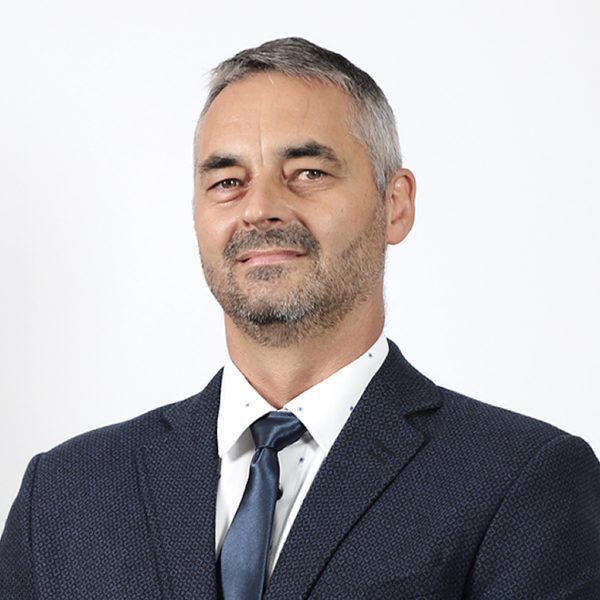
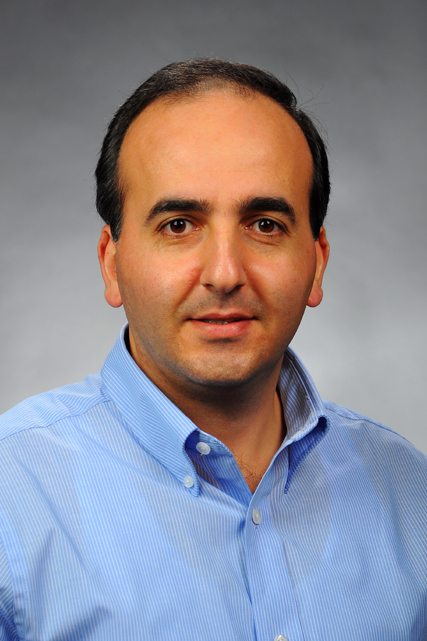
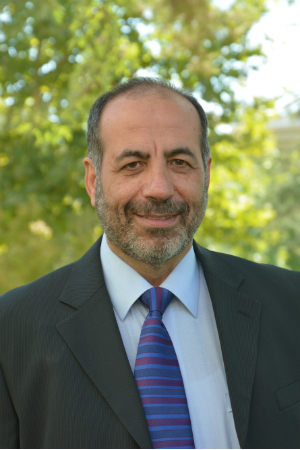
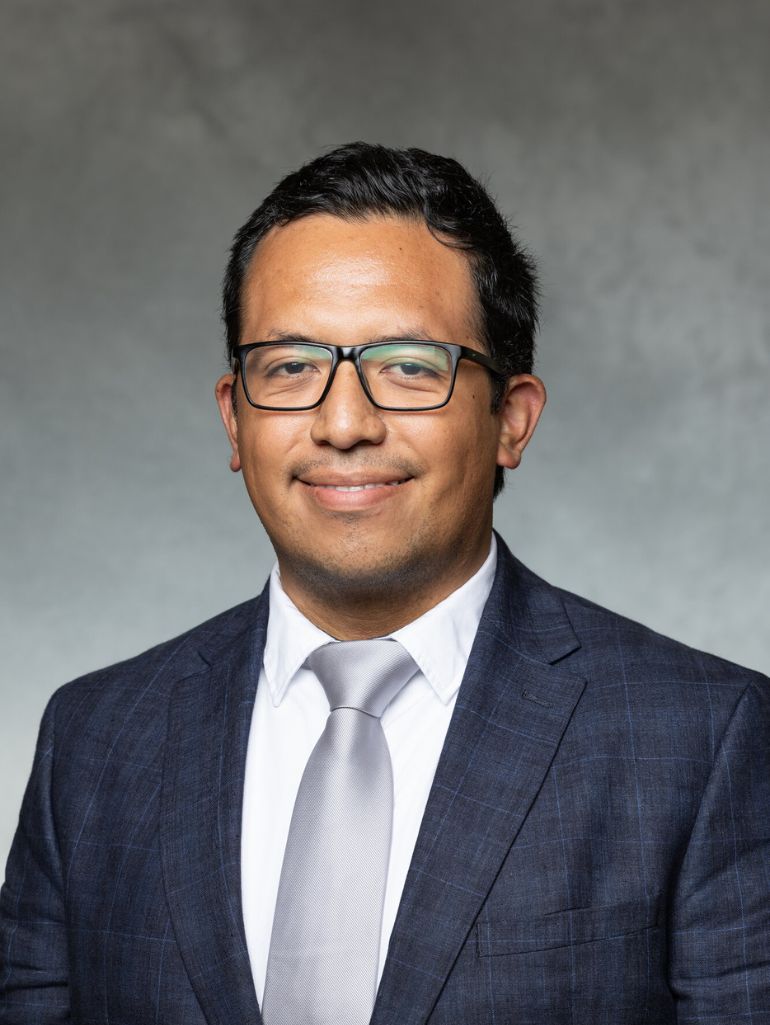
Dr inż. Zbigniew Kędra serves as an Assistant Professor in the Department of Transport Engineering at the Faculty of Civil and Environmental Engineering, Gdańsk University of Technology. His primary workplace is located in the HYDRO building at ul. Narutowicza 11/12, Gdańsk. His research focuses on critical aspects of railway infrastructure, including track technology , geodetic measurement systems for railways , and railway safety analysis . His work emphasizes practical applications in rail inspection, maintenance methodologies, and accident investigation protocols. Key contributions include developing standards for wheel-rail interaction analysis and precision measurement techniques for track geometry. Dr Kędra's publication record demonstrates consistent expertise in railway engineering through technical monographs and forensic analyses. His 2017 monograph Technologia robót torowych comprehensively covers track maintenance technologies from manual methods to mechanized ballast cleaning and welding techniques. Professional activities include conducting geodetic surveys for railway infrastructure verification and providing expert testimony for railway accident investigations, such as the 2015 Krotoszyn-Chojnice line derailment.
Tianxing Cai serves as an Assistant Professor in the Dan F. Smith Department of Chemical and Biomolecular Engineering at Lamar University, where he teaches core chemical engineering courses including Thermodynamics, Process Control, and Chemical Process Safety across undergraduate and graduate levels. His educational background includes a Ph.D. in Chemical Engineering from Lamar University and a B.S. in Chemistry from Shanghai University. His research focuses on quantitative risk assessment methodologies with specialized expertise in chemical process safety modeling, air quality impact analysis, and statistics-driven decision frameworks for industrial operations. Dr. Cai's publication portfolio demonstrates consistent contributions to environmental and process safety optimization, particularly in air quality modeling for chemical plant siting, emission-constrained process design, and spatiotemporal data analytics for pollution monitoring. His work integrates Monte Carlo simulations, clustering algorithms, and multi-parametric programming to address regional environmental compliance challenges. Young Research Scholar Award for FOCAPO, NSF (2014) Best Student Paper Award of Environmental Division, AIChE (2013) Outstanding Employee Award, Amkor Technology (2007) He actively mentors student organizations as Faculty Advisor for both the National Society of Black Engineers and ASHRAE Student Chapters at Lamar University, while contributing to industry safety standards through AIChE's Chemical Engineers with Disabilities Task Force and Process Safety Leading/Lagging Metrics initiatives.
Vanina Katsarova serves as an Associate Professor at the University of Architecture, Civil Engineering and Geodesy (UACEG) in Sofia, Bulgaria, within the Faculty of Transport Engineering, Department of Roads and Transport Facilities. She has been affiliated with UACEG since 2011 and maintains an active teaching and research profile in transport engineering. Her educational background includes a Master's Degree in Transport Construction from UACEG and a Master of Science in Infrastructure Planning and Management from Vienna University of Technology. She is proficient in German (Goethe-Zertifikat C1) and English (CAE Certificate in Advanced English). Professor Katsarova's research focuses on critical aspects of road safety, pavement engineering, and transport infrastructure management. Her work examines the relationship between road surface properties and traffic safety, risk management in road construction projects, and development of methodologies for assessing transport infrastructure quality. She has made significant contributions to understanding how pavement characteristics influence accident rates and has developed approaches for unified management of road infrastructure corridors. Her publication record demonstrates consistent research output in specialized journals and conferences, with particular emphasis on practical applications for improving road safety and infrastructure management in Bulgaria and across European transport corridors. Professional recognitions include: Engineer of the Year 2014 award from SPIK Certificate as Road Safety Auditor Certificate of participation in IRF's Safer Roads by Design Workshop Participation in the annual council of the World Road Association (PIARC) in Yokohama, Japan (2018) She actively contributes to research through participation in projects such as the development of a risk management model for road infrastructure construction in Bulgaria. Professor Katsarova is a member of the Bulgarian Branch Association Road Safety and maintains professional engagement with international road safety organizations. Her laboratory and field work focuses on practical assessment of road surfaces, development of safety indicators, and implementation of risk management frameworks for transport infrastructure projects. Current research appears to be exploring advanced methodologies for corridor management and predictive safety modeling based on pavement characteristics.
Horacio Ahuett-Garza serves as an Adjunct Researcher in Manufacturing Engineering at Tecnológico de Monterrey's School of Engineering and Sciences, Campus Monterrey, focusing on Industry 4.0/5.0 implementations and smart manufacturing systems. His academic credentials include: PhD in Philosophy in Mechanical Engineering from The Ohio State University Master in Science from The Ohio State University Mechanical Electrical Engineering degree from Tecnológico de Monterrey Dr. Ahuett-Garza's research integrates mechanical engineering with advanced manufacturing technologies, specializing in additive manufacturing optimization, augmented reality applications for industrial training, and electric vehicle propulsion systems. His work emphasizes practical implementation of Industry 4.0 concepts in real manufacturing environments, with significant contributions to digital twin development and smart collaborative robotic systems. Analysis of his 2019-2022 publications reveals a dominant focus on Industry 4.0 integration, particularly in digital thread implementation, metrology systems, and additive manufacturing process optimization. His interdisciplinary approach bridges mechanical engineering, computer science, and industrial engineering to solve production challenges through technologies like augmented reality and IoT connectivity. Key recognitions include: Comité Técnico EGELIM membership from CENEVAL (2004) Mexican Researcher Certification at Level 2 He actively mentors doctoral students through courses like Doctoral Research series and Design of Machine Elements, while leading research initiatives including ASCENT (Centro de entrenamiento automotriz Coahuila sureste) and NL4.0 pilot demonstration cells for human capital development. His IDEEA Global projects foster international engineering collaboration across multicultural teams. Dr. Ahuett-Garza contributes to Industry 5.0 research through the School of Engineering and Sciences, with projects aligning with UN Sustainable Development Goals in affordable energy, health, infrastructure innovation, and quality education.
Sam Dennis serves as a Research Professor in the Department of Agricultural and Environmental Sciences at Tennessee State University's College of Agriculture. His career spans over three decades with faculty appointment since 1994, focusing on critical intersections of soil science and water resource management. His extension and research programs address pressing environmental challenges in agricultural landscapes across Tennessee and the broader region. Education: Ph.D. in Plant & Soil Science from Alabama A&M University (Emphasis: Soil Physics/Environmental Soil Science) M.S. in Agricultural Sciences from Tennessee State University B.S. in Plant & Soil Science from Middle Tennessee State University (Minor: Mathematics) Dr. Dennis's research program centers on environmental soil processes and water quality dynamics. His work employs field-scale monitoring of greenhouse gases, watershed-level pharmaceutical contamination tracking, down-well camera groundwater assessment, and vadose zone contaminant transport studies. This integrated approach addresses agricultural impacts on water resources through both empirical measurements and modeling frameworks, with particular emphasis on Middle Tennessee ecosystems. His extension efforts translate these findings into practical watershed management strategies for regional stakeholders. Analysis of his publication record reveals consistent focus on agricultural environmental impacts, particularly greenhouse gas emissions from corn systems and water contamination pathways. His work combines field experimentation with modeling approaches to evaluate tillage practices, fertilizer management, and contaminant transport mechanisms across diverse spatial scales from soil columns to watersheds. Scientific Awards: No specific awards documented in source materials Dr. Dennis has mentored postdoctoral researchers including A. A. Amenyenu and Q. Deng, whose collaborative publications form significant portions of his recent output. He coordinates regional technology transfer conferences and multi-state training programs that enhance water resource management capacities across professional networks. His service includes USDA research and extension proposal review panels, contributing to national agricultural science funding decisions. Field monitoring infrastructure forms the backbone of his research operations, supporting long-term environmental observation in Middle Tennessee watersheds.
Bogusław Pelc serves as a Lecturer at the Higher School of Economics and Informatics, Lublin, specializing in construction subjects within Real Estate Valuation and Real Estate Management programs. Concurrently, he holds the position of Senior Inspector of Building Supervision at Lublin's District Inspectorate of Building Supervision since 2017 and acts as Professional Liability Advocate for the Lublin District Chamber of Civil Engineers (2022-2026). His professional expertise centers on construction engineering with documented specialization in heating, ventilation, gas, water, and sewage networks. He maintains dual licensing credentials: an unlimited construction license for installation specialties and a limited license for construction/building projects. This practical engineering focus directly informs his academic instruction in property management domains. Key operational domains include building code compliance oversight, infrastructure system design validation, and construction project management within municipal regulatory frameworks.
Professor Zora Vrcelj is a distinguished academic at Victoria University, Australia, where she serves as Professor in the College of Engineering and Science. She is the founder and head of Victoria University's Built Environment program, bringing over two decades of academic experience to her role. Prior to joining Victoria University in 2012, she served as an academic at UNSW's School of Civil and Environmental Engineering for 12 years. Professor Vrcelj also holds a Visiting Professor position in Civil Engineering at the University of Novi Sad, Serbia since 2010. Professor Vrcelj earned her Bachelor of Civil Engineering (Honours 1) from the University of Wollongong (1999) and PhD in Structural Engineering from the University of New South Wales (2004). She has further enhanced her leadership capabilities through multiple specialized certificates from Harvard Business School Online, including Leadership and Management, Strategy, Entrepreneurship and Innovation, and Business in Society. She is also pursuing governance expertise through the Foundations of Directorship program with the Australian Institute of Company Directors. Her research spans several critical areas in the built environment, with particular focus on smart buildings and infrastructure, sustainable construction materials (especially incorporating waste textiles and cardboard in concrete), digital transformation of construction processes, and engineering education. Professor Vrcelj has pioneered work on 'Tex-Crete' as part of circular economy solutions, developed digital platforms for construction quality control, and examined the social impacts of urban design features like gated communities in Middle Eastern cities. Professor Vrcelj has authored close to 150 peer-reviewed publications with significant citation impact in journals such as Engineering Structures and Journal of Cleaner Production. Her recent work shows a clear trend toward integrating digital technologies with sustainable construction practices while addressing social dimensions of urban development. President of the American Society of Civil Engineers (ASCE) Australia Section Deputy Chair of the Academic Board at Victoria University Member of the Executive Committee of the Australian Council of Engineering Deans (ACED) Secretary of the Australasian Universities Building Education Association (AUBEA) Professor Vrcelj has successfully supervised 10 PhD completions across structural engineering, digital construction, and sustainable materials research. She has secured over $3.5 million in competitive research funding from agencies including ARC, CRC, and Sustainability Victoria for projects addressing construction insolvency, sustainable concrete technologies, and digital transformation in construction. Her research teams work at the intersection of laboratory experimentation, field implementation, and digital innovation to solve complex challenges in the built environment.
Diomidis Spinellis is Professor of Software Engineering in the Department of Management Science and Technology at the Athens University of Economics and Business, Greece, where he heads the Business Analytics Laboratory (BALab). He also holds a position as Professor of Software Analytics in the Department of Software Technology at the Delft University of Technology. His academic career spans multiple prestigious institutions and research domains. Spinellis's research interests center on software engineering, IT security, and computing systems. He has made significant contributions through his work on code quality, software tools, program comprehension, and debugging methodologies. His research bridges theoretical foundations with practical applications, evident in his development of widely-used open-source tools and his contributions to operating systems like Apple's macOS and BSD Unix. His scholarly output includes over 300 technical papers with more than 10,500 citations, demonstrating substantial impact across the software engineering community. His publications span diverse topics including software analytics, program comprehension, debugging techniques, and open-source software quality. Among his notable recognitions are two award-winning, widely-translated books: Code Reading and Code Quality: The Open Source Perspective , followed by Effective Debugging: 66 Specific Ways to Debug Software and Systems in 2016. His work has been influential in both academic and industry settings. IEEE Software editorial board member for a decade Editor-in-Chief of IEEE Software for four years Elected member of IEEE Computer Society Board of Governors (2013-2015) Senior member of ACM and IEEE Spinellis actively contributes to the software engineering community through tool development (CScout, UMLGraph, dgsh), conference leadership roles, and mentoring activities. His professional service includes program committee memberships across major software engineering conferences including ICSE, ESEC/FSE, and ASE.
David Barnhart is a Professor in the Department of Astronautical Engineering at the Viterbi School of Engineering, University of Southern California, and serves as Director of the Space Engineering Research Center (SERC) within the Information Sciences Institute (ISI). His work drives innovation in aerospace systems, satellite technologies, and space robotics through interdisciplinary collaboration across USC and national defense initiatives. His educational foundation includes a Master of Engineering in Aerospace & Ocean Engineering from Virginia Polytechnic Institute and a Bachelor of Science in Aerospace Engineering from Boston University. Research expertise spans three core domains: Rendezvous and Proximity Operations (sensor fusion, orbital object “DNA” signatures, genetic algorithms for swarm constellations); Space Robotics (conformable end effectors using gecko/electro adhesion, trade space analysis for on-orbit inspection); and Spacecraft Technology (cellularized systems, design-to-code methodologies, student-built bespoke satellites). Dr. Barnhart pioneered USC’s first CubeSat launches and developed satellite design-synthesis tools that reduce development cycles from months to days. His SERC laboratory maintains clean room and electrical/mechanical facilities supporting satellites up to 100kg, alongside novel hybrid robotics testbeds for low-cost ground validation. As an entrepreneur, he co-founded multiple space sector ventures including a Space Infrastructure-as-a-Service company advancing commercial satellite servicing. Key recognitions include: Office of Secretary of Defense Exceptional Public Service Medal USC Mentoring Award for Astronautics and Space Technology Division AIAA Space Systems Award for Boeing/AFRL XSS-10 Mission Associate Fellow of the American Institute of Aeronautics and Astronautics USC Viterbi Innovation in Research Award With over 80 publications and regular leadership of national conference panels, his work bridges academic research, defense applications, and commercial space infrastructure development.
Prof. Bastian Gruschka serves as a Professor at the City University of Applied Sciences Bremen within Faculty 5 and Department 2. His office is located in building FHD, room 152 at Flughafendamm 40, 28199 Bremen, Germany, with direct contact via phone +49 421 5905 4686. His research specializes in applied virtual reality systems for maritime contexts, currently leading a 2024-2025 project developing virtual ship tours through 360° camera imaging, 3D scanning, and VR integration. This work bridges computer vision and industrial simulation for navigation training and vessel inspection applications. No scientific awards or honors were documented in the source material. Limited institutional details prevent elaboration on advising activities, grant funding, or laboratory infrastructure, though his project suggests collaboration with maritime industry partners.
Christoph Eck serves as a Professor at the Institute of Mechanical and Energy Engineering within the School of Engineering & Architecture at Lucerne University of Applied Sciences and Arts (HSLU) in Horw, Switzerland. His office is located in Room E309 at Technikumstrasse 21, with direct contact via +41 41 349 33 85. His research expertise spans Robotics, Mechanical Engineering, and Energy Systems with emphasis on practical implementations. Key initiatives include: SITA Better World Robotics for environmental sustainability Robot-based vegetation control in railway track maintenance Virtual Lucerne Robotics Center (vLRC) as a collaborative digital platform Energy-efficient wellness technologies development High-voltage line inspection robotics Earth's magnetic field recording systems While his 2009 publication on FPGA timing parameters indicates foundational work in digital design, current research demonstrates a strategic pivot toward applied robotics and energy solutions. This evolution reflects a strong focus on real-world engineering challenges with societal impact, particularly in infrastructure maintenance and sustainable technology. Professor Eck secures ongoing research funding across multiple projects, with the virtual Lucerne Robotics Center representing a cornerstone initiative for future innovation. His work actively bridges academic research and industrial applications through the Institute of Mechanical and Energy Engineering's CC Mechanical Systems division.
Dr. Manideep Tummalapudi is an Assistant Professor in the Department of Construction Management at California State University, Fresno, affiliated with the Lyles College of Engineering. He holds a Ph.D. in Construction Management and Education Sciences from Colorado State University, an M.S. in Civil Engineering from Bradley University, and a B.Tech. in Civil Engineering from GITAM University, India. With prior industry experience as a project manager across international projects, he provides consulting services in sustainability and workforce development. His research focuses on: Construction finance and economics Transportation infrastructure and workforce development Integration of emerging technologies (AI, drones, data analytics) Innovative construction education methodologies His publications emphasize practical solutions for industry challenges including workforce retention, project closeout delays, and technology adoption. Awards & Honors: Best Research Poster Award, TRB Conference (2022) Outstanding Graduate Student Award, Colorado State University (2022) Outstanding Young Professional, ASCE (2021) People's Choice Award, CSU Research Demo Day (2021) UN Youth Assembly Delegate (2019) Grants & Projects: Secured funding as Principal Investigator for strategic initiatives including: Bridge inspection technologies STEM career outreach for construction professions Open-resource educational models Construction cash flow benchmarking Collaborates with agencies like Fresno State Transportation Institute and AGC Education Foundation.
Hovannes Kulhandjian is an Associate Professor in the Department of Electrical and Computer Engineering at California State University, Fresno (Fresno State), within the Lyles College of Engineering. He teaches undergraduate and graduate courses in electrical and computer engineering and conducts research in wireless communications, applied machine learning, and their applications in transportation and agriculture. His educational background includes: Ph.D. in Electrical Engineering from the State University of New York at Buffalo (2014) M.S. in Electrical Engineering from the State University of New York at Buffalo (2010) B.S. in Electronics Engineering with high honors (magna cum laude) from the American University in Cairo (2008) Dr. Kulhandjian's research spans wireless communications, applied machine learning, and their applications. His work in intelligent transportation systems includes AI-based road inspection and pedestrian detection, while in precision agriculture, he develops drone-based systems for weed detection and tree health monitoring. He also explores underwater acoustic communications, visible light communications, and physical layer security. His recent publications demonstrate a strong trend in applying artificial intelligence to solve real-world problems in transportation and agriculture, often using drones and multi-sensor fusion. In communications, he advances techniques for next-generation wireless systems, including OTFS and NOMA for 6G, and optical wireless for IoT. Scientific awards and honors: IEEE Senior Member Outstanding Reviewer Award from ELSEVIER Ad Hoc Networks Outstanding Reviewer Award from ELSEVIER Computer Networks Claude C. Laval Award for Innovative Technology and Research Dr. Kulhandjian advises Master's students through thesis (ECE 299) and project (ECE 298) courses. His research is supported by multiple grants, including the Department of Defense Research and Education Program, NSF-ADVANCE Research Alliance Seed Grant, CSU-WATER Faculty Research Incentive, and the Fresno State Transportation Institute SB1 Research Grant for six consecutive years. During his doctoral studies, he worked in the Wireless Networks and Embedded Systems (WiNES) Laboratory at SUNY Buffalo. At Fresno State, he leads a research group focused on the development of innovative solutions in wireless communications and AI applications, collaborating with various institutions and industry partners.
Riadh Munjy serves as a Professor in Geomatics Engineering at California State University, Fresno's Lyles College of Engineering, where he teaches core courses including CE 205 (Computing in Engineering Analysis), GME 123 (Stereo-Photogrammetry), and GME 125 (Analytical Photogrammetry). His academic foundation includes a Ph.D. in Civil Engineering (1982), M.S. in Applied Mathematics (1981), and M.S.C.E. (1979) from the University of Washington, complemented by a B.S. in Civil Engineering from the University of Baghdad (1976). Ph.D., Civil Engineering, University of Washington (1979-1982) M.S., Applied Mathematics, University of Washington (1980-1981) M.S.C.E., Civil Engineering, University of Washington (1978-1979) B.S., Civil Engineering, University of Baghdad (1972-1976) Professor Munjy's research centers on advancing photogrammetric methodologies with particular emphasis on Unmanned Aircraft Systems (UAS) mapping accuracy, sensor calibration, and novel processing techniques for LIDAR and IFSAR data. His work bridges theoretical mathematics with practical applications in transportation infrastructure, disaster response, and terrain modeling, consistently addressing industry pain points like rolling shutter effects in UAV imagery and LIDAR strip adjustment challenges. He has pioneered standards for GPS-controlled photogrammetry adopted by Caltrans and contributed foundational chapters to the ASPRS Manual of Photogrammetry. Analysis of his 15 most recent publications (2010-2020) reveals a strategic evolution from traditional photogrammetric techniques toward UAS-centric workflows, with increasing focus on automated processing, accuracy validation, and integration of multi-sensor data. His research consistently targets real-world implementation barriers in transportation mapping and corridor projects, demonstrating strong industry relevance through Caltrans collaborations and ASPRS leadership. American Society of Photogrammetry and Remote Sensing Fellow Award (2020) ASPRS Fairchild Award (2014) Caltrans Research Innovation Award (2004) Five School of Engineering Research Excellence Awards (1992, 1996, 1998, 2002, 2003) ASPRS Meritorious Service Awards (1992, 1997) Halliburton Research Award (1992) Professor Munjy's research program has been consistently supported through Caltrans-funded projects including GPS Photogrammetry (2005), UAS Research (2018), and corridor mapping standards development. His advisory impact extends through co-authoring the ASPRS Manual of Photogrammetry and mentoring numerous conference presentations, though formal student lists aren't documented. Current initiatives focus on sUAS data accuracy validation and rolling shutter effect mitigation, positioning his work at the forefront of evolving UAV mapping regulations.
Jose Capa Salinas serves as an Assistant Professor in the Civil Engineering Department at the University of St. Thomas' School of Engineering. His academic journey includes a BS from Universidad Tecnica Particular de Loja (Ecuador), followed by two years in industry before returning for MS and PhD degrees at Purdue University. Research Focus: Dr. Capa Salinas leads innovative work at the intersection of traditional civil engineering and emerging technologies. His primary interests include: Infrastructure inspection through drone applications Structural health monitoring of bridges Steel and concrete behavior under natural hazards Machine learning integration for predictive infrastructure analysis His recent publications demonstrate strong focus on unmanned aerial systems (UAS) for infrastructure assessment, with significant contributions to pavement evaluation and bridge inspection methodologies. The research portfolio shows increasing emphasis on integrating AI with structural engineering while maintaining practical applications for transportation agencies. Professional Recognition: 2025 Fred Burggraf Award from Transportation Research Board ASCE Civil Engineering Magazine feature Multiple fellowship recognitions including Purdue Trailblazer in Engineering Dr. Capa Salinas actively serves on technical committees for NCHRP, TRB, and ASCE/SEI 7-28 standards. His teaching portfolio includes advanced steel design, civil engineering materials, and water resources courses. The research group partners with state DOTs, FHWA, and private industry to translate findings into practice, with undergraduate students directly involved in lab work and field applications.