Prof. Tiziana Lippiello is a Full Professor and Rector at Ca' Foscari University of Venice, leading the Department of Asian and North African Studies. Her academic career focuses on Chinese literature, ancient civilizations, and Confucian thought. She oversees the university's strategic direction as Rector while maintaining active research in East Asian history, religious practices, and intercultural dialogue. Her work bridges classical Chinese texts with modern interpretations, emphasizing themes like divination, governance, and Jesuit influence in cross-cultural exchanges. Key publications include studies on Prospero Intorcetta’s Latin translations of Confucian texts and analyses of ancient longevity practices. She has edited volumes on Chinese literature and merchant culture, contributing significantly to scholarly discourse on Sinology and early modern history.
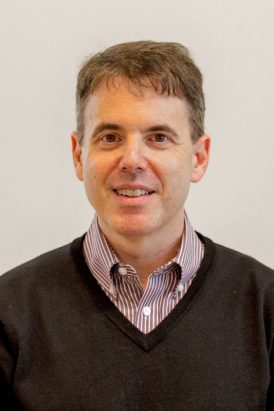
Amol Deshpande is a Professor in the Department of Electrical Engineering and Computer Sciences at the University of California, Berkeley, College of Engineering. With over 160 publications spanning from 2000 to 2025, his research has significantly impacted the database systems community. His work bridges theoretical foundations with practical systems, evidenced by numerous publications in top-tier venues including SIGMOD, VLDB, and ICDE. Professor Deshpande's research focuses on database systems, with particular expertise in graph databases, data management, probabilistic databases, query optimization, and data provenance. His work addresses fundamental challenges in managing complex data, including efficient graph analytics, dataset versioning, streaming data processing, and privacy-preserving data management. Recent research directions include entity-relationship abstractions beyond traditional relations, standalone catalog engines for large data systems, and graph theoretical approaches to dataset versioning. His publication trends show a consistent focus on evolving database technologies, with early work on probabilistic databases and query optimization, transitioning to graph analytics and data provenance, and more recently addressing modern challenges in data cataloging, privacy-first data management, and serverless stream processing. His research spans both theoretical contributions (e.g., approximation algorithms for stochastic optimization) and practical systems building (e.g., RStore, TreeCat). Professor Deshpande has mentored numerous PhD students who have become active researchers in the database community, including Hui Miao, Souvik Bhattacherjee, and Konstantinos Xirogiannopoulos. His collaborative work spans across institutions, with frequent collaborations with researchers from MIT, University of Maryland, and other leading institutions. His research has been supported by major funding agencies and has influenced both academic research and industry practices in data management. The evolution of his work reflects the changing landscape of data management, from traditional relational systems to modern graph and streaming data challenges.
Prof. Dr. Thorsten Sander is an adjunct professor in philosophy at the University of Duisburg-Essen's Institute of Philosophy, within the Faculty of Humanities. His research focuses on philosophy of language, pragmatics, and Gottlob Frege's contributions to semantics. He holds a PhD from Universität Gesamthochschule Essen (2001) and has authored influential works such as Frege's Pragmatics (2025) and Bedeutung als Gebrauch (2018). His work bridges historical analysis of Frege's theories with contemporary issues in semantics and psycholinguistics. Research Interests: Non-at-issue contents (e.g., implicatures) Fregean pragmatics (coloring, side-thoughts) Register differences and use-conditional meaning Meta-ethics and moral semantics Publications highlight his engagement with Frege's legacy, including analyses of modality, presupposition, and pragmatic vs. semantic meaning distinctions. He critiques traditional categorizations like 'epistemic implicature' and advocates for precise semantic profiles tailored to theoretical goals. Prof. Sander's contributions span books, peer-reviewed articles, and reviews. His current projects include exploring pejoratives and Frege's influence on modern psycholinguistics. Office hours are Fridays at 12 noon (email预约).
Golnoosh Farnadi is an Associate Professor at the Department of Computer Science and Operational Research at the University of Montreal and an Assistant Professor at the School of Computer Science at McGill University. She holds a Canada-CIFAR Chair in Artificial Intelligence and serves as a Senior Academic Member at Mila - Quebec Institute for Artificial Intelligence. Her interdisciplinary work bridges computer science, operations research, and ethical AI considerations. Her educational background includes a Ph.D. in Computer Science from KU Leuven and Ghent University (2017), followed by postdoctoral positions at the University of Montreal/MILA (2018-2020) and the University of California, Santa Cruz (2017-2018). Her research focuses on algorithmic fairness, responsible AI, deep learning, and probabilistic models, with applications spanning healthcare, recommender systems, and public policy. Farnadi's recent publications demonstrate a strong emphasis on addressing fairness in machine learning systems, with particular attention to cultural diversity in recommender systems, fairness in healthcare optimization (particularly kidney exchange programs), and mitigating hallucinations in large language models. Her work consistently combines theoretical rigor with practical applications, often employing novel mathematical frameworks to tackle complex ethical challenges in AI. Among her notable recognitions are the Google Scholar Award (2021), Facebook Research Award (2021), Google Award for Inclusion Research (2023), and being named one of the 100 Brilliant Women in AI Ethics (2023). She was also recognized as a Rising Star in AI Ethics in 2021. Farnadi supervises numerous graduate students through her EQUAL Lab (EQuity & EQuality Using AI and Learning algorithms), which focuses on developing AI systems that promote fairness and equity. Her teaching includes courses on Responsible AI, Machine Learning, and Trustworthy Machine Learning at both McGill University and HEC Montreal.
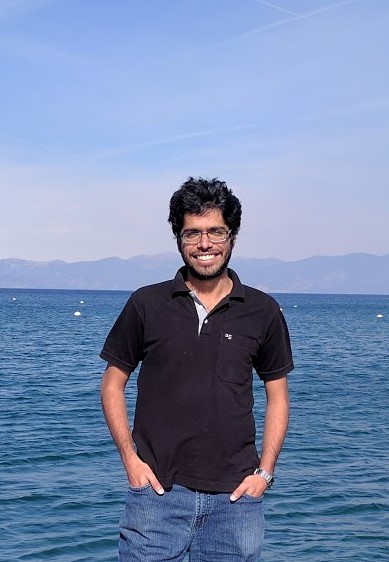
Sharan Vaswani is an Assistant Professor in the School of Computing Science at Simon Fraser University (SFU), Canada. His research focuses on designing algorithms for sequential decision-making under uncertainty, stochastic optimization, and their application to modern machine learning, particularly reinforcement learning and generalization analysis. Education & Career: PhD in Computer Science (2015-2018), University of British Columbia (UBC), supervised by Laks Lakshmanan and Mark Schmidt. Postdoc (2019-2021) at Mila - Quebec AI Institute with Simon Lacoste-Julien, and University of Alberta with Csaba Szepesvári. MSc in Computer Science (2015), UBC, focusing on influence maximization in social networks. BS from Birla Institute of Technology and Science, Pilani (2012), followed by research engineering at Siemens Corporate Research. Research Interests: Algorithmic development for decision-making in uncertain environments (bandits, reinforcement learning). Stochastic optimization methods with provable guarantees. Generalization and theoretical foundations of machine learning models. Recent Trends in Publications: Focus on optimization algorithms (e.g., stochastic gradient methods, line search, momentum techniques) with theoretical analysis. Contributions to reinforcement learning, including policy gradient methods and constrained MDPs. Exploration of adaptive algorithms for continual learning and over-parameterized models. Awards: Best Paper Honorable Mention (AISTATS 2022). Best Paper Award (2nd IEEE International Conference on Parallel Distributed and Grid Computing 2012). Research Group: Leads a team at SFU focused on machine learning optimization and decision-making systems. Active in organizing workshops at NeurIPS and ICML on optimization and reinforcement learning theory.
Dr. Rajesh Bhargave is an Associate Professor of Marketing at the Department of Analytics, Marketing and Operations within Imperial Business School, Imperial College London. He holds a B.B.A. from the University of Texas at Austin and a Ph.D. from the Wharton School of the University of Pennsylvania. His research focuses on consumer behavior, particularly how social contexts and digital tools influence decision-making and product evaluations. Dr. Bhargave’s academic journey includes prior faculty positions at the University of Texas at San Antonio before joining Imperial College London. He teaches across programs including MBA, Executive Education, and Pre-experience Masters, emphasizing practical application of marketing principles. His research explores two primary areas: (1) the impact of social environments on product preferences, analyzing shared versus solitary consumption experiences, and (2) how online technologies reshape consumer decision-making processes. Key topics include hedonic judgments, numerical processing in choices, and the psychological effects of digital cues like 'cloud' reminders. His publications span journals such as Journal of Consumer Research and Psychological Science , reflecting a strong focus on behavioral economics and consumer psychology. Notable themes include 'collective satiation,' 'cue-of-the-cloud effects,' and the role of round numbers in consumer perceptions of product longevity. Dr. Bhargave has advised students such as JORGE PENA-MARIN and Nicole Votolato Montgomery. While no scientific awards are explicitly listed, his work contributes significantly to marketing theory and practice. His research and teaching underscore the intersection of technology, social dynamics, and consumer behavior.
Prof. Annette Jackle is a Professor of Survey Methodology and Deputy Director of Understanding Society - the UK Household Longitudinal Study at the University of Essex. Her research focuses on innovative data collection methods, including mobile device integration, sensor data, and data linkage consent processes. She leads methodological experiments in longitudinal studies to improve participation rates and data quality. Key projects include the Understanding Society Innovation Panel, which explores event-triggered data collection, mobile app-based expenditure measurement, and consent mechanisms for administrative data linkage. Her work addresses barriers to participation, mode effects, and bias reduction in surveys. Recent studies analyze digital trace data during the pandemic, mobile app efficacy in probability/nonprobability panels, and the impact of question placement on consent decisions. Her research informs best practices for survey design in rapidly evolving technological landscapes. Jackle collaborates with institutions like ISER and the ESRC Research Centre on Micro-Social Change. She advises on survey methodology for large-scale studies and contributes to policy-relevant research through Understanding Society's extensive dataset.
Fred Feinberg is the Joseph and Sally Handleman Professor of Marketing and Professor of Statistics (by courtesy) at the University of Michigan, where he is also an Affiliated Faculty member of the Center for the Study of Complex Systems. His work integrates advanced Bayesian methods with large-scale marketing data to illuminate how people make choices under uncertainty. Education Ph.D., Sloan School of Management, Massachusetts Institute of Technology (1989) Doctoral program in Mathematics, Cornell University (1983–84) S.B. Mathematics & S.B. Philosophy, Massachusetts Institute of Technology (1983) Research Focus Feinberg’s scholarship centers on discrete choice models that leverage real-world decisions to infer latent attributes such as demographics, product appeal, and socioeconomic status. Methodologically, he employs Hierarchical Bayes (HB) models and cutting-edge MCMC algorithms to handle massive data sets, while theoretically he advances dyadic utility theory and optimal search under uncertainty. Applications span click-through behavior, menu-based choice, online dating preferences, spatial marketing, and consumer reactions to intangible or aesthetic product features. Recent empirical studies explore the wearout versus weariness effects of online advertising, the impact of data breaches on consumer behavior, and dynamic pricing for digital media subscriptions. Across these projects, Feinberg couples rigorous statistical innovation with actionable managerial insights, bridging marketing science, operations, and engineering. Scientific Awards & Leadership Joseph and Sally Handleman Endowed Professorship Past President, INFORMS Society for Marketing Science Departmental Editor, Production and Operations Management Former Co-Editor, Marketing Science Co-author (with T. Kinnear & J. Taylor) of the textbook Modern Marketing Research: Concepts, Methods, and Cases Grants & Collaborations While explicit grant lists are not provided, Feinberg’s prolific publication record in top-tier journals (e.g., Journal of Marketing Research , Marketing Science , Management Science ) and editorial board service imply sustained external funding and interdisciplinary partnerships, particularly with operations, engineering, and computer-science groups. Laboratories & Teams Feinberg is formally affiliated with the Center for the Study of Complex Systems (CSCS) at the University of Michigan, where he collaborates on network-based choice frameworks and large-scale behavioral data analytics. He maintains active ties to the Ross Marketing faculty and the Department of Statistics, fostering joint workshops and doctoral training initiatives.
Associate Professor Lucy Chen is a faculty member at the NUS Business School , National University of Singapore, specializing in the Department of Analytics & Operations. With over 15 years at NUS, she bridges operations management and business analytics in her teaching and research. PhD and MSc in Operations Management from Cornell University Her research explores inventory management , supply chain dynamics , and the intersection of operations-marketing . Recent work investigates corporate behavior around quarterly targets, including publications like Supply Chain Performance with Target-Oriented Firms . She employs immersive teaching methods such as supply chain simulations and role-playing games to engage students. Lucy's Google Scholar profile reveals 15 years of contributions spanning: Strategic inventory optimization Behavioral aspects of supply chain decision-making Co-opetition models in service clusters Impact of financial turbulence on operations Cultural influences on inventory behavior Architectural innovations in balanced ordering systems In 2022, her research on target-oriented firms demonstrated how operational adjustments benefit trading partners more than focal companies. She actively mentors students in operations/supply chain management , emphasizing skill transferability to sectors like banking analytics and logistics consulting.
Patrick Emmenegger is a Professor of Comparative Political Economy and Public Policy at the University of St. Gallen's School of Economics and Political Science (SEPS-HSG). He chairs the PhD Program in International Affairs and Political Economy and serves on the Executive Committee of the Council for European Studies. His research focuses on direct democracy, electoral systems, vocational education policy, and the political economy of skill formation. He has held roles in federal vocational education commissions and served as editor of the Socio-Economic Review. His academic interests include the interplay between economic policy and political institutions, particularly in Switzerland and Europe. Recent work examines voter behavior in direct democratic contexts, electoral district design, and the adaptation of skill formation systems to the knowledge economy. He co-authored a forthcoming book on electoral system reforms and contributed to policy reports on industrial policy and education reforms. Key research outputs include analyses of higher education as industrial policy, municipality-level voting patterns in Switzerland, and partisan strategies in electoral districting. His work bridges comparative political economy with methodological rigor, addressing topics like taxation politics, labor market governance, and the impact of war on state capacity. Advising and grants include leadership of the PhD program and contributions to federal education policy initiatives. His research team explores themes such as gender segregation in occupations and the role of skill requirements in labor markets. He maintains strong links with European policy networks through his involvement in the Council for European Studies.
Prof. Tijani CHAHED is a Professor at Telecom SudParis, part of Université Paris-Saclay, affiliated with the SAMOVAR laboratory and the NeSS research group. His work focuses on network optimization, edge computing, machine learning applications in telecommunications, and game-theoretical frameworks for distributed systems. He holds a position in the Department of Computer Science and Telecommunications. His research spans resource allocation in 5G/6G networks, energy efficiency strategies for mobile infrastructure, reinforcement learning for dynamic systems, and coalitional game theory for multi-agent systems. Key contributions include optimization of cache allocation in edge computing, latency-critical traffic management (URLLC), and strategic investment models for distributed computing infrastructures. Selected articles highlight advances in edge computing resource management, metaverse data transport over 5G, and energy-efficient sleep mode control for base stations. His work often intersects with industrial applications in green networks and smart grid integration for mobile infrastructure. Collaborations involve institutions like École Polytechnique, INRIA, and industry partners in telecommunications. Current projects include 6G network architectures, metaverse-enabled edge services, and decentralized resource allocation frameworks. Labs/Teams: SAMOVAR Lab (Signal and Media Access Networks, Optical and Radio Networks), NeSS Group (Networked Systems and Services).
Giacomo Fiumara is an Associate Professor at the University of Messina, Department of Mathematical and Computer Sciences, Physical Sciences and Earth Sciences. He holds academic rank since October 2021. Previously, he served as a Permanent Researcher (2008–2021) and secondary school teacher (1997–2008). He earned a Doctorate in Physics (1993) and a Degree in Physics (1989), both from the University of Messina. He is an associate member of the Accademia Peloritana dei Pericolanti and qualified as an associate professor in INF/01 and ING-INF/05 sectors. His research focuses on social network analysis, network science, data science, criminal networks, knowledge representation, bioinformatics, and computational modeling. He has supervised over 170 theses and advised PhD students in Mathematics and Computational Sciences. Key collaborations include work with Prof. Pasquale De Meo on criminal networks and complex systems, and international projects with institutions in the US, UK, China, and Australia. Teaching includes courses on Algorithms, Data Structures, Bioinformatics, and Machine Learning across Computer Science, Engineering, and Medical programs since 2000. He also contributed to international programs at Lviv Polytechnic, Birzeit University, Cluj-Napoca, and Murcia. His editorial roles include Associate Editor of IEEE Access and Academic Editor of Complexity. He holds a patent for predictive analysis of criminal organizations' social structures and has received FFABR research funding. Key awards include FFABR funding (2017) and recognition in the FFABR Unime 2020 II edition. He organized conferences like Crimenet 2014 and participated in high-profile events such as the 2022 Complex Networks conference in Palermo, presenting on quantum walks for criminal network analysis.
Abdol-Hossein Esfahanian is a Professor and Chairperson of the Computer Science and Engineering (CSE) Department at Michigan State University (MSU), part of the College of Engineering. He joined MSU in 1983 and has held leadership roles, including Graduate Director for 10 years and Associate Chair. His research focuses on applying graph theory to computer networks, algorithm design, and fault-tolerant computing. He has published extensively in journals like IEEE Transactions on Computers and Discrete Applied Mathematics, and serves as an editor for professional journals. Education: Ph.D. in Electrical Engineering and Computer Science from Northwestern University (1983), M.S. in Computer, Information, and Control Engineering from the University of Michigan (1977), and B.S. in Electrical Engineering from the University of Michigan (1975). Research interests include graph theory applications in network design, distributed systems, and fairness-aware algorithms. Notable awards include the Withrow Teaching Excellence Award (2005, 2015) and recognition as an IEEE Senior Lifetime Member. Teaching includes courses like CSE 835 (Algorithmic Graph Theory). He has contributed to curriculum development, emphasizing computational competencies for engineering students. His work integrates theoretical foundations with practical applications in networking and distributed systems.
Peter Pal Zubcsek serves as Senior Lecturer of Marketing at Tel Aviv University's Coller School of Management, previously holding an Assistant Professor position at University of Florida. His academic work bridges marketing, network science, and consumer psychology through rigorous quantitative analysis. His educational background includes: Ph.D. in Management from INSEAD M.Sc. in Informatics from Budapest University of Technology and Economics Zubcsek's research investigates how social network structures shape consumer behavior, with special focus on mobile advertising effectiveness, customer relationship management, and innovation diffusion. His work employs advanced network analysis to model consumer interactions and predict market responses. His publication trajectory from 2011-2017 reveals evolving expertise: starting with foundational network diffusion models (2011), progressing through mobile advertising frameworks (2016), and culminating in connected consumer intelligence systems (2017). This progression demonstrates increasing sophistication in integrating real-world network data with consumer behavior prediction. Key recognitions include: Journal of Interactive Marketing Best Paper Award (2016) MSI Research Grants totaling over $70,000 for mobile consumer behavior projects International Mathematical Olympiad silver medal (1998) He has secured significant research funding including MSI's $40,000 'Ideas Challenge' grant and leads the 'mLab' mobile research initiative, though specific student mentorship details remain undisclosed. His editorial role at Journal of Interactive Marketing underscores disciplinary leadership. The 'mLab' research initiative represents his current focus on mobile consumer behavior, leveraging collaborative frameworks to study real-time advertising response and device ecosystem interactions.
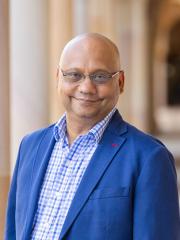
Professor Ashish Sinha is a leading academic in Marketing at the UQ Business School, holding concurrent roles as Visiting Professor at the Indian School of Business and Research Fellow at the Hong Kong Polytechnic University. His career spans senior leadership in academia (e.g., Academic Dean of Executive Education at ISB, Interim Dean at UTS Business School) and industry (Vice President at IRI, Chicago). His research bridges theory and practice, focusing on digital transformation, AI-driven strategies, ESG impact analysis, and marketing analytics. He has pioneered frameworks for retail optimization, category management, and B2B innovation adoption, with over 30 journal articles in top-tier outlets like Journal of Marketing and Marketing Science . Research Impacts: Sinha’s work has transformed executive education programs (e.g., ISB’s #38-ranked custom programs) and driven research excellence at UTS. He is a serial entrepreneur, having founded two analytics firms acquired for their practical impact. His $240M Food Agility CRC participation highlights his role in agribusiness innovation. Awards include the Davidson Award and twice runner-up for the Gary Lilien Practice Award for applied marketing science. Key Research Themes: AI in Marketing, Digital Transformation, ESG Strategies, Consumer Sentiment Analysis Leadership Roles: Academic Dean (ISB), ADR (UTS), Head of Marketing (UNSW) Industry Experience: Analytics leadership at IRI, strategic consulting across sectors Grants/Partnerships: CI in Food Agility CRC ($240M), multiple ERA-recognized research collaborations. Advises on AI ethics, sustainable marketing, and global business strategy.