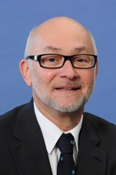
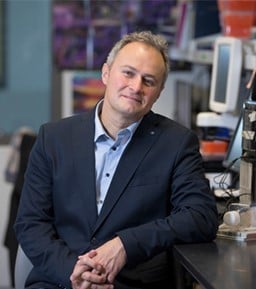
Noah Freeman Shroyer, Ph.D. is an Associate Professor in the Department of Medicine, Section of Gastroenterology and Hepatology at Baylor College of Medicine in Houston, Texas. He also holds an Adjunct Associate Professor position in the Department of Pediatrics Division of Gastroenterology, Hepatology & Nutrition at Cincinnati Children's Hospital, University of Cincinnati. Additionally, he is a Member of the Dan L Duncan Comprehensive Cancer Center at Baylor College of Medicine and serves as Core Director of the Digestive Diseases Center at Texas Medical Center. Education: BS in Microbiology and Biochemistry from Louisiana State University, Baton Rouge PhD in Cell and Molecular Biology from Baylor College of Medicine, Houston Post-Doctoral Fellowship in Molecular and Human Genetics at Baylor College of Medicine, Houston Dr. Shroyer's research primarily focuses on understanding the mechanisms that control intestinal development and homeostasis, with particular emphasis on epithelial transcription factors such as Atoh1 (Math1), Gfi1, and Spdef. His laboratory has made significant contributions to understanding how these factors regulate intestinal development and differentiation, and how their dysfunction relates to diseases like inflammatory bowel disease and colorectal cancer. He has pioneered the development of organ culture methods to direct differentiation of human pluripotent stem cells into intestinal tissue, creating valuable models for studying intestinal development, disease mechanisms, and potential therapeutic approaches. Analysis of Dr. Shroyer's recent publications (2022-2025) reveals a strong focus on intestinal organoid models, vitamin D signaling in the gut, stem cell biology, and colorectal cancer mechanisms. His work increasingly integrates enteric nervous system components with intestinal epithelium in organoid models, examines sex differences in intestinal biology, and explores metabolic pathways in intestinal stem cells and cancer. The research demonstrates a progression from basic developmental mechanisms toward more translational applications, including therapeutic targeting of pathways like Wnt/β-catenin and metabolic regulators in colorectal cancer. Dr. Shroyer's laboratory has established itself as a leader in intestinal stem cell and organoid research, with significant contributions to understanding transcriptional regulation in intestinal development and disease. His work bridges basic science with clinical applications, particularly in the areas of colorectal cancer and intestinal regeneration. While specific grant information is not detailed in the provided text, Dr. Shroyer's extensive publication record spanning from 1997 to the present suggests sustained research funding. His work likely involves collaborations across multiple institutions, including Baylor College of Medicine, Cincinnati Children's Hospital, and other research centers focused on gastrointestinal diseases and cancer. His laboratory appears to focus on both fundamental developmental biology questions and translational applications for gastrointestinal diseases. Dr. Shroyer's laboratory maintains a strong focus on developing and utilizing human intestinal organoid models to study development, disease mechanisms, and potential therapeutic interventions. The lab's work with human pluripotent stem cell-derived intestinal tissue represents a cutting-edge approach to modeling human intestinal biology and disease in vitro.