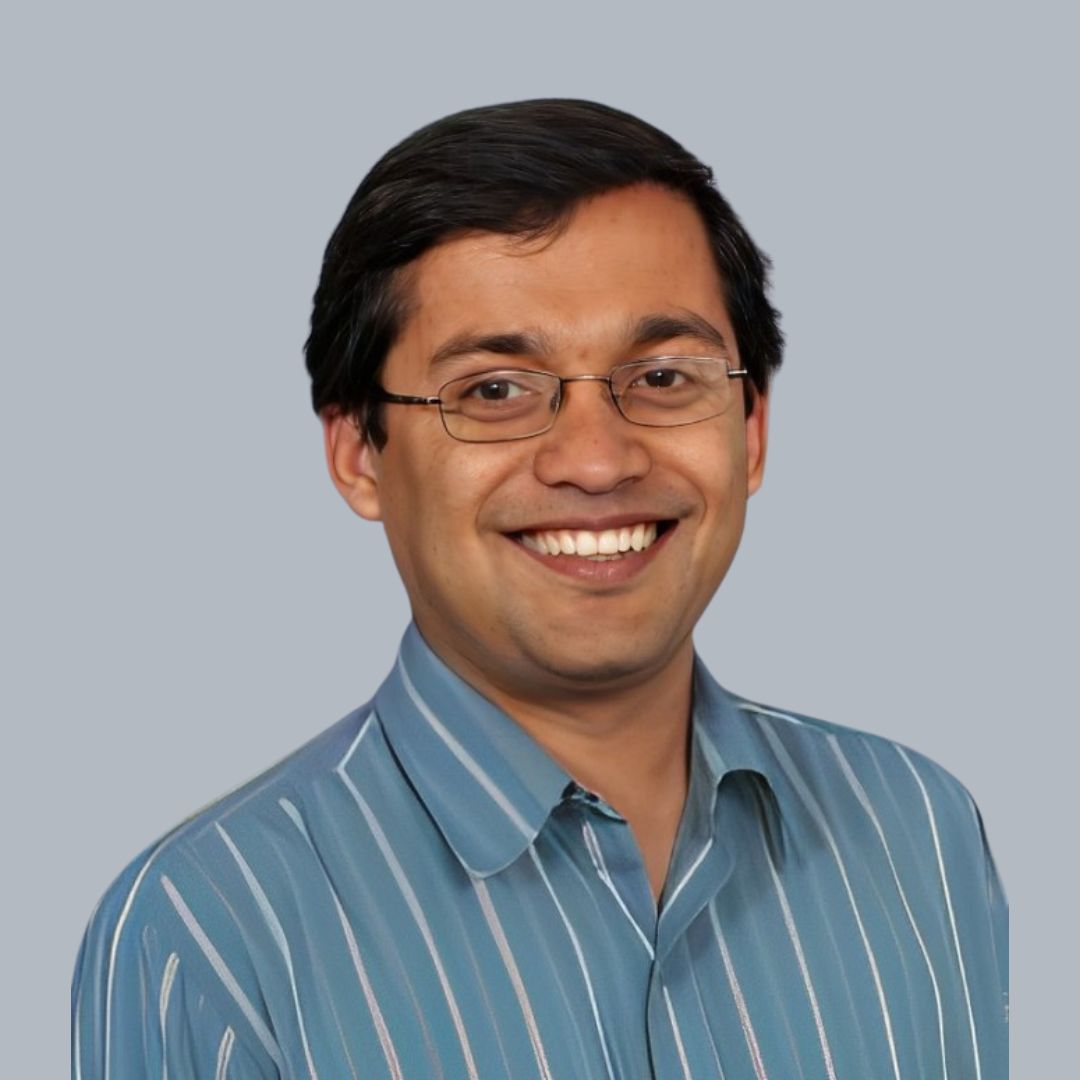
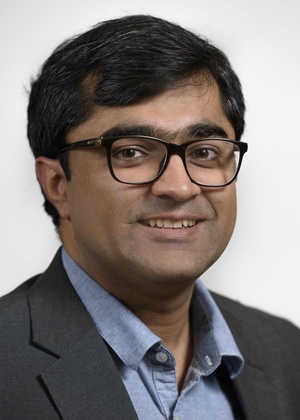
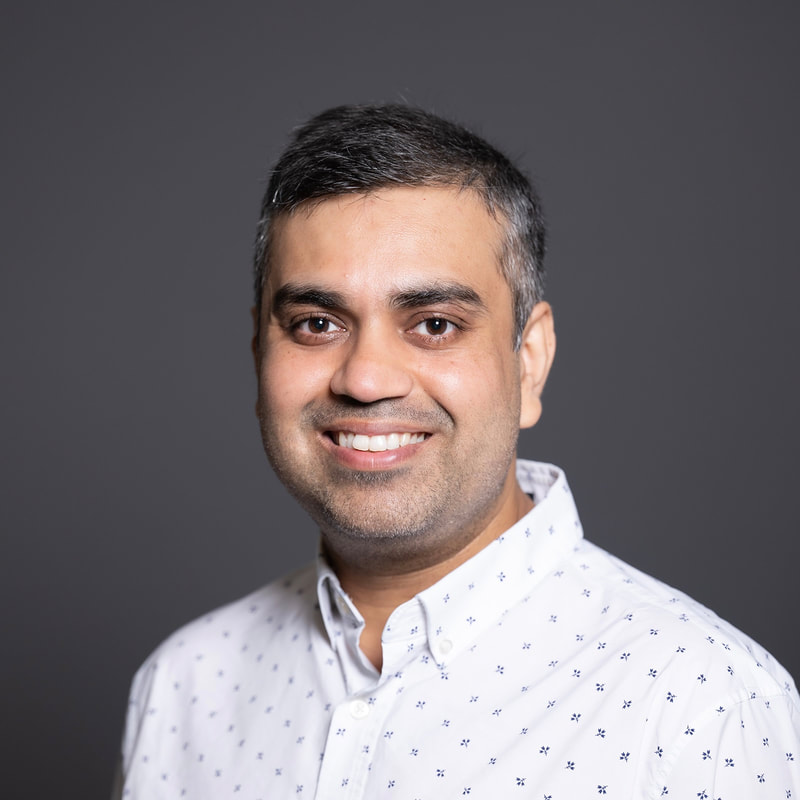
Parminder Jeet Singh is a Lecturer and serves as Executive Director of IT for Change, an organization focusing on digital equity and policy. His work bridges technology and societal development in areas like internet governance, e-governance, and the digital economy. Global roles: Special Advisor to the UN's Internet Governance Forum (IGF) and UN Global Alliance for ICTD. Contributions: Co-coordinated the Internet Governance Caucus, a key civil society group, and participated in UN working groups on IGF improvements and internet policy cooperation. Advocacy: Founded the Just Net Coalition and Internet Rights and Principles Coalition, and contributed to drafting India’s e-commerce policy. No formal academic publications or awards are explicitly listed in the provided text.
Karthik Bhat is an Assistant Professor in the Department of Information Science at Drexel University's College of Computing & Informatics (CCI). His research focuses on how emerging technologies can enhance healthcare and care work, particularly examining sociocultural and socioeconomic factors influencing technology adoption in healthcare systems. He holds a PhD in Human-Centered Computing from Georgia Institute of Technology and a B.Tech in Information Technology from NITK Surathkal, India. His research interests include Human-Centered AI, care work dynamics, and the role of technology in global health contexts (ICTD). Notable awards include Best Paper and Honorable Mention at the ACM CSCW conference. He currently mentors undergraduate and graduate students at Drexel but is not accepting new PhD students at this time. Dr. Bhat's work bridges HCI, AI ethics, and healthcare innovation, with recent publications exploring hybrid telemedicine workflows, family caregiving roles, and privacy practices in aging households. His lab investigates technology's role in improving equitable access to healthcare services while addressing systemic barriers through participatory design approaches. Key Research Themes: Care Work, Telemedicine, HCI for Healthcare, Sociocultural Technology Design Awards: CSCW Best Paper (2023), CSCW Honorable Mention (2023) Education: PhD Georgia Tech (202?), B.Tech NITK (20?) Lab Focus: Technology Mediation in Care Systems, Health Equity through Design
Dr. Yingqin Zheng is a Reader in Management and Marketing at the Essex Business School, University of Essex. Her research focuses on the societal impacts of information and communication technologies (ICT), with particular emphasis on digital inclusion, technology-enabled development, and critical perspectives on ICT4D. Her work explores how digital technologies shape social equity, innovation ecosystems, and organizational practices in global contexts. Her research interests include: ICT for Development (ICT4D) Digital inequality and empowerment Innovation hubs and tech ecosystems Platform labor dynamics Sociotechnical systems in global health Recent publications highlight contributions to understanding mHealth adoption in India, post-pandemic health interventions in Thailand, and the paradoxes of digital disempowerment. She has secured grants such as the 2023 Interdisciplinary Network on Women's Digital Inclusion funded by the Academy of Medical Sciences. Teaching responsibilities include courses on technology-organization-society dynamics, innovation management, and research methodologies in management.
Dr. Shameem Ahmed is an Associate Professor in the Department of Computer Science at Western Washington University. He co-founded and co-directs the NEAT (Next Generation Effective Affective Technology) research group, focusing on interdisciplinary work at the intersection of technology for neurodivergent individuals, human-computer interaction (HCI), and information and communication technologies for development (ICTD). Education: Ph.D. in Information Science from University of Illinois at Urbana-Champaign MS in Computer Science from University of Illinois at Urbana-Champaign MS in Computer Science from Marquette University B.Sc. in Computer Science and Engineering from Bangladesh University of Engineering and Technology His research explores assistive technologies for autistic individuals, including emotion detection, stress prediction, and accessible education design. Recent work includes IEEE COMPSAC 2024 publications on emotion recognition systems and assessment techniques for autistic students. His peer-reviewed articles span topics like mixed-reality training platforms , data-driven stress analysis , and self-healing middleware , with a focus on surveys, systematic reviews, and technology deployment in developing regions. He has mentored students receiving WWU CS Outstanding Graduate Student and Alumni Awards . Awards: Outstanding Poster Award, Undergraduate Scholars Poster Session, WWU (2017, 2016) Dissertation Fellowship, iSchool, UIUC (2014) Honorable Mention: Best Poster Award, ACM iConference (2013) Sohaib and Sara Abbasi Fellowship, CS, UIUC (2008) Runner-up, CS UIUC Internet Television (IPTV) Development Competition (2008) Shameem Ahmed teaches courses in database systems , mobile programming , and technology for social good . His NEAT lab has produced impactful tools like InterViewR for job interview training simulations and studies on autism support systems in Bangladesh.
Debra Richardson: Academic Overview Debra Richardson is a Professor of Informatics and the founding Dean of the Donald Bren School of Information and Computer Sciences (ICS) at the University of California, Irvine. She has held leadership roles since joining UCI’s faculty in 1987, including serving as Chair of ICS and Dean for ten years. Her academic work bridges software engineering, sustainability, and requirements engineering. Key research projects include Software Engineering for Sustainability (SE4S) and Requirements Engineering at the Margins (RE@tM) , which address global challenges in ICT development and environmental impact reduction. Education Ph.D., Computer and Information Science, University of Massachusetts Amherst (1981) M.S., Computer and Information Science, University of Massachusetts Amherst (1978) B.A., Mathematics, University of California, San Diego (1976) Research Interests Richardson’s research focuses on adapting software engineering methods to socially relevant domains. She advocates for sustainable ICT systems and inclusive computing practices that address marginalized communities. Her work emphasizes integrating sustainability as a first-class requirement in software development and rethinking requirements engineering for global accessibility. She also explores gender diversity in technology and has pioneered initiatives like the Women in ICS (WICS) program. Recognition & Contributions She has been recognized as a Fellow of Automated Software Engineering and led the National Center for Women & Information Technology (NCWIT). Her efforts include chairing Computer Science Education Week and advocating for K-12 CS education reforms in California. Richardson also chairs the California Computing Education Advocacy Network (CCEAN) to ensure equitable access to computing education. Service & Advocacy Her service extends to promoting diversity in STEM, including roles with the Computing Research Association (CRA) Deans Group and Girls Incorporated of Orange County. Richardson’s leadership has transformed ICS into a top-tier interdisciplinary school and fostered initiatives like the Debra J. Richardson Student Support Fund to support underrepresented students in computing. Personal Interests Beyond academia, Richardson is an avid outdoors enthusiast, practicing rock climbing, scuba diving, and yoga. She supports women’s sports and has been a dedicated fan of UCI’s women’s basketball team.
Christelle Scharff is a Professor at Pace University 's Seidenberg School of Computer Science and Information Systems. Her research spans Artificial Intelligence , Global Software Engineering , and ICT for Development (ICTD) , with a focus on cultural and educational applications. 1993-1999: BS, MS, PhD in Computer Science (Universite Henri Poincare, France) Her work includes AI ethics , deep learning for cultural preservation , and mobile technology for education in Africa . She leads the Seidenberg School's Artificial Intelligence Lab and has secured grants from NSF, IBM, Microsoft, Google , and USAID . Recent publications analyze global AI strategies , scrum team dynamics , and coding education in Africa . Her projects emphasize localization and sustainable technology deployment in Senegal and Cambodia. 2023 : NYAS Scientist Fellow 2019, 2012 : Fulbright Scholar in Senegal 2015 : Jefferson Award for Public Service She teaches advanced courses including Mobile Application Development , AI Ethics , and Software Reliability , with a pedagogical approach integrating field research and social entrepreneurship.
Anandha GOPALAN serves as an Associate Professor (Educator Track) in the Department of Computer Science at the School of Computing, National University of Singapore (NUS). He actively teaches undergraduate and graduate courses while mentoring students within NUS Computing's academic ecosystem. His research spans Sustainable Computing, Educational Technology (EdTech), and ICT for Development (ICTD), with concentrated efforts on deploying technology for economic advancement in low-income regions. Specific applications target literacy, education systems, healthcare accessibility, and commerce infrastructure in underserved communities. Instructional responsibilities include foundational courses: CS2100 Computer Organisation, CS2106 Introduction to Operating Systems, and CS5224 Cloud Computing. Personal interests extend to urban exploration through travel, long walks, and local market immersion outside academic duties.
Benedetta Piantella is an Industry Associate Professor at the NYU Tandon School of Engineering, affiliated with the Integrated Design & Media Program (IDM). She holds a dual role as an educator and humanitarian technologist, with over two decades of experience in international development, STEM education, and sustainable technology design. Her work focuses on participatory design methodologies to address global challenges in resource equity, climate resilience, and community-driven innovation. Education & Experience: Former Technologist in Residence at Cornell Tech (Connected Experiences Lab, Social Technologies Lab) Technology Architect at Columbia University’s Earth Institute and Quadracci Sustainable Engineering Lab Founder of two R&D companies focused on sustainable solutions for global problems Research Interests: Benedetta’s work bridges technology and society through projects like the Solar Protocol initiative, which explores energy-positive internet infrastructure, and the Low Power Lab’s development of off-grid systems. She emphasizes participatory design, user-centered approaches, and open-source collaboration to create resilient networks and IoT solutions for underserved communities. Key Contributions: Her research addresses equitable access to life-sustaining resources through solar microgrids, real-time monitoring systems, and distributed infrastructure. Recent projects include deploying 24/7 water kiosks in Africa and developing decentralized energy networks for disaster resilience. Labs & Affiliations: Center for Urban Science + Progress (CUSP) Low Power Lab Partnerships with UNICEF, UN, and Millennium Villages Project
Carleen Maitland is an Associate Professor of Information Sciences and Technology at The Pennsylvania State University and Co-director of the Institute for Information Policy. She holds a Ph.D. from Delft University of Technology, an M.S. from Stanford University, and a B.S. from Worcester Polytechnic Institute. Her research focuses on humanitarian information systems, refugee studies, and digital connectivity in marginalized communities. Key themes include the intersection of technology with displacement, migration justice, and crisis response. She has extensively studied ICT applications in refugee contexts, including data collection, communication infrastructure, and policy implications. Notable contributions include analyzing digital platform use in refugee crises, exploring trust-building in humanitarian networks, and critiquing colonial impulses in technology development. Her work bridges technical innovation with socio-political dimensions, advocating for equitable technology deployment in vulnerable populations. Maitland’s interdisciplinary approach integrates social informatics, policy analysis, and participatory methodologies. Her articles address challenges such as anxiety management in displaced populations during pandemics, drone technology ethics, and comparative displacement policies between Uganda and Ecuador. Her current roles emphasize institutional leadership in information policy, reflecting her commitment to addressing systemic inequities through technology and governance frameworks.
Mustafa Naseem is a Clinical Associate Professor at the University of Michigan School of Information. His research focuses on technology for social impact, particularly in patriarchal societies and low-income communities. He collaborates with governments and NGOs across Africa, Asia, and North America to create sustainable sociotechnical solutions. Education MS in ICT and Development (ICTD), University of Colorado Boulder BS in Electrical Engineering, National University of Sciences and Technology (NUST), Pakistan Research Focus Naseem designs technologies enabling behavior change to improve health outcomes for women and children. His interdisciplinary work spans health informatics, HCI, ICTD, and AI ethics, with emphasis on cultural contexts in South Asia and diasporic communities. Publication Themes His research demonstrates consistent focus on digital safe spaces, health communication, and community-centered design. Recent work explores AI ethics, refugee adaptation, and combating misinformation through culturally responsive technologies. Awards and Honors Diversity and Inclusion Award (CSCW 2020) Best Paper Honorable Mention (CHI 2020) Finalist - Rolex Young Laureate Award (2016) Fulbright Scholarship (2011-2013) Grants and Collaborations Substantial funding from: Bill & Melinda Gates Foundation National Institutes of Health National Science Foundation USAID UNICEF UK Department for International Development Leads international teams implementing solutions impacting tens of thousands in Punjab, Pakistan.
Richard J. Anderson is a Professor at the Paul G. Allen School of Computer Science & Engineering, University of Washington, with a focus on Human-Computer Interaction (HCI), education technology, and computing for development. His work bridges theoretical computer science with practical applications in low-resource settings, particularly in Sub-Saharan Africa and South Asia. Key Research Areas: HCI4D (Human-Computer Interaction for Development), digital health systems, agricultural technology scaling, mobile money economies, and blockchain policy integration. Collaborations: Works with institutions like Makerere University (Uganda), International Training and Education Center for Health (UW), and Aurora Health Innovations LLP (India). Recent publications highlight dual-platform agricultural tools in Tanzania, privacy considerations in HIV digital health, and blockchain's role in telecom governance. His work emphasizes scalability, privacy, and structural equity in technology deployment. Scientific Awards: Best Paper (ACM Journal on Computing and Sustainable Societies) Honorable Mention (ACM Conference on Human Factors in Computing Systems) Anderson’s career spans decades, with foundational contributions to parallel algorithms and sustained leadership in computing education research. His projects often integrate active learning and tablet-based classroom interaction systems.
Timothy X Brown is a Professor in the Department of Electrical and Computer Engineering at the College of Engineering. His research focuses on wireless systems, networking, network security, machine learning, cognitive radios, and unmanned aircraft systems. His work spans applications ranging from rural education chatbots to drone-based search and rescue systems, with a strong emphasis on developing-world contexts. Research Interests: Unmanned aircraft systems (UAVs) for agriculture, search-and-rescue, and telecommunications Design of AI-driven conversational assistants for educational and community support Spectrum management policies and cognitive radio networks Wireless network security and interference analysis Technology adoption in rural and under-resourced environments Recent Research Trends: Recent publications (2020–2025) highlight growing emphasis on human-centered AI applications in education, including chatbot systems for teacher support in Côte d’Ivoire. Earlier work (2016–2020) focused on UAV airframe design, dynamic spectrum policies, and network performance analysis in heterogeneous cellular systems. Professional Affiliations: Part of the College of Engineering's faculty, contributing to academic programs in electrical and computer engineering across Africa, Silicon Valley, Thailand, and other global locations.
Aditya Vashistha is an Assistant Professor at Cornell University's Ann S. Bowers College of Computing and Information Science, leading the Global AI Initiative. His research focuses on designing equitable AI systems for marginalized communities, addressing misinformation, ableism, and cultural bias in technology. He holds a Ph.D. in Computer Science from the University of Washington. Research interests include Human-Computer Interaction (HCI), ICTD, and accessibility, with projects like ASHABot for community health workers and culturally-nuanced AI tools. His work has received funding from Microsoft, Google, and USAID, and recognition including Best Paper Awards at CHI and FAccT. Education: Ph.D. in Computer Science & Engineering (University of Washington) Recent Awards: Google Cyber NYC Award, Einaudi Seed Grant, CCSS Faculty Fellowship Labs/Initiatives: Cornell Global AI Initiative, Hack4Impact
Pietari Keskinen serves as a Postdoctoral Researcher in the Department of Computer Science at Aalto University, Finland, working under Professor Marko Nieminen's research group. His work bridges Human-Computer Interaction and ICT for Development, with dedicated focus on creating technology solutions for marginalized communities in the Global South, particularly Namibia. Research interests center on digital inclusion through community-centered design approaches. Keskinen investigates how digital platforms can support livelihoods via crowdfunding, microwork, and community-based tourism, emphasizing participatory co-design methods. His fieldwork with San communities and informal settlements examines technology adoption barriers and develops context-specific solutions like locally mediated crowdfunding access and mobile co-design tools. Analysis of his 2018-2025 publications reveals consistent thematic evolution: from early mobile weather services for Maasai farmers (2018) to sophisticated frameworks like the Tech Mediator Model (2022) and distributed co-design via WhatsApp (2024). His work increasingly focuses on socioeconomic impacts of digital platforms, with recent studies examining communication gaps in crowdfunding (2025) and worker empowerment in sharing economies. Keskinen maintains active international collaborations, primarily with Namibia University of Science and Technology researchers, enabling sustained field engagement in Namibia. While specific grant details aren't public, his publication pipeline suggests robust research funding. As a postdoctoral researcher, he contributes to team-based projects without independent student supervision, focusing on collaborative research within Aalto's computer science department.
Dr. Michael L. Best is a Professor at the Sam Nunn School of International Affairs and the School of Interactive Computing at the Georgia Institute of Technology . As Executive Director of the Institute for People and Technology (IPaT) , he leads the Technologies and International Development Lab . Previously, he served as founding director of the United Nations University Institute on Computing and Society (UNU-CS) in Macau SAR, China, and as director of Media Lab Asia in India and head of the eDevelopment group at the MIT Media Lab . Education Ph.D., MIT MS, MIT BS, UCLA Research Interests focus on Information and Communications Technologies for Development (ICTD) , International Diffusion of Technology , and Computing’s role in Global Affairs . His work spans post-conflict communication systems in Sub-Saharan Africa , East/South Asia , and Latin America , addressing Inequality and Social Justice , Digital Communication , and Human-Machine Interaction . Recent Publications highlight trends in Social Media’s impact on Democracy , Mobile Phones in Post-Conflict Zones , and E-Governance in Developing Countries . His research often bridges Artificial Intelligence , Human-Technology Frontiers , and Inclusive Innovation . Scientific Contributions Founded UNU-CS (2013) Co-founded and served as Editor-in-Chief Emeritus for Information Technologies and International Development Associate Editor for Global Computing with Communications of the ACM Dr. Best mentors students and collaborates through projects like the Living Liberia Fabric (AI-based narrative system for post-conflict reconciliation) and MOSES (media for post-conflict healing). He has delivered over 150 invited/keynote lectures globally.