Ulrike Felsing is a Senior Lecturer at the Lucerne School of Design, Film and Art (Lucerne University of Applied Sciences and Arts, HSLU), where she teaches in the BA Graphic Design and Data Design + Art programs. She leads the +RE course 'Wissensbilder in Medien und Gesellschaft' (Knowledge Images in Media and Society). Her research focuses on knowledge visualization in digital humanities and participatory archives. Education: Studied Visual Communication at the Leipzig University of Applied Sciences (HGB). Research Projects: Co-Principal Investigator (2021–2025): 'Participatory Knowledge Practices in Analog and Digital Image Archives' (Swiss National Science Foundation Sinergia grant, with Prof. W. Leimgruber & Dr. P. Fornaro, University of Basel). 'The Exploration of Design Methods in Transcultural Visual Communication' (SNF-funded, 2010–2015, with Dr. R. Baur). Publications include peer-reviewed articles on participatory archives and critical map visualizations, as well as monographs such as 'Reflexive Kataloge' (2021) and co-authored 'Visual Coexistence' (2020). Grants and Funding: Swiss National Science Foundation (SNF) grants for multiple projects. Her work bridges design, cultural studies, and digital humanities.
Dr. Christian Scharinger is an Associated Scientist and Principal Investigator at the Leibniz-Institut für Wissensmedien (IWM) in Tübingen, Germany, where he has been actively engaged in research since 2010. He is a member of the Multimodal Interaction Lab and leads a DFG-funded project on neurophysiological measures in instructional design. His research integrates cognitive psychology with educational technology, focusing on how digital learning environments affect cognitive processes. Christian Scharinger earned his M.A. in Linguistics, Informatics, and Media Sciences from the University of Trier and the University of Konstanz in 2007. He completed his doctoral thesis in Cognitive Science at the University of Tübingen in 2015. From February to September 2017, he served as a postdoctoral researcher at the University of Tübingen’s Chair of Applied Cognitive Psychology and Media Psychology. His research interests center on the cognitive and neurophysiological mechanisms underlying learning in digital environments. He employs advanced methodologies such as combined EEG and eye-tracking to investigate cognitive load, working memory, and the effects of multimedia elements like decorative pictures and virtual reality. He is particularly interested in how seductive details influence learning and how user-friendly digital interfaces can be designed based on neurocognitive data. The recent publications of Christian Scharinger reflect a strong trend in using neurophysiological indicators—especially EEG frequency band power and pupil dilation—to assess cognitive load across various learning contexts, including text reading, VR, and gamified tasks. His work bridges cognitive theory with practical applications in educational design, often evaluating the validity of multimedia learning principles through empirical neurocognitive data. Task-irrelevant decorative pictures increase cognitive load (2024) Effects of emotional decorative pictures on cognitive load (2023) Gamification of n-back tasks (2023) EEG and eye-tracking in text-picture learning (2020) Cross-subject cognitive load classification (2018) Christian Scharinger has been involved in multiple DFG and interdisciplinary research projects, including those on virtual reality, working memory load, and perception of historical sites. He has taught seminars at Hochschule Tuttlingen and Hochschule Fresenius Heidelberg, contributing to academic training in psychology and technology. He is also a member of the IWM postdoc network 'Cognitive Conflicts During Media Use', indicating active engagement in collaborative research. While no formal advisees are listed, his role as a PI and lab member suggests mentorship responsibilities. He has contributed to setting up and operating a combined EEG-eye-tracking laboratory at IWM, demonstrating technical leadership. His work spans both basic and applied research, with implications for instructional design, human-computer interaction, and educational technology. He regularly presents at major conferences such as EARLI, TeaP, and ETRA, and has organized symposia and workshops, reflecting strong academic leadership.
Mario Aquilina is a Senior Lecturer in the Department of English within the Faculty of Arts at the University of Malta. He holds a BA (Hons) and MA in English from the University of Malta and earned his PhD in English Studies from the University of Durham, UK in 2013. His academic work spans literary theory, electronic literature, and style studies, with particular focus on continental philosophy's intersection with literary analysis. His research interests prominently feature Critical Theory, Literary Theory, Electronic Literature, and Digital Humanities. Aquilina has made significant contributions to understanding style in literature through the lens of thinkers like Blanchot and Gadamer, while also exploring the emerging field of electronic literature and its theoretical implications. His work on the relationship between literature and digital games represents an innovative interdisciplinary approach that bridges traditional literary studies with contemporary digital culture. Aquilina's publication pattern reveals a strong trajectory in theoretical literary studies, with recent work increasingly engaging with digital humanities methodologies and big data approaches to literary analysis. His scholarship demonstrates consistent engagement with continental philosophy while progressively incorporating computational and digital perspectives on literature. As an educator at the University of Malta, he teaches within both the Department of English and the Centre for English Language Proficiency. His professional experience includes extensive work as an editor for international publishers, with particular expertise in managing multi-author projects and navigating cross-cultural editorial challenges. His academic contributions include editing multiple volumes on the history of the essay and serving as co-editor for the CounterText special issue on Electronic Literature. He maintains an active research agenda that bridges traditional literary scholarship with contemporary digital approaches, reflecting the evolving nature of literary studies in the 21st century.
Andrew Monk is Professor of Psychology at York University and Director of the Centre for Usability and Human-Computer Interaction Research (CUHTec). His research focuses on technology to support older adults' independence, including banking systems for individuals over 80, assistive technology for dementia care, and mainstream usability solutions. He has held leadership roles in the British HCI Group (Chair: 1997-2001) and the ACM Sig CHI community (ACM CHI Academy, 2005). Current affiliation: York University (Psychology Department) Leadership: Director of CUHTec Research Interests: Human-Computer Interaction (HCI) with emphasis on lightweight usability methods, secure delegation in digital payments, multimodal communication systems, and adaptive designs for aging populations. Publication Trends: His work spans 25+ years, showing sustained focus on user-centered design challenges from early hypertext systems (1989) to modern socio-technical frameworks for financial delegation (2014). Key themes include accessibility, security, and cognitive support through technology. Scientific Recognition Fellow of the British Computer Society ACM CHI Academy member (2005) Labs & Teams: As Director of CUHTec, he leads interdisciplinary research initiatives combining psychology and computing science to address real-world technological challenges.
Axel Vogelsang is a Professor and Head of the Research Group Visual Narrative at Lucerne University of Applied Sciences and Arts' Lucerne School of Design, Film and Art. His academic career spans over two decades, combining practical experience in advertising and web design with academic leadership roles. He holds an MA and PhD in Art & Design from Central Saint Martins College/University of the Arts London. His research focuses on digital communication, museum narratives, and the intersection of technology with cultural heritage. Notable projects include the Audience+ initiative exploring social media's role in museums, and the ALE project using mobile devices to enhance cultural site experiences. He has led research groups since 2011 and currently oversees the Visual Narrative group investigating complex information visualization in digital/social media contexts. Vogelsang has authored/co-authored influential publications such as "Social Media und Museen II" (2016) and contributed to international conferences on topics like transmedia storytelling and participatory museum practices. His awards include a nomination for the Design Preis Schweiz (2017) and a Best of Swiss App Award (2016). He teaches Service Design at the MA Design program and manages modules like Data Visualisation and Narration in the MSc Applied Information and Data Science. Professional activities include founding roles in the stARTcamp Switzerland network and the Center for Storytelling, alongside board memberships in the DGTF (Design Theory & Research Society). His work bridges academic research with real-world applications, emphasizing participatory design approaches and innovative storytelling techniques across digital platforms.
Trace E. Reddell is a Professor and Director of Emergent Digital Practices at the University of Denver’s College of Arts, Humanities and Social Sciences. He is affiliated with the Department of Media, Film & Journalism Studies and the School of Art and Art History, reflecting his interdisciplinary work at the intersection of digital media, sound, and theory. Education: Ph.D., English Literature, University of Colorado at Boulder, 1997 M.A., Creative Writing, University of Colorado at Boulder, 1989 B.A., English Literature, Texas Tech University, 1986 (Magna Cum Laude) Trace Reddell’s research and creative work center on the interactions of sound, cosmology, and the imagination. His expertise spans Sound Studies, Digital Media, Science Fiction, New Materialism, and Philosophy of Technology . He explores how sonic cultures—particularly in science fiction, psychedelic music, and audiovisual performance—shape new modes of being and understanding. His work integrates critical theory, media philosophy, and hands-on artistic practice, including live cinema and net.art. He teaches courses in sonic arts, expanded cinema, speculative cultures, and critical digital media. His publications reveal a strong trajectory in sound and media studies, with recent work focusing on sonic innovation in science fiction cinema, Afrofuturism, and cybernetic performance . His 2018 book, The Sound of Things to Come , is a landmark study in film sound, and he is preparing a sequel and additional books on psychedelic rock and space music. His upcoming MIT Press book, The Magic Circle: Sonic Substance in Psychedelic Music , further establishes his authority in sound culture. Scientific Awards: Dean’s Award for Excellence, AHSS Dean, University of Denver (2018) “Excellent Artists” Honorary Award, Art on the Net Competition, Tokyo (2001) George F. Reynolds Fellowship, University of Colorado (1994–1995) Wiegers' Appointment, University of Colorado (1994) Trace Reddell actively mentors graduate students, serving as a Ph.D. advisor and MFA thesis committee lead. He has directed numerous graduate research projects and served on dissertation and exhibition committees. He has secured multiple research grants from the University of Denver, including Faculty Research Funds and Creative Arts Material Funds, supporting projects like Sonic Science Fiction 2 and international academic exchanges. His creative work—ranging from live audiovisual performances to commissioned soundtracks—has been exhibited globally in venues from Amsterdam to Seoul. He also contributes to academic service through manuscript review for presses like Routledge and the University of Minnesota Press, and has held leadership roles including Graduate Director and Director of Digital Media Studies. Labs and Teams: He has been closely associated with the Boulder Laptop Orchestra (BLOrk), contributing live visual performances. His collaborative projects, such as microMacroCosm with Timothy Weaver, reflect his engagement with interdisciplinary artistic teams. He has also led visiting artist series and founded digital media outreach initiatives at the university.
David Stotts is a Professor in the Department of Computer Science at the University of North Carolina at Chapel Hill. With a Ph.D. from the University of Virginia (1985), he has held academic positions at UNC since 1992, previously serving at the University of Maryland (1985-1991) and the University of Florida (1991-1992). His affiliations include NASA Goddard Space Flight Center and NIST. Research Interests span collaborative distributed systems, formal methods in software engineering, hypermedia, and active learning pedagogy for programming education. He pioneered the Trellis hypermedia system and the Bricks teaching platform for introductory programming, focusing on concurrent computation models and educational technology. Publications emphasize interdisciplinary applications of software engineering in bioinformatics, environmental science, and assistive technologies, with a strong focus on collaborative interfaces and formal verification. His work includes over 50 refereed publications and book chapters. Honors include the i3@UNC Fellowship for instructional innovation, Best Paper Award at XP/Agile Universe 2004, and memberships in Tau Beta Pi and Phi Beta Kappa. He secured over $4.2 million in research grants from NSF, EPA, DARPA, IBM, and other agencies. Teaching highlights include leading team-based software development courses (COMP 523) and advanced programming seminars (COMP 590). He has supervised 24 graduate students across UNC, University of Maryland, and University of Florida, covering topics like collaborative hypermedia, software process modeling, and assistive technologies.
Stuart Moulthrop is a Distinguished Professor and Department Chair in the English Department at the University of Wisconsin-Milwaukee, within the College of Letters & Science. He holds a PhD from Yale University and is a leading scholar in electronic literature, cybertext theory, and digital media. His work explores the intersections of literature, technology, and culture, with a focus on hypertext narratives, game studies, and digital preservation. Key roles include membership in the Electronic Literature Organization's Board of Directors and leadership in projects like the NEH-funded Pathfinders initiative, which preserves early digital literature. Notable publications include Twining: Critical and Creative Approaches to Hypertext Narratives (2021) and Traversals: The Use of Preservation for Early Electronic Writing (2017). He has received international recognition for narrative and poetry, including awards in 2007. Moulthrop’s research bridges theory and practice, addressing topics like procedural rhetoric, digital curation, and the evolution of electronic literature. His articles span journals in digital humanities, game studies, and literary criticism, emphasizing interdisciplinary engagement with technology and narrative form.
Lewis Jayes is a Lecturer and Director of the Undergraduate Programme for Psychology at the University of Surrey's School of Psychology. His research investigates cognitive processes in digital reading environments, particularly examining how hyperlinks, skim reading behaviors, and perceived information importance affect comprehension and navigation patterns in web-based texts. His experimental work employs eye-tracking and behavioral measures to understand attention allocation during online reading. Current teaching responsibilities include courses on Professional Skills in Applied Psychology, Cognitive Psychology research methods, and foundational psychology concepts. Jayes received the 2020 Teaching Excellence Award from the Reading Students' Union for outstanding instruction in Arts, Humanities and Social Sciences. His publications demonstrate consistent focus on digital literacy challenges, particularly how hyperlinks influence reading depth and information retention.
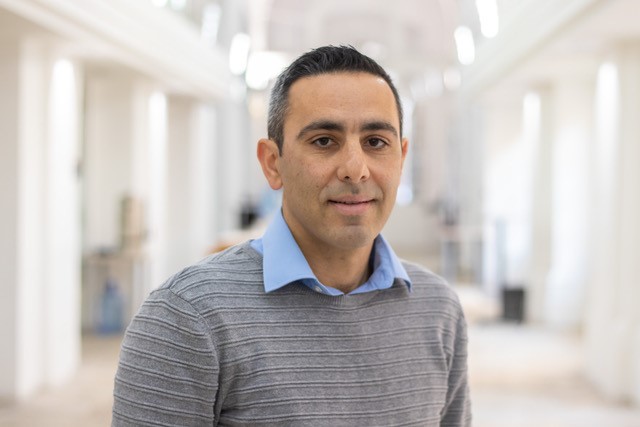
J. Michael Moore is an Instructional Associate Professor in the Department of Computer Science & Engineering at Texas A&M University, part of the College of Engineering. He holds a PhD in Computer Science from Texas A&M (2007) and has extensive teaching experience in courses like Human-Computer Interaction and Accessible Computing. His research focuses on HCI, software design, accessibility, and digital libraries, with notable work on design exploration and document triage systems. Education includes a B.S. in Biochemistry from Texas A&M (1991) and an M.S. in Computer Science from Texas State University (1997). He has authored over 20 peer-reviewed publications and has been recognized with awards such as the 2014 Mentoring Award and the Guseman Award (2002). Moore also contributes to professional service roles, including advising student organizations like DeAF and OSTEM. Teaching: Over 20 years of instruction in programming, HCI, and accessible computing. Research: Specializes in HCI, accessibility, and collaborative design tools. Service: Serves on committees for diversity initiatives and professional networks. His work integrates technical innovation with user-centered design principles, emphasizing accessibility and inclusive computing practices.
Monika Lanzenberger is an Assistant Professor at the Institute of Software Technology and Interactive Systems, Faculty of Informatics, Vienna University of Technology. Her research focuses on the intersection of Semantic Web technologies, ontology alignment, and information visualization. She has established herself as a notable researcher in visual ontology alignment through her development of the AlViz tool and related publications. Dr. Lanzenberger received her PhD from the Vienna University of Technology, Faculty of Informatics in 2003 and her MSc in Computer Science from the same institution in 2001. She completed a Post-Doc Fellowship (ERCIM) with the NTNU, Department of Computer and Information Science, Trondheim, Norway (February - October 2005) and with the Centre for IT Innovation (CITI) at the CRP Henri Tudor, Luxembourg (November 2005 - July 2006). Her primary research interests center around Semantic Web and Ontology-based Data, with specific focus on ontology alignment and visualization techniques. She has made significant contributions to the field through her work on visual ontology alignment tools, particularly the AlViz system. Her research also extends to Human Computer Interaction, Information Visualization techniques, feminist perspectives on computer science, and online learning and didactics. She has published extensively in top conferences and journals in these areas, with a particular emphasis on making ontology alignment more accessible through visualization. Dr. Lanzenberger has received recognition for her work, including an Outstanding Paper Award in 2002 for her research on the evaluation of navigation in hypertext learning systems. She is an active member of the scientific community, serving as a reviewer for international conferences and co-organizer of workshops in her field. As an educator, Dr. Lanzenberger has taught numerous courses including Information Visualization, Women in Science and Technology, Fundamentals of Methodical Working, and Semi-Automatic Information and Knowledge Systems. She has supervised multiple student projects, Bachelor's theses, and Master's theses, particularly in areas related to information visualization and semantic technologies. She is a member of several professional organizations including IEEE, ÖGAI, OCG, and GI, demonstrating her active engagement with the broader computer science community.
Simon Rowberry is a Lecturer in Publishing at University College London's Department of Information Studies since 2021, serving as Academic Director of Education. His research and teaching focus on the intersection of computing history and digital publishing over the past seven decades, with notable books including Four Shades of Gray: The Amazon Kindle Platform (2022) and The Early Development of Project Gutenberg, c.1970-2000 (2023). Formerly taught Digital Media & Publishing at the University of Stirling Research areas: history of ebooks, digital reading, pre-Web digital publishing, hypertext historiography, and shadow libraries His publications span the history of digital publishing technologies, from Ted Nelson's self-publishing practices to ACM Hypertext Conferences' pre-Web innovations. Recent work explores generative AI's implications for book digitization and the mutual influence of digital/physical literature. Dr. Rowberry's teaching includes modules like Publishing Studies , Researching Publishing , and Working in Publishing , emphasizing practical and theoretical aspects of contemporary publishing ecosystems.
Giorgio Melloni is an Associate Professor of Italian at the University of Delaware. He holds a PhD in Italian from Brown University (1998) and a Laurea (B.A.) in Classics from the University of Bologna, Italy. His research focuses on 19th- and 20th-century Italian literature, cinema, theater, and hypertextual literature. He has published in journals including Lingua e Stile , Strumenti critici , and Italica , and is currently writing a book on Federigo Tozzi, a notable 20th-century novelist and playwright. Before joining UD, Melloni taught at Brown University, Rhode Island School of Design, Roger Williams University, and SUNY New Paltz, where he earned tenure and promotion in 2005. He serves in the Department of Languages, Literatures & Cultures, contributing to both undergraduate and graduate programs. His work bridges traditional literary analysis with digital humanities methodologies. No specific grants or lab affiliations are noted in the provided materials. His teaching responsibilities include courses in Italian language, literature, and culture, though specific course titles are not listed here.
Simon Harper is a Professor of Human Computer Systems at the University of Manchester, leading the Web Ergonomics Lab. His research focuses on web accessibility, human-computer interaction, and healthcare technology, with a particular emphasis on disabilities like visual impairment. He has pioneered initiatives such as the Web4All conference series and serves on steering committees for major conferences like ACM HT and ASSETS. Harper has secured over £1.45M in grants since 2007 and holds an h-index of 20. His work spans medical technology innovations (e.g., HYPO-CHEAT hypoglycemia reduction system), accessibility evaluation methods (OPTIMAL-EM tool), and environmental monitoring via citizen science. He has received prestigious awards including the ACM Doug Engelbart Prize (2000) and Best Paper awards at W4A. Harper's academic contributions include over 140 publications, with key areas in diabetes management systems, Parkinson’s disease monitoring via smartphone data, and web accessibility evaluation methodologies. His teaching integrates cutting-edge research into professional computing education, emphasizing real-world industry practices. He is actively involved in standards bodies like the W3C Web Accessibility Initiative and serves on editorial boards for journals such as ACM Transactions on Accessible Computing. Research Groups: Information Management, Data Science Institute, Web Ergonomics Lab Professional Roles: Chair of ACM SIG Hypertext, RCUK EPSRC Inclusion Cluster Expert Lab Focus: Developing computational models for human behavior in digital environments
Pierre Senellart is a Professor in the Computer Science Department at the École Normale Supérieure (ENS), part of Université PSL. He holds academic appointments at CNRS, Inria Paris, and ENS, and leads the Valda team, an Inria project-team. He is deputy director of DI ENS and chairs the PRAIRIE Paris School of AI initiative. His roles include president of section 6 (Computer Science) of the National Committee for Scientific Research and vice-president of the Gilles Kahn PhD Award. Education: ENS alumnus with a PhD (2007) and Habilitation (2012) from Université Paris-Sud and Université Pierre et Marie Curie, respectively. His research focuses on Web data management, including crawling, information extraction, and uncertainty management. He has published extensively in top venues like SIGMOD, VLDB, and the Journal of the ACM. Awards include membership in the Institut Universitaire de France (2020–2025) and the ACM HyperText 2014 Best Paper Award. He has led major projects such as PRAIRIE (600k€) and Dissemin (124k€). Teaching includes courses on data wrangling, databases, and AI. Administrative roles span managing entrance exams, SWERC programming competitions, and steering committees for data management initiatives.