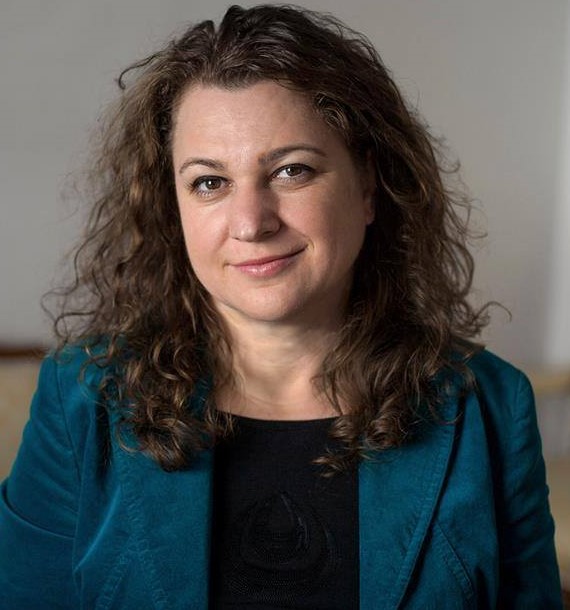
Dr. Samuel A. Moore is a Scholarly Communication Specialist at Cambridge University Library and Principal Investigator for the Materialising Open Research Practices in the Humanities and Social Sciences project, funded by Wellcome Trust, AHRC, and Research England Development Fund. He serves as an Affiliated Lecturer at Cambridge Digital Humanities and a College Research Associate at King’s College Cambridge. PhD in Digital Humanities from King’s College London His research bridges scholarly communication, metaresearch, and open science, with a focus on digital publishing , community-led open access , and academic governance . Recent work explores care ethics in publishing, the politics of author rights, and alternatives to corporate-controlled scholarly infrastructure. Key trends in his publications include open access policy critique, scholar-led publishing models, and interdisciplinary studies linking bioethics and academic labor. He co-founded the Radical Open Access Collective and advocates for progressive publishing ecosystems. Wellcome Trust grant AHRC grant Research England Development Fund grant Dr. Moore’s collaborations span libraries, research institutions, and global open science initiatives. His work emphasizes democratizing knowledge production and challenging commercial monopolies in academia.
Filippo Valguarnera serves as Senior Lecturer in Legal History at Uppsala University's Department of Law within the Faculty of Law. He previously held associate professor positions at Örebro University (2009-2013), University of Gothenburg (2013-2020), and Stockholm University (2020-2025) before joining Uppsala. Valguarnera earned his law degree summa cum laude in 2003 and completed his doctoral thesis in comparative law at the University of Florence in 2007. His academic journey included visiting fellowships at Uppsala University and New York University, establishing foundations for his transnational legal perspective. His research centers on comparative legal history with specialized focus on property rights, collective resources (commons), public right of way, and European private law frameworks. Valguarnera examines historical legal developments in Scandinavia and Italy, addressing contemporary issues like access to nature, wilderness protection, and the evolution of legal methodologies through interdisciplinary approaches that bridge historical analysis with modern jurisprudential challenges. Recent publications (2021-2024) reveal consistent thematic engagement with property rights and commons, including analyses of Dobbs v. Jackson abortion jurisprudence, historical status of domestic animals in Swedish law, constitutional overreach, and commons management challenges. His work demonstrates a distinctive comparative methodology that contextualizes Scandinavian legal traditions within broader European and global frameworks, particularly examining how historical legal concepts inform modern resource governance and human rights discourse.
Professor Catherine Barnard is a leading scholar in European & Employment Law at the Faculty of Law, University of Cambridge . She serves as Deputy Director of the research initiative UK in a Changing Europe , focusing on the socio-legal impacts of Brexit. Her work bridges EU law, labor rights, and competition policy, with a particular emphasis on migrant worker experiences and digital economy challenges. Education: M.A., University of Cambridge LL.M., European University Institute PhD., University of Cambridge Research Themes: Barnard's scholarship critically examines the intersection of EU legal frameworks and national labor policies, especially post-Brexit. Her recent projects include analyses of low-skilled labor migration, EU Settlement Scheme implementation, and digital platform worker protections. She contributes to debates on free movement doctrine, social dumping, and regulatory autonomy in a fragmented legal landscape. Public Engagement: As a prominent voice in post-Brexit legal discourse, she leads research teams studying migrant integration, tribunal accessibility, and welfare policy continuity. Her collaborative work with EU migrant communities highlights practical legal barriers in employment, healthcare, and debt resolution.
Lilla Farkas is an Associate Professor at Eötvös Loránd University's Institute of Political and International Studies. Her academic work centers on anti-discrimination law, racial equality, and Roma rights, combining legal scholarship with activism through her role as a former member of the Budapest Bar Association (1998-2022) and her leadership in non-discrimination policy advisory bodies. Education: LLM from King’s College, London; PhD in Law from the European University Institute (2020 thesis: 'Mobilising for racial equality in the EU: Roma rights and transnational justice') Notable affiliations: Fulbright scholar at UCLA (2018/19); Hungarian Equal Treatment Authority’s Advisory Board (2005-2011); European network of legal experts on non-discrimination (since 2005) Her research explores how legal frameworks can combat structural discrimination in areas like education and housing, with a focus on empirical enforcement challenges and transnational justice mechanisms. Recent publications analyze the role of strategic litigation, EU equality directives, and data collection practices in advancing Roma rights across Europe. Lilla's scientific contributions include co-authoring influential reports for the European Commission and developing equality indicators. She has also written extensively on the intersection of ethnicity, disability, and anti-discrimination law. Scientific awards: Fulbright scholarship (2018/19)
Aaron Sachs is a Professor in the History Department and American Studies Program at Cornell University , with a focus on Environmental History , American Cultural History , and Interdisciplinary Approaches . His work bridges Historical Geography , Creative Nonfiction , and Intellectual History . His recent publications explore climate change, environmental justice, and urban ecology through lenses like 19th-Century Landscape Traditions , Melville’s Environmental Relevance , and Dark Comedy as Climate Communication . He has received recognition including a National Book Critics Circle Award Finalist (2022) and Pulitzer Prize Nomination (2013). Co-editor, New Directions in Narrative History (Yale University Press) Founder of the Cornell Roundtable on Environmental Studies Topics (CREST) Faculty sponsor of HAW! (Historians Are Writers)
Dr. Erol Saglam is a social anthropologist working across two institutions: as a Research Fellow at the Institute for Global Prosperity , University College London (UKRI Horizon Europe Postdoctoral Fellowship), and as a Lecturer in Sociology at Istanbul Medeniyet University . With a PhD in Sociology from University College London and an MA from Boğaziçi University, his work bridges political anthropology, cultural studies, and gender analysis.
Prof. Dr. Solveig Richter is a University Professor at the Humanities Centre , University of Leipzig , holding the Heisenberg Professorship for International Relations and Transnational Politics . Previously, she was Junior Professor for International Conflict Management at the Willy Brandt School of Public Policy, University of Erfurt, and worked at the German Institute for International and Security Affairs (SWP) on EU foreign policy and Southeast Europe. Education: Political Science, History, Communication Science (Dresden & Strasbourg) PhD in International Relations at TU Dresden and IFSH Hamburg Research Focus: External democracy promotion in post-conflict societies, peacebuilding mechanisms, EU crisis management tools, and informal power networks. Her regional expertise spans Eastern Europe , Western Balkans , and Colombia . Publications Trends: Recent work examines social solidarity economies in peacebuilding, EU missions in Kosovo, environmental conflicts in Colombia, and Ukrainian post-war reconstruction. She explores intersections of governance, gender, and local ownership in hybrid peace processes. Scientific Contributions: Editor-in-Chief of the ZeFKo (2021-2023) Co-Editor of the Rowman and Littlefield Handbook on Peace and Conflict Studies Advising & Collaborations: Supervises 10+ doctoral candidates at Leipzig and Erfurt. Collaborates with researchers across Europe, India, and Colombia on peace missions, democratic transitions, and conflict analysis. Labs & Teams: Leads the Department of International Relations and Transnational Politics team, integrating global PhD researchers, visiting scholars, and external guests in projects spanning EU security, post-conflict Colombia, and Ukrainian crisis management.
Jessaca Leinaweaver is a Professor in the Department of Anthropology at Brown University, specializing in cultural anthropology and anthropological demography. Her work focuses on Peru and its diaspora, particularly transnational adoption, child migration, and kinship practices. Her research explores: informal child fostering in Andean communities aging and elder care in rural Peru kinship dynamics in transnational adoption state involvement in child welfare demographic implications of migration Major scientific awards include the Margaret Mead Award for her first book. Her fieldwork has been funded by Wenner-Gren Foundation, National Science Foundation, Fulbright IIE, Jacob K. Javits Fellowship, and SSHRC Canada. Recent publications analyze: microbiographic insights from Peruvian child welfare databases Andean community care systems from children's perspectives adoption-related disappearances in Spain transnational adoption's impact on racial identity digital ethnography using FamilySearch
Justin Piché, PhD is Full Professor in the Department of Criminology at the University of Ottawa and Director of the Carceral Geography (Col)laboratory. His research examines the material and symbolic dimensions of criminalization and punishment, focusing on carceral infrastructure, resistance to penality, and justice alternatives. Affiliations : Co-editor, Journal of Prisoners on Prisons (University of Ottawa Press) Founding member, Criminalization and Punishment Education Project (CPEP) Board member, Érudit Criminologie Member, Coalition Against the Proposed Prison (CAPP) Prison Pandemic Partnership (2020-2023) Grants : SSHRC Partnership Development Grant 890-2024-0011 (Disaster Prisons Partnership) SSHRC Insight Grant 435-2022-0585 (Locating Penitentiaries in Canada) SSHRC Insight Development Grant 430-2022-0037 (Escape Rooms and Prison Tourism) SSHRC Partnership Engage Grant 892-2023-0034 Research Trends (2023-2024): Critical analysis of carceral tourism, prison infrastructure impacts, and pandemic-era penal policies, emphasizing human rights and community-based alternatives. Awards : 2012 SSHRC Aurora Prize 2016 Young Researcher of the Year 2020 Media/Community Activities Award 2024 John Keith Irwin Distinguished Scholar Award Degrees : PhD in Sociology (Carleton University, 2012) MA in Criminology (University of Ottawa, 2006) B.Soc.Sci. in Criminology/Sociology (University of Ottawa, 2003-2004)
Professor Justine Nolan serves as the Director of the Australian Human Rights Institute and a Professor in the Faculty of Law and Justice at UNSW Sydney. With over 25 years of experience, she is an internationally recognized expert in modern slavery and human rights issues relating to business practices. Her career has included significant advisory roles with business, civil society, government, and the United Nations, and she has been a key driver of the Australian and global business and human rights movement. Professor Nolan holds an MPP from the University of California, Berkeley, and both an LLB(Hons) and BSc from the Australian National University. Her educational background provides a strong foundation for her interdisciplinary approach to human rights and business issues. Nolan's research focuses on the intersection of business and human rights, particularly supply chain responsibility for human rights and modern slavery. Her work is noted for both conceptual clarity and practical application, setting strategic paths to address significant business and human rights challenges. She has led major research projects, including one on 'transformative business practices' funded by the Laudes Foundation, which identifies and tests replicable business practices for just transitions in global supply chains. Her influential publications include the 2019 co-authored book Addressing Modern Slavery , The International Law of Human Rights (OUP, 2017), and Business and Human Rights: From Principles to Practice (Routledge, 2016). Professor Nolan's scholarly output reveals consistent focus on modern slavery legislation, supply chain transparency, human rights due diligence, and corporate accountability. Her work demonstrates a progression from theoretical frameworks to practical applications, with increasing emphasis on remediation mechanisms and regulatory effectiveness in recent years. UNSW Arc Postgraduate Outstanding Research Supervisor Award (2020) Academic of the Year, Australian Law Awards (2019) UNSW Vice Chancellor's Award for Teaching Excellence (2018) UNSW Plus Alliance Fellow (2019-2020) Professor Nolan has supervised numerous doctoral students on topics including human rights protection in manufacturing supply chains, extraterritorial processing of refugees, the lithium extractive sector and corporate human rights compliance, and remedying corporate human rights violations. She has secured substantial research funding, including grants from the Laudes Foundation (EUR238,033), Freedom Fund (US$72,727), and Australian Government programs. Her teaching portfolio includes International Human Rights Law and Advocacy, Business and Human Rights, and Human Rights Law in Practice. As Director of the Australian Human Rights Institute, Nolan leads a major research center focused on business and human rights issues. She has held significant leadership roles including Deputy Director of the Australian Human Rights Centre (2006-2017) and Associate Dean Academic at UNSW Law (2016-2019). She continues to influence policy through appointments to the Australian Government's Modern Slavery Expert Advisory Group (2020, reappointed 2024) and other expert panels.
Galia Chimiak is Professor at the Institute of Philosophy and Sociology of the Polish Academy of Sciences (IFiS PAN) since December 2017, with previous appointment as Adjunct since 2005. She serves as Co-Editor-in-Chief of Voluntas: International Journal of Voluntary and Nonprofit Organizations (2022-present) and holds editorial board positions at Trzeci sektor and Voluntas . Her international affiliations include Fulbright Senior Scholar at University of Nebraska-Lincoln (2024-25) and active collaboration with Development Studies Association Ireland. Her research interests focus on development sociology and civil society sociology, with particular expertise in NGO studies, humanitarianism, public diplomacy, and migration. Her scholarly work examines the transformation of civil society in post-communist contexts, Polish development cooperation, diaspora organizations, and the impact of authoritarian trends on nonprofit sectors. She has pioneered research on informal social activism and reverse innovation in development contexts. Analysis of her recent publications reveals consistent thematic focus on civil society resilience amid democratic challenges, particularly examining Poland's transition from aid recipient to development actor. Her work demonstrates strong interdisciplinary connections between political sociology, development studies, and migration research, with increasing emphasis on Ukraine crisis responses and civil society diplomacy since 2022. Highly Commended paper in the 2017 Emerald Literati Network Awards for Excellence Fulbright Senior Award 2024-25 Extensive editorial service for major journals including Voluntas , Polish Sociological Review , and International Journal of Sociology and Social Policy Professor Chimiak actively mentors through her role as Co-Editor-in-Chief of Voluntas and frequent academic workshops on publishing. She has secured research funding from The Swedish Foundation for Humanities and Social Sciences and Poland's Ministry of Family, Labour and Social Policy. Her scholarly network spans Ireland (Trinity College Dublin, University College Dublin), Sweden (Södertörn University), and the United States (University of Nebraska-Lincoln). She leads the Civil Society Study Group within Development Studies Association Ireland and has organized numerous international conferences addressing civil society responses to the Ukraine war, democratic challenges, and development cooperation. Her current Fulbright research examines Polish grassroots humanitarian responses to the Ukraine crisis.
Charles M. North is an Associate Professor in the Department of Economics at Baylor University, where he has been a faculty member since earning his PhD from the University of Texas. Prior to academia, he practiced law in Dallas after graduating from Duke University School of Law. His research uniquely bridges Economics of Religion , Law & Economics , and Applied Microeconomics , with a focus on experimental economics applied to criminal justice, religious markets, and legal systems. He has published extensively in journals like the Journal of Economic Behavior and Organization and Journal of Money, Credit & Banking , exploring topics such as religion’s impact on the rule of law and experimental studies of jury behavior. Education: PhD in Economics (University of Texas, 1999) JD in Law (Duke University, 1990) MBA in Business (Baylor University, 1987) BA in Business Administration (Baylor University, 1986) Teaching: Courses include Introductory Economics, Game Theory, and Law & Economics Director of the Baylor Business Fellows program Research Trends: Recent work focuses on experimental economics in criminal justice Longstanding interest in religion-economic-legal intersections Studies on jury bias, plea bargaining, and religious freedom Personal Interests: Founder of Baylor’s Aloha Fridays tradition Fan of Everton Football Club (UK) Created Ted Lasso filming location tours in London Contact: charles_north@baylor.edu
Şener Aktürk is a Professor at the Department of International Relations, Koç University. His research focuses on comparative politics of ethnicity, religion, nationalism, and identity, with regional expertise in Germany, Russia, Turkey, Europe, and the Middle East. He holds a PhD from the University of California, Berkeley, and has been a postdoctoral fellow at Harvard University's Davis Center for Russian and Eurasian Studies. Education: PhD (UC Berkeley, 2009), Master’s (University of Chicago, 2003) Research Areas: Geopolitical identities, ethnic regimes, grand strategy, and European Muslim representation. His work includes a comparative analysis of 17 countries and a theory of ethnic regimes (monoethnic/antiethnic/multiethnic). Scientific Awards: Joseph Rothschild Prize (2013), TÜBA Outstanding Young Scientists (2015), BAGEP Award (2016), TÜBİTAK Incentive Award (2019), and TÜBA Associate Membership (2023). Recent Publications: Analyzed the Arab Spring as a world-historical event (2023), comparative analysis of circumcision bans in Europe (2018), and institutionalization of ethnocultural diversity (2021). His 2012 book Regimes of Ethnicity and Nationhood in Germany, Russia, and Turkey remains a seminal work.
Dr Graham Harrison serves as Associate Professor of International Political Economy in Durham University's School of Government and International Affairs, joining the institution in 2019 after establishing a distinguished 25-year academic career focused on African political economy and development. His research critically examines neoliberal governance structures, democratic transitions, and the representation of Africa in Western public discourse through extensive fieldwork across Mozambique, Tanzania, Uganda, and Rwanda. Education: PhD (1999) specializing in democratisation processes in rural Mozambique Harrison's research trajectory reveals evolving yet interconnected themes: early work analyzed grassroots democratisation in Mozambique ( The Politics of Democratisation in Rural Mozambique , 2000), followed by critical examinations of World Bank interventions ( The World Bank and Africa , 2004; Neoliberal Africa , 2010). His mid-career shifted to cultural analysis of Africa's representation in British identity ( The African Presence , 2013), while recent scholarship investigates normative tensions in Rwandan development models. His teaching emphasizes global political economy, post-colonial states, and the political economy of poverty. Analysis of his 2016-2019 publications demonstrates sustained critique of authoritarian neoliberalism's impact on African capitalist transformation, alongside investigations into UK development policy under austerity and Rwanda's contested developmental state model. These works consistently challenge technocratic development paradigms by foregrounding political power dynamics and historical context. Scientific Awards: No specific awards or fellowships documented in available materials While the text confirms Harrison's 25 years of lecturing experience and development of new teaching modules at Durham, it provides no explicit details regarding doctoral students or grant funding. His extensive multi-country fieldwork, however, strongly indicates successful research project leadership and funding acquisition throughout his career. No laboratories, research centers, or collaborative teams are referenced in the provided institutional profile.
Jessica Ordaz is an Assistant Professor of Ethnic Studies at the University of Colorado Boulder, specializing in Chicanx/Latinx history, US-Mexico border studies, and carceral state analysis. Her work bridges migration politics, labor history, and food justice. Ph.D. in American History (UC Davis, 2017) Focus on radical social movements and transnational solidarity networks Her research examines migrant detention regimes and BIPOC veganism. She authored The Shadow of El Centro (2021) and contributes to critical debates on racial capitalism and border abolitionism. Recent publications analyze: HIV/AIDS in detention centers Transborder labor organizing Latinx veganism's decolonial dimensions Ordaz previously held the Andrew W. Mellon Sawyer Seminar fellowship at the University of Washington, focusing on comparative racial capitalism.