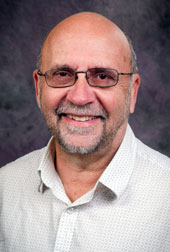
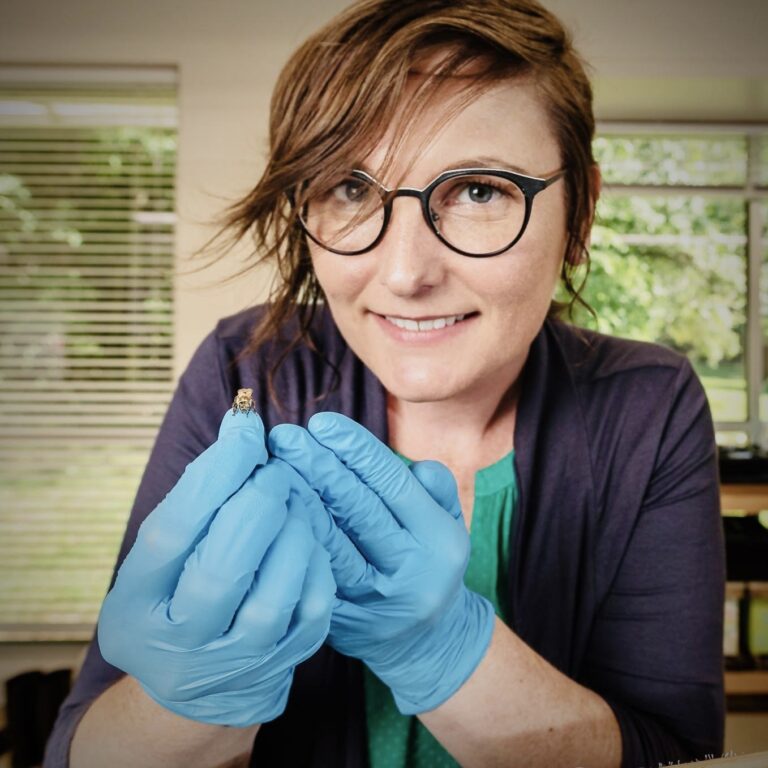
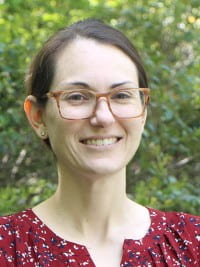
Yuanpu Peter Di is a Professor at the University of Pittsburgh in the Department of Environmental and Occupational Health. His research explores environmental exposure impacts on pulmonary host defense, chronic disease pathogenesis, and antimicrobial resistance (AMR) mechanisms. Research Interests : Elucidating SPLUNC1/BPIFA1's role in lung immunity and disease Investigating inflammation-associated lung tumorigenesis and K-ras mutation dynamics Developing novel antimicrobial peptides (e.g., PAX, WLBU2) to combat multidrug-resistant infections Studying lung stem cell biology and epithelial repair mechanisms Publications demonstrate expertise in: Environmental toxicant effects on respiratory systems Antimicrobial peptide-membrane interactions Host-pathogen dynamics in bacterial/viral coinfections Translational applications of urinary bladder matrix Genomic approaches to lung disease mechanisms His work combines in vitro and in vivo models with advanced bioinformatics and molecular biology techniques.
Dr. Richard Wubbolts is an Assistant Professor at Utrecht University's Faculty of Veterinary Medicine, Department of Biomolecular Health Sciences. He leads research in Cell Biology, Metabolism & Cancer and manages the Center for Cell Imaging (CCI). His academic journey includes a PhD from Leiden University (1993-1999) and postdoctoral work at the Netherlands Cancer Institute and UMC Utrecht. Research interests focus on: Molecular mechanisms of antigen presentation via MHC class II Dynamics of extracellular vesicles in immune regulation Fluorescence microscopy applications in cellular biology Host-pathogen interactions and viral entry mechanisms Lipid droplet formation and intracellular trafficking His publications primarily explore virology (35%), immunology (30%), and cellular trafficking (25%), with emerging work in organoid models and mucosal immunity. Recent articles demonstrate increased focus on SARS-CoV-2 mechanisms and extracellular vesicle biology. Scientific Awards: NWO-VENI scholarship (2003-2006) for live imaging of protein sorting As manager of the Center for Cell Imaging, he coordinates advanced microscopy resources and trains researchers in fluorescence techniques. Current work involves collaborative projects on extracellular vesicle functions in infection and immunity.
Gerald Reeck is a Professor in the Department of Biochemistry and Molecular Biophysics at Kansas State University, where he serves as an undergraduate advisor. With a research career spanning over five decades, he has established himself as a leading expert in insect biochemistry and plant-insect interactions. Education: B.A. 1967, Seattle Pacific College Ph.D. 1971, University of Washington Dr. Reeck's research focuses on the biochemistry and molecular genetics of proteins involved in insect-plant interactions, with particular emphasis on aphid saliva proteins and their role in mediating these complex relationships. His work on Armet (MANF) proteins spans both human and insect contexts, providing valuable comparative insights. Additionally, he investigates cereal proteins and their inhibitors, contributing to our understanding of plant defense mechanisms against insect pests. Analysis of his recent publications reveals a consistent focus on molecular mechanisms of insect-plant interactions, particularly through the study of salivary proteins from aphids and other insect pests. His work combines proteomics, transcriptomics, and structural biology approaches to identify and characterize effector proteins that insects use to manipulate plant physiology. The research shows a progression from basic characterization of insect proteins to more sophisticated molecular analyses of host-pathogen interactions and potential applications in agricultural protection. Throughout his career, Dr. Reeck has maintained an active research program resulting in numerous publications across multiple decades, demonstrating sustained contribution to his field of study.
Natacha Bodenhausen is a researcher at the University of Chicago specializing in plant-microbe interactions with a focus on soil microbiology and agricultural applications. Her work spans molecular techniques to field studies, examining how microbial communities impact plant health and crop productivity. Her research interests center on plant-microbe symbiosis , particularly mycorrhizal fungi and root microbiome dynamics. She develops and applies molecular techniques like qPCR for microbial quantification and investigates how agricultural practices affect soil health and microbial diversity. Her work bridges fundamental microbial ecology with practical agricultural applications, focusing on sustainable farming systems and crop resilience. Analysis of her publication trends reveals a consistent focus on soil microbiome analysis and plant-microbe interactions , with increasing emphasis on agricultural applications since 2020. Her recent work (2023-2025) shows strong interest in predictive modeling of crop responses to microbial inoculants and quantification methods for mycorrhizal colonization across different crop species. Her collaborative network includes prominent researchers in soil microbiology, particularly MGA van der Heijden and Joy Bergelson, with whom she has published multiple high-impact papers in journals like Nature Microbiology . Bodenhausen's laboratory work focuses on developing molecular techniques for microbial quantification while maintaining strong connections to agricultural field studies. Her recent publications indicate active involvement in European long-term field experiments examining sustainable agricultural practices and their impact on soil ecosystems.
Kasie Raymann serves as an Assistant Professor in the Department of Plant and Microbial Biology at North Carolina State University, with additional affiliations as an Affiliate Member of the Global One Health Academy and Faculty Member of the Genetics and Genomics Academy. Her educational credentials include: BSc in Biology from Indiana University (2011) PhD in Microbiology from Pasteur Institute (2014) Dr. Raymann's research centers on microbial ecology and evolution , with specialized expertise in honey bee gut microbiome dynamics, opportunistic bacterial pathogens, experimental evolution frameworks, and metagenomic analyses. Her laboratory integrates in vivo , in vitro , and in silico methodologies to investigate fundamental questions about bacterial lifestyle evolution and host-microbe symbiosis. Current projects examine how protist predation drives virulence evolution in Serratia marcescens , environmental filtering mechanisms in microbial community assembly, and anthropogenic impacts on honey bee reproductive health. Analysis of her 15 most recent publications reveals dominant themes in honey bee microbiome resilience , bacterial speciation mechanisms , and anthropogenic chemical impacts . Her work consistently bridges microbial genetics with ecological field studies, demonstrating how strain-level dynamics influence colony health outcomes. Key methodological innovations include targeted deep sequencing for microbiome analysis and experimental evolution systems for tracking pathogen emergence. No scientific awards are documented in the available information. Dr. Raymann leads an active research group investigating host-microbe interactions through multidisciplinary approaches. Her collaborative project with the Tarpy Lab examines how beekeeper-applied antibiotics and acaricides affect queen and drone reproductive physiology, microbiome composition, and chemical accumulation in reproductive tissues. While specific grant details aren't provided, this work aims to develop clinical services for real-time beekeeper assessment of reproductive health. Her laboratory maintains a dual focus on fundamental microbial evolutionary processes and applied apicultural challenges, utilizing the honey bee as a tractable model for understanding host-associated microbiome assembly, stability, and functional consequences across environmental gradients.
Balázs Brankovics is a Researcher at Wageningen University & Research , focusing on plant pathogens and genomics within the Biointeractions and Plant Health department. His work spans fungal and bacterial pathogens like Fusarium , Pectobacterium , and Xanthomonas , emphasizing molecular detection, mitogenome evolution, and pangenomics. Research Themes : Phylogenetics, pathogenicity mechanisms, diagnostic assay development, and microbial evolution. Key Collaborations : Active in interdisciplinary projects with teams studying plant diseases and pathogenomics. Methodologies : Utilizes pangenome analysis, TaqMan assays, and mitochondrial genome sequencing.
Juergen Kroymann is a Senior Scientist at CNRS, affiliated with the Laboratoire Écologie, Société et Évolution (IDEEV) at Universite Paris-Saclay. His research focuses on evolutionary genetics, plant-insect interactions, and specialized plant metabolism. University: Universite Paris-Saclay Email: juergen.kroymann@universite-paris-saclay.fr Kroymann studies the function and evolution of plant secondary metabolites, particularly glucosinolates in Brassicales, and their roles in host plant defenses against insects. His work explores how genetic variation in metabolic pathways drives ecological adaptation and coevolution with herbivores. His recent publications highlight research on gene conversion, quantitative trait loci, methylthioalkylmalate synthases, and plant defense mechanisms against nematodes and Lepidoptera. Keywords include evolutionary genetics, chemical ecology, and plant-insect coadaptation. Scientific Awards:
Carolyn Elya is an Assistant Professor at the Department of Molecular and Cellular Biology , Harvard University , focusing on parasitic behavioral manipulation and host-pathogen interactions. Her lab investigates the Entomophthora muscae -fruit fly system to uncover molecular and neural mechanisms behind 'zombie' behavior in insects. Developing transgenic techniques for fungal pathogen research Integrating molecular biology, genetics, and neuroscience Research Focus: The lab addresses four key questions: (1) Identifying effector molecules used by E. muscae ; (2) Determining fungal cell contributions to host manipulation; (3) Decoding circadian death timing; (4) Analyzing pathogen impacts on host circadian rhythms. Publication Trends: Recent work spans parasitology , neuroscience , and genetics , with studies on fungal genomics, neural circuits, and viral interactions. Articles frequently explore molecular mechanisms of pathogenesis and evolutionary implications of host manipulation. Awards & Collaborations: No explicit awards listed. Collaborates with institutions like University of Copenhagen and University of Bologna on fungal behavior and neuroimmunology projects. Labs & Teams: Leads the Elya Lab at Harvard's Biological Labs, developing experimental tools for parasitic systems. Partners with researchers in behavioral genetics and fungal ecology.
Eyðfinn Magnussen serves as an Associate Professor in Biology within the Faculty of Science and Technology at the University of the Faroe Islands. With over three decades of academic service, he has established himself as a leading researcher on Faroese wildlife ecology and population genetics, focusing particularly on small mammals endemic to the archipelago. His educational background includes an MSc from the University of Copenhagen (1993) with thesis research on cod growth differences between the Faroe Bank and Faroe Plateau. His academic career progressed from Assistant Professor (2000-2013) to his current Associate Professor position, with additional administrative experience as Vice Dean of the Faculty of Science and Technology (2001-2007). Magnussen's research spans several interconnected domains: small mammal ecology (particularly mountain hares, brown rats, and house mice), population genetics of island species, fish ecology on the Faroe Bank, and climate change impacts on marine ecosystems. His work combines field monitoring with genetic analysis to understand evolutionary adaptation in isolated island populations. The Faroese house sparrow and mountain hare represent two of his most extensively studied species, with long-term population monitoring programs. His publication record demonstrates remarkable breadth and consistency, with 231 total publications including 25 peer-reviewed articles, 25 reports, 22 cruise reports, and 81 popular science articles. Recent work (2021-2025) increasingly focuses on interdisciplinary approaches, connecting ecological research with sociocultural dimensions of resource management in the Faroe Islands. His current projects include studies on Toxoplasma gondii prevalence, Faroese mountain hare populations, and landscape valuation through participatory mapping. Magnussen has supervised one PhD, three MSc, and approximately 27 BSc students, demonstrating strong commitment to academic mentorship. His leadership extends to editorial roles with the Faroese Scientific Journal and participation in Nordic research networks including NorMER (Nordic Centre for Research on Marine Ecosystems and Resources under Climate Change). Through his radio broadcasts, television appearances, and popular science writing, Magnussen actively engages with the public on wildlife conservation topics. His 'Haruveiðan' series of reports on hare hunting since 2012 exemplifies his commitment to translating scientific findings into practical wildlife management guidance for local communities.
Sarah Wong is a **Researcher** at the Pasteur Institute in Paris, France, affiliated with the Department of Mycology and the Immunobiology of Aspergillus team. Her work focuses on fungal pathogens, particularly Aspergillus fumigatus , A. flavus , and Cryptococcus neoformans , investigating their interactions with the human immune system. Her research spans topics like: Cell wall organization and immune recognition Complement system activation and regulation Proteomic analysis of host-pathogen interactions Development of vaccine platforms using fungal vesicles The 15 most recent articles highlight her contributions to understanding: Species-specific immune responses in Aspergillus Complement protein dynamics in infection Hydrogel-based antifungal therapies Transcriptional mechanisms in drug resistance Her collaborations include leading researchers like Dr. Vishu Kumar Aimanianda and Professor Jean-Paul Latgé. While no formal awards are documented in the provided texts, her work has been cited in high-impact journals including Nature Communications , PNAS , and PLoS Pathogens .
Eric Pearlman is a Professor at the University of California, Irvine (UCI) School of Medicine, affiliated with the Departments of Physiology & Biophysics and Ophthalmology & Visual Sciences . He serves as Director of the Institute for Immunology. Research Focus: Dr. Pearlman investigates immune responses in ocular onchocerciasis (river blindness), emphasizing the role of Wolbachia bacteria and Toll-like receptor 4 (TLR4) in pathogenesis. His work spans immunology, parasitology, and ophthalmology. Scientific Contributions: Key publications include studies on: Wolbachia- Onchocerca volvulus interactions (2002) TLR4/MyD88 signaling in keratitis (2006) Multi-epitope vaccine design (2019)
Professor Madhava Meegaskumbura is a leading researcher at Guangxi University 's Guangxi State Key Lab in Forest Ecology & Conservation and College of Forestry. Specializing in Eco-Evolutionary Genetics , his work spans amphibians, freshwater fish, cavefish, and microbiome-disease interactions. He previously served as Full Professor & Principal Investigator in the Department of Molecular Biology at the University of Peradeniya (Sri Lanka) and was a Ziff Environmental Postdoctoral Fellow at Harvard University 's Museum of Comparative Zoology. B.Sc. in Zoology, University of Peradeniya Ph.D. in Biology, Boston University Ziff Environmental Postdoctoral Fellowship, Harvard University His research focuses on adaptive diversification mechanisms, with key projects examining genetic introgression in cavefish radiation , microbiome-pathogen dynamics , and climate-driven amphibian declines . His work integrates molecular tools with ecological and comparative genomic approaches, particularly in South Asian and Chinese biodiversity hotspots. Recent publications highlight his contributions to understanding cavefish diversification in karstic landscapes, microbial community functions in amphibians, and thermal stress responses in aquaculture species. These studies span disciplines like Evolutionary Biology, Microbial Ecology, and Conservation Genetics. Ziff Environmental Postdoctoral Fellowship He serves as Co-Chair for the Amphibian Specialist Group (ASG/IUCN/SSC) and is on the editorial boards of Communications Biology and BMC Ecology and Evolution . His collaborations between China, India, and Sri Lanka advance transboundary conservation science.
Hannes Schuler is an Assistant Professor in the Faculty of Science and Technology at the Free University of Bozen-Bolzano since October 2018. His academic background includes doctoral studies at Universität für Bodenkultur Wien, followed by postdoctoral positions at multiple institutions including University of Notre Dame, Universität für Bodenkultur, and Laimburg Research Centre. His research spans entomology, evolutionary biology, and microbial ecology with a focus on insect-microbe interactions. Schuler investigates Wolbachia symbiosis and its role in speciation processes, insect microbiome dynamics across different environments and life stages, population genetics of invasive species, and vector-pathogen relationships in agricultural pests. His work frequently examines fruit flies (particularly Rhagoletis species), psyllids, and other economically important insects. Analysis of his recent publications (2021-2025) reveals a progression from fundamental research on Wolbachia dynamics and speciation mechanisms toward applied studies of invasive species management, microbiome engineering, and molecular diagnostics for pest control. His work increasingly integrates multi-omics approaches with ecological field studies to understand host-symbiont-pathogen interactions at multiple scales. Schuler has secured significant funding from the Austrian Science Fund for projects on Wolbachia transmission and speciation. He maintains active collaborations with researchers across Europe and North America, particularly in the fields of entomology and microbial ecology. He is a member of several professional societies including the Italian Society of Entomology, German Society of General and Applied Entomology, Entomological Society of America, Gregor Mendel Society Vienna, and Network of Biological Systematics Austria, demonstrating his active engagement with the international entomological community.
Marie-Anne Van Sluys is a Full Professor in the Institute of Biosciences at the University of São Paulo , Brazil. She holds a PhD in Genetics and Microbiology from Université Paris-Sud (France) and a BSc in Biological Sciences from Universidade do Estado do Rio de Janeiro (Brazil). Her research focuses on plant-microbe interactions , genomics , and transposable elements , with applications in sugarcane and grass crops. Her work explores genomic instability in polyploid plants, plant defense mechanisms against pathogens, and evolutionary genomics of plant-microbe systems. She has contributed to understanding gene duplication dynamics and phytohormone production in plant pathogens. Through the GaTE Lab , she investigates transposable elements as drivers of genomic diversity , collaborating internationally on projects like the Earth BioGenome Project . Her recent publications highlight advancements in grass comparative genomics and sugarcane microbiome research.
Pavol Bardy is a Postdoctoral Research Associate at the University of York, affiliated with the York Structural Biology Laboratory and the Department of Biology. He collaborates closely with Prof. Fred Antson and Dr. Paul Fogg, focusing on structural biology research related to viral genome packaging and horizontal gene transfer mechanisms. PhD in Molecular and Cellular Biology and Genetics from Masaryk University (2021) Former research in bacteriophage gene engineering and structural studies under Assoc. Prof. Roman Pantucek and Dr. Pavel Plevka His research explores nucleic acid interactions with viral packaging machinery, emphasizing under-studied viral families and their ecological roles. This work has implications for understanding viral evolution, pathogenicity islands, and nanopore-based DNA sequencing technologies. Recent publications highlight his contributions to genome delivery mechanisms (e.g., penton blooming in microviruses), CRISPR-Cas10-assisted phage engineering, and capsid-mediated DNA mobilization in gut microbiomes. These studies span structural biology, microbiology, and molecular biology. Pavol's work involves interdisciplinary collaborations and structural analysis techniques, including cryogenic electron tomography. His projects aim to uncover conserved viral mechanisms and apply them to biotechnological innovations.