معرفی
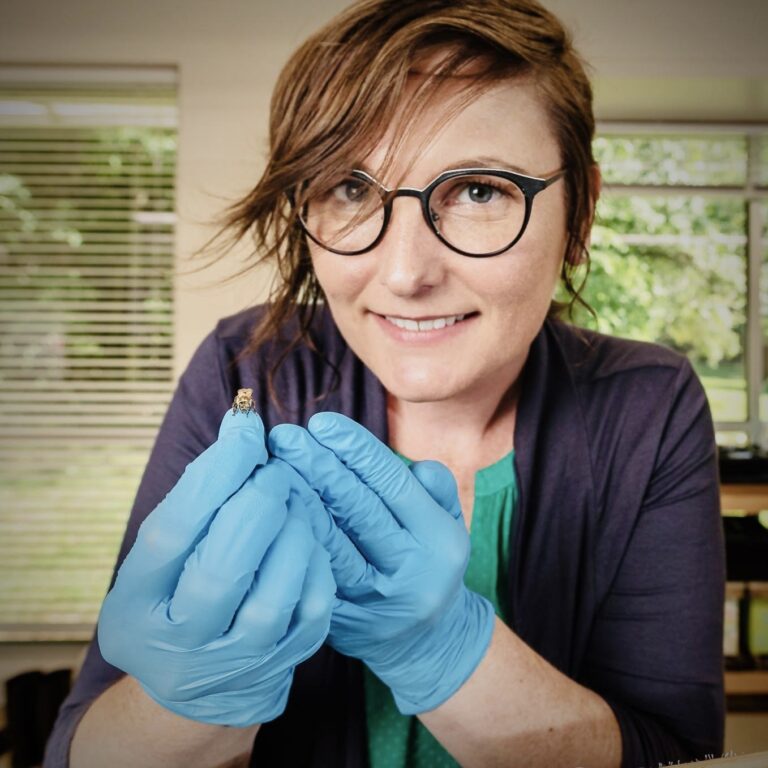
Kasie Raymann serves as an Assistant Professor in the Department of Plant and Microbial Biology at North Carolina State University, with additional affiliations as an Affiliate Member of the Global One Health Academy and Faculty Member of the Genetics and Genomics Academy.
Her educational credentials include:
- BSc in Biology from Indiana University (2011)
- PhD in Microbiology from Pasteur Institute (2014)
Dr. Raymann's research centers on microbial ecology and evolution, with specialized expertise in honey bee gut microbiome dynamics, opportunistic bacterial pathogens, experimental evolution frameworks, and metagenomic analyses. Her laboratory integrates in vivo, in vitro, and in silico methodologies to investigate fundamental questions about bacterial lifestyle evolution and host-microbe symbiosis. Current projects examine how protist predation drives virulence evolution in Serratia marcescens, environmental filtering mechanisms in microbial community assembly, and anthropogenic impacts on honey bee reproductive health.
Analysis of her 15 most recent publications reveals dominant themes in honey bee microbiome resilience, bacterial speciation mechanisms, and anthropogenic chemical impacts. Her work consistently bridges microbial genetics with ecological field studies, demonstrating how strain-level dynamics influence colony health outcomes. Key methodological innovations include targeted deep sequencing for microbiome analysis and experimental evolution systems for tracking pathogen emergence.
No scientific awards are documented in the available information.
Dr. Raymann leads an active research group investigating host-microbe interactions through multidisciplinary approaches. Her collaborative project with the Tarpy Lab examines how beekeeper-applied antibiotics and acaricides affect queen and drone reproductive physiology, microbiome composition, and chemical accumulation in reproductive tissues. While specific grant details aren't provided, this work aims to develop clinical services for real-time beekeeper assessment of reproductive health.
Her laboratory maintains a dual focus on fundamental microbial evolutionary processes and applied apicultural challenges, utilizing the honey bee as a tractable model for understanding host-associated microbiome assembly, stability, and functional consequences across environmental gradients.