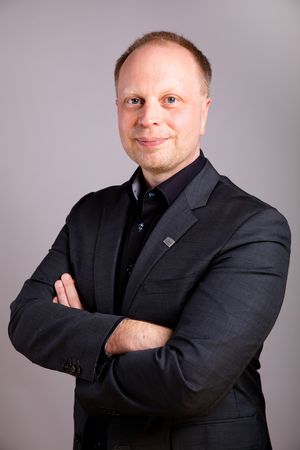
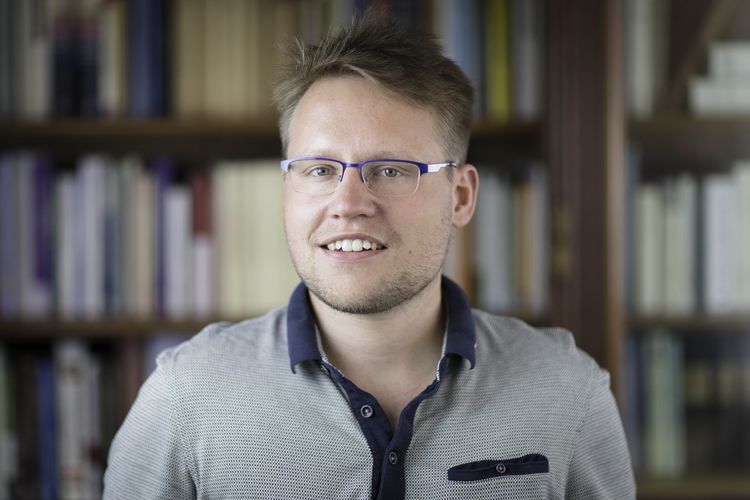
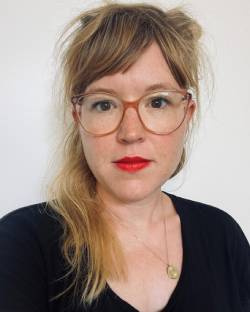
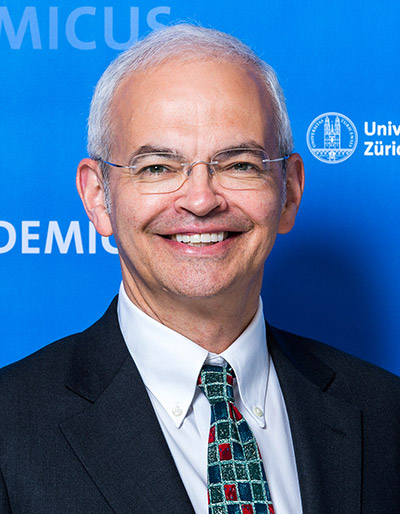
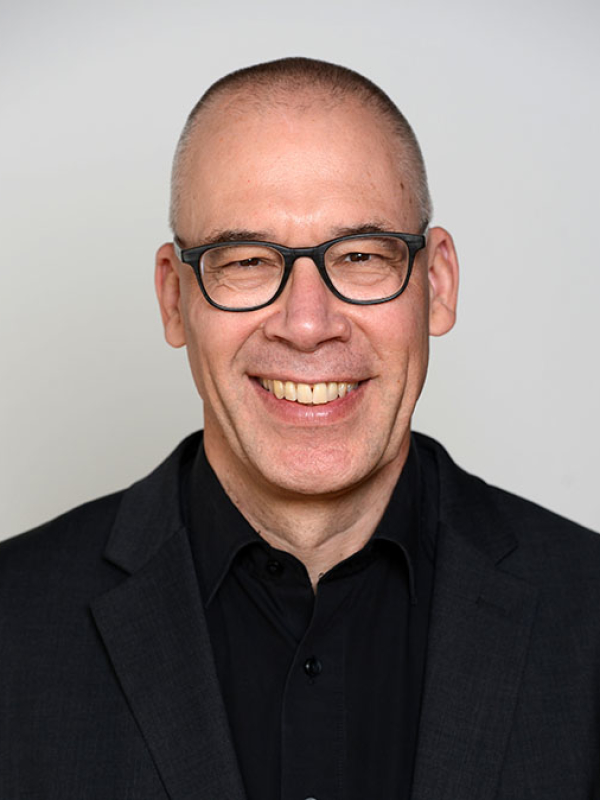
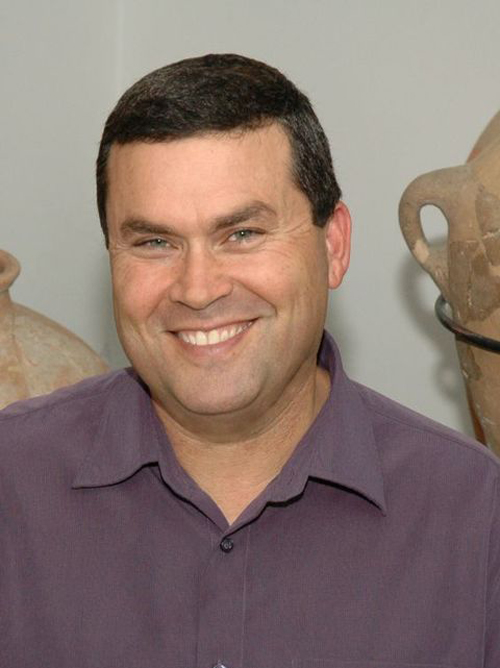
Prof. Dr. Benedikt Hensel is a full Professor for Old Testament at the University of Oldenburg , where he serves as Dean of the Faculty of Humanities and Social Sciences since 2025. He co-directs the Institute for Protestant Theology and Religious Education and leads the Digital Biblical Archaeology Oldenburg initiative. Research Focus : Interdisciplinary study of Israelite and ancient Jewish history, digital cultural heritage technologies in Levantine archaeology, and theological interpretation of Hebrew Bible texts. Projects : Hazor Digital (since 2024), Resettlement of Ruins and Memories (Gerda Henkel-funded), and Transjordan and Southern Levant Archaeology (since 2019). His recent publications analyze: Iron Age cultural memory formation in the Southern Levant Edomite-Israelite relations through archaeological and textual evidence Digital reconstruction of biblical sites like Hazor Yahwistic diversity in Persian period Judah and Samaria Theological implications of migration narratives in the Hebrew Bible Scientific Awards : 2018 Armin Schmitt Prize for Biblical Text Research Student Supervision : Currently advising PhD candidates on topics ranging from Idumean trade networks to post-exilic identity formation in biblical texts.
Swiss Federal Institute of Technology in LausanneSwitzerland
Yuval Noah Harari is a historian, philosopher, and lecturer at the Department of History at the Hebrew University of Jerusalem. Born in Haifa, Israel in 1976, he received his PhD from the University of Oxford in 2002. He is best known as the author of the internationally acclaimed books Sapiens: A Brief History of Humankind (2014), Homo Deus: A Brief History of Tomorrow (2016), 21 Lessons for the 21st Century (2018), Nexus: A Brief History of Information Networks from the Stone Age to Artificial Intelligence , and the Unstoppable Us children's series. Harari's research focuses on macro-historical questions including the relationship between history and biology, the essential difference between Homo sapiens and other animals, justice in history, historical directionality, human happiness throughout history, and the ethical questions raised by science and technology in the 21st century. His work bridges history, biology, philosophy, and economics, taking both macro and micro perspectives to understand not only what happened and why, but also how it felt for individuals. His books have sold over 45 million copies in 65 languages, with Sapiens alone selling 25 million copies since its publication. He is considered one of the world's most influential public intellectuals today. Harari has given keynote speeches at major international forums including the World Economic Forum in Davos and has presented as a digital avatar in a TED talk. Sapiens spent 96 consecutive weeks in the top 3 of the Sunday Times bestseller list Co-founded Sapienship, an international social impact company focused on education and storytelling, with his husband Itzik Yahav Regularly speaks at major international events on topics of technology, history, and the future of humanity Harari's recent work focuses on the challenges of the information age, particularly the crisis of truth and trust in an era of disinformation and artificial intelligence. He explores how humans can navigate the complex ethical questions raised by emerging technologies while maintaining democratic values and human dignity.
Ruth Ebach is a full professor of historical-philological studies of the Hebrew Bible at the Université de Lausanne's Faculty of Theology and Religious Studies since August 2021. Previously, she worked as a research assistant at Eberhard Karls Universität Tübingen (2013-2021) and received a prestigious fellowship from Käte-Hamburger-Kolleg in 2019-2020. Specializes in Old Testament/Hebrew Bible exegesis Chair of the SBL-Steering Committee "The Book of the Twelve Prophets" Chief Editor of the journal Hebrew Bible and Ancient Israel (HeBAI) Active in multiple editorial committees and academic societies Research Focus: Combines rigorous historical-philological analysis with interdisciplinary approaches to explore identity construction in biblical texts, prophetic literature, Deuteronomy/Pentateuch studies, and ancient Near Eastern divination practices. Her habilitation thesis addressed handling false/unfulfilled prophecy in the Old Testament. Notable Publications: Includes monographs on Deuteronomic identity construction (BZAW 471, 2014) and prophetic uncertainty (FAT 165, 2023). Current research examines the Book of the Twelve Prophets and intercultural biblical interpretation. Scientific Recognition: Käte-Hamburger-Kolleg fellowship Vice-Director of Schweizer Theologische Gesellschaft Section 4 delegate in Swiss Academy of Humanities and Social Sciences Academic Leadership: Serves as chief editor for HeBAI journal and participates in editorial committees for major biblical studies publications including Wissenschaftliches Bibellexikon im Internet and Vetus Testamentum.
Richard Albert holds the prestigious Hines H. Baker and Thelma Kelley Baker Chair in Law and serves as Director of Constitutional Studies at the University of Texas at Austin School of Law. He is also Professor of Government in the Department of Government within the College of Liberal Arts. With an extensive scholarly record featuring 89 papers and over 69,000 downloads on SSRN, Albert is a leading authority in constitutional law and constitutional amendment studies. Albert's research focuses on constitutional amendment from comparative, doctrinal, historical, and theoretical perspectives. His work spans constitutional design, constitutional dismemberment, unamendability, constitutional conventions, and the relationship between written and unwritten constitutional elements. He has made significant contributions to understanding how constitutions change through both formal amendment processes and informal mechanisms. His recent scholarship reveals several key trends: a growing interest in decolonial constitutionalism, constitutional dynamics in the Commonwealth Caribbean, and the intersection of artificial intelligence with constitutional design. Albert has also edited numerous Global Reviews of Constitutional Law and International Reviews of Constitutional Reform, establishing himself as a central figure in global constitutional scholarship. As Director of Constitutional Studies, Albert oversees a significant research program that brings together scholars from around the world to examine pressing constitutional questions. His work has influenced constitutional design processes in multiple jurisdictions and has been cited by courts and constitutional drafters internationally. Albert frequently collaborates with prominent scholars including David Landau, Pietro Faraguna, and Šimon Drugda on major comparative constitutional projects.
Stephen Germany is a Lecturer at the Faculty of Theology, University of Basel, specializing in Hebrew Bible studies. His research focuses on the literary history of the Hebrew Bible, particularly the Pentateuch and Former Prophets, with an emphasis on analyzing conflicts between Israel/Judah and neighboring nations like the Philistines and Arameans. He is affiliated with the research project ‘Transforming Memories of Collective Violence in the Hebrew Bible,’ funded by the Swiss National Science Foundation. Germany holds a Habilitation from the University of Basel (2023), a Ph.D. from Emory University (2016), an M.T.S. from Harvard University (2011), and a B.A. from Oglethorpe University (2008). His research investigates how biblical narratives construct historical patterns and rhetorical functions, such as the portrayal of Philistines and Arameans as ‘stock characters’ in Samuel-Kings. He also explores the formation of biblical texts within their historical contexts, combining literary analysis with archaeological and extrabiblical sources. Germany has contributed to numerous academic publications on topics ranging from book-seams in the Hexateuch to the geopolitical dynamics in Transjordan during the monarchic period. His work bridges biblical exegesis with historical and interdisciplinary approaches, addressing questions of identity, memory, and historiography. Germany collaborates on projects like the ‘Book-Seams in the Hexateuch’ series and has edited volumes on Israel-Judah relations and collective violence in the ancient Mediterranean.
Simon Butticaz is an Ordinary Professor at the Faculty of Theology and Religious Sciences of the University of Lausanne and currently serves as Vice-Dean. He is affiliated with the Romand Institute of Biblical Sciences (IRSB) and focuses on New Testament exegesis and ancient Christian traditions. Specializes in Pauline literature, Lukan-Acts studies, and oral/written dynamics in antiquity Expert in cultural anthropology of early Christian communities Active in international academic societies and editorial boards His research examines identity formation, memory practices, and communication strategies in early Christianity. Recent work emphasizes colometric analysis of Paul's letters and the role of oral performance in shaping biblical texts. He has taught at universities in Lyon, Mexico City, and Antananarivo.
Dr. Felix Hagemeyer is a researcher at the University of Oldenburg's Institute for Protestant Theology and Religious Education since February 2024, working under Prof. Dr. B. Hensel's Chair of Old Testament Studies. Previously, he served as a PhD Research Assistant at the University of Leipzig's Faculty of Theology (2016–2022) and resumed this role in 2022 with a leave of absence until 2026. He holds a doctorate in theology (summa cum laude, 2022, University of Leipzig/Heidelberg), a diploma in Protestant Theology (2015, Leipzig), and is currently pursuing a part-time Master's in Ancient World Archaeology (Southern Levant focus). Specializes in Southern Levant archaeology (Iron Age to Persian period) Key research areas: Philistine cultural development, Jerusalem's regional interactions, trade networks, and biblical text-archaeology correlations Recipient of the Hanns Lilje Prize 2024 and multiple early-career awards His publications include a lauded dissertation on Ashdod-Jerusalem relations (2023), peer-reviewed journal articles on cultural exchange mechanisms, and contributions to archaeological lexicons. As Area Supervisor for the Tell el-Badawiya/Hannathon Archaeological Project (since 2023) and Center Member at the Minerva Center for Israel-Aram Relations (since 2020), he combines fieldwork with academic research. His teaching portfolio includes courses on Old Testament texts and historical analysis.
Giorgio Paximadi is a Full Professor of Old Testament Exegesis at the Faculty of Theology of the University of Italian Switzerland. He holds a Licentiate in Theology from the University of Fribourg and a Doctorate from the Pontifical Biblical Institute in Rome. Catholic University of the Sacred Heart (Milan): Degree in Classics with a thesis in general linguistics applied to classical languages University of Fribourg (CH): Licentiate in Theology Pontifical Biblical Institute (Rome): Licentiate in Sacred Scripture and Doctorate in Biblical Sciences His research focuses on Old Testament exegesis, Hebrew linguistics, Septuagint studies, and rhetorical analysis of biblical texts. He has published extensively on Leviticus, Exodus, and Psalms, examining textual structures and their theological implications. His recent publications (2019-2023) explore topics such as Levitical zoological classifications, divine wrath in biblical theology, and textual variations in Septuagint manuscripts. These works span fields including Hebrew Bible studies, textual criticism, and comparative religious practices. For direct communication, you can contact him at giorgio.paximadi@usi.ch or reach via phone at +41 58 666 4568. His office is located at the Faculty of Theology in Lugano (Via Buffi 13, 6900).
Chen Dandelot is a Lecturer in Hebrew and Academic Advisor at the Faculty of Theology, University of Geneva. She earned a doctorate in Theology (Old Testament), a Master's in Theology, and a Bachelor's in both Theology and Literature (History of Religions and History of Art). Education : Doctorate in Theology (Old Testament), University of Geneva; Master's in Theology; Bachelor's in Theology and Literature. Her research focuses on the Book of Habakkuk, exploring connections between scriptural prophecy, psalms, and liturgy, alongside sociohistorical and literary analysis of Ancient Israel. Her publications address topics such as divine imagery in Habakkuk 3, pragmatic approaches to biblical texts, and the role of cultic material in scriptural expansion. She has contributed to scholarly discourse through edited volumes and book chapters, including Approaches and methods in biblical sciences: what’s new? (2022), which examines interdisciplinary methodologies in biblical studies. Her work also integrates feminist theology and gender studies, as seen in Women’s Words, God’s Discourse (2018). Scientific awards include the Stella Genevensis Prize (2022, 2013) and participation in the Mentoring for Young People program (2018-2019). Scientific Activities : Member of the Romand Institute of Biblical Sciences (IRSB) and European Association of Biblical Studies (EABS); co-organizer of the EABS research unit 'Ancient Apocalypses and Their Contexts' (2024-2026).
Prof. Dr. Shimon Health is a scholar at the intersection of traditional Jewish scholarship and modern biblical studies, affiliated with the Hebrew University in Jerusalem's Bible Department since 2002. He has served as Head of the Department (2013–2015) and contributed to bridging academic cultures across Israel, North America, and Europe. Education: PhD from Hebrew University (2000) on "The Feasts of Israel in the Pentateuch"; postdoctoral work at Harvard University. His research focuses on integrating classical Jewish biblical interpretation with contemporary academic methodologies, particularly in Pentateuchal theory. He has led international collaborations addressing convergence and divergence in biblical scholarship. Scientific Awards: 2019 Honorary Doctor of Theology from the Faculty of Theology, University of Zurich Professor Health has been actively involved in academic dialogues across continents, guest lecturing widely while maintaining leadership roles in Israel's academic institutions.
Swiss Federal Institute of Technology in LausanneSwitzerland
Sebastian Martin Waszak is a Tenure Track Assistant Professor of Life Sciences at the École Polytechnique Fédérale de Lausanne (EPFL) and an Associate Adjunct Professor of Neurology at the University of California, San Francisco. He serves as the Director of the Laboratory of Computational Neuro-Oncology at the Swiss Institute for Experimental Cancer Research (ISREC). Dr. Waszak is actively involved in multiple research consortia including the Pacific Pediatric Neuro-Oncology Consortium (PNOC), the UCSF Pediatric DMG Tumor Board, and the DIPG/DMG National Brain Tumor Board. Dr. Waszak's educational background includes: Ph.D. in Biotechnology/Bioengineering, École Polytechnique Fédérale de Lausanne, Switzerland (2014) Diplom-Ingenieur (FH) in Bioinformatics, Hochschule Weihenstephan-Triesdorf, Germany (2010) Diplom Thesis in Population genomics, Weizmann Institute of Science, Israel (2009) Dr. Waszak's research focuses on biomedical data science for children and young adults with brain tumours. His work centers on studying the genetic architecture and evolutionary history of brain tumours, developing novel technologies for minimally invasive and longitudinal molecular diagnostics in pediatric neuro-oncology, and investigating cancer genomes in precision medicine clinical trials. His laboratory is particularly interested in diffuse midline glioma (DMG), a fatal brain tumor and leading cause of cancer-related death in children, adolescents, and young adults. Through his research, Dr. Waszak has contributed to the discovery of novel genetic brain tumor syndromes (ELP1, GPR161, TRAF2), novel disease mechanisms, and molecular subtypes of pediatric gliomas. Dr. Waszak's scientific contributions have been recognized with numerous awards including the Poster Award from the Society for Neuro-Oncology (2023), the Global Inclusion Award from Children's Brain Tumor Network (2022), and the Early Career Award from the Swiss Institute of Bioinformatics (2017). His work has significantly impacted clinical practice, leading to revised national and international clinical guidelines from organizations including AWMF, EANO-EURACAN, NCCN, NSW eviQ, NCI PDQ, AACR CPWG, ESCP MB, and SIOPE. As a mentor, Dr. Waszak advises several doctoral students and serves on PhD program committees for both the Computational and Quantitative Biology and Molecular Life Sciences programs at EPFL. His laboratory is actively involved in genomic research within early-phase clinical trials focused on targeted therapies for pediatric glioma patients, including PNOC001 and PNOC003. The Laboratory of Computational Neuro-Oncology maintains collaborations with multiple international institutions and participates in large-scale genomic initiatives including the ICGC Pan-Cancer Analysis of Whole Genomes Project.
Prof. Dr. phil. Petry Erik is a Research Associate and Deputy Director of the Center for Jewish Studies at the University of Basel, and holds an honorary doctorate (Dr. hc) from the Emile Dreyfus Teaching and Research Center. He specializes in modern Jewish history, Zionism, and oral history, with a focus on Germany, Switzerland, and the Middle East. Education: M.A. in medieval/modern history from the University of Göttingen (1989); Ph.D. (1998) and Habilitation (2010) from the same institution. Research Stays: Extended periods in Israel (1992–2010, funded by DAAD/Rotary). Roles: President of the Swiss Society for Jewish Studies (2003–present), expert at Swiss Youth Research, and contributor to exhibitions (e.g., 1997 '100 Years of the First Zionist Congress in Basel'). His research integrates oral and memory history, addressing themes like early Zionism, German Jewish migration, and Middle East conflicts. Teaching focuses on 19th/20th-century Jewish history and culture. Awards: Dr. hc (2010). Grants/Projects: DAAD-funded research in Israel, leadership training for Jewish youth (Likrat). He collaborates with educational institutions in Switzerland and Poland, designing exhibitions and workshops on Middle East history and teacher training.
Oded Lipschits is a Professor of Jewish History at Tel Aviv University and served as Director of the Institute of Archaeology from 2011 to 2022. His research bridges archaeology, history, epigraphy, biblical studies, and theology, focusing on Judah during the Babylonian and Persian periods. He has directed excavations at Ramat Rahel and Tel Moza and is recognized for his scholarly contributions to understanding ancient Israel and Judah. Education: Doctorate from Tel Aviv University (1997), Humboldt Fellow at Heidelberg University Key Research Areas: History of Judah, Biblical Archaeology, Persian Period Studies, Epigraphy, Interdisciplinary Theological Research His work has earned him the EMET Prize in Archaeology (2022), one of Israel's highest academic honors, and he has promoted numerous master's and doctoral theses. Lipschits also engages in science communication, including a MOOC course on 'The Fall and Rise of Jerusalem' and organizing public events on ancient Levantine history.
Graduate Institute of International and Development StudiesSwitzerland
Cyrus Schayegh serves as Professor of International History and Politics and Chair of the Department of International History and Politics at the Graduate Institute of International and Development Studies (Geneva Graduate Institute) since 2017, following prior appointments as Associate Professor at Princeton University and Assistant Professor at the American University of Beirut (2005-2008). His academic credentials include: PhD in History, Columbia University, New York City (2004) Schayegh's research spans transimperial history, global history, and Middle Eastern studies with thematic expertise in Empires (past and present), Cold War dynamics, sociopolitical history, and the United States' global role. Geographically, he focuses on Iran, Israel, Lebanon, Palestine, and the United States, examining how regional histories intersect with imperial and global frameworks through projects like his introductory transimperial history book and primary source collections on 20th-century Middle Eastern history. Analysis of his 2017-2025 publications reveals consistent engagement with urban history in the Middle East (particularly Beirut's development as an 'aero-city'), decolonization processes, Cold War imperial dynamics, and US foreign policy ambiguities. His work bridges regional Middle Eastern studies with global historical narratives, emphasizing transnational connections and challenging conventional periodizations through case studies on Ottoman successor states, settler colonialism, and differential acceleration in imperial contexts.
Graduate Institute of International and Development StudiesSwitzerland
Nathan Sussman is a Full Professor of International Economics and holds the Pictet Chair in Finance and Development at the Hebrew University of Jerusalem. He directs the Centre for Finance and Development (CFD) and previously served as Director of the Research Department at the Bank of Israel, where he was a voting member of the Monetary Policy Committee. His expertise spans economic history, central bank policies, sustainability, and emerging markets. Sussman earned his PhD in Economics from the University of California, Berkeley and has held academic leadership roles at institutions like the Hebrew University and the University of Western Ontario. Education: PhD in Economics, University of California, Berkeley Previous academic appointments include Full Professor and Chair at the University of Western Ontario, and Associate Dean at the Hebrew University Research Interests: Economic history, focusing on medieval Paris and early modern financial systems Monetary policy, particularly inflation targeting and central bank governance Sustainability frameworks and their integration with development policy Analysis of emerging markets and financial globalization His recent research includes projects on inequality in medieval Paris (under contract with Princeton University Press) and the financial development of London in the 17th century. Sussman's work often bridges historical analysis with contemporary policy challenges, such as climate change mitigation strategies and pandemic response mechanisms. Labs/Teams: Directs the Centre for Finance and Development (CFD), a multidisciplinary research hub addressing global financial and development challenges.