Marcos Escobar-Anel is a Professor in the Department of Statistical and Actuarial Sciences at Western University. His research focuses on stochastic processes, financial mathematics, and statistical modeling, particularly in areas such as multivariate stochastic covariance, dynamic portfolio optimization, and GARCH models. He has supervised numerous graduate students pursuing PhD and Master’s degrees, including Wei Li Fan, Yijao Jiao, and Shiying Li. Ph.D. in Mathematics from the University of Toronto His recent work explores applications of affine GARCH models in option pricing, robust portfolio strategies under stochastic volatility, and the impact of derivatives in portfolio optimization. He has received significant research funding through NSERC Discovery Grants and Mitacs Postdoctoral Accelerate programs. Publications highlight advancements in multivariate stochastic covariance modeling, constrained portfolio strategies, and utility-based optimization frameworks. Collaborations with researchers like Rudi Zagst and Lars Stentoft demonstrate interdisciplinary approaches to financial risk management and sustainable investing.
Tarasankar Debroy is a Professor of Materials Science and Engineering at Pennsylvania State University, where he has been a faculty member since 1980. He currently holds appointments in the Department of Materials Science and Engineering within the College of Earth and Mineral Sciences. Dr. Debroy is also associated with the Penn State Intercollege Graduate Degree Program (IGDP) in Materials Science and Engineering. Dr. Debroy received his Ph.D. in Metallurgy from the Indian Institute of Science, Bangalore in 1974 under the supervision of Professor K. P. Abraham. He completed postdoctoral studies at Imperial College of Science and Technology, London (1974-77) with Professor D. G. C. Robertson, and at Massachusetts Institute of Technology (1978-79) with Professors T. W. Eagar and J. Szekely. Dr. Debroy's research focuses on computational materials processing, particularly the application of numerical transport phenomena and optimization in welding and additive manufacturing. His work involves developing sophisticated models that compute temperature and velocity fields, cooling rates, and solidification parameters by solving tens of billions of equations efficiently. These models are specially structured for integration with genetic algorithms and other search engines, enabling bi-directional simulations that can tailor product attributes, optimize production variables, reduce defects, and improve product quality. His contributions include the first rigorous numerical model of heat and fluid flow in 3D printing, the first comprehensive numerical model for laser-fired aluminum-silicon contact geometry, and novel experimental techniques for estimating temperatures during laser welding. Dr. Debroy's extensive publication record demonstrates significant contributions to the understanding of welding processes, additive manufacturing, and materials processing. His recent work shows a clear trend toward digital manufacturing, with a focus on developing digital twins for additive manufacturing processes, understanding residual stresses and distortion, and optimizing process parameters for improved material properties. His research spans multiple disciplines including computational mechanics, materials science, thermal engineering, and process optimization. Dr. Debroy has held numerous prestigious positions including Founding Editor of Science and Technology of Welding and Joining (1996-present), Chair of the Research and Development committee of the American Welding Society (2007-2016), and Chair or Co-Chair of multiple International Conferences on Trends in Welding Research. Throughout his career, Dr. Debroy has mentored numerous graduate students and has been actively involved in research collaborations with industry. His work has significant implications for improving manufacturing processes in aerospace, automotive, and energy sectors. He has also held visiting positions at institutions worldwide including Production Technology Center in Sweden, African University of Science and Technology in Nigeria, and the Indian Institute of Science. Dr. Debroy leads a research group focused on computational materials processing that works closely with experimentalists to validate models and develop practical solutions for industrial applications. His team collaborates with researchers across multiple disciplines to address complex challenges in materials processing and manufacturing.
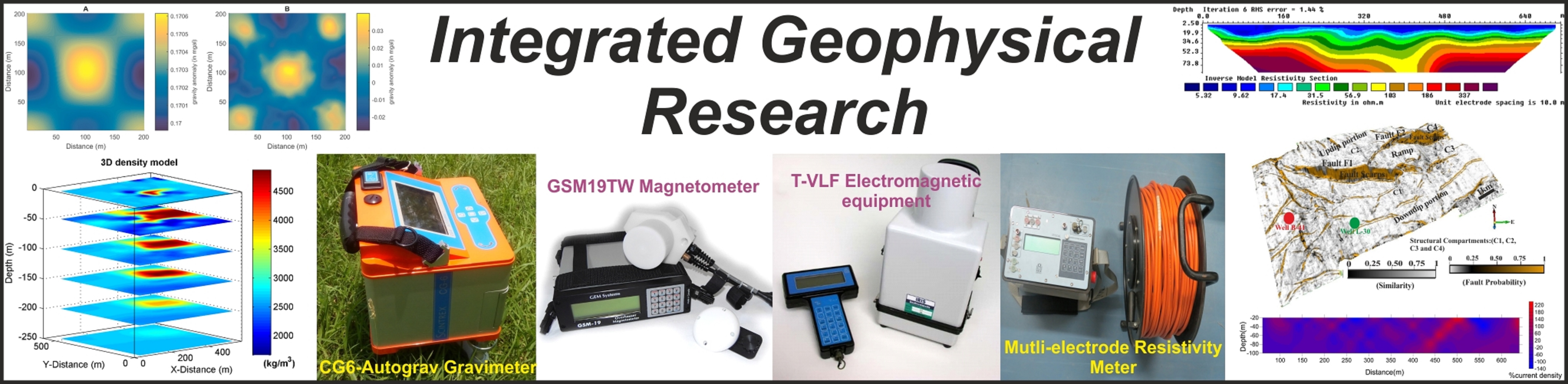
Animesh Mandal serves as an Associate Professor in the Department of Earth Sciences at Indian Institute of Technology Kanpur (IITK) , where he has been a faculty member since April 2015. His academic journey includes a B.Sc. in Physics from University of Calcutta (2005), M.Sc. in Physics from IIT Delhi (2007), and Ph.D. in Geophysics from IIT Kharagpur (2013). Prior to joining IITK, he worked as a Project Scientist at the National Geophysical Research Institute (NGRI). Research Interests : Dr. Mandal specializes in near-surface geophysical studies , geophysical data enhancement , and subsurface modeling . His work focuses on integrated geophysical approaches to understand shallow crustal configuration and delineate natural resources, utilizing gravimeter, magnetometer, electrical, and EM equipment. He has pioneered research in machine learning-assisted interpretation of geophysical data, particularly in seismic impedance inversion, reservoir characterization, and geothermal system analysis. His recent publications demonstrate expertise in applying deep learning techniques to solve complex geophysical problems. Research Trends : Analysis of his recent publications reveals a strong focus on geothermal energy systems , particularly non-volcanic hot springs in the Eastern Ghats Mobile Belt. His work combines gravity-magnetic studies with advanced computational methods to understand crustal configuration and thermal structure. Another major trend involves machine learning applications in seismic data processing, where he develops novel deep learning architectures for impedance inversion and reservoir characterization. His research bridges traditional geophysical methods with cutting-edge AI techniques, creating innovative approaches to subsurface imaging. Scientific Awards : Supervised students who received Prime Minister's Research Fellowship (PMRF) Advisees awarded FARE Fellowship, ONGC-IGU Best Poster Presentation Award, and EAGE PACE grants Students received FULL sponsorship to attend major international conferences like IMAGE 2024 Mentored students who secured postdoctoral positions at prestigious institutions including KAUST and University College Dublin Academic Leadership : Dr. Mandal has successfully supervised multiple Ph.D. and M.Tech. students to completion, with recent graduates securing positions at institutions like University College Dublin, Queen's University, and industry roles at companies including Verisk Analytics and ONGC. His research group maintains active collaborations with international institutions and regularly presents at major geoscience conferences including EAGE, SEG, and AOGS. The group has secured competitive research funding that supports field studies, laboratory work, and student training in advanced geophysical techniques.
Adam Talib is an Associate Professor at the American University in Cairo within the Sheikh Hassan Abbas Sharbatly Department of Arab and Islamic Civilizations. He serves as the Director of Graduate Studies and is a co-editor of the journal Middle Eastern Literatures . As an award-winning translator of Arabic into English, his scholarly work bridges classical Arabic philology, translation studies, and comparative literature. His research focuses on: Classical Arabic poetry and its historical contexts Arabic literary history and canon formation Comparative Islamicate poetic traditions across Arabic, Persian, and Ottoman literatures Classical Arabic literary scholarship (rhetoric, criticism, prosody) Translation theory and practice Talib’s first book, How Do You Say “Epigram” in Arabic? Literary History at the Limits of Comparison , challenges Eurocentric frameworks by analyzing the history of Arabic maqāṭīʿ -poetry and its implications for world literature. He also uncovered a previously unknown diwan (collection) of poetry by Ibn al-Musalaya and transcribed eloquent letters attributed to Abbasid caliphs.
Huijia (Rachel) Lin serves as Professor at the University of Washington's Paul G. Allen School of Computer Science and Engineering, holding the Paul G. Allen Development Professorship with research bridging theoretical computer science and cryptographic security systems. Her academic foundation includes: PhD in Computer Science from Cornell University Postdoctoral research at MIT CSAIL and Boston University Department of Computer Science Dr. Lin's research pioneers foundational cryptographic constructs including program obfuscation, functional encryption, attribute-based encryption, and concurrent security protocols. Her theoretical work directly enables practical secure computation systems through rigorous mathematical frameworks in complexity theory and algorithm design, establishing new paradigms for privacy-preserving technologies. Her scientific recognition encompasses: NSF CAREER award Hellman Fellowship Cisco research award JP Morgan Faculty award Microsoft Research PhD Fellowship Best paper award at STOC 2021 Best paper award at Eurocrypt 2018 Best paper honorable mention at Eurocrypt 2016 Invited speaker at International Congress of Mathematicians (2022) ScienceNews '10 scientists to watch' (2022) Dr. Lin actively mentors graduate students in cryptographic theory while securing substantial research funding from NSF, Cisco, JP Morgan, and Microsoft Research. Her earlier Assistant Professorship at UC Santa Barbara established her trajectory in advancing cryptographic foundations before her current UW appointment. She drives collaborative research through dual leadership in the university's Cryptography Group and Theory of Computation Group, focusing on next-generation secure computation models and cryptographic hardness assumptions within the Paul G. Allen School's theoretical research ecosystem.
Catherine Brown is a Senior Lecturer in the School of Law within the Faculty of Business and Law at Queensland University of Technology (QUT). With extensive professional experience spanning both government sectors (Queensland and NSW) as an accountant and policy advisor, as well as private sector work in taxation law, she brings practical insights to her academic role. She is an active member of the Australian Centre for Health Law Research and the Humans Technology Law Centre, contributing to interdisciplinary legal scholarship. Doctor of Juridical Science (Queensland University of Technology) Master of Laws (Queensland University of Technology) Bachelor of Laws (Honours) (Southern Cross University) Bachelor of Business (Honours) (Southern Cross University) Dr. Brown's research focuses on the critical intersection of insolvency and taxation laws, traditional insolvency and bankruptcy law, the transformative impact of technology on legal practice, and innovative approaches to legal education. Her work explores how legal frameworks can better address financial hardship in contemporary economic contexts, with particular attention to how AI and automation are reshaping insolvency practice and the ethical implications of systems like Robodebt. She examines theoretical aspects through Dworkinian legal philosophy while maintaining practical relevance to real-world legal challenges. Analysis of Dr. Brown's publications reveals a consistent focus on practical legal issues affecting individuals and businesses in financial distress. Her recent work demonstrates increasing engagement with technology-law intersections, including submissions to government inquiries on personal insolvency reform and pandemic-related bankruptcy impacts. She skillfully blends theoretical legal philosophy with practical case studies on flood risk disclosure, superannuation in bankruptcy, and automated debt collection systems, creating a research profile that bridges academic scholarship and policy relevance. Certified Practising Accountant - CPA Australia Chartered Tax Advisor (CTA) - Tax Institute of Australia Academic member of INSOL Academic member of Australian Restructuring Insolvency & Turnaround Association (ARITA) Dr. Brown actively contributes to legal education through curriculum development projects and policy engagement. Her numerous submissions to government inquiries, including the Robodebt Royal Commission and Attorney-General's Department consultations, demonstrate successful translation of academic research into policy impact. While specific student supervision details aren't provided, her collaborative publications and educational research suggest active mentoring of junior researchers and engagement with legal education reform initiatives. As a member of both the Australian Centre for Health Law Research and the Humans Technology Law Centre, Dr. Brown participates in interdisciplinary research environments that support her investigations into technology's impact on legal practice and procedural justice. These centers provide platforms for collaborative research that connects legal scholarship with broader societal challenges in health, technology, and social justice.
Jessica J. Cameron serves as Professor in the Department of Psychology within the University of Manitoba's Faculty of Arts, maintaining an active research program since her 2003 appointment. Her academic trajectory progressed from Assistant Professor (2003-2008) to Associate Professor (2008-2016) before achieving her current Professor rank in 2016, with office location in P502 Duff Roblin Building. Her educational foundation includes: PhD in Social and Personality Psychology (University of Waterloo, 2003) Certificate in University Teaching (University of Waterloo, 2003) BA Honours in Psychology (University of Manitoba, 1998) Dr. Cameron's research program integrates three interwoven strands through the lens of Social and Personality Psychology. Her pioneering work on the friends-to-lovers pathway examines how platonic friendships transition into romantic relationships, challenging traditional relationship initiation models. Concurrently, she investigates insecurity dynamics including self-esteem's interpersonal consequences and measurement challenges, revealing how low self-esteem creates shared relationship vulnerabilities. Most recently, her research on gender diversity has driven methodological innovations in ethical gender/sex measurement, co-developing national research toolkits to address heteronormativity in psychological science. The Self and Interpersonal Dynamics (SAID) Lab employs diverse methodologies from dyadic experiments to meta-analyses, consistently applying a Person x Situation interactionist framework. Analysis of her 2010-2024 publications shows evolving emphasis from core self-esteem mechanisms toward inclusive gender methodology while maintaining relationship science foundations. Recent work demonstrates increasing interdisciplinary reach into research ethics and measurement science, with 40% of 2022-2024 publications directly addressing gender diversity in methodology. Her scholarly impact is recognized through: 2022 Merit Award for combined Research and Teaching 2017 Faculty of Arts Outstanding Professor Award 2011 Rh Award for Social Sciences Research Multiple teaching awards (2008 Merit Award, 2007-2008 Department Teaching Award) As a dedicated mentor, Dr. Cameron currently accepts graduate students and has guided 9+ scholars through advanced degrees including PhDs (Kelley Robinson, Justine MacLean Legge), MA theses (Megan Topolniski, Christine Hole), and professional programs (Maggy McGunigal's Journalism MA). Her grant portfolio supports active projects including the 2024-2025 Couples Survey Study examining cross-cultural relationship initiation preferences and longitudinal assessments of romantic relationship quality. The SAID Lab operates as a collaborative research ecosystem with current graduate students like Katherine Dyck (MA candidate studying friends-first romance) and research teams conducting Prolific-based studies on friendship intimacy. Ongoing projects integrate theoretical innovation with methodological rigor, particularly through the Gender and Sex Research Toolkit initiative advancing inclusive practices across Canadian psychological research.
Tiffany Shaw is a Professor in the Department of the Geophysical Sciences at the University of Chicago. Her research focuses on the physics of Earth's atmospheric circulation and climate system across temporal scales, integrating theoretical frameworks, numerical modeling, and observational data analysis. Past, present, and future climate dynamics Storm track processes and CO2-driven circulation shifts Stratosphere-troposphere coupling Her recent work leverages AI/ML tools to enhance climate change predictions, emphasizing physical interpretability. She supervises graduate students and collaborates with postdoctoral researchers like Joonsuk Kang and Qi Zhou . Prof. Shaw actively participates in outreach programs, including the Leadership Alliance Summer Research Early Identification Program and Columbia University's Summer Research Program for Science Teachers. Contact: tas1@uchicago.edu | Office: 419 Henry Hinds Laboratory for the Geophysical Sciences
Prof. Cristina MORA is a Full Professor at the University of Parma's Department of Food and Drug Sciences. She specializes in Food Marketing, Agricultural Economics, and Consumer Behavior, with a focus on sustainable food systems and policy-related research. Her work bridges food science, public health, and environmental sustainability, particularly in areas like labeling systems (Nutri-Score, Eco-Score), consumer attitudes toward novel foods (plant-based proteins, insect-based products), and dietary behaviors in university populations. Teaching appointments span courses such as 'Quality and Procurement of Raw Materials for Agri-Food,' 'Food Companies Organization and Marketing,' and 'Food Marketing,' across undergraduate and graduate programs in Food Science and Gastronomic Science. Research highlights include studies on Mediterranean diet adherence, digital nudging in campus dining, and the socio-economic impacts of food labeling. Her work frequently explores cross-cultural comparisons and policy implications, such as consumer acceptance of genetically modified organisms and sustainable seafood purchasing. Ongoing projects investigate the intersection of health literacy, HIV/AIDS prevention, and food system sustainability in international contexts.
Patrick Mullen is Associate Professor and Chair of the Department of Counseling and Special Education at Virginia Commonwealth University's School of Education. He holds a PhD in Counselor Education from the University of Central Florida and maintains credentials as a National Certified Counselor and Approved Clinical Supervisor. His research examines school counseling effectiveness, counselor education methodologies, and professional well-being in educational settings. Research focuses on evidence-based practices in school counseling, legislative advocacy training, and factors influencing counselor burnout. Recent publications explore ethical decision-making frameworks, culturally responsive assessment tools, and mindfulness interventions for student emotional development. Article analyses reveal consistent themes in competency assessment, cross-cultural validation, and occupational health in educational professions. Honors and Awards: Outstanding Chapter Faculty Advisor Award, Chi Sigma Iota (2023) Best Practices Research - Faculty Award, American Counseling Association (2020) Patricia B. Elmore Research Award (2019) Locke-Paisley Mentoring Award (2018) He mentors graduate students in research design and supervises counseling trainees. His editorial roles include positions at Counselor Education and Supervision and Journal of School-based Counseling Policy and Evaluation. Grants support initiatives like the GPS for SUCCESS program, which enhances student support systems in K-12 education.
Sue Smith is a prominent researcher at the University of Central Lancashire, with a focus on entrepreneurship, leadership development, and action learning within SMEs. Her work bridges academic theory and practical application, emphasizing transformative learning, networked learning, and organizational development.
Daven Henze is a Professor in the Department of Mechanical Engineering at the University of Colorado Boulder. He holds a B.S. from the University of Washington (2001), and M.S. and Ph.D. from the California Institute of Technology (2004, 2007). His research focuses on aerosols, air quality, climatology, atmospheric chemistry, adjoint sensitivity analysis, and data assimilation techniques. He teaches courses such as Air Pollution Control, Inverse Methods, and Numerical Methods. His work bridges environmental engineering and atmospheric science, emphasizing the development of advanced models for pollutant transport and emission source identification. Key contributions include the GEOS-Chem adjoint model and applications of remote sensing data for emission estimation. Research Interests: Aerosol dynamics, climate impacts of pollutants, inverse methods for emission quantification, and policy-relevant air quality studies. His interdisciplinary approach combines numerical modeling, satellite remote sensing, and adjoint-based sensitivity analysis to address global and regional environmental challenges. Recent Publications Trends: Focus on methane fluxes, NOx/PM2.5 health impacts, and satellite data integration. Studies highlight emission source attribution, pollutant mitigation strategies, and the co-benefits of decarbonization policies. Awards: Notable honors include the 2017 S.P. Chip Faculty Fellowship, Provost's Faculty Achievement Award (2014), and multiple teaching/mentorship awards. His research has been supported by NASA, EPA, and international collaborations. Advising & Grants: Advises graduate students in environmental modeling and air quality. Leads projects funded by NASA's New Investigator Program and EPA Early Career grants. Collaborates on global emission inventories and health impact assessments.
Carolina Torres is an Associate Professor and Endowed Chair in Tree Fruit Postharvest Systems at Washington State University’s Wenatchee Tree Fruit Research and Extension Center (TFREC). Her research focuses on postharvest biology, fruit quality preservation, and the mitigation of physiological disorders like sunscald and lenticel breakdown. With over 20 years of experience, she integrates non-destructive sensing technologies (e.g., hyperspectral imaging, Vis-NIR spectroscopy) to optimize storage strategies and address environmental impacts on fruit. Her work emphasizes collaboration with the fruit industry to translate research into practical solutions. Key research areas include light and temperature stress effects on fruit, metabolic pathways linked to disorders, and sustainable storage technologies. She leads research groups and has developed predictive models for postharvest quality issues using spectral and biochemical data. No scientific awards are explicitly mentioned, but her contributions include advancing methods for detecting fruit stress pre- and postharvest. She collaborates with global institutions and industry partners to ensure research outcomes align with real-world agricultural challenges. Carolina Torres is affiliated with the Overley Lab in Wenatchee, part of WSU’s CAHNRS, and actively contributes to graduate training and extension programs.
Carter Skemp is an Assistant Professor of Architecture at the University of Maine at Augusta, located at Handley Hall, 331 Water St, Augusta, ME. His teaching emphasizes developing students' proficiency in both traditional design logics and modern digital tools to navigate evolving technological landscapes. He focuses on design theory integration with tool mastery, enabling adaptive design skills. Research interests explore the intersection of traditional craft and digital fabrication, particularly how democratized access to digital tools (e.g., DIY shops, Fab Labs) impacts creativity, proportion, and design collaboration. He investigates evolving perceptions of craft in an era of personal digital fabrication, questioning how design attribution and skill transmission shift in this new paradigm. Educated at the Harvard Graduate School of Design (Masters of Architecture I, 2010) and Rhode Island School of Design (BFA Industrial Design, 2002), his work bridges architectural education with hands-on research projects exploring craft-digital synergies.
Guanhua Yan is an Associate Professor in the School of Computing at Binghamton University. He holds a PhD in Computer Science from Dartmouth College (2005) and previously worked at Los Alamos National Laboratory for nine years as a Research Associate and Research Scientist. His research focuses on cybersecurity, big data, networking, and modeling/simulation, with notable contributions to 5G network security, malware classification using AI, and adversarial machine learning. Education: PhD in Computer Science, Dartmouth College, 2005 Research Interests: Cybersecurity: Including 5G security, malware detection, and adversarial attacks Big Data: Anomaly detection and large-scale workflow analysis Networking: IoT protocols, SDN/NFV, and telecom infrastructure Modeling & Simulation: Network behavior modeling and vulnerability testing Recent work emphasizes proactive defenses against evolving cyber threats, such as 5G core network hardening and developing explainable AI for malware classification. His publications span over two decades, addressing topics ranging from Bluetooth worm propagation to modern 5G vulnerability exploitation. No scientific awards or grants are explicitly mentioned in the provided text. He advises no listed students, though his research likely involves graduate-level collaboration.