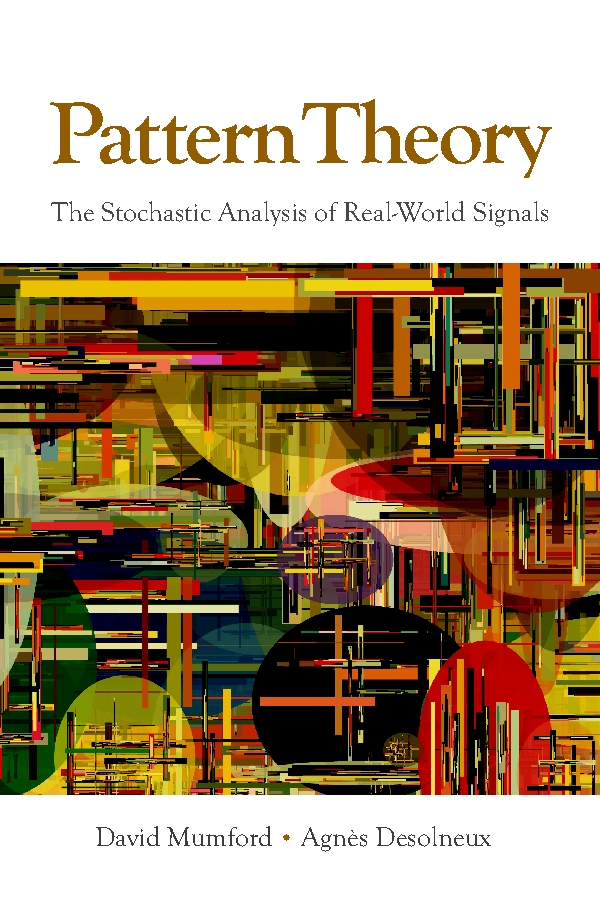
Agnes Desolneux is a CNRS Research Director at the Borelli Centre (formerly CMLA) and a Professor attached to the Mathematics Department at ENS Paris-Saclay. Education: PhD in Applied Mathematics (2000) from ENS Cachan Habilitation in Applied Mathematics (2010) from Université Paris Descartes Her research focuses on image analysis via statistical methods , particularly a contrario approaches, image restoration, texture synthesis, Determinantal Point Processes (DPP), optimal transport, Gaussian mixtures, geometry of random field excursions, shot-noise models, and mathematical modeling of visual perception through Gestalt theory. The articles extracted reflect her expertise in applied mathematics and computer vision , with recent works (2025-2020) on optimal transport algorithms, DPP applications, multiscale texture analysis, and stochastic modeling in medical imaging. Keywords span machine learning, probability theory, medical imaging, and computer vision . She has no listed scientific awards but has authored influential works including the book From Gestalt Theory to Image Analysis: A Probabilistic Approach (Springer, 2008) and Pattern Theory: the stochastic analysis of real-world signals (AK Peters, 2010).
Prof. Bernhard U. Seeber is an Extraordinary Professor at the Technical University of Munich (TUM), leading the Chair of Audio Signal Processing within the TUM School of Computation, Information and Technology. His work bridges auditory neuroscience and engineering, focusing on improving hearing aids, cochlear implants, and virtual acoustic systems. He holds affiliations with the Bernstein Center for Computational Neuroscience, Munich Institute of Biomedical Engineering, and others. Education: Studied and earned his PhD (2003) in Electrical Engineering and Information Technology at TUM. Postdoctoral research included time at UC Berkeley and the MRC Institute of Hearing Research (UK), where he pioneered studies on binaural hearing and cochlear implant optimization. Research Interests: Combines experimental and theoretical approaches to explore auditory scene analysis, binaural unmasking, and spatial hearing. Key areas include signal coding for cochlear implants, virtual acoustics, and non-destructive acoustic monitoring. His work emphasizes interdisciplinary collaboration with industry and academia. Awards: Lothar Cremer Award (2010), Emmy Noether Fellowship (2007), and recognition from the German Acoustical Society. Teaching: Offers courses on audio communication, computational neuroscience, and technical acoustics. Projects: Leads initiatives like HAPPAA and Auralization, advancing sound field synthesis and hearing aid algorithms. Current Roles: Head of Chair of Audio Signal Processing, Board Member of DEGA, and spokesperson for the ITG Technical Committee on Hearing Acoustics.
Naomi Eilan is Professor of Philosophy at the University of Warwick and Director of the Warwick Mind and Action Research Centre. She co-directs the Leverhulme/British Academy project on The Second Person and the Only Connect project (Warwick Impact Fund). She served as President of the European Society of Philosophy and Psychology from 2009 to 2014 and remains on its Advisory Board. Her research focuses on the intersection of philosophy of mind, metaphysics, and psychology. Key areas include second person thought, knowledge of one's own and other minds, joint attention and action, and theories of communication. She actively welcomes PhD students in these fields. Naomi Eilan’s academic work spans interdisciplinary collaborations, particularly in understanding schizophrenia and the explanatory role of consciousness. Her publications cover topics like perceptual intentionality, causation, objectivity, and gestalt switches, reflecting her engagement with both empirical and theoretical challenges in philosophy of mind. She directs the Warwick Mind and Action Research Centre, a hub for interdisciplinary studies on consciousness and cognition. Her current projects emphasize second person perspectives and intersubjective exchanges, aligning with her long-term contributions to philosophical and psychological discourse.
David Huber is a Professor in Psychology and Neuroscience at the University of Colorado. He holds a PhD from Indiana University (2000). His research focuses on human perception, memory, and decision-making from a computational perspective, integrating behavioral studies with neuroimaging techniques (fMRI, ERP) and computational models (Bayesian, neural networks). Key areas include visual cognition, spatial navigation models, memory retrieval dynamics, and priming effects. Education: PhD in Psychology from Indiana University (2000). Research emphasizes mechanisms underlying memory processes, perceptual adaptation, and the neural basis of cognitive functions. Recent work challenges traditional roles of hippocampal place/grid cells, proposing memory-centric models. He explores how perceptual fluency influences decision-making and juror cognition, with studies on serial dependence and gestalt principles in binocular rivalry. His neurocomputational methods include fMRI-based tuning function analysis and virtual electrophysiology modeling. Publications span over two decades, focusing on memory models (SAM-RI), neural habituation, and Bayesian modeling of brain activity. His work advocates for rigorous model-driven approaches in cognitive neuroscience.
Ciarán Ó Gallchóir is an Assistant Professor/Lecturer in Education at Maynooth University, specializing in initial teacher education, educational leadership, and public policy. He is affiliated with the Department of Education within the Faculty of Arts and Humanities. His research explores the intersection of identity and policy in educational contexts, emphasizing how these dynamics manifest in institutional practices. He currently leads the full-time and part-time Masters of Education programs. Key research initiatives include the HEA-funded PATH programme (supporting marginalized groups in teacher education), the Erasmus+ SUP4PCL project (Egyptian school-university partnerships), and the NCCA-funded evaluation of Junior Cycle implementation. His work spans peer-reviewed articles, conference presentations, and policy reports, addressing topics like teacher identity, digital learning frameworks, and global citizenship education. Ó Gallchóir’s publications analyze tensions in educational leadership, policy enactment, and the impact of technology on learning. He has contributed to interdisciplinary collaborations across Ireland and internationally, focusing on systemic reforms and pre-service teacher development. While no formal awards are listed, his extensive contributions to educational policy and pedagogy reflect significant scholarly impact. He leads research teams and has advised on projects such as the longitudinal study of Junior Cycle reforms. His work emphasizes bridging theoretical frameworks with practical educational challenges, particularly in marginalized communities and policy implementation.
Dr. Einat Rashal is a Lecturer in Psychology at Keele University, specializing in visual perception and attention with a focus on low-level and mid-level processes. She holds a BA in Psychology and Music, MA in Cognitive Psychology and Human Factors, and a PhD in Psychology from the University of Haifa. Her research examines perceptual organization in contexts like depth perception and visual illusions, utilizing EEG methods to study attention-control and visuomotor integration. She won a Marie-Skłodowska-Curie Fellowship at EPFL and serves as an expert evaluator for the European Commission. With ten years of teaching experience, she has developed courses in: Introduction to Psychology Research Methods and Statistics EEG lab practicals Academic writing She has supervised undergraduate/postgraduate projects and MSc theses. Her publication trends focus on attention mechanisms, EEG methodologies, perceptual organization, and statistical learning, demonstrating consistent innovation in cognitive neuroscience paradigms. Awards include the Marie-Skłodowska-Curie Individual Fellowship for her postdoctoral work at EPFL.
Dr. Mauro Manassi is a Lecturer in Psychology at the University of Aberdeen's School of Psychology, where he has been appointed since August 2019. He leads the Manassi Laboratory, which focuses on visual perception research, and co-hosted the 46th European Conference on Visual Perception in Aberdeen in August 2024. His educational background includes a PhD in Neuroscience from École Polytechnique Fédérale de Lausanne (2014), an MSc in Clinical Psychology from the University of Padua (2009), and a BSc in Psychology of Personality and Interpersonal Relationships from the University of Padua (2006). Prior to his academic career, he completed an 18-month postdoc at UC Berkeley under Prof. David Whitney's laboratory, funded by the Swiss National Science Foundation. Manassi's research centers on how the visual system organizes cluttered environments into coherent perceptions and stabilizes our visual interpretations of the world. His laboratory investigates two key principles: Organization (studying visual crowding and ensemble perception) and Stabilization (examining serial dependence in visual perception). His work has significant implications for understanding visual perception in complex environments, including applications in medical image perception for radiology and dermatology. His publication record shows a strong focus on serial dependence mechanisms, visual crowding phenomena, and medical image perception. The research demonstrates how our brains create stable visual experiences despite discontinuous retinal input, with findings showing that our perception integrates visual information over approximately 15 seconds. His recent work extends these principles to clinical contexts, revealing how perceptual biases affect medical diagnosis. His scientific recognition includes the British Psychology Society Cognitive Psychology Section Award for Best Research Article of the Year (2022) and awards for hosting the European Conference on Visual Perception in 2024. Manassi actively supervises PhD students and research assistants while serving in multiple administrative roles at Aberdeen, including Head of S.C.R.E.A.M. committee, Data Protection Champion, and member of the Ethics Committee. His research has attracted substantial media attention, with over 259,000 views on his YouTube visual illusion and viral coverage of his work on The Conversation.
Keith Allen is a Professor and Head of Department in the Department of Philosophy at the University of York, a position he assumed in 2024 after serving as Senior Lecturer and Lecturer since joining the university in 2007. He holds significant administrative roles including Equality Champion, Chair of the Athena Swan committee, and University Research Champion for Culture and Communication. Education: University of Cambridge University College London Allen's research centers on the philosophy of colour, where he defends a naïve realist (primitivist) theory asserting colours as mind-independent properties distinct from scientific descriptions, as detailed in his 2016 Oxford University Press monograph A Naïve Realist Theory of Colour . His work extends to broader philosophy of perception, early modern philosophy (particularly Locke and theories of ideas), and phenomenology (including Merleau-Ponty). He actively bridges historical and contemporary perspectives, emphasizing how perceptual experience connects to scientific understanding. Analysis of his 15 most recent publications (2019-2025) reveals a dominant focus on colour and vision within philosophy of perception, increasingly incorporating experimental methods (e.g., perceptual averaging studies, folk belief surveys). A strong secondary thread examines historical contexts, especially early modern theories of ideas, while recent interdisciplinary work explores sociocultural dimensions of perception. The research consistently engages with naïve realism and its relationship to science. Scientific Awards: None documented in available sources. Allen mentors PhD students in philosophy of mind, perception, and history of philosophy, welcoming new candidates. His research is supported by multiple active grants including the White Rose Centre for the History of Philosophy (CHi-Phi) and projects like Art and the Limits of Perception and Purpose and Procedure in the Philosophy of Perception , reflecting sustained external funding for collaborative work. He co-directs CHi-Phi (with Robert Stern) and participates in SPIN (Sense Perception in the North), a cross-institutional network connecting philosophers of perception at York, Leeds, and Durham. His current work explores transcendental naïve realism and its implications for science.
Ronen Hershman is a Research Fellow at the Department of Clinical Psychology I, University of Innsbruck. He specializes in cognitive psychology research with a focus on pupillometry, eye movements, and cognitive control mechanisms. His work primarily investigates numerical processing and conflict resolution using Stroop task paradigms. His research interests center on: Cognitive control mechanisms in conflict tasks Pupillometry as an indicator of cognitive effort Numerical cognition and processing Eye movement patterns in cognitive tasks Development of methodological tools for pupillometry analysis Hershman's publications demonstrate a consistent focus on cognitive conflict paradigms, particularly Stroop task variations, with an emphasis on temporal analysis of pupillary responses. His methodological work includes developing CHAP, an open-source pupillometry analysis software that has become a significant contribution to the field. He has taught courses including Research Seminar, Specific Clinical Research Methods, and specialized seminars on pupillometry and eye movement methodologies. His teaching portfolio includes both graduate and undergraduate level instruction in statistics and research methods.
Köksal BİLİRDÖNMEZ is an Assistant Professor in the Graphic Design Department at Kastamonu University's Faculty of Fine Arts and Design. Born in 1976 in Erzurum, he completed his undergraduate studies at Atatürk University's Faculty of Fine Arts (1999), followed by a Master's in Photography (2010) and Proficiency in Art (2016) at Akdeniz University. Currently serving as Dean Assistant and former Department Head, he has held academic positions since 2000. BA: Graphic Arts, Atatürk University (1999) MA: Photography, Atatürk University (2010) Proficiency in Art: Art and Design, Akdeniz University (2016) His research focuses on Graphic Design, Animation, and Visual Design with particular interest in optical illusions, color theory, and historical poster design. His scholarly work examines cultural symbolism in visual communication, contemporary spatial design, and educational technology applications. With an h-index of 5 and 70 citations on Google Scholar, his research bridges traditional Turkish visual culture with contemporary design practices. BİLİRDÖNMEZ has supervised 7 graduate theses on topics ranging from environmental pollution-themed posters to Kemal Sunal film posters. His academic leadership includes directing 9 research projects and serving on university committees. As an active practitioner, he has designed over 145 artistic events including journal covers, conference posters, and cultural exhibitions. His administrative roles demonstrate significant institutional engagement while maintaining active scholarly and creative production.
Will W. Adams is an Associate Professor of Psychology at Duquesne University and a practicing psychotherapist/ecopsychologist. He holds a B.S. in Business (UNC-Chapel Hill, 1980), M.A. in Psychology (West Georgia College, 1985), and Ph.D. in Clinical Psychology (Duquesne, 1993). Previously, he served as a Clinical Fellow at McLean Hospital/Harvard Medical School. His research integrates existential phenomenology, relational psychoanalysis, Gestalt therapy, and Zen Buddhism/Christian mysticism. Education: B.S., Business, University of North Carolina-Chapel Hill, 1980 M.A., Psychology, West Georgia College, 1985 Ph.D., Clinical Psychology, Duquesne University, 1993 Research focuses on ecopsychology, contemplative spirituality, and nature-based healing. Current projects include a book titled A Wild & Sacred Call: Nature, Psyche, Spirit , exploring phenomenology and transpersonal frameworks. He teaches courses on psychology, ecology, and spirituality, including Ecopsychology and Psychology and Spirituality: Christian-Buddhist Dialogue . Publications span topics like ecological ethics, pandemic psychology, and Gestalt therapy. He serves on editorial boards of Humanistic Psychologist and Journal of Humanistic Psychology . His work bridges academic research with clinical practice, emphasizing relational and embodied approaches.
Dr Milica Stojković is an Assistant Professor of Educational Psychology in the Department of Social and Human Sciences at the Faculty of Technical Sciences in Čačak, University of Kragujevac . She has been a faculty member since 2012 and was promoted to Assistant Professor in December 2018. Education: PhD in Psychology (2018), Faculty of Philosophy, University of Belgrade – thesis: Teachers’ professional identity development BA in Psychology (2010), Faculty of Philosophy, University of Belgrade – thesis: Conflict resolution strategies in adolescent peer and friendship relations Certified Gestalt Psychotherapist (EAGT-accredited, 2024) Additional training in Constructivist psychotherapy, MAXQDA qualitative data analysis, experimental interactive design, and Erasmus+ staff mobility. Research Interests: Her work centers on educational psychology , focusing on the development of teachers’ professional identity , inclusive education practices , psychological resilience among students and teachers, digital competences and e-learning , and school-based mentoring . She employs both quantitative and qualitative methodologies to investigate how personal and contextual factors shape teaching quality and student outcomes. Publications Trend: Since 2011, Dr Stojković has published more than 60 peer-reviewed works. Recent articles (2022–2024) concentrate on resilience and stress predictors among university students during crises , online distance teaching experiences during COVID-19 , and nonverbal communication literacy . Earlier works explored self-regulated learning , conflict resolution strategies , multicultural personality assessment , and support systems for students with specific learning disabilities . Scientific Awards & Honors: While no major named awards are listed, she has received academic recognition through highly competitive project grants (DigiPsyRes, ALLVET, Erasmus+), invitations to keynote lectures, and membership in national and international expert groups such as the EU Open Method of Coordination (OMC) thematic group on teacher education. Projects & Grants: DigiPsyRes (2021-2024) – Consortium Board member & project team leader; enhancing digital and psychological resilience via peer networking. ALLVET (2019-2023) – Initial coordinator; capacity building for VET teachers under Bologna principles. Erasmus+ mobility coordinator for the faculty (2015-2022). Participation in Serbian Ministry-funded projects on entrepreneurship education, teacher competence development, and OECD TALIS survey implementation. Labs & Teams: She collaborates with the Psychology Research Group at the Faculty of Technical Sciences in Čačak and leads work packages in the DigiPsyRes international consortium involving universities from Serbia, Poland, Italy, Croatia, and Spain. She also co-founded the local NGO PsychoZona , providing psychological counseling and educational services to children with disabilities and their families.
Ken Nakayama is the Edgar Pierce Professor of Psychology at Harvard University, where he has been since 1990. Previously, he spent 20 years at the Smith Kettlewell Eye Research Institute in San Francisco. He holds a B.A. from Haverford College and a Ph.D. from UCLA. University: Harvard University Department: Department of Psychology Lab: Vision Sciences Laboratory Research Interests Nakayama’s work focuses on understanding the mechanisms of visual perception, including motion perception, attention, face recognition, and the neural basis of visual processing. He explores how the brain constructs coherent visual scenes from dynamic sensory inputs, emphasizing the interplay between low-level visual processing and higher-order cognitive functions. His research employs methods such as visual psychophysics, computational modeling, and neuroimaging to study topics like the perception of surfaces, motion, and attentional deployment. Recent work includes investigations into developmental prosopagnosia (face blindness) and the role of visual perception in social cognition. Key Contributions Nakayama has contributed fundamentally to understanding the aperture problem in motion perception, the role of attention in visual search, and the neural correlates of face recognition. He co-developed the Cambridge Face Memory Test, a gold-standard tool for assessing face recognition abilities. His lab has also studied the impact of perceptual learning, the effects of brain lesions on visual processing, and the application of visual psychophysics to neurological disorders. Collaborations with neuroscientists and clinicians highlight his interdisciplinary approach to understanding vision and cognition.
Roberto Casati is a distinguished academic serving as a Senior Researcher (Directeur de Recherche) at the French Centre National de la Recherche Scientifique (CNRS) since 2002, and as a Director of Studies (Directeur d'Etudes) at the School for Advanced Studies in the Social Sciences (EHESS) in Paris since 2016. His academic career spans multiple institutions across Europe and North America, including previous positions as Research Fellow at CNRS (1993-2002), Assistant at Université de Neuchatel, Switzerland (1991-1994), and Research Fellow with the Swiss National Science Foundation (1991-1993). Dr. Casati received his PhD from the University of Milan, Italy in 1992 and from the University of Geneva, Switzerland in 1991. He has taught at the Ecole Normale Supérieure and served as visiting professor or scholar at prestigious institutions including Università IUAV in Venice, the University of Turin, Columbia University, and Dartmouth College. His research focuses on the intersection of philosophy and cognitive science, with particular emphasis on perception, representation, and cognition. Dr. Casati has made significant contributions to understanding shadow perception, cognitive artifacts, spatial representation, and the philosophy of sound. His work bridges theoretical philosophy with empirical cognitive science, creating a rich interdisciplinary approach to understanding human cognition and its relationship with the physical world. Dr. Casati has published extensively, with nine academic books and numerous research articles in leading journals across philosophy and cognitive science. His publications span topics from metaphysics to visual perception, demonstrating the breadth and depth of his scholarly contributions. Scientific Awards 2003 Prix de la Science du Livre for the book "La découverte de l'ombre" 2001 Premio Castiglioncello di Filosofia for the book "La scoperta dell'ombra" 2000 Premio Fiesole speciale for the book "La scoperta dell'ombra" 1996 CNRS Bronze Medal in Philosophy (most distinguished researcher in the year for Philosophy) 1990 Geneva University Prize in Philosophy Dr. Casati has been actively involved in academic service and leadership. He is co-founder and co-editor of the Review of Philosophy and Psychology (Springer). He was responsible for Institut J. Nicod's Enactive Network of Excellence (IST-2002-002114) and has served as an evaluator for the VI Framework Programme of the European Commission, the European Science Foundation, and national research institutions of France and Italy. He has organized numerous national and international conferences in both philosophy and cognitive science. Beyond academic research, Dr. Casati has been committed to public philosophy, publishing a widely translated book (Semplicità insormontabili, with A. Varzi) that was adapted for theater, and over 250 short philosophical articles in the Italian daily IlSole/24Ore. Dr. Casati combines his academic pursuits with diverse personal interests, including professional competence in drawing and design, and completed a Transat Retour sailing race on a Challenge 67 sailboat in 2017. His future research projects focus on cognitive artifacts and wayfinding, continuing his tradition of innovative interdisciplinary work.
Elif Bayramoğlu is an Associate Professor at the Department of Landscape Architecture, Faculty of Forestry, Karadeniz Technical University. She holds a PhD from the same institution, with additional research experience at the University of Natural Resources and Life Sciences Vienna (Austria). Her academic career spans from Research Assistant (2005–2013) to Assistant Professor (2015–2018), and currently serves as Associate Professor since 2018. Education: PhD: Karadeniz Technical University, 2013 (Investigation of Drip Irrigation for Berberis and Ilex) Postgraduate: Karadeniz Technical University, 2007 Undergraduate: Karadeniz Technical University, 2003 (Landscape Architecture) Visiting Research: Universität für Bodenkultur Wien, 2008–2009 Research Interests: Focuses on sustainable urban design, water conservation in landscaping, climate change adaptation, recreational ecology, and ergonomics in urban spaces. Her work integrates ecological principles with practical applications in campus planning, coastal management, and accessibility for diverse populations. Recent Research Trends: Recent articles emphasize drought-tolerant design, rainwater harvesting, and sustainable campus infrastructure. Studies highlight the ecological and social dimensions of urban parks, green belts, and accessibility for disabled individuals. Grants/Awards: Trained in Occupational Health and Safety (2021) and Education Management (2020). No explicitly listed scientific awards. Labs/Teams: Leads projects on campus sustainability (e.g., KTU Kanuni Campus) and urban ecological corridors.



.jpg)