معرفی
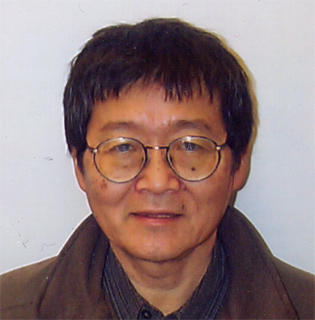
Ken Nakayama is the Edgar Pierce Professor of Psychology at Harvard University, where he has been since 1990. Previously, he spent 20 years at the Smith Kettlewell Eye Research Institute in San Francisco. He holds a B.A. from Haverford College and a Ph.D. from UCLA.
- University: Harvard University
- Department: Department of Psychology
- Lab: Vision Sciences Laboratory
Research Interests
Nakayama’s work focuses on understanding the mechanisms of visual perception, including motion perception, attention, face recognition, and the neural basis of visual processing. He explores how the brain constructs coherent visual scenes from dynamic sensory inputs, emphasizing the interplay between low-level visual processing and higher-order cognitive functions.
His research employs methods such as visual psychophysics, computational modeling, and neuroimaging to study topics like the perception of surfaces, motion, and attentional deployment. Recent work includes investigations into developmental prosopagnosia (face blindness) and the role of visual perception in social cognition.
Key Contributions
Nakayama has contributed fundamentally to understanding the aperture problem in motion perception, the role of attention in visual search, and the neural correlates of face recognition. He co-developed the Cambridge Face Memory Test, a gold-standard tool for assessing face recognition abilities.
His lab has also studied the impact of perceptual learning, the effects of brain lesions on visual processing, and the application of visual psychophysics to neurological disorders. Collaborations with neuroscientists and clinicians highlight his interdisciplinary approach to understanding vision and cognition.