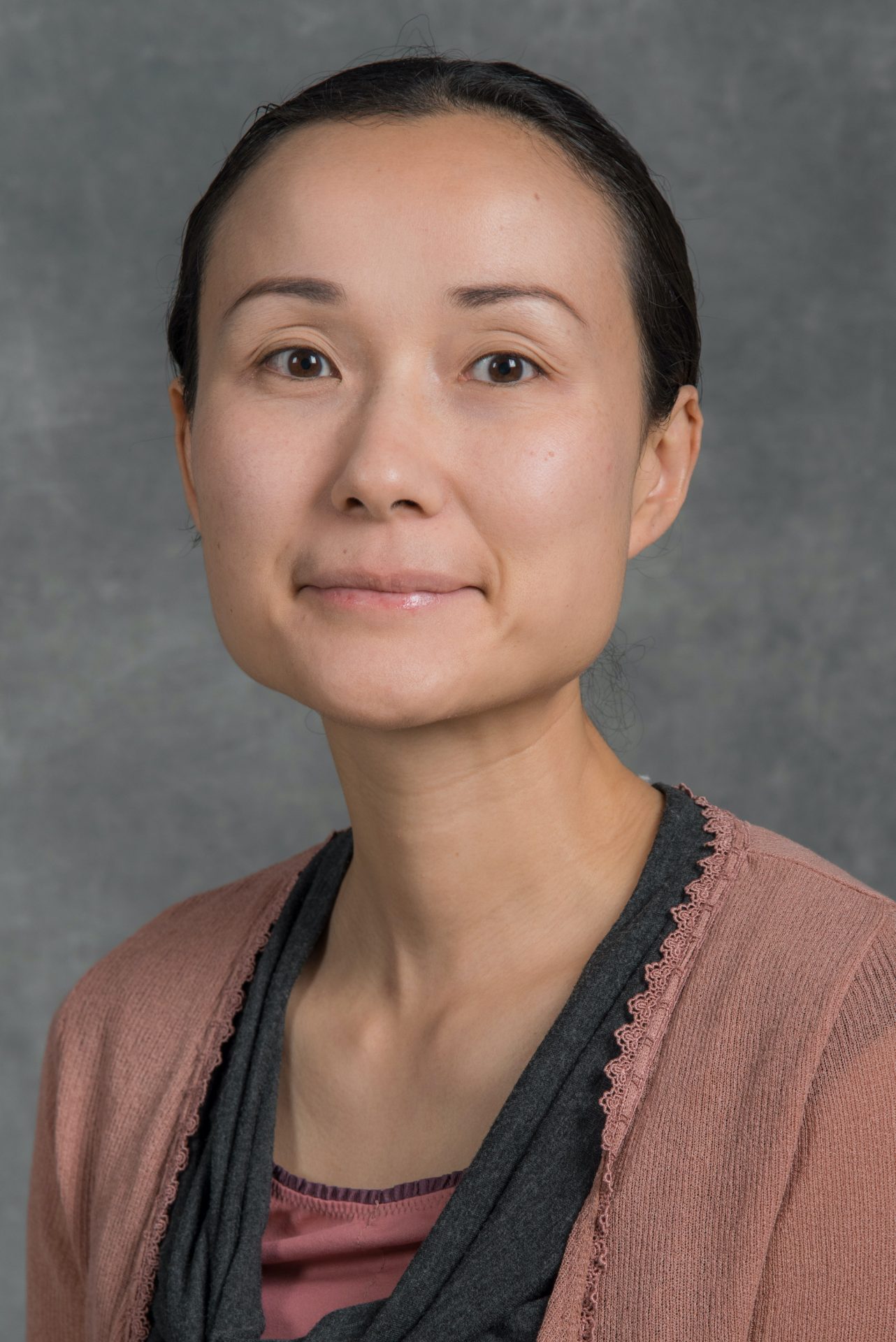
Haruko Murakami Wainwright is an Assistant Professor at the Massachusetts Institute of Technology (MIT), affiliated with the Department of Nuclear Science and Engineering. Her research focuses on environmental informatics, integrating mechanistic modeling and machine learning to address challenges in nuclear waste management, radiation monitoring, and environmental resilience. She leads interdisciplinary projects such as the DOE’s Advanced Long-term Environmental Monitoring Systems (ALTEMIS) and the Artificial Intelligence for Earth System Predictability (AI4ESP) initiative. Education: BEng in Engineering Physics from Kyoto University (2003), MS and PhD in Nuclear Engineering and Statistics from UC Berkeley (2006–2010). Research emphasizes Bayesian geostatistical methods, real-time environmental monitoring systems, and applications in watershed science. Notable contributions include radiation dose rate mapping post-Fukushima, groundwater contamination modeling, and sustainable remediation strategies. Her work bridges nuclear engineering, environmental science, and data science, with a focus on resilience to environmental disasters and sustainable energy waste management.
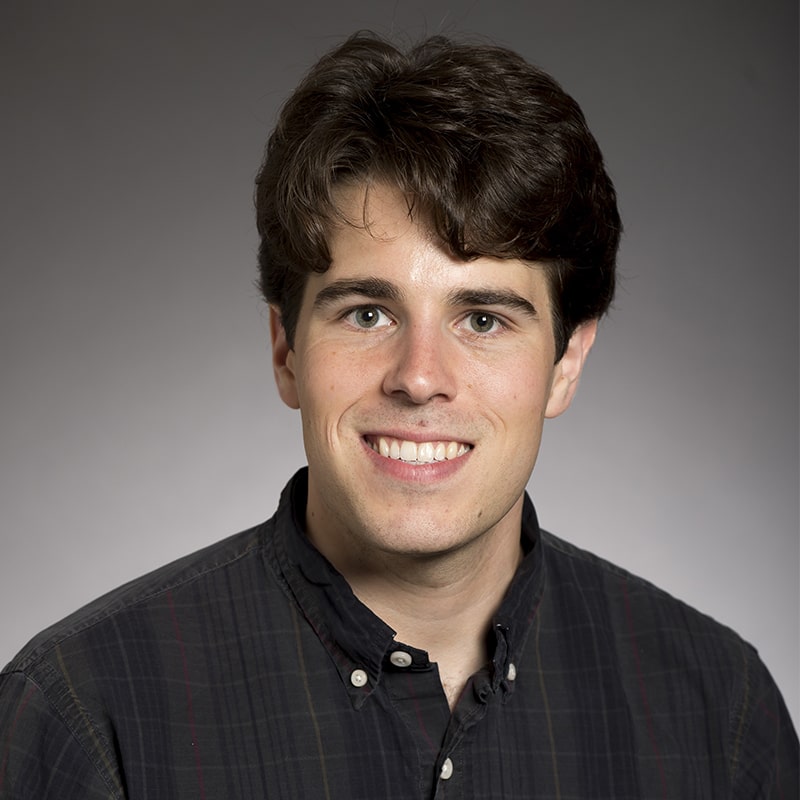
Zach Branson is an Associate Teaching Professor and Assistant Director for the Undergraduate Program at Carnegie Mellon University's Department of Statistics & Data Science within the Dietrich College of Humanities and Social Sciences. His work bridges theoretical and applied statistics, with a focus on experimental design and causal inference. PhD in Statistics , Harvard University (2019) BS in Economics and Statistics , Carnegie Mellon University (2014) BA in Professional Writing , Carnegie Mellon University (2014) Branson's research centers on experimental design and causal inference, particularly addressing questions like "Does a treatment cause a change in outcomes?" His methodological interests include covariate balance , matching , randonization tests , and regression discontinuity designs . Applications span education , epidemiology , mental health , and text analysis . His recent publications emphasize causal inference in educational and social sciences, with methodological innovations in rerandomization, propensity score trimming, and regression discontinuity designs. Key themes include improving covariate balance, handling continuous treatments, and applying Bayesian nonparametric approaches to spatial data. NSF Graduate Research Fellowship (for PhD work on experimental design) Branson actively engages in teaching causality and statistical communication to undergraduates, advocating for capstone courses (e.g., 36-490, 36-493, 36-497) to foster practical data science skills. He also contributed to public-facing statistical pedagogy through "data science portfolio" projects.
Matthias Katzfuss is a Professor in the Department of Statistics at the University of Wisconsin–Madison, affiliated with the School of Computer, Data & Information Sciences. His research focuses on computational spatial and spatio-temporal statistics, Gaussian processes, uncertainty quantification, and data assimilation, with applications in environmental science and satellite remote sensing. He has received funding from NSF, NASA, NOAA, USDA, Sandia National Laboratory, and Jet Propulsion Laboratory. His scientific achievements include awards such as the NSF Career Award, a Fulbright Scholarship, and the Early Investigator Award from the American Statistical Association’s Section on Statistics and the Environment. His work bridges theoretical advancements and real-world applications, particularly in environmental monitoring and large-scale data fusion. Recent research trends include scalable methods for high-dimensional spatial data, nonstationary covariance modeling, and Bayesian transport maps. His publications address challenges in remote sensing, climate science, and machine learning, emphasizing computational efficiency and methodological innovation. Matthias collaborates extensively with institutions like JPL and NASA, contributing to global-scale environmental studies. His lab focuses on developing open-source software tools, such as the GPgp package, to enable reproducible research in spatial statistics.
Chunming Zhang is a Professor of Statistics at the University of Wisconsin-Madison, affiliated with the Department of Statistics within the School of Computer, Data & Information Sciences. He holds academic leadership roles and has been a faculty member since 2000. His research focuses on statistical learning theory and applications in neuroinformatics, bioinformatics, financial econometrics, and imaging data analysis. Key areas include high-dimensional inference, robust statistics, and functional data analysis. Education: Ph.D. in Statistics (University of North Carolina-Chapel Hill, 2000), M.S. in Computational Mathematics (Academia Sinica, 1995), B.S. in Mathematical Statistics (Nankai University, 1992). His research interests span computational neuroscience, medical imaging, and financial time series analysis. Notable contributions include methodologies for neuroimaging data analysis, robust statistical estimation, and large-scale multiple testing. He has authored over 50 peer-reviewed publications and serves on editorial boards of leading journals such as the Annals of Statistics and Journal of the American Statistical Association. Professional service includes roles as Associate Editor for multiple top-tier journals and leadership in statistical societies. Teaching focuses on advanced statistical theory, including courses on Mathematical Statistics and Nonparametric Methods.
D. (Dennis) Fok is a Professor of Econometrics and Data Science at the Department of Econometrics, Erasmus School of Economics, Erasmus University Rotterdam. He has been affiliated with the institution since 1999 and serves as a Fellow at the Erasmus Research Institute of Management (ERIM). His research focuses on applied econometrics in marketing contexts, particularly: Modeling unobserved heterogeneity Nonlinear econometric models Bayesian statistical methods Consumer-level decision modeling High-dimensional choice modeling Dynamic marketing mix effects Dennis Fok's work combines econometric theory with practical marketing applications, developing efficient estimation techniques for complex consumer behavior models. His methodological contributions have been adopted in various business contexts including retail analytics and loyalty program optimization. ERIM Top Article Junior Award (2017) ERIM Top Article Award (2010) ERIM Award for Outstanding Performance by a Young Researcher (2006) ERIM Dissertation Award (2004) He has supervised numerous PhD candidates across diverse topics including: Marketing modeling for new products Econometric advances in diffusion models Heterogeneity in customer purchase behavior Brand portfolio management High-dimensional assortment modeling Response style modeling
Joao Maia, PhD, is a Professor in the Department of Macromolecular Science and Engineering at Case School of Engineering, Case Western Reserve University. His research focuses on polymer rheology, extensional rheometry, and advanced processing techniques like layer multiplication coextrusion. He holds a PhD in Polymer Science and Engineering from the University of Minho (2007), a Bachelor of Science in Physics Engineering from the Technical University of Lisbon (1992), and a Bachelor of Science in Rheology/Applied Mathematics from the University of Wales (1996). Research Interests: Multi-scale polymer-based materials Computational and experimental polymer rheology Nano-layered materials processing On-line monitoring in extrusion Multiscale modeling of complex fluids Recent work highlights include applying machine learning to predict material behavior in suspensions and developing advanced extrusion technologies for layered polymer systems. His publications span topics like graphene oxide nanocomposites, drug delivery nanocarriers, and computational modeling of polymer dynamics. Grants and advising details are not explicitly listed, but his extensive publication record reflects active collaboration with industry and academic partners. He contributes to innovations in additive manufacturing and biomedical polymer applications.
Rahul Parhi is an Assistant Professor in the Department of Electrical and Computer Engineering at the University of California, San Diego (UCSD), where he has been since 2024. Previously, he was a postdoctoral researcher at the École Polytechnique Fédérale de Lausanne (EPFL) from 2022 to 2024, and completed his Ph.D. in Electrical Engineering at the University of Wisconsin–Madison in 2022. His research focuses on the mathematics of data science, particularly the theoretical foundations of neural networks and deep learning, with a strong emphasis on functional/harmonic analysis, signal processing, and nonparametric statistics. Key research themes include the mathematics of computed tomography, sparsity, compressed sensing, and the geometry of Banach spaces. Education: B.S. in Mathematics, University of Minnesota, Twin Cities (2018) B.S. in Computer Science, University of Minnesota, Twin Cities (2018) Ph.D. in Electrical Engineering, University of Wisconsin–Madison (2022) His research interests span the interplay between functional and harmonic analysis with data science, including: Foundations of neural networks and deep learning Approximation properties of neural networks Nonparametric statistical estimation Inverse problems and compressed sensing Wavelet-based signal processing Banach space theory His recent publications explore topics such as neural network optimization, attention mechanisms, and the theoretical limits of learning in high-dimensional spaces. He has contributed to understanding the mathematical principles underlying deep learning's success in breaking the curse of dimensionality. His work bridges abstract mathematical concepts with practical applications in signal processing and machine learning. Parhi's research also extends to collaborative projects with experts in optimization and applied mathematics, aiming to develop novel algorithms with rigorous theoretical guarantees. His lab at UCSD focuses on advancing interdisciplinary research at the intersection of mathematics and data science.
Michał Dereziński is an Assistant Professor of Computer Science and Engineering at the University of Michigan, affiliated with the College of Engineering. His research focuses on the theoretical foundations of randomized algorithms for numerical linear algebra, machine learning, optimization, and data science. Previously, he held postdoctoral positions at UC Berkeley (Department of Statistics) and the Simons Institute for the Theory of Computing, and completed his Ph.D. in Computer Science at UC Santa Cruz under Manfred Warmuth, alongside Master's degrees in Mathematics and Computer Science from the University of Warsaw. He teaches courses such as Foundations of Computer Science (EECS 376), Algorithms for Data Science (EECS 474), and specialized RandNLA courses. His work emphasizes bridging theory and practice in RandNLA, with applications to ML and optimization. Key achievements include an NSF CAREER Award and a NeurIPS 2020 Best Paper Award for work on column subset selection. Current advisees include Sachin Garg, Jiaming Yang, and Shabarish Chenakkod. His research explores topics like sketching algorithms, stochastic optimization, and random matrix theory, with publications in top venues such as NeurIPS, COLT, and SIAM journals. He actively contributes to the RandNLA community through tutorials and software development efforts like RandBLAS/RandLAPACK initiatives.
Thang Bui is a Lecturer (equivalent to tenure-track Assistant Professor) in Machine Learning at the School of Computing, Australian National University (ANU) since July 2022. Previously, he was a Lecturer at the University of Sydney (2018–2022) and spent two years (2019–2020) at Uber AI. He holds a PhD from the Cambridge Machine Learning Group at the University of Cambridge, supervised by Richard Turner and advised by Carl Rasmussen. Research Interests: His work focuses on probabilistic modeling and inference, Monte Carlo methods, distributed/continual learning, and model-based reinforcement learning. Current projects include uncertainty estimation in Gaussian processes and neural networks, adaptive models for changing environments, and interpretable machine learning techniques. Awards: Best Paper Award, ACL Workshop on Information Extraction from Scientific Publications (2023) Best Paper Award, NeurIPS workshop on Deep Learning through Information Geometry (2020) Best Paper Award, NIPS Workshop on Advances in Approximate Bayesian Inference (2015) Advising & Grants: Actively recruiting PhD/MPhil students and postdoctoral fellows. His research has been supported by grants focusing on Bayesian methods and scalable machine learning. He has advised students on topics ranging from Gaussian processes to federated learning and continual learning. Labs/Teams: Leads a research group exploring uncertainty quantification, adaptive learning systems, and probabilistic AI at ANU's College of Engineering and Computer Science.
Facu Sapienza is a Postdoctoral Scholar in Geophysics at Stanford University, focusing on interdisciplinary research that combines paleomagnetism , differential equations , machine learning , and quantum thermodynamics . His work bridges computational methods with Earth and planetary sciences, particularly through physics-informed machine learning models for glaciology and magnetospheric studies. His recent publications highlight expertise in Universal differential equations for geophysical modeling Statistical learning for remagnetization analysis Quantum thermodynamic resource theory Planetary magnetic field interactions (Mars) Distance learning algorithms with Fermat principles trends in applying Gaussian processes, causal inference, and differentiable programming to geoscience challenges. He maintains an active research profile with collaborations in computational geophysics and quantum information theory, though no formal awards or student advising details are publicly listed in the provided materials.
Jonathan Taylor is a Professor of Statistics at Stanford University , with a joint appointment in Data Science . His research focuses on Gaussian processes , stochastic processes , differential geometric methods , neuroimaging , and HIV protein sequence analysis . He is known for his contributions to BrainSTAT/NiPy software and teaches courses like STATS 191 , STATS 202 , and STATS 306B . Education: Details not explicitly provided in the text, but his role as a Professor suggests advanced degrees in Statistics or related fields. Research Interests: His work spans Gaussian processes and smooth stochastic processes Differential geometric methods in statistics Integral geometry and geometric probability Multiple comparisons and False Discovery Rate Neuroimaging data modeling and analysis HIV protein sequence analysis and mutation patterns Awards: Invited speaker at the International Congress of Mathematicians (ICM) 2018 in the Probability and Statistics track. Contact: jonathan.taylor@stanford.edu , Office: Sequoia Hall 137, Stanford University.
Xiu Yang is an Associate Professor in the Department of Industrial and Systems Engineering at Lehigh University's College of Engineering. He previously worked at Pacific Northwest National Laboratory (PNNL) as a scientist and holds a Ph.D. in Applied Mathematics from Brown University, along with degrees from Peking University. His research focuses on modern scientific computing, including uncertainty quantification, quantum computing, physics-informed machine learning, and multi-scale modeling. Yang has applied these methods to fluid dynamics, hydrology, biochemistry, and energy storage systems, with recent emphasis on quantum computing algorithms and their applications in scientific computing. He has received notable awards, including the NSF CAREER Award (2022) and PNNL's Outstanding Performance Awards (2015 and 2016). His work bridges computational mathematics and real-world challenges, such as error modeling in NISQ devices and developing quantum algorithms for linear systems. Yang also contributed to the DOE applied mathematics visioning committee in 2019, reflecting his leadership in advancing computational science. His research outputs span interdisciplinary areas, combining quantum computing with machine learning (e.g., Quantum DeepONet) and enhancing Gaussian process regression techniques with constraints. This work underscores his commitment to advancing computational tools for complex scientific problems, from seismic wave equations to power grid systems.
Baisravan HomChaudhuri is an Assistant Professor in the Department of Mechanical, Materials, and Aerospace Engineering at the Illinois Institute of Technology (Illinois Tech), part of the Armour College of Engineering. His expertise lies in control systems and optimization, with a focus on model predictive control, connected vehicle systems, and motion planning. Education: Ph.D. Mechanical Engineering, University of Cincinnati, 2013 M.S. Mechanical Engineering, University of Cincinnati, 2010 B.E. Electrical Engineering, Jadavpur University, 2007 Research interests emphasize optimal control strategies for autonomous systems, energy-efficient vehicle control, and stochastic reachability analysis. His work integrates machine learning, distributed optimization, and real-time control for applications in robotics, transportation, and smart grids. Recent studies include eco-driving for hybrid vehicles, collision avoidance under uncertainty, and cooperative control of multi-agent systems. His publications highlight advancements in connected vehicle networks, robust MPC frameworks, and safety-critical motion planning. Notable contributions include fuel-efficient control algorithms for urban traffic and distributed optimization methods for resource allocation in cyber-physical systems. Scientific Awards: MMAE Excellence in Teaching Award (2022) Best Student Paper Award at International Conference on Hybrid Systems (2017) His research is supported by grants focused on hybrid systems, smart transportation, and stochastic control. He advises students in applied control systems and collaborates with industry on connected vehicle technologies. Office: Rettaliata Engineering Center 247.
Prof. Dr. Werner Frank holds the Chair of Mathematics IX (Inverse Problems) at the University of Würzburg. He is a leading researcher in statistical inverse problems, focusing on regularization theory, uncertainty quantification, and applications in biophysics, particularly fluorescence microscopy. His work bridges statistics and inverse problem methodologies with non-Gaussian noise analysis. Education: PhD in Mathematics from Georg-August-Universität Göttingen (2012) Postdoctoral Research (2012–2014) at the Institute for Numerical and Applied Mathematics Group Leader, Statistical Inverse Problems in Biophysics, at the Max Planck Institute for Biophysical Chemistry (2014–2020) Research Interests: Statistical inverse problem theory, multiscale scanning, minimax testing, super-resolution microscopy, and imaging techniques with statistical guarantees. His recent work emphasizes applications in biophysics and nanoscale imaging. Publications: Over 30 peer-reviewed articles in top journals like Inverse Problems , Journal of the Royal Statistical Society , and SIAM Journal on Scientific Computing . Key topics include Poisson data regularization, ill-posed problem analysis, and variational methods for image denoising. Affiliations: Active in professional societies such as the Society for Inverse Problems (GIP), IFIP Working Group 7.4, and the International Photonic Imaging Association (IPIA). Regular speaker at international conferences like Inverse Problems: Modeling and Simulation (IPMS) and Applied Inverse Problems (AIP). Future Work: Expanding research on adaptive regularization methods, spatial statistical resolution in microscopy, and interdisciplinary collaborations in imaging science.
Omiros Papaspiliopoulos is a Full Professor at Bocconi University’s Department of Decision Sciences. He joined Bocconi in 2021, previously serving as an ICREA Research Professor at Universitat Pompeu Fabra in Barcelona. His academic career includes roles at Warwick, Oxford, Lancaster, Berlin, Osaka, Paris, Madrid, and Lima. He has been awarded the Royal Statistical Society’s Guy Medal (2010) and the DeGroot Prize for his influential work with Nicolas Chopin. His research focuses on computational statistics, spanning Bayesian inference, machine learning, probability, and applied mathematics. Notably, he founded Europe’s first Master in Data Science at the Barcelona Graduate School of Economics (2013) and directed the Data Science Center until 2021. Since 2022, he has been Director of Bocconi’s Bachelor of Science in Economics, Management, and Computer Science (BEMACS). Papaspiliopoulos is co-Editor of Biometrika (top-4 in Statistics) and Associate Editor of the Journal of Uncertainty Quantification . He has delivered keynote talks at institutions like Chicago Booth, Duke, and LSE, emphasizing the societal impact of data science. His teaching spans courses on data science, statistics, machine learning, and quantitative methods in social sciences. Education & Academic Leadership PhD in Statistics (Implied by career trajectory) Founded Bocconi’s BEMACS program (2022) Directed the Master in Data Science (2013–2021) Executive course design for SDA Bocconi and Barcelona School of Economics Research Interests Computational Statistics & Bayesian Methods Machine Learning & Applied Mathematics Data Science in Social Sciences Hidden Markov Models & State-Space Systems High-Dimensional Inference & Scalable Algorithms Recent Work Trends His publications emphasize scalable Bayesian computation, treatment effect inference, and applications in social sciences. Recent topics include confounder importance learning, particle filtering, and computational efficiency in hierarchical models. Collaborations bridge theory and practice, addressing challenges in policy, finance, and public administration. Awards & Recognition 2010: Royal Statistical Society’s Guy Medal DeGroot Prize for Nonparametric Hidden Markov Models Onassis Foundation Scholar Grants & Outreach Directed the Barcelona Data Science Center (2016–2021) Outreach activities: Talks for high-school students, policymakers, and the European Commission Editorial roles in top journals: Biometrika , Journal of Uncertainty Quantification Labs & Teams Current affiliation with Bocconi’s Department of Decision Sciences and involvement in interdisciplinary data science initiatives.