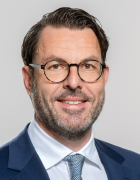
Federico Russo serves as an Associate Professor of Jurisprudence (GIUR-12/A) at the University of Palermo's School of Law within the Department of Jurisprudence. His current teaching responsibilities include Civil Procedural Law and Elements of Legal Informatics for Erasmus students, with office hours held both in person at the main building's secondary atrium (Via Maqueda) and via Microsoft Teams. His research concentrates on critical areas of civil procedure reform, including: Electronic civil process implementation (PCT systems) Forced execution mechanisms Labor and social security process reforms Terrorism-related confiscation law Historical analysis of Takfiri movements' legal impacts Recent scholarly output demonstrates specialized focus on appeals processes, creditor interventions, and condominium law within the Italian civil code framework. Russo actively participates in national research initiatives including: "Historical and Institutional Matrices of Contemporary Takfiri Movements" (2015 PRIN project) "New Implementation of IT in Civil Trial" (NIIT CITR, SIR 2014) "Reforms of the Labour and Social Security Process" (2012) Collaborative work includes partnerships with the Universities of Naples 'L'Orientale', Rome 'La Sapienza', Catania, and Trieste.
Professor Mary Blair-Loy is a leading sociologist at the University of California San Diego, holding a Professorship in the Department of Sociology within the Division of Social Sciences. Her research focuses on gender, social inequalities, work-family dynamics, and diversity in STEM and corporate environments. She critiques cultural schemas like the 'work devotion schema' and 'schema of scientific excellence' that perpetuate inequalities. Notable works include Opting Back In and articles on faculty hiring bias, pandemic impacts on academia, and global work-hour disparities. Her research has been featured in Science , PNAS , and Trends in Microbiology . Education and professional background: No explicit details provided in text but inferred as top-tier academic credentials given her position. Research interests emphasize dismantling systemic barriers for women in academia and professions through evidence-based interventions. Publications span over two decades, addressing topics such as corporate leadership gender gaps, pandemic faculty challenges, and the moralization of merit in science. Her work bridges sociological theory with actionable policy recommendations for equity.
Esther Aldave Monreal is an Assistant Professor at the Public University of Navarre , affiliated with the Department of Humanities and Education . Her work centers on Contemporary History , focusing on Historical Memory , Political Violence , Gender Studies , and Social Conflict . Research Interests include analyzing violence during Spain’s political transitions (19th-21st centuries), particularly in Navarre, with projects like the Documentary Fund on Historical Memory . Her publications explore themes such as Francoist repression , gender roles during the Second Republic , and urban violence , often using interdisciplinary approaches combining historical analysis and social theory . Scientific Awards include a predoctoral grant from UPNA (2015–2019). She has participated in 21 Congresses , organized events like the UPNA Seminar on Violence in an era of social changes (2017), and contributed to editorial committees. Her Grants include a project on Social Control and Security Institutions in Spain (2022–2025, PID2021-123504NB-I00) and a research agreement with the Parliament of Navarre (2023–2027, €75,000).
Julian A. Norato serves as Associate Professor and Director of Graduate Studies in the Department of Mechanical Engineering at the University of Connecticut, where he joined in 2014 after leading Caterpillar's Product Optimization group. His expertise spans computational methods for structural design and optimization. Education: M.Sc. and Ph.D. in Mechanical Engineering with Specialization in Computational Science and Engineering, University of Illinois at Urbana-Champaign Bachelor’s in Mechanical Engineering, Universidad Nacional de Colombia Dr. Norato’s research pioneers the integration of failure criteria, geometric constraints, manufacturing limitations, and cost requirements into computational topology and shape optimization frameworks. His work enables the design of highly efficient structures and architected materials, with significant applications in industrial manufacturing and structural engineering. Current projects focus on welding sequence optimization and novel material architectures. His 2023 publication on welded frame topology optimization exemplifies his focus on bridging computational design with real-world manufacturing cost constraints, reflecting broader trends in practical topology optimization research. Scientific Awards: NSF CAREER Award (2018) Office of Naval Research Young Investigator Program (2017) ASME Design Automation Young Investigator Award (2019) Air Force Research Lab Summer Fellow (2020) Caterpillar’s Move the Mountain Award As an advisor, Dr. Norato mentors graduate students like Hollis Smith, who received the NRC Fellowship and won the AIAA Jefferson Goblet Student Paper Award. His editorial roles include Review Editor for the Journal of Structural and Multidisciplinary Optimization and Associate Editor for the ASME Journal of Mechanical Design. Research is supported by prestigious grants including NSF CAREER and ONR YIP funding. Dr. Norato actively shapes the field through leadership roles such as election to the ISSMO Executive Committee (2023) and organization of specialized mini-symposia at major conferences including WCCM and ASME IDETC.
Marek Ilnicki is a Lecturer at the University of Gdańsk , affiliated with the Faculty of Social Sciences and specifically the Department of Strategic and Security Studies . His academic focus lies at the intersection of political science, security studies, and maritime law. Fields of Interest : Political Science, Security Studies, Maritime Law, Counterterrorism, International Relations, and Crisis Management. Research Trends in his publications emphasize legal frameworks for state security, maritime governance, terrorism prevention, and international cooperation. His work often addresses Poland's strategic challenges in maritime environments and border security. Contact Information : Email: marca.ilnicki@ug.edu.pl Phone: +48 58 523 41 81
Jason A. Delborne is a Professor of Science, Policy and Society in the Genetic Engineering and Society (GES) cluster of the Chancellor's Faculty Excellence Program at North Carolina State University. His departmental affiliation is with the Department of Forestry and Environmental Resources in the College of Natural Resources. He serves on the executive committee of the Genetic Engineering and Society Center and was named a University Faculty Scholar in 2019. His educational background includes: Bachelor's degree in Human Biology from Stanford University (1993) Doctorate in Environmental Science, Policy and Management from the University of California, Berkeley (2005) Delborne's research centers on public and stakeholder engagement with emerging biotechnologies, drawing from the interdisciplinary field of Science, Technology, and Society (STS). His work explores how policymakers and the public interface with controversial science, particularly in genetic engineering and its societal implications. Key areas include: Public engagement methodologies Governance of biotechnologies Policy development for emerging technologies Genetic engineering in food, energy, and water systems Gene drives for conservation Synthetic biology and biodiversity His notable recognition includes being named a University Faculty Scholar by NC State University in 2019. Delborne has secured significant funding as co-Principal Investigator for the NSF-funded National Research Traineeship program, Agricultural Biotechnology in our evolving Food, Energy, and Water Systems (AgBioFEWS). He has contributed to national and international advisory efforts through service on two National Academies of Sciences, Engineering, and Medicine committees and the International Union for Conservation of Nature Task Force on Synthetic Biology. He actively participates in the Engineering Biology Research Consortium (EBRC) Council and multiple advisory boards, advancing interdisciplinary collaboration within the Genetic Engineering and Society Center to address complex socio-technical challenges.
Edward Alden is a senior fellow at the Council on Foreign Relations (CFR), specializing in U.S. economic competitiveness, trade, and immigration policy. He holds visiting academic positions at Western Washington University as the Ross Distinguished Visiting Professor and is affiliated with the Washington Campus as faculty. He also serves on the advisory council of the Clayton Yeutter Institute of International Trade at the University of Nebraska-Lincoln. Bachelor’s in Political Science, University of British Columbia Master’s in International Relations, University of California, Berkeley Pursued doctoral studies (no degree completed) His research spans international trade, immigration policy, border security, and U.S. foreign economic policy . His recent work critically examines pandemic-era border closures, Trump’s trade tariffs, and the future of U.S. global competitiveness. He is a co-author of When the World Closed Its Doors and author of Failure to Adjust and The Closing of the American Border . His recent publications and commentary focus on the instability of U.S. trade policy, the human costs of restrictive border regimes, and the erosion of multilateral trade norms. He frequently analyzes the economic implications of protectionist policies and the strategic use of tariffs in foreign policy. Mellon Fellowship in the Humanities MacArthur Foundation Graduate Fellowship Lukas Book Prize Finalist (2009) Alden has advised on several CFR Independent Task Forces on trade and immigration. He is a monthly columnist for Foreign Policy and has contributed to Foreign Affairs , New York Times , and Wall Street Journal . His media appearances include BBC, CNN, NPR, and PBS NewsHour. He leads public webinars and podcasts on trade and immigration, engaging both academic and policy audiences. He is affiliated with research teams at CFR’s Greenberg Center for Geoeconomic Studies and contributes to initiatives like RealEcon and the CFR Fellows’ Book Launch series.
Jack Barth is a Professor in the College of Earth, Ocean, and Atmospheric Sciences (CEOAS) at Oregon State University (OSU) and Executive Director of the Marine Studies Initiative (MSI). He holds a Ph.D. in Oceanography from MIT and Woods Hole Oceanographic Institution (1987). His research focuses on coastal ocean dynamics, hypoxia, and marine ecosystem interactions. Barth has led projects on ocean observing systems, including glider technology and the Ocean Observatories Initiative (OOI). He serves on the Oregon Ocean Policy Advisory Council’s Scientific Committee and co-chairs the Ocean Acidification and Hypoxia Council. Education: B.A., University of Colorado (1982); Ph.D., MIT/WHOI Joint Program (1987). Experience includes roles as Postdoctoral Research Associate (1987–1989), Assistant Professor (1989–2001), and Professor (2001–present). He also served as Associate Dean for Research in CEOAS (2016–present) and Executive Director of MSI (2016–present). Research Interests: Coastal ocean circulation, hypoxia, inner continental shelf dynamics, eastern boundary currents, and ocean observing systems. He has published over 100 papers and mentored 20+ students/postdocs. Awards include Fellowships from The Oceanography Society (2013) and the American Meteorological Society (2017). Awards: Carl-Gustav Rossby Award (1988), Pattullo Teaching Award (2010), and multiple keynote lectures. His work addresses climate impacts, marine conservation, and interdisciplinary collaboration for sustainable ocean management.
Prof. Dr. Marianne Braig is a Professor of Political Science with a focus on Latin America at the Institute for Latin American Studies, Freie Universität Berlin. She has held this position since 2002 and previously served as Director of the Institute from 2003 to 2006. Prof. Braig is actively involved in the Center for Area Studies and serves as Principal Investigator for the Research Unit Temporality at the Berlin Graduate School for Global and Transregional Studies (BGTS). She also serves as Speaker of the Security Section of the Collaborative Research Center (SFB) 700 "Governance in Areas of Limited Statehood" at Freie Universität Berlin. Prof. Braig's educational background includes a PhD (Dr. phil.) in Sociology from Freie Universität Berlin (1989, summa cum laude) and a State doctorate from the Department of Political and Social Science at Freie Universität Berlin (1999). She studied Anthropology and History at Universidad Nacional Autónoma de México (UNAM) in 1977 and completed her diploma with double majors in Economics and Sociology from Freie Universität Berlin in 1977. Her academic career includes positions as Assistant Professor at the Institute for Latin American Studies (1988-1997) and Professor at Goethe-Universität Frankfurt (1997-2002). Prof. Braig's research spans several interconnected fields with a particular focus on gender segmentation in labor markets, social and educational policy, transformation and development in Latin America, political culture of the state and governance, and intertwined inequalities in the global context. Her work often examines how gender, class, and regional dynamics intersect in shaping social and political outcomes, particularly in Mexican and broader Latin American contexts. She has conducted extensive fieldwork in Mexico, where she has studied urban spaces, informal economies, and governance structures. Her research methodology combines theoretical rigor with empirical investigation, often employing comparative frameworks to analyze local phenomena within global structures. Prof. Braig's recent publications reveal a consistent focus on inequality, governance, and transformation processes in Latin America, with increasing attention to global interconnections and contemporary crises. Her work bridges political science, sociology, and gender studies, often employing comparative frameworks to analyze how local phenomena connect to global structures. Recent publications show growing engagement with issues of forced labor, pandemic responses, and sustainability challenges, reflecting her ability to address emerging global issues through the lens of Latin American experiences. Her scientific recognition includes: Margherita von Brentano Award for outstanding achievements in the advancement of women studies and gender research, Freie Universität Berlin (2013) Prof. Braig has led numerous significant research projects, including the Maria Sibylla Merian International Centre for Advanced Studies on "Conviviality in Unequal Societies," the "desiguALdades.net" research network on interdependent inequalities in Latin America, and the "GLOCON" project on land conflicts in Latin America and Sub-Saharan Africa. She has received funding from major German research organizations including DFG, BMBF, DAAD, and various foundations. Her international collaborations span across Latin America, particularly with institutions in Mexico, Peru, and Chile, and she has served as Visiting Professor at prestigious institutions including Colegio de México and Universidade de São Paulo. Prof. Braig maintains active leadership roles within Freie Universität Berlin, including membership on the Board of Trustees (Kuratorium) since 2008, the Excellence Council (Excellenzrat) since 2009, and the Executive Board of the Center for Area Studies since 2008. She has also contributed significantly to academic governance beyond her institution, serving as Vice President of the Latin American Studies Association (LASA) for 2017/18 and as a member of the Comité Científico Asesor Internacional (CCAI) at the PUCP since 2018.
Karim Harji is an Associate Fellow at Saïd Business School, University of Oxford, specializing in impact measurement and impact investing. He advises organizations globally on evaluating social and environmental impacts of strategies in developed and emerging markets. His roles include Co-Chair of the Ontario Government’s Impact Measurement Task Force and member of the G8 Social Impact Investment Task Force. He co-founded Purpose Capital (now Rally Assets), leading its Impact Advisory practice, and is a Senior Fellow at the J.W. McConnell Family Foundation. Education: Master’s in Public Administration from Carleton University and BA (Honours) in Economics from McMaster University. Research focuses on impact measurement methodologies and decision-making frameworks for investors. Teaching includes founding the Oxford Impact Measurement Programme and delivering executive education globally. Key Projects: Evaluated the Rockefeller Foundation’s $40M Impact Investing Initiative, authored market-defining reports on impact investing trends, and designed capacity-building programs for nonprofits. Current Affiliations: Managing Director of Evalysis, an impact advisory firm, and teaches at Oxford Saïd.
Nicolas Binder is a Professor and Head of the Turbomachinery and Propulsion Research Group at ISAE-SUPAERO . His research focuses on turbomachinery aerodynamics, unsteady flow analysis, and innovative propulsion systems for aerospace applications. Member of EuroTurbo executive committee ASME Member Associate Editor, Journal of Turbomachinery Research expertise in off-design operations and windmilling flows Research Interests : Aerodynamics of turbomachinery in severe off-design conditions Unsteady flow dynamics in turbines Innovative propulsion methods including magneto-hydrodynamics Flow analysis techniques for compressors and fans Recent publications (2024-2021) emphasize transient flow modeling in turbines, windmilling operation optimization, and variable geometry turbine performance. Articles span experimental validation of numerical models, shock wave interactions, and novel propulsion concepts like plasma-thrusters for drones.
Dr. Scott Soo is an Associate Professor in Modern Languages and Linguistics at the University of Southampton, where he teaches across all years of BA and MA programmes covering French and European history and society. He is affiliated with the Centre for Transnational Studies, the Parkes Institute, and the Southampton Centre for Medical and Health Humanities. His academic background includes: Studies in French and Spanish DPhil in History from the University of Sussex Three years at the Université de Toulouse 1 Sciences Sociales Scott Soo's research focuses on the modern history of conflict, migration and commemoration in France and Europe, with forced displacement and its legacies central to his work. His DPhil traced Spanish Civil War refugees in France, resulting in the monograph 'The routes to exile: France and the Spanish Civil War refugees, 1939-2009' (Manchester University Press, 2013). He examines how different but interconnected histories are reflected through memorial practices at former sites of trauma, particularly focusing on the Gurs Camp in southern France. His research spans the mass 1939 exodus across the Pyrenees, French internment camps during WWII, work and Resistance activities, and contemporary commemorative legacies. His publication trajectory shows consistent focus on transnational memory and refugee experiences, with recent work analyzing how Spanish republicans, International Brigades members, and German-Jewish deportees in France are represented in commemorative ceremonies. This has involved collaboration with award-winning photographer/director Tom Price on visual legacies of internment at Gurs Camp. His scholarship demonstrates evolving engagement with memorialization practices, moving from historical analysis of refugee experiences to contemporary commemorative dynamics. Scott Soo serves on the Editorial Board of 'Diasporas. Circulations, migrations, histoire' and the Academic Board of the Centre d'Archives et d'Etudes sur les Migrations Ibériques at Université de Toulouse. Previously, he served on the Academic Advisory Board of 'Migrance' journal and the Executive Committee of the Association for the Study of Modern and Contemporary France. As a postgraduate, he co-founded the University of Sussex Journal of Contemporary History. He is an experienced PhD supervisor, currently advising Elinor Mary Briginshaw in Modern Languages, and welcomes inquiries from students interested in French culture, history, politics, society, or Spanish Civil War legacies. His research has been supported through academic collaborations including the 'Legacies for the Twenty-First Century' project examining landscape, remembrance, and visualization of the former Gurs internment camp. Scott Soo is actively involved in multiple research communities, contributing to interdisciplinary dialogue between history, migration studies, and memory studies through his institutional affiliations and editorial work.
Geir Olav Dyrkolbotn is an Associate Professor at NTNU's Center for Cyber and Information Security (CCIS) and a Major in the Norwegian Armed Forces, serving at the Norwegian Defence Cyber Academy (NDCA). He leads the NTNU Malware Lab and the cyber defence research group at CCIS. He holds a PhD in Information Security from Gjøvik University College and a MSc in Computer Science from NTNU. With over 25 years in the military, his work focuses on tactical communication systems, defensive cyber operations, and operational security. His research emphasizes cyber defence, reverse engineering, malware analysis, side-channel attacks, and machine learning applications. Education: PhD in Information Security, Gjøvik University College (HiG) MSc in Computer Science, NTNU Research Interests: Geir Olav's work bridges theoretical cybersecurity research and practical military applications. He explores innovative methods for hardware reverse engineering, malware detection/classification using low-level features, and forensic acquisition techniques. His contributions include analyzing USB power delivery vulnerabilities, NTFS cluster allocation behavior, and secure chip exploitation for digital forensics. Teaching: Courses include IIKG6500/IMT4213 Cyber-taktikk, IMT4214 Cyber-etterretning, IIKG6501 Cyber Intelligence, and IMT4116 Malware Analysis & Reversing. Labs & Teams: Heads the NTNU Malware Lab and leads the cyber defence research group at CCIS, collaborating on projects like the Digital Forensic Acquisition Kill Chain and hardware security vulnerability assessments.
Prof. Dr. Urs Gasser is Professor of Public Policy, Governance and Innovative Technology at the Technische Universität München (TUM) , where he serves as Dean of the TUM School of Social Sciences and Technology and Rector of the Hochschule für Politik (HfP). His research examines the interplay between emerging technologies and societal structures, focusing on regulatory frameworks for AI, quantum technologies, and extended reality. Academic Affiliations: TUM, Harvard Law School (Visiting Professor), Berkman Klein Center for Internet & Society (Executive Director, former) Policy Roles: Chairs Thailand's International Policy Advisory Panel on AI Governance, advises OECD/UNICEF/UNESCO, contributes to World Economic Forum and US National Academies of Sciences Working Group on Generative AI Gasser leads initiatives including the TUM Think Tank , Generative AI Task Force , Quantum Social Lab , and Friedrich Schiedel Fellowship . His recent publications address AI governance blueprints (2025), quantum ethics (2024), and digital policy challenges across global jurisdictions. Emerging trends in his research emphasize: Responsible innovation for quantum technologies Ethical guardrails in AI-driven decision-making Comparative regulatory frameworks (EU vs US) Generative AI's impact on education and scientific integrity Global governance models for digital privacy Interoperability in digital ecosystems
Cynthia Port is an Associate Professor of English at Coastal Carolina University's School of Humanities since 2007, specializing in modern and contemporary British/Anglophone literature, gender/sexuality theories, and critical aging studies. She holds a PhD from the University of Pennsylvania and contributes to interdisciplinary aging research through editorial and collaborative roles. Education : BA (Barnard College), MA (Columbia University), PhD (University of Pennsylvania) Her research interrogates aging and temporal structures in literature, evident in publications in PMLA , Occasion , and Age, Culture, Humanities . Current projects explore intersectional approaches to aging in postcolonial and modernist texts. Selected recent article themes include: Temporalities in postmodern narratives Gendered economies of aging Epistolary afterlives and futurity Critical age theory development Professional roles include: Executive Committee, MLA Age Studies Forum Advisory Council, Alzheimer’s Resource Coordination Center Founding Coeditor, Age, Culture, Humanities journal Collaborator, Ageing + Communication + Technology Project