معرفی
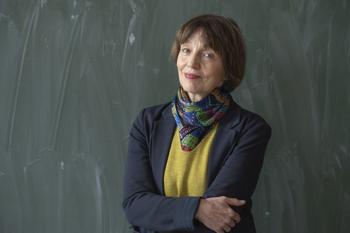
Prof. Dr. Marianne Braig is a Professor of Political Science with a focus on Latin America at the Institute for Latin American Studies, Freie Universität Berlin. She has held this position since 2002 and previously served as Director of the Institute from 2003 to 2006. Prof. Braig is actively involved in the Center for Area Studies and serves as Principal Investigator for the Research Unit Temporality at the Berlin Graduate School for Global and Transregional Studies (BGTS). She also serves as Speaker of the Security Section of the Collaborative Research Center (SFB) 700 "Governance in Areas of Limited Statehood" at Freie Universität Berlin.
Prof. Braig's educational background includes a PhD (Dr. phil.) in Sociology from Freie Universität Berlin (1989, summa cum laude) and a State doctorate from the Department of Political and Social Science at Freie Universität Berlin (1999). She studied Anthropology and History at Universidad Nacional Autónoma de México (UNAM) in 1977 and completed her diploma with double majors in Economics and Sociology from Freie Universität Berlin in 1977. Her academic career includes positions as Assistant Professor at the Institute for Latin American Studies (1988-1997) and Professor at Goethe-Universität Frankfurt (1997-2002).
Prof. Braig's research spans several interconnected fields with a particular focus on gender segmentation in labor markets, social and educational policy, transformation and development in Latin America, political culture of the state and governance, and intertwined inequalities in the global context. Her work often examines how gender, class, and regional dynamics intersect in shaping social and political outcomes, particularly in Mexican and broader Latin American contexts. She has conducted extensive fieldwork in Mexico, where she has studied urban spaces, informal economies, and governance structures. Her research methodology combines theoretical rigor with empirical investigation, often employing comparative frameworks to analyze local phenomena within global structures.
Prof. Braig's recent publications reveal a consistent focus on inequality, governance, and transformation processes in Latin America, with increasing attention to global interconnections and contemporary crises. Her work bridges political science, sociology, and gender studies, often employing comparative frameworks to analyze how local phenomena connect to global structures. Recent publications show growing engagement with issues of forced labor, pandemic responses, and sustainability challenges, reflecting her ability to address emerging global issues through the lens of Latin American experiences.
Her scientific recognition includes:
- Margherita von Brentano Award for outstanding achievements in the advancement of women studies and gender research, Freie Universität Berlin (2013)
Prof. Braig has led numerous significant research projects, including the Maria Sibylla Merian International Centre for Advanced Studies on "Conviviality in Unequal Societies," the "desiguALdades.net" research network on interdependent inequalities in Latin America, and the "GLOCON" project on land conflicts in Latin America and Sub-Saharan Africa. She has received funding from major German research organizations including DFG, BMBF, DAAD, and various foundations. Her international collaborations span across Latin America, particularly with institutions in Mexico, Peru, and Chile, and she has served as Visiting Professor at prestigious institutions including Colegio de México and Universidade de São Paulo.
Prof. Braig maintains active leadership roles within Freie Universität Berlin, including membership on the Board of Trustees (Kuratorium) since 2008, the Excellence Council (Excellenzrat) since 2009, and the Executive Board of the Center for Area Studies since 2008. She has also contributed significantly to academic governance beyond her institution, serving as Vice President of the Latin American Studies Association (LASA) for 2017/18 and as a member of the Comité Científico Asesor Internacional (CCAI) at the PUCP since 2018.