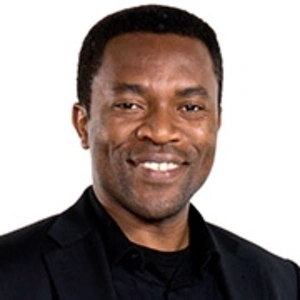
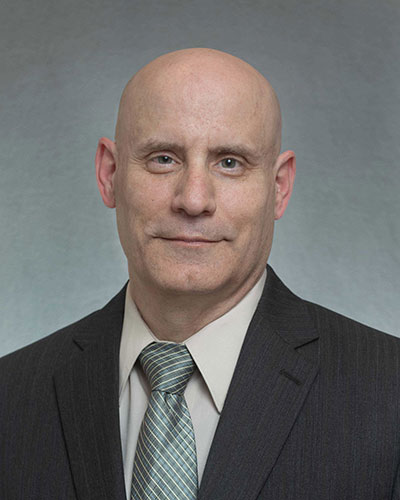
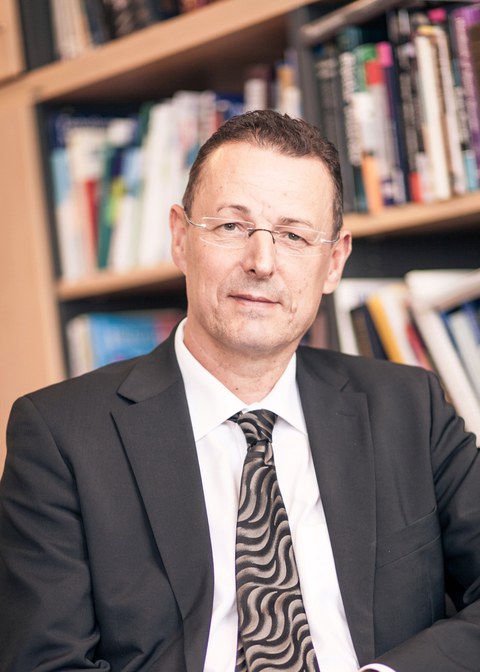
Rhonda Hylton serves as an Assistant Professor in the Department of Curriculum and Instruction at Indiana University's School of Education, specializing in literacy pedagogical practices of Black women faculty, epistemological ways of knowing, intersectionality, cultural/social issues in schools, and preservice teacher education with current focus on racial literacies in teacher preparation. Her academic credentials include: Ph.D. in Curriculum and Instruction (Literacy concentration) from Kent State University Hylton's research has been disseminated through peer-reviewed journals, books, and state/national conferences. She actively advances educational equity through teaching, research, and service, including roles on the Ohio Council of Teachers of English Language Arts Executive Board, Kent State's Ad-hoc Anti-Racist Task Force, and Women of Color Collective Leadership Team. Approaching her work as both learner and teacher, she emphasizes collaborative frameworks in all professional engagements.
Professor Michael Simmonds is a distinguished academic at Griffith University, currently serving as Professor in the School of Health Sciences - Exercise Science since January 2025. Previously, he held positions as Associate Professor (2021-2024), Senior Lecturer (2016-2021), and Lecturer (2013-2015) at Griffith University. He also maintains international connections as a Visiting Professor at the University of Saarland in Germany (2023) and previously at Deutsche Sporthochschule Köln (2015). His academic journey includes a Doctor of Philosophy in physiology, biophysics, and blood rheology from Griffith University (2007-2011) and a Bachelor of Science (Hons Class I) from the same institution (2003-2006). Before his academic career, he worked as a Senior Polysomnographer and Polysomnographer in sleep disorder clinics. Professor Simmonds' research focuses on mechanobiology and blood rheology, specifically exploring how artificial life support devices affect blood properties through multi-scale mechanobiological projects. His work examines how artificial materials and high mechanical forces change blood cell structure and function, with particular emphasis on sub-lethal damage to erythrocytes. He heads the GU Mechanobiology Research Laboratory, which he conceived in 2013 and later merged with Prof. Geoff Tansley's team. His laboratory integrates biological and engineering approaches to improve cardiothoracic surgery outcomes by understanding blood-device interactions. His publication portfolio reveals a strong focus on blood rheology, mechanobiology, and artificial organ development. Recent works (2023-2025) demonstrate continued leadership in understanding blood-device interactions, erythrocyte mechanotransduction, and hemocompatibility testing of cardiac assist devices. His research spans fundamental physiology to clinical applications, with particular emphasis on Piezo1 channels in red blood cells, blood quality in mechanical circulatory support, and implications for diabetes and cardiovascular health. Young Tall Poppy Award (2018) Flying Scientist (2019) Rising Star Award (International Society for Biorheology, 2021) Emerging Leader (Australian Financial Review, 2022) ISCH Research Award (2012) Professor Simmonds has supervised numerous PhD and Masters students, with current supervisees focusing on macrophage clearance of damaged red cells, nanobubbles in cavitation processes, synthetic erythrocyte analogues, blood filtration processes, and blood trauma in medical devices. His laboratory collaborates with mechanical engineers, medical doctors, and scientific bodies to drive research that bridges engineering and biology. He serves on the Executive Board of the International Society for Clinical Hemorheology and has co-directed the Perfusion and Anaesthetic Research Collaborative (PARC), recognized by Qld Health. His research is supported by competitive grants from the Australian Research Council (ARC) and the Medical Research Future Fund (MRFF). Professor Simmonds is actively involved in the Queensland Quantum and Advanced Technologies Research Institute (QUATRI) and has served on various university committees including the Research Committee and Equipment Advisory Committee. His vision centers on promoting health and life satisfaction for those requiring cardiothoracic surgery through improved artificial life support technologies that better understand and minimize blood trauma.
Krista Auchenbach serves as a Visiting Fellow in the Defense and Security Department at the Center for Strategic and International Studies (CSIS) and holds a part-time faculty position at George Washington University's Elliott School of International Affairs. Her extensive career includes leadership roles as Deputy Director of the Campaign Decision Support Team in the Office of the Secretary of Defense (OSD) and Division Chief for Strategic Assessments at Headquarters Air Force A5/7, where she provided strategic analysis to senior military leaders. Her educational background features a BA in international affairs and an MA in security policy studies, both earned from George Washington University's Elliott School of International Affairs. This academic foundation supports her current dual roles in defense policy research and teaching. Ms. Auchenbach's research centers on defense strategy, counterterrorism, and geopolitical security with specialized focus on Russia-Ukraine conflict dynamics. She examines military innovation in drone warfare, cyber operations, and space domain integration, emphasizing adaptation and resilience in modern combat. Her work analyzes how commercial technologies transform warfighting capabilities and resource allocation in defense planning. Recent publications reveal consistent thematic trends across military domains, showing how Ukraine's conflict drives innovation in contested environments. Her analysis connects tactical battlefield adaptations to broader strategic implications for NATO and U.S. defense posture, particularly regarding data-driven decision making and multi-domain operations integration. Term Member, Council on Foreign Relations Next Generation Fellow, Center for a New American Security (2020) With over twelve years of experience advising senior defense officials from 2008-2020 in the Office of the Under Secretary of Defense for Policy, Ms. Auchenbach has directed country-specific portfolios and strategic assessments. Her current CSIS fellowship continues this advisory role while her academic position enables knowledge transfer to the next generation of security professionals.
Patricia Turnbull serves as a Lecturer in the Department of Marketing at the Craig School of Business, California State University, Fresno, where she has taught for over 15 years while maintaining an active industry career. Her dual expertise spans academia and executive leadership, including founding Turnbull Marketing Services Inc. in 1998 and serving as Chief Administrative Officer at Fogg, Maxwell, Lanier & Remington EyeCare overseeing 100+ personnel. Her educational background features a Master of Business Administration with Marketing emphasis and Bachelor of Science in Business Administration-Management, both earned as a double alumnus of California State University, Fresno while working full-time in advertising. Professor Turnbull's professional focus integrates practical business application across key domains: Marketing strategy and business growth Promotion and advertising execution Sales force management systems Human resources and talent development Branding and public relations She channels this expertise into courses including MKTG 100S (Marketing Concepts), MKTG 132 (Promotion Mix), and MKTG 160 (Professional Selling), blending real-world case studies from her Central Valley consulting practice with academic frameworks. Her ongoing advisory work with regional organizations reinforces her commitment to connecting classroom learning with Valley business community needs.
Rania Awaad, M.D. is a Clinical Professor of Psychiatry at Stanford University School of Medicine where she serves as Director of the Stanford Muslim Mental Health & Islamic Psychology Lab and Stanford University's Affiliate Chaplain. She also holds significant administrative roles as Associate Division Chief for Public Mental Health and Population Sciences and Section Co-Chief of Diversity and Cultural Mental Health. Dr. Awaad is additionally a faculty member of the Abbasi Program in Islamic Studies and has affiliations with multiple organizations including Maristan (where she serves as Executive Director), The Rahmah Foundation, Cambridge Muslim College, The Islamic Seminary of America, Yaqeen Institute, and the Institute for Social Policy and Understanding. Dr. Awaad's research interests focus on Muslim Mental Health, Islamic Psychology, Cultural Psychiatry, Women's Mental Health, and Refugee Mental Health. As Director of the Muslim Mental Health Lab, her work spans Community Based Participatory Research with American Muslim Communities, Historical representations of Mental Health in the Muslim world, Psychometric Scales Specific to Muslims, Islamic Framework for Mental Health, Social Justice and Muslim Mental Health, and International and Refugee Mental Health. Her scholarly output demonstrates a consistent trajectory toward understanding the intersection of Islamic tradition and contemporary mental health practice. Her 15 most recent publications reveal a strong emphasis on suicide prevention within Muslim communities, mental health stigma, culturally competent care for Muslim populations, and the historical roots of mental health care in Islamic intellectual heritage. The publications show increasing sophistication in methodology from community-based participatory research to historical analysis of Ottoman music therapy, reflecting her dual expertise in clinical psychiatry and Islamic scholarship. Department Faculty Professional and Leadership Award, Stanford University School of Medicine (2021) Outstanding Faculty Teaching Award, Stanford Psychiatry Residency Program (2021) Stanford Leadership Development Program, Stanford University (2020-2021) Top 25 Faith and Spiritual Influencers of 2020 Award, HolyTV (2020) Community Achievement Award for exceptional commitment to promoting mental health wellbeing, ACCESS California (2019) Dr. Awaad serves as a Med Scholar Project Advisor to students like Besher Ashouri and has established multiple Muslim mental health clinics and custom-tailored training programs for clinicians and religious leaders. Her work with the El Camino Women's Medical Group reflects her commitment to women's mental health, while her international work with Syrian and Iraqi refugees in Jordan demonstrates her global perspective. She has pioneered the first Muslim Mental Health Community Advisory Board in the US and has been invited by Presidents Obama and Biden to present her work at national convenings in DC. As the first female Professor of Islamic Law at Zaytuna College and a scholar with certifications (ijaza) in Qur'an, Islamic Law, and other branches of Islamic Sciences from Damascus, Syria, Dr. Awaad uniquely bridges Western medical training and traditional Islamic scholarship. Her laboratory serves as an academic home for the study of mental health as it relates to the Islamic faith and Muslim populations, providing intellectual resources to clinicians, researchers, and community leaders.
Brent Muckridge serves as Assistant Professor and Sylvester Endowed Chair in Entrepreneurship at Lynn University's College of Business and Management. He has held the position of Academic Program Coordinator for Entrepreneurship, Social Impact and Entrepreneurship, and Social Innovation since 2021. His institutional base is the International Business Center, and he maintains active roles as Board Member for Girl Scouts of Tropical Florida (chairing the centennial committee and serving on fundraising/board development committees) and as a member of the International Coaching Federation. His research concentrates on Entrepreneurship and Business Innovation with growing emphasis on Artificial Intelligence applications. He investigates AI's dual role as a disruptive force in business models and as a transformative tool in higher education pedagogy. His work bridges theoretical frameworks with practical implementation strategies for organizational adaptation in rapidly evolving technological landscapes. Recent publications analyze AI's impact across domains: examining faculty adoption of AI teaching methodologies in private university settings and exploring AI as a fundamental disruptor in contemporary business innovation. These works reveal consistent themes of technological integration challenges, pedagogical adaptation, and strategic business transformation driven by artificial intelligence. As an executive coach, he specializes in career transitions, succession planning, and governance for business leaders and entrepreneurs, with notable focus on supporting LGBTQ+ professionals in navigating identity and career aspirations. His professional engagements include presentations at events like the Apparel Textiles Expo and speaking on family business dynamics, entrepreneurship, and leadership development.
Professor Damien McLoughlin is the Anthony C. Cunningham Professor of Marketing and Marketing Subject Area Head at UCD Michael Smurfit Graduate Business School, University College Dublin. He serves as Director of the Centre for Marketing Studies and has held numerous leadership positions including Associate Dean (International) from 2011-2017, Associate Dean (Executive Education) from 2010-2011, and Subject Area Head (Marketing) during multiple periods. With visiting positions at Cornell University, Indian School of Business, Purdue University, IMD, and NYU Stern School of Business, Professor McLoughlin has established himself as an international expert in marketing strategy. Bachelor of Business Studies, Dublin City University Master of Business Studies, University College Dublin PhD in Marketing, Lancaster University Professor McLoughlin specializes in agribusiness strategy and business-to-business marketing, with particular expertise in global markets and digital contexts. His research focuses on strategic architecture in emerging markets, innovation management, and the development of new markets for industrial services. He has published extensively in top journals including Entrepreneurship Theory and Practice, Journal of Business Research, Industrial Marketing Management, and Technovation, with over seventy papers and a book on strategy and marketing issues. His publication record demonstrates consistent contributions to marketing theory and practice, with recent work examining strategic architecture in emerging markets, cross-cultural communication during organizational change, and innovation in the life science industry. Professor McLoughlin's research shows an evolution from foundational work on business-to-business marketing toward more complex examinations of strategic frameworks in global contexts, particularly in the agribusiness sector. Teaching Award from Quinn School of Business Teaching Award from Smurfit School of Business Best Paper Award at Academy of Marketing Science conference Professor McLoughlin has advised numerous students and supervised research projects focused on marketing strategy and agribusiness. His grant portfolio includes significant funding from Enterprise Ireland and University College Dublin, supporting research on topics including "Innovation in Global Food," "Marketing in the New Era," and "Science Identity Models." He has also led major industry collaborations through the Bord Bia talent initiative, developing innovative programs like the Marketing Fellowship Programme and the Origin Green Ambassador Programme. As Director of the Centre for Marketing Studies, Professor McLoughlin oversees research initiatives connecting academic work with industry practice. He has played a key role in developing the innovative Bord Bia Marketing Fellowship Programme, the Bord Bia Origin Green Ambassador Programme, and the Bord Bia Supply Chain and Account Management programme, each involving collaboration with leading business schools including MIT Sloan, Harvard Business School, and IMD.
Keke Chen is an Associate Professor in the Department of Computer Science and Electrical Engineering at the University of Maryland, Baltimore County (UMBC). His research focuses on AI security and privacy, data mining/machine learning, and distributed systems. He holds a Ph.D. from Georgia Tech (2006) and has worked at institutions like Marquette University, Wright State University, and Yahoo! Labs. His work is supported by NSF, NIH, AFRL, and industry partners like Amazon. Research Interests: Security and privacy in AI systems Privacy-preserving machine learning and cloud computing Confidential computing (Trusted Execution Environments) Data mining algorithms and scalable learning Graph spectral analysis and encrypted analytics Recent Projects: Includes domain inference attacks, differential privacy calibration, TEE-based secure computing, and privacy-preserving graph mining. His lab (TAIC Lab) develops tools like SGX-MR and DisguisedNets for secure outsourcing of ML tasks. Funding Sources: NSF CICI: Confidential Computing in Collaborative Workflows Northwestern Mutual Data Science Institute Air Force Research Lab (SPIN project) Amazon/AWS cloud computing initiatives Collaborations: Partnerships with institutions like UPenn (immunology research), AFRL (telescope data analysis), and industry leaders in secure computing.
Dee Asaah is an interdisciplinary researcher, educator, and entrepreneur affiliated with the University of Pennsylvania’s Graduate School of Education (Penn GSE). He currently co-teaches “Foundations of Teaching, Learning, and Curriculum: Curriculum, Equity, and Participatory Inquiry” at Penn GSE, blending academic theory with his decade of corporate experience in training and operations management. Professional Roles: Founder & CEO of The Asaah Group, LLC (corporate training & multimedia publishing) Co-founder & Executive Director of the Nawee Afrika Education Foundation (supports African youth education) Research Focus: Dee’s work intersects literacy, educational development, and neuroscience. His doctoral research involved designing an online tutoring program during the early pandemic, partnering with a Philadelphia nonprofit. He also explores conceptualizations of success, including studies on Jack Canfield’s “Success Principles” framework. Creative Projects: He is authoring the ColorFull Whimsical Tales™ series—interactive children’s books merging edupreneurship, multimodality, and neuroscience. Professional Background: Former roles include business manager at the U.S. Department of Defense Army & Air Force Exchange Service, operations manager at ArcLight Cinemas Hollywood, and corporate training roles within the U.S. Army.
Dr. Todd R. Andel serves as Dean of the School of Computing and Professor of Computer Science at the University of South Alabama. He previously held roles including Department Chair (2019–2023) and Associate Professor (2012–2015). His expertise spans cyber security, embedded systems protection, and network security protocols. Education: Ph.D. in Computer Science from Florida State University (2007), M.S.C.E. in Computer Engineering from Air Force Institute of Technology (2002), and B.S.C.E. in Computer Engineering from University of Central Florida (1998). Research focuses on side-channel analysis/defense, embedded systems security, and active cyber defenses. He leads the System Protection and Exploitation Research (SPERG) group, emphasizing malware analysis, program obfuscation, and formal methods in reverse engineering. The CFITS Center explores forensic technology and information security. Publications span 20+ years with notable work on MTD strategies, SCADA security, and IoT threats. No awards listed but maintains active research labs and educational toolkits for undergraduate research. Teaching includes courses on network security, computer architecture, and distributed systems. Advising details and grants are not explicitly listed.
Michael Bauer is a Professor of Psychiatry and currently holds the position of Executive Chair of the Department of Psychiatry and Psychotherapy at the University Hospital Carl Gustav Carus, Technische Universität Dresden. He also serves as Director and Physician-in-Chief of the Psychiatric Hospital and Outpatient Clinics, and Spokesperson of the Centre of Mental Health. Additionally, he is a transCampus® Professor at Technische Universität Dresden and King’s College London. Education: Diploma in Biology (1977-1982), University of Constance PhD in Molecular Biology & Biochemistry (1987), Freie Universität Berlin (FU Berlin) MD in Medicine (1983-1989), School of Medicine, FU Berlin Postdoctoral lecture qualification (venia legendi) in Psychiatry (2001), FU Berlin Research Interests: Bauer’s work focuses on bipolar and depressive disorders, neurobiology (functional neuroimaging, neuroendocrinology, genetics), treatment strategies, and the development of digital health technologies. He emphasizes translational research bridging basic science and clinical practice, particularly in leveraging technology for mental health management. Awards & Positions: President of the International Group for the Study of Lithium-Treated Patients (IGSLI) Chair of multiple international task forces (e.g., ECNP Bipolar Disorders Network, ISBD/IGSLI) Editor-in-Chief of International Journal of Bipolar Disorders and Pharmacopsychiatry Recipient of the Mitchell Balter Award, ARETÄUS Price, and AGNP-Prize Key Contributions: Bauer has coordinated national research consortia (e.g., BIPOLIFE) and led the development of S3 treatment guidelines for bipolar disorders. His work integrates clinical psychiatry with technological innovation, such as smartphone-based monitoring and algorithm-guided therapies.
Robert F. Kirsch is the Allen H. and Constance T. Ford Professor and Chair of Biomedical Engineering at Case Western Reserve University, and Executive Director of the Cleveland Functional Electrical Stimulation Center. He leads the Case-Coulter Translational Research partnership and holds roles in multiple national advisory boards. His research focuses on restoring arm function in individuals with spinal cord injuries using functional electrical stimulation (FES) and brain-computer interfaces (BCIs). Education BS in Electrical Engineering, University of Cincinnati (1982) MS and PhD in Biomedical Engineering, Northwestern University (1986) Postdoctoral research at McGill University Research Interests Kirsch’s work integrates neural engineering and rehabilitation technologies to restore movement. Key areas include FES-based neuroprosthetics, BCI systems for prosthetic control, and advanced feedback algorithms for closed-loop systems. His team employs robotics, virtual reality, and machine learning to model human motor control. Grants & Awards Fellow of the American Institute for Medical and Biological Engineering (AIMBE) National Institutes of Health, Department of Veterans Affairs, and Coulter Foundation funding Labs & Teams He directs the Cleveland FES Center and collaborates with the BrainGate consortium. His lab develops implantable medical devices and advanced prosthetic interfaces.
Manoshi Samaraweera, Ph.D., is a Professor of Marketing at the University of Central Oklahoma's College of Business. Her research focuses on enhancing salesforce performance, organizational climate, and consumer behavior, particularly in contexts like sales force cohesion and environmental marketing. She teaches courses such as Professional Selling, Marketing Research, and Social Media Marketing. Education: Ph.D., Marketing, University of Houston B.Sc. Agri., Economics and Business Management, University of Peradeniya, Sri Lanka Research Interests: Dr. Samaraweera explores methods to boost sales performance through organizational climate analysis, salesforce competitiveness, and the impact of visual cues on consumer decisions for eco-friendly products. Her work intersects global sales strategies, crisis management, and advertising efficiency. Awards & Honors: Marvin Jolson Award (2016) Outstanding Researcher Award (2016) AMA Sheth Foundation Fellowship (2009) Grants & Advising: Received UCO grants (2013-17) and mentored undergraduate researchers on projects like social media profitability and executive LinkedIn connections' impact on stock prices. Advised student presentations at conferences like Winter AMA and ISMS. Labs/Teams: Collaborates with interdisciplinary teams on salesforce dynamics and consumer behavior studies.
Florian Allroggen is the Executive Director of MIT's Laboratory for Aviation and the Environment (LAE) and Senior Strategic Advisor in the Department of Aeronautics and Astronautics. He holds the academic rank of Instructor and also serves as a Research Scientist. His roles include co-leading MIT's Transportation Decarbonization efforts in the Climate and Sustainability Consortium and directing the Zero Impact Aviation Alliance. Originally from Germany, he earned a B.S. and Doctorate in Transport Economics from Münster University. Prior to MIT, he worked as an LAE Postdoc and consultant at McKinsey & Company in Germany. Dr. Allroggen's research bridges Transport, Environmental, and Energy Economics, focusing on sustainable aviation solutions. He analyzes policy and market responses to new technologies, including hydrogen fuels, biofuels, and contrail mitigation strategies. His work emphasizes techno-economic assessments, lifecycle analysis, and climate system impacts. He is an expert on aviation decarbonization pathways and sits on the ICAO Committee on Aviation Environmental Protection's Fuels Task Group. His publications (e.g., 2023–2025) explore hydrogen aircraft design, contrail avoidance, and aviation's environmental trade-offs. His research also evaluates infrastructure requirements for low-carbon fuels and quantifies economic benefits of air connectivity. While no formal awards are cited, his leadership roles and expert appointments highlight recognition in his field. Dr. Allroggen heads major MIT initiatives like the Transportation Decarbonization program and collaborates with global stakeholders. His work integrates technical, economic, and policy dimensions to address aviation's sustainability challenges, emphasizing scalable solutions for climate-neutral flight.
An Thai Le is an Assistant Professor at VinUniversity and Head of AI at VinRobotics . He remains affiliated with TU Darmstadt as a Visiting Professor in the Intelligent Autonomous Systems lab. His research focuses on scaling robotics learning and planning methods with batch optimization, optimal transport theory, and generative models. Scaling robot learning & planning for long-horizon, high-dimensional state-space, and multi-agent systems Applications of Optimal Transport in robotics, molecular representation, and CLIP embedding alignment Development of diffusion models for motion planning and grasp generation His recent work explores tensor planning, geometric goal inference, and kinematics correspondence. He has supervised numerous master's theses on topics like neural Lyapunov control, hybrid motion-force optimization, and graph correspondence diffusion. An Thai Le has served as a Teaching Assistant for courses including Reinforcement Learning, Statistical Machine Learning, and Robot Learning Integrated Project. He reviews for top robotics and machine learning venues such as NeurIPS, ICRA, and CoRL. He completed his Ph.D. at TU Darmstadt's Intelligent Autonomous Systems lab, building on prior internships at Bosch AI and master's research advised by Dr. Meng Guo and Dr. Jim Mainprice.