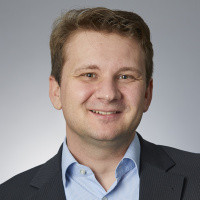
Bertram Steininger is an Associate Professor at the Department of Real Estate and Construction Management at KTH Royal Institute of Technology, Sweden. He is affiliated with the cross-disciplinary Digital Futures research center (KTH, Stockholm University, and RISE). His research focuses on quantitative analyses in real estate and finance, emphasizing AI, FinTech/PropTech innovation, natural risk, and investment vehicles like REITs and tokens. He currently directs the international M.Sc. in Real Estate and Construction Management and serves as managing editor of the German Journal of Real Estate Research. Steininger’s academic roles include teaching courses such as Financial Econometrics, Real Estate Finance, and Applied Statistics. His research collaborations span global networks including EFA, EEA, and ERES. Key research themes include tokenization of real estate assets, flood risk pricing spillovers, and infrastructure project cost overruns. He has published extensively in journals like the Journal of Portfolio Management, Journal of Real Estate Finance and Economics, and European Journal of Finance. His work bridges theoretical finance with empirical real estate applications, addressing topics from green housing premiums to blockchain-driven token offerings.
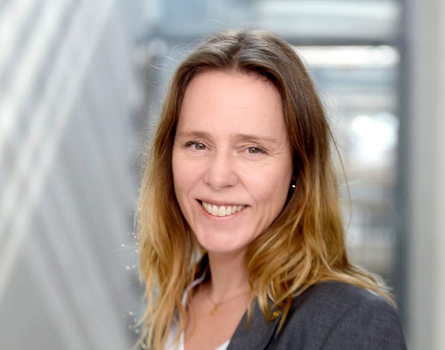
Olga Obizhaeva is an Assistant Professor of Finance at the Stockholm School of Economics (SSE) and a Researcher at the Swedish House of Finance (SHoF). She holds a PhD from the London School of Economics. Her research focuses on empirical asset pricing, institutional asset management, market microstructure, fintech, and big data applications in finance. Education PhD in Finance, London School of Economics Research Interests Her work examines how institutions and market structures influence financial outcomes, including: Impact of search engine marketing on ETF performance Hedge fund fundraising dynamics and broker intermediation Market microstructure invariance theory and its implications for stock returns Corporate share repurchase strategies and their economic consequences Application of web analytics and big data to financial markets Notable Contributions Her 2022 co-authored book Stock Buyback Motivations and Consequences provides a comprehensive review of corporate repurchase strategies. Recent work explores digital visibility's role in attracting investment flows and the structural determinants of stock return dynamics through the lens of invariance theory. Affiliations Resident Researcher, Swedish House of Finance Member of the SHoF Data Center Academic Advisory Group
Cresantus Biamba is a Senior Lecturer at the University of Gävle, specializing in Educational Science. His research bridges education theory with technological advancements, focusing on teacher training, sustainability in education, and inclusive pedagogy. Researcher at University of Gävle (Education, Educational Science) Research interests include: Education for Sustainable Development (ESD) in global contexts Teacher education reform and policy analysis Inclusive classroom practices in the Global South Technological integration in educational systems Curriculum development for post-pandemic resilience Publication trends reveal interdisciplinary work combining AI, cloud computing, and IoT applications with educational challenges, particularly in African institutions. His articles address security optimization, healthcare technology, and sustainability frameworks. Academic activities involve collaborations with researchers in cybersecurity, AI, and energy systems, though specific grants or mentoring roles are not explicitly documented here.
Nicholas Loubere is a Senior Lecturer at the Centre for East and South-East Asian Studies , Lund University, with a joint affiliation at the Department of History . His work bridges China Studies and Development Studies , emphasizing interdisciplinary approaches and fieldwork methodologies. Education: BA in English Literature, Northern Illinois University MA in International Relations, Xiamen University PhD in East Asian Studies, University of Leeds Research focuses on three interconnected strands: microcredit programs for rural development in China , Chinese migration to Ghana for gold mining , and methodological critiques in China/Development Studies . His work contributes to UN Sustainable Development Goals (SDGs) related to poverty reduction and sustainable economies. Recent publications span topics from digital financial systems to Chinese migration impacts , with a strong engagement in open access advocacy as co-editor of the Made in China Journal . Awards include the International Co-operative Alliance Best Paper for Young Scholars Award (2015) . He actively participates in academic networks like the Extractivism Research Group and Chinese Global Orders , and has delivered keynotes at events such as Global China as Method to Global China from Below (2024). Current projects include Research After the Gold Rush and Fragmented Power: Maritime Silk Road Governance .
Beatrice Crona is a Professor and Science Director at the Stockholm Resilience Centre, a collaboration between Stockholm University and the Beijer Institute of Ecological Economics at the Royal Swedish Academy of Sciences. She represents the Centre as a knowledge partner to the Taskforce on Nature-related Financial Disclosures (TNFD) and serves as a member of the Nature Action 100 Science Council. Crona co-leads the Mistra FinBio program focused on developing research to support the financial sector's contribution to a nature-positive economy. Dr. Crona received her PhD in Systems Ecology in 2006. Her academic career began with research on fisheries governance in small-scale fisheries in developing countries, spanning regions from East Africa to the Philippines. She has since expanded her research focus to integrate sustainability requirements into traditional financial services and explore food systems transformation, with particular emphasis on aquatic foods. Professor Crona's research spans two key areas of transdisciplinary research: corporate and financial system sustainability and food systems transformation. Her work in sustainable finance emphasizes integrating sustainability requirements into traditional financial services and investigating how private capital can be leveraged to promote sustainability through various investment mechanisms. She has developed the "Earth System Impact" (ESI) score that captures corporate and investment impacts on the earth system beyond carbon emissions. In food systems, she has contributed to the EAT-Lancet report and co-led the Blue Food Assessment with Professor Roz Naylor at Stanford, examining the role of aquatic foods in achieving sustainable and healthy diets. Her recent publications demonstrate a strong focus on developing scientifically robust sustainability impact assessment methodologies, translating planetary boundaries into actionable frameworks for cities and businesses, and analyzing the role of blue foods in global food systems. Crona's work consistently applies a systems lens to identify key levers for change across multiple scales, bridging scientific insights with practical applications in finance and food systems. Ranked among top 2% most cited scientists globally (2024) according to Elsevier Data Repository Contributor to EAT-Lancet Commission on healthy diets from sustainable food systems Co-leader of the Blue Food Assessment Professor Crona leads the Mistra FinBio program, which develops research to support the financial sector's capacity to contribute to a nature-positive economy. She was part of the initial secretariat of the SeaBOS initiative, aiming to bridge the gap between science and seafood business for improved corporate practice, and led the initial SeaBOS Taskforce on Transparency and Traceability. Her work often involves collaborations with international organizations, academic institutions, and industry partners to translate scientific insights into practical applications. Through the Mistra FinBio program and her leadership roles in initiatives like TNFD and Nature Action 100, Crona has established research teams focused on sustainable finance and biosphere stewardship. Her work with the Blue Food Assessment has created a global network of researchers examining the role of aquatic foods in sustainable and healthy diets. These teams bring together expertise from ecology, economics, political science, and finance to address complex sustainability challenges.
Claire Ingram Bogusz is an Associate Professor (docent) in the Department of Informatics and Media at Uppsala University. Her research examines how code-based technologies reshape work, organizational structures, and societal inequalities through interdisciplinary lenses of law, philosophy, and economics. Her primary research interests include: Artificial Intelligence and its societal implications, particularly in employment and decision-making Blockchain technologies and their impact on financial systems and entrepreneurship Fintech innovation and digital transformation in financial services Platform ecosystems and the gig economy's effects on labor markets Collective intelligence in digital communities Regulatory challenges for emerging technologies Analysis of her recent publications reveals a critical focus on AI ethics in recruitment, fintech boundary definition, and open banking governance. Her work consistently explores how technological change interacts with social structures, emphasizing risks of discrimination, the need for transparent systems, and the complex dynamics of digital entrepreneurship within polarized societies.
Talina Sondershaus is an Assistant Professor at the Department of Economics at Lund University School of Economics and Management (Sweden) and an affiliated researcher at Norges Bank (Norwegian Central Bank). She holds a PhD from the Halle Institute for Economic Research (IWH) and University of Magdeburg in Germany. Her research focuses on financial intermediation, including borrowing/lending behavior, loan trading dynamics, and the intersection of financial markets with climate change, geopolitical risks, and monetary policy. She has published extensively on topics such as covered bonds, bank portfolio rebalancing, and the impact of unconventional monetary policies. Awards include the Best Discussion Award at the 13th National PhD Workshop in Finance (2024) and Workshop on Banking Research Münster (2023). Her research is supported by grants like the Jan Wallanders och Tom Hedelius stiftelse project 'Shadow Banks and Climate Change' (1 million SEK). She actively organizes academic events, including the Knut Wicksell Conference on Crypto and Fintech (2024), and collaborates internationally on projects such as 'The Impact of Finfluencers on Retail Investment.'
Ahmad Ghazawneh is a Senior Lecturer at the School of Information Technology , Halmstad University. His research explores the intersection of digital innovation platforms, blockchain technology, and fintech, emphasizing transformative impacts on financial systems and digital economies. Email: ahmad.ghazawneh@hh.se Research Focus: Dr. Ghazawneh investigates blockchain-based financial ecosystems, knowledge graph integration in healthcare, and platform dynamics across multiple domains including mobility systems and social media affordances. Scientific Trends: Recent publications demonstrate expertise in federated health data systems, token-based blockchain ecosystems, conversational AI for healthcare, and sustainable mobility platforms. His work bridges theoretical platform economics with practical implementations.
Elin Molin is a postdoctoral researcher at Lund University , Sweden, with affiliations to the Centre for Economic Demography (CED) , Uppsala Centre for Fiscal Studies (UCFS) , and Knut Wicksell Centre for Financial Studies (KWC) . Primary research areas: Household Finance, Financial Intermediation, Education Economics, Labor Economics. Focus on policy-relevant questions: financial distress determinants, BNPL loans, crypto assets, and educational reforms. Scientific Awards: 2nd best paper prize at the Essen Health Conference 2024. Grants: Johan och Jakob Söderbergs stiftelse The Thule Foundation Handelbanken (two grants) Conference Participation: Co-organizer of the 2nd Arne Ryde Workshop, Workshop on Household Debt Relief, and Knut Wicksell Conference on Crypto and Fintech.
Chris Ivory is a Professor of Innovation Management at Mälardalen University’s School of Innovation, Design and Engineering, within the Division of Innovation Management. His work focuses on fostering research culture and advancing knowledge in innovation, creativity, and entrepreneurship. He explores how digitalization, artificial intelligence, and emerging technologies reshape work environments, organizational practices, and societal structures. His research spans key areas including the future of work, sociomaterial entanglements in technology use, Fintech’s societal impacts, and sustainable decarbonization strategies for small businesses. He critically examines managerial roles in technologically mediated environments, emphasizing ethical considerations and human-centered approaches. Publications highlight interdisciplinary inquiry into digital transformation, workplace well-being, and the intersection of technology with social issues. His work often bridges theoretical frameworks (e.g., relational ontology, posthumanism) with empirical studies in sectors like construction, healthcare, and education. Notable contributions address challenges in organizational learning, project management innovation, and the ethical deployment of AI and wearables. His research advocates for equitable technology adoption and sustainable practices, influencing both academic discourse and practical policy recommendations.
Anette Hallin is a Professor in Business Studies (Organization and Management) at Mälardalen University, Sweden. She holds positions in the School of Business Society and Engineering's Division of Organization and Management. Her roles include serving as Scientific Director for AI@MDU's societal implications subarea and contributing to the Center for Welfare Change since 2023. She teaches organization studies, project management, change management, and research methodology, and has authored textbooks in these areas. Her research focuses on how organizing processes unfold as ongoing, messy social-material interactions. Key interests include digitalization's impact on work, sustainability in urban development, and temporary organizational structures. She explores topics like technology-society entanglements, stakeholder engagement in large projects, and ethical leadership in change processes. Her publications address themes such as digital transformation, project management methodologies, and sociomateriality in organizational contexts. She actively supervises PhD candidates and participates in interdisciplinary initiatives at MDU. While no awards are listed, her extensive publication record and leadership roles highlight her scholarly contributions. Her professional activities include advising on digital governance, sustainability projects, and experimental technologies like Robot Process Automation in local government. She collaborates across academia, public sectors, and citizens to address societal challenges, emphasizing boundary-crossing collaboration and innovative governance models.
Ye Zhang is an Assistant Professor in the Department of Finance at Stockholm School of Economics (SSE) and an Eva and Mats Qviberg Research Fellow at the Swedish House of Finance (SHoF). She holds a PhD from Columbia University (2021) and a BSc from Hong Kong University of Science and Technology (2015). Her research focuses on empirical corporate finance, particularly entrepreneurial finance, using field and lab-in-the-field experiments to explore questions in venture capital, discrimination dynamics, sustainable investment, and real estate markets. She has received multiple awards including the Best Paper Awards at SWFA and SFA conferences, and Vinnova Funding Grants. Her work bridges behavioral economics with finance, examining how investor and founder behaviors shape market outcomes. She teaches courses on Climate Finance, Sustainable Finance, and Fintech at SSE. Key contributions include revealing gender/racial discrimination patterns in venture capital, analyzing ESG funding strategies, and modeling housing market bargaining heuristics.
Björn Lundqvist is a Professor of European Law with a focus on Competition Law at Stockholm University's Department of Law, where he also serves as Head of EU Law. His academic career spans multiple prestigious institutions across Europe and the United States, contributing significantly to the field of competition law in digital contexts. His educational background includes a doctoral degree and MRes from the European University Institute in Florence, an LL.M. from the University of Michigan Law School, and both LL.M. and LL.B. degrees from Uppsala University in Sweden. This diverse academic foundation has shaped his interdisciplinary approach to legal scholarship. Lundqvist's research centers on the intersection of Competition, Innovation, Data, Property and Law, with particular emphasis on the data-driven economy. His work examines how traditional competition law frameworks adapt to digital markets, data governance, and technological innovation. He investigates the regulatory challenges posed by digital platforms, cloud services, and data access issues, exploring how competition law can address emerging market dynamics while fostering innovation. His publication record demonstrates a clear progression toward addressing the legal challenges of the digital age, with recent works focusing on data access rights, fintech competition, and digital market regulation. The thematic evolution shows increasing attention to how competition law interfaces with data governance, platform regulation, and innovation policy in networked economies. Lundqvist actively contributes to academic leadership through his roles as Director for the Institute for European Law and the Swedish Network for European Law Research. He serves on the board of the Academic Society for Competition Law (ASCOLA) as the Nordic representative, working to establish a joint Nordic organization for researcher exchange. He also participates in the Nordic network for competition law research and serves on the board of the Association for Market and Competition Law. As an educator, Lundqvist teaches across multiple levels, directing courses in Basic EU Law, Competition Law, Legal Methods in Research and Practice, and Master Thesis in European Economic Law. He supervises PhD researchers and master's thesis students, contributing to the next generation of legal scholars. His teaching extends internationally, as evidenced by his 2022 lecture 'Novel forms of abuses of dominance in digital and green economies' for the Competition Summer School for Asian officials organized by the College of Europe for the European Commission DG Competition.
Mohamed Genedy is an Assistant Professor at Jönköping University's Centre for Family Entrepreneurship and Ownership (CeFEO). His research focuses on family business dynamics, entrepreneurship, employee well-being in scaling ventures, and generational succession patterns. He investigates topics such as birth order effects on career choices, ownership structure impacts, and the interplay between family control and business strategies. His work bridges academic rigor with practical insights for family enterprises, emphasizing both the opportunities and challenges faced by these organizations. Key themes include the psychological and organizational factors influencing employee satisfaction during rapid growth phases, as well as the unique governance challenges in family-owned firms. Dr. Genedy's publications analyze dark aspects of entrepreneurship and explore gender perspectives in family succession, contributing to a more nuanced understanding of family firm operations. His research often employs mixed-methods approaches to dissect complex phenomena like investor innovation support mechanisms and the dual-edged sword of unanticipated business growth. Affiliations: CeFEO Members, Jönköping International Business School Key Research Areas: Family Enterprise Succession, Scale-up Challenges, Entrepreneurial Marketing, Generational Dynamics Contact: Room B7019 | +46 36-10 1682
Chris Ivory is a Professor of Innovation Management at the Division of Innovation Management within the School of Innovation, Design and Engineering at Malmö University. His research focuses on digitalization's impact on work environments, organizational behavior in post-digital eras, and sociomaterial entanglements in technology adoption. He explores topics such as AI-driven management practices, workplace well-being in construction and healthcare sectors, and sustainable innovation strategies for SMEs. Research interests include: Future of work dynamics in digital economies Technological mediation in healthcare and construction industries Post-Taylorism organizational theories Decarbonization strategies for small businesses Sociomaterial analysis of managerial agency Recent publications analyze AI's psychosocial implications, wearables in construction safety, and Fintech's underacknowledged effects on employee well-being. His work bridges critical management studies with applied innovation research. No awards are listed, though his prolific output reflects sustained scholarly contribution. Advising and grant details are not provided in available texts. Active in OER advocacy and experimental governance studies related to local government digital transformation.