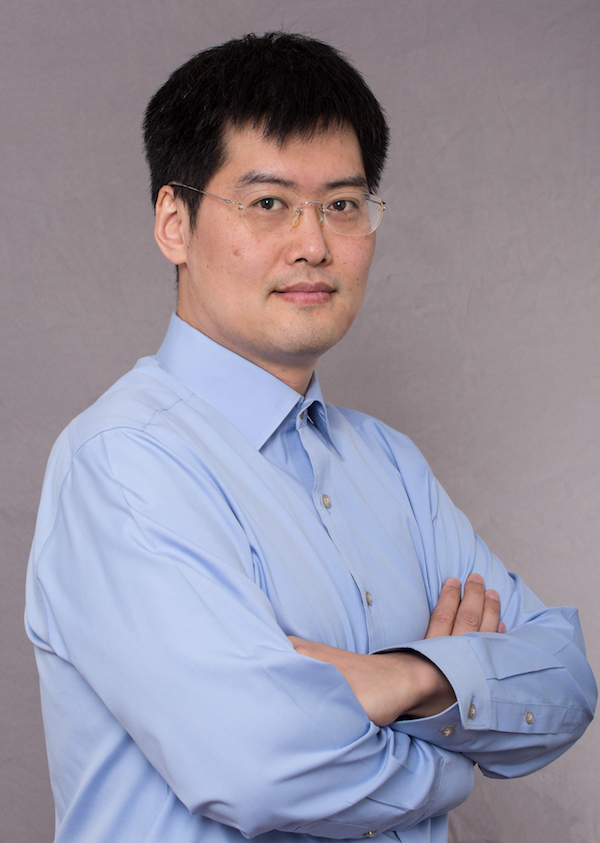
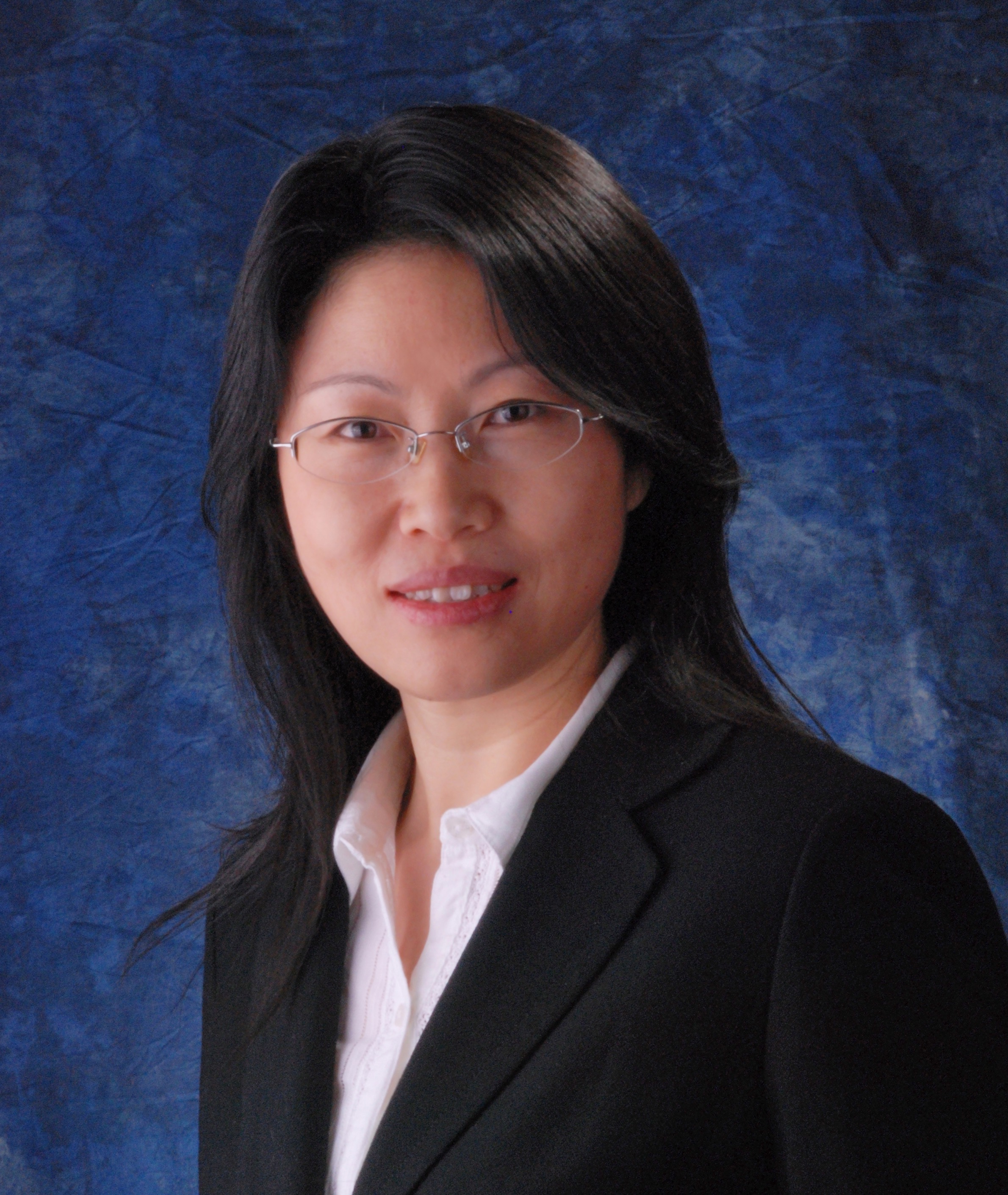
Piotr Koniusz is a Principal Research Scientist at Data61/CSIRO and an Honorary Associate Professor at the Australian National University (ANU), with an Adjunct role at UNSW. He holds a PhD in Computer Vision from the University of Surrey (2013) and a BSc from Warsaw University of Technology (2004). His research focuses on Foundation Models, Representation Learning, and Few-shot Learning, with contributions to Graph Neural Networks and Adversarial Robustness. Key roles include Program Chair for NeurIPS’25, Senior Area Chair for ICML’25 and ICLR’25, and Workshop Co-Chair for WWW’25. Awards include the Sang Uk Lee Best Student Paper (ACCV’22) and recognition as an Outstanding Area Chair (ICLR 2021–2023). Research interests span Vision-Language Models (VLMs), Generative Adversarial Networks (GANs), and Domain Adaptation. He supervises PhD students at ANU and collaborates with industry on projects like traffic forecasting and ecotoxicology prediction.
Dr. Cheng Ouyang is a Departmental Lecturer at the University of Oxford's Institute of Biomedical Engineering, part of the Department of Engineering Science. Affiliated with St. Peter's College, his research focuses on developing data-efficient, robust machine learning approaches for medical imaging and signal analysis. Key interests include domain generalization, few-/zero-shot learning, uncertainty modeling, and multimodal learning applied to medical data such as ultrasound and MRI. Prior to Oxford, he conducted postdoctoral research in cardiac imaging at Imperial College London, where he also earned his PhD in Computing. His work emphasizes practical medical applications, such as accelerating MRI reconstruction and enhancing ECG classification through multimodal techniques. Recent contributions include the CMRxRecon2024 dataset for cardiac MRI and federated learning approaches for low-dose CT denoising. His methods address challenges in generalizability, stability, and user interaction in clinical AI systems. Awards and recognitions are pending explicit mentions in the text. Dr. Ouyang's research spans foundational machine learning theory and applied biomedical engineering, with a focus on bridging gaps between algorithmic innovation and clinical utility. His lab collaborates across disciplines to advance medical imaging analysis and decision support systems.
Lu Shijian is an Associate Professor (tenured) at the School of Computer Science and Engineering , Nanyang Technological University (NTU) , Singapore. He holds a PhD in Electrical and Computer Engineering from the National University of Singapore and leads the Visual Intelligence Lab (VILab) , focusing on humanlike visual perception, understanding, and creation. University: Nanyang Technological University School: School of Computer Science and Engineering Academic Rank: Associate Professor (tenured) Email: Shijian.Lu@ntu.edu.sg Office: N4-02C-101, NTU, Singapore His research spans computer vision, deep learning, image and video analytics, visual intelligence, and machine learning , with key topics including scene text detection, unsupervised domain adaptation, image synthesis, satellite image analytics, and facial expression recognition. His work integrates supervised, semi-supervised, and self-supervised learning across 2D images, 3D point clouds, and multi-spectral data. The recent publications highlight a strong trend in domain adaptation, generative modeling, 3D vision, and multimodal AI . His lab produces high-impact work accepted at top venues like CVPR, ICCV, ECCV, NeurIPS, and TPAMI, with applications in autonomous systems, image editing, and robust AI. Top winner of ICFHR2014 Competition on Word Recognition from Historical Documents Top winner of ICDAR 2013 Robust Reading Competition (scene text segmentation) Top winner of ICDAR 2013 Document Image Binarization Contest (DIBCO 2013) Top winner of H-DIBCO 2010 – Handwritten Document Image Binarization Competition Top winner of ICDAR 2009 Document Image Binarization Contest (DIBCO 2009) Lu advises several PhD students and serves as an Associate Editor for Pattern Recognition and Neurocomputing . He has held leadership roles in top conferences as Senior Program Committee member (IJCAI, AAAI) and Area Chair (ICDAR, WACV). His lab, the Visual Intelligence Lab , is actively recruiting PhD students and conducting cutting-edge research in visual intelligence, with recent work on 3D Gaussian splatting, backdoor attacks, and vision-language models.
Yu Meng is an Assistant Professor in the Department of Computer Science at the University of Virginia (UVA), part of the School of Engineering and Applied Science. He joined UVA in 2024 as a tenure-track faculty member. His research focuses on machine learning, natural language processing (NLP), and data mining, with recent emphasis on large language models (LLMs), alignment, reliability, and ethical AI development. Educated at the University of Illinois Urbana-Champaign (UIUC), Meng earned his Ph.D. in 2023 under advisor Jiawei Han. His doctoral thesis, Efficient and Effective Learning of Text Representations , received the ACM SIGKDD 2024 Dissertation Award. He also held a visiting researcher position at Princeton University under Danqi Chen and was a Google PhD Fellow. His work has been recognized with awards including the Superalignment Fast Grant from OpenAI and notable publications at venues like NeurIPS, ICLR, and ACL. Meng’s research explores topics such as preference optimization (SimPO), retrieval-augmented generation (InstructRAG), and zero-shot learning. He actively serves on program committees for top conferences (ICLR, ICML, NeurIPS) and as an action editor for Transactions of Machine Learning Research (TMLR) . He teaches graduate-level courses on NLP, emphasizing cutting-edge LLM topics like architecture design, instruction tuning, and ethical considerations. Key achievements include contributions to LLM alignment via retrieval optimization, efficient pretraining techniques, and foundational work on weakly supervised learning. His research bridges theory and practice, addressing both technical challenges and societal impacts of AI systems.
FANG Yuan is a tenured Associate Professor at the School of Computing and Information Systems (SCIS), Singapore Management University (SMU). He holds the prestigious Lee Kong Chian Fellowship and leads research in artificial intelligence and data science. His institutional affiliation includes: School of Computing and Information Systems, Singapore Management University Education: Ph.D. in Computer Science, University of Illinois at Urbana-Champaign (2014) Bachelor of Computing (First Class Honors), National University of Singapore (2009) - Top student in Computer Science Research Focus: Dr. FANG specializes in data mining, machine learning, and AI with emphasis on graph learning, information networks, recommendation systems, and knowledge graph applications. His work bridges theoretical foundations with practical applications in social analytics, biomedical informatics, and digital transformation, often employing advanced neural network architectures. Publication Trends: Recent works (2024-2025) demonstrate strong focus on graph machine learning innovations, including graph foundation models, prompt-based learning for dynamic graphs, and LLM-graph integrations. Key themes include few-shot/zero-shot learning, non-homophilic graph processing, and applications in recommendation systems, bioinformatics, and NLP. Methodological advancements frequently involve contrastive learning, transformer architectures, and explainable AI techniques. Awards & Honors: Lee Kong Chian Fellow World's Top 2% Scientist (2024) by Stanford/Elsevier #1 Most Influential Paper at WWW'23 (GraphPrompt) - Paper Digest (2024-09) Top 5 Most Influential Papers at WWW'23 (GraphPrompt) - Paper Digest (2024-05) Top Computer Science Graduate, NUS (2009) Student Advising: Currently advises doctoral candidates including DONG Viet Hoang, LIU Ran, and NIU Yudong. Recently supervised Dr. Zhongzhou Liu's successful PhD defense (2024) on trustworthy recommendation systems. Professional Engagement: Regularly organizes tutorials at premier venues (WWW, KDD) and delivers invited talks internationally on graph learning advancements. Leads multiple research projects in collaboration with industry partners.
Huaizu Jiang is an Assistant Professor at Khoury College of Computer Sciences, Northeastern University. His research bridges computer vision, graphics, and natural language processing to develop AI systems that understand and reconstruct 3D visual environments. Prior to joining Northeastern, he was a Postdoc Researcher at Caltech and Visiting Researcher at NVIDIA. He holds a Ph.D. from UMass Amherst (advised by Prof. Erik Learned-Miller), and M.E./B.E. degrees from Xi'an Jiaotong University. His research focuses on fundamental challenges in 3D scene understanding, including geometry reconstruction, semantic interpretation, novel view synthesis, motion generation, and optical flow estimation. Core interests span video processing, human-object interactions, multimodal reasoning, and efficient edge-device implementations. Recent publications emphasize diffusion models for motion/scene generation, transformer-based 3D perception, and video interpolation. Key trends include multi-view consistency techniques, text-to-3D synthesis, and efficient real-time algorithms for robotics applications. Awards & Honors: Winner of the VQA Challenge 2020 He advises 15+ graduate students on projects spanning 3D reconstruction, motion synthesis, and vision-language models. His group collaborates with institutions like NVIDIA and Caltech, focusing on generative AI for dynamic scene understanding.
Mohammad Rostami is a Research Assistant Professor at the University of Southern California (USC) in the Department of Computer Science and Electrical and Computer Engineering, with a joint appointment at the USC Information Sciences Institute (ISI). He holds a PhD in Electrical and Systems Engineering from the University of Pennsylvania and additional degrees in Robotics, Philosophy, Electrical Engineering, and Pure Mathematics from prestigious institutions including the University of Waterloo and Sharif University of Technology. His research focuses on machine learning in data-scarce environments, particularly transfer learning, domain adaptation, low-shot learning, and improving learning efficiency through continual and collective learning. He incorporates symbolic logic and neuro-symbolic approaches to address challenges in catastrophic forgetting and knowledge retention. Applications span medical imaging, computer vision, and explainable AI. Rostami has received several accolades including the UPenn Best PhD Dissertation Award, IJCAI Distinguished Student Paper Award, and University of Waterloo Outstanding Achievement Award. His work bridges theoretical advancements with practical implementations, emphasizing real-world applications in healthcare and autonomous systems. He teaches graduate courses in applied natural language processing and knowledge graph construction. Rostami advises students at all academic levels and collaborates with remote researchers, emphasizing motivated, long-term project commitments.
Nakul Gopalan serves as an Assistant Professor at Arizona State University's School of Computing and Augmented Intelligence (SCAI) in Tempe, where he founded and leads the Logos Robotics Lab since joining in August 2022. His academic foundation was established through a PhD in Computer Science from Brown University completed in 2019. Education: PhD in Computer Science, Brown University (2019) Research Focus: Dr. Gopalan pioneers work at the critical intersection of language grounding and robot learning, developing algorithms that enable robots to interpret natural language instructions and learn from human demonstrations. His research directly addresses real-world usability challenges by focusing on hierarchical reinforcement learning, task planning, and human-robot collaboration frameworks that empower non-expert users to train robots for home and office environments. Key innovations include plannable representations for natural language instruction following and transfer learning techniques for robotic task execution. Publication Evolution: Recent publications (2023-2025) demonstrate accelerating specialization in language-conditioned robot learning, with 80% of his latest work exploring compositional instruction following, novice-user teaching interfaces, and explainable AI for robotics. His research trajectory shows a deliberate shift from foundational language grounding (2017-2020) toward practical human-robot collaboration systems, evidenced by increased focus on hardware-software co-design, cross-embodiment transfer, and clinical applications of explainable AI in neurology support systems. Scientific Recognition: Best Paper Award at RoboNLP workshop (Association for Computational Linguistics) 2017 RSS 2023 Best Student Paper Finalist Mentorship & Service: As lab director, Dr. Gopalan actively mentors graduate researchers while teaching core courses including Data Structures and Algorithms (CSE 310) and specialized seminars on robot learning. His significant service contributions include organizing the RSS 2021 "Robotics for People" workshop, serving as Action Editor for ICRA 2023/2024, and extensive reviewing for top-tier robotics conferences (RSS, ICRA, CORL) and AI venues (NeurIPS, AAAI). Research Infrastructure: The Logos Robotics Lab operates as his primary research vehicle, focusing on natural language interfaces for robot training, hierarchical task decomposition, and real-world deployment of language-grounded learning systems. Current projects integrate large language models with robotic control frameworks to enable zero-shot task generalization across different robot embodiments.
Dr. Edward Johns is an Associate Professor in the Department of Computing at Imperial College London and Director of the Robot Learning Lab. He specializes in robot learning, focusing on enabling robots to learn tasks through imitation and language-based reasoning. His expertise spans robotics, machine learning, and computer vision, with a particular emphasis on manipulation tasks requiring physical interaction with objects. He holds a BA and MEng from the University of Cambridge and a PhD from Imperial College London. Prior to his current role, he was a postdoc at UCL, a founding member of the Dyson Robotics Lab, and led the robot manipulation team there. He also served as Head of Robot Learning at Dyson (part-time, 2021–2022). His research has produced state-of-the-art capabilities such as one-shot imitation learning and language-driven task execution. Key areas of interest include sim-to-real transfer, self-supervised learning, and adaptive robotic systems. His work bridges foundational AI research with practical robotics applications, emphasizing real-world deployment and human-robot collaboration. Dr. Johns has published over 60 peer-reviewed papers, with over 4,000 citations, and has received prestigious awards including the UK-RAS Early Career Award (2023) and the Best Conference Paper Award at ICRA (2024). He is also actively involved in industry through advisory roles for robotics and AI startups. His teaching includes graduate courses on reinforcement learning and robot learning, and he collaborates extensively with labs such as the Robotics Forum and the Artificial Intelligence Network at Imperial College.
Stuart E. Middleton is a Professor in the Electronics and Computer Science (ECS) department at the University of Southampton, where he has been employed since 2003. His research bridges artificial intelligence with practical applications in social science, mental health, and security domains. He leads multiple research projects funded by DTP and CISDnS CDT, focusing on multimodal natural language processing and large language models for social good applications. Professor Middleton's research interests center on Natural Language Processing, Large Language Models, and Human-in-the-loop AI systems. His work spans mental health applications (particularly suicide risk detection and mood change analysis), social media analysis for crisis mapping, geoparsing for location extraction, and argument mining in political discourse. He has developed numerous open-source NLP projects and datasets including CPIQA for climate science, ConversationMoC for mental health monitoring, and M-Arg for multimodal argument mining. His research demonstrates how AI can effectively support human decision-making in critical domains like mental healthcare, defense applications, and crisis management. His recent publications reveal a strong trend toward applying LLMs to high-impact societal challenges, particularly in mental health monitoring and climate science verification. He has pioneered methods for detecting suicidal ideation in social media, identifying moments of mood change, and developing context-aware question answering for climate papers. His work consistently emphasizes the importance of human oversight in AI systems, with numerous publications on responsible AI, regulation, and human-in-the-loop approaches. Ranked 1st in ECAL-2024 shared task on suicidal ideation detection Ranked 1st in NAACL-2022 shared task on suicide risk and mood change classification Winner of 'best paper' award at WWW2002 Semantic Web Workshop Professor Middleton actively supervises PhD students through multiple funded projects including 'Multimodal Natural Language Processing for Computational Social Science', 'Large Language Models for Military Veteran Mental Health', and 'Large Language Models for Human/AI Information Foraging to Combat Digital Human Trafficking into Terrorism'. He has secured significant funding from UKRI, DSTL, and other sources to support his research in responsible AI applications. He organizes major workshops including the RAI UK Workshops on Responsible AI for Mental Health and AIUK workshops on AI for Data Rescue and Defense applications. His research group maintains numerous GitHub repositories with open-source NLP tools and datasets that have been widely adopted by the research community.
Joaquin Vanschoren is an Associate Professor of Machine Learning at Eindhoven University of Technology (TU/e), affiliated with the Faculty of Mathematics and Computer Science. He leads the Automated Machine Learning group and serves as Education Director for the Data Science program. His research focuses on democratizing AI, algorithm selection, and open science platforms like OpenML. He has received awards including the Dutch Data Prize and Amazon Research Award. Education: PhD in Engineering (KU Leuven, Belgium), MSc in Computer Science (KU Leuven). Research visits included IBM, Amazon Research, and universities globally. Research Interests: Machine Learning, Automated ML, Meta-learning, AI Safety, Data-centric AI. He co-founded OpenML and chairs MLCommons' AI Safety working group. Key Projects: NeurIPS Datasets and Benchmarks track, MLCommons initiatives, OpenML platform. Supervised 78 research works and authored 200+ papers. Awards: Dutch Data Prize (2016), Amazon Research Award (2019), Microsoft Azure Research Awards (2016–2017). Labs/Teams: OpenML open source team, MLCommons collaborations, Automated Machine Learning group at TU/e.
Eugene Vinitsky is an Assistant Professor at NYU Tandon School of Engineering, holding joint appointments in Civil and Urban Engineering and Computer Science. His research develops multi-agent reinforcement learning systems for autonomous vehicles and traffic control, with applications in robotics and intelligent infrastructure. He directs the Computational Transportation Systems Lab and leads projects like CIRCLES on congestion reduction. Research Focus: Designs algorithms enabling complex behaviors through unsupervised agent interactions, human-AI compatibility, and environment synthesis for autonomous systems. Awards & Leadership: NSF Graduate Fellow (2016), Eisenhower Fellow (2018, 2020), and PI on multiple grants including Amazon Research Awards. Mentored 14+ graduate students and organized international RL conferences.
Xuming He is an Associate Professor at the School of Information Science and Technology (SIST), ShanghaiTech University, where he leads the PLUS Lab. His research spans computer vision and machine learning with a focus on developing algorithms that operate effectively under limited supervision and evolving data conditions. His core research interests include weakly-supervised and few-shot learning for scenarios with sparse annotations, continual learning frameworks for knowledge retention during sequential task acquisition, semantic segmentation techniques for scene understanding, and multimodal vision-language representations. He emphasizes interpretable machine learning to build transparent AI systems capable of human-understandable reasoning, addressing critical challenges in model trustworthiness and deployment reliability. Recent publications reveal strong trends toward novel class discovery in long-tailed recognition scenarios, physics-informed generative modeling for scientific applications, and robust segmentation under distribution shifts. His work increasingly integrates large language models for multimodal reasoning while maintaining focus on efficiency in resource-constrained environments like robotic grasping and medical imaging analysis. He actively mentors students, having supervised Qian He to PhD completion and Chuanyang Hu to Master's degree in 2023. He welcomes prospective graduate students through ShanghaiTech's Computer Science & Technology program and offers undergraduate research projects requiring minimum six-month commitments. The PLUS Lab under his direction drives innovation in learning under supervision constraints, with recent work spanning medical tumor analysis, cross-view geolocation, photonic computing, and semiconductor design verification. The lab's research bridges theoretical advances with practical applications across healthcare, robotics, and scientific discovery domains.
Professor Liu Hongyan is a full-time Professor in the Department of Management Science and Engineering at Tsinghua University's School of Economics and Management, where he has served since 1994, achieving the rank of Professor in 2011 after previously holding positions as Associate Professor (2003-2011) and Teacher. His research bridges theoretical data science with practical applications across e-commerce, healthcare, and social media platforms. Education: PhD in Management, School of Economics and Management, Tsinghua University (2001) His research focuses on big data management , machine learning , and business intelligence with specialized expertise in personalized recommendation systems , medical/financial data analysis , and computer vision applications . Recent work integrates large language models and causal inference to solve complex problems in short video platforms, live streaming, and healthcare analytics, emphasizing real-world impact through industry collaborations. Analysis of his 15 most recent publications (2023-2025) reveals a strong trajectory toward multimodal AI systems combining recommendation engines with computer vision, particularly in 3D animation for advertising and healthcare. Key trends include LLM-enhanced display advertising, emotion-aware facial animation, and medical image annotation using adversarial learning, while maintaining core contributions to behavioral data mining in social networks. Scientific recognition includes: National Archives Administration's Outstanding Scientific and Technological Achievement Award Multiple Best Paper Awards at international conferences Outstanding Doctoral Dissertation Supervisor designation from the Society for Management Science and Engineering Special Award for National Natural Science Foundation project on user behavior pattern discovery Professor Liu has secured leadership roles in major National Natural Science Foundation projects including Innovation Research Groups and international cooperation initiatives. His industry impact is demonstrated through patented recommendation systems adopted by multiple companies, particularly in personalized content delivery for live streaming and short video platforms. As an Outstanding Doctoral Dissertation Supervisor, he mentors the next generation of data science researchers. He serves as Deputy Director of Tsinghua University's Center for Artificial Intelligence and Management Research and holds key positions in national academic societies including the E-Commerce and Cyberspace Management Committee (China Management Modernization Research Association) and the Information Systems Engineering Committee (Chinese Society for Systems Engineering).
Janarthanan Rajendran is an Assistant Professor and the Sexton Chair in Reinforcement Learning at the Faculty of Computer Science, Dalhousie University, in Halifax, Nova Scotia, Canada. He is actively involved in research, teaching, and mentoring, with a focus on deep reinforcement learning and its applications in complex, dynamic environments. Education: Postdoctoral Fellow, Mila Quebec AI Institute and University of Montreal, Canada (2023) PhD in Computer Science and Engineering (AI stream), University of Michigan, Ann Arbor, USA (2021) MTech and BTech in Electrical Engineering, Indian Institute of Technology Madras, India (2016) His research focuses on enabling machines to learn through interaction, with core interests in deep reinforcement learning, model-based RL, multi-agent systems, transfer learning, and applications in materials science and economics. He also explores the integration of large language models and foundation models into reinforcement learning frameworks. His work emphasizes adaptivity, lifelong learning, and societal implications of AI. The most recent publications show a strong trend in advancing cooperative multi-agent systems, developing adaptive and memory-efficient RL methods, and applying RL to real-world challenges such as crystal design and dynamic pricing. His research bridges theoretical innovation with practical application, often in interdisciplinary contexts. Scientific Awards: Sexton Chair in Reinforcement Learning Dr. Rajendran is actively involved in mentoring graduate students and fostering an inclusive research environment. He is currently recruiting PhD and MCS students at Dalhousie University. He has no formal grants listed in the text, but his research chair and active publication record suggest strong funding support. He is also engaged in the broader AI community, having organized and participated in major conferences such as the Atlantic Canada AI Summit and NeurIPS. Labs and Research Groups: He leads a research group focused on deep reinforcement learning at Dalhousie University, working on topics including model-based RL, off-policy learning, and leveraging external knowledge sources. The group emphasizes inclusivity and supports underrepresented groups in computer science research.