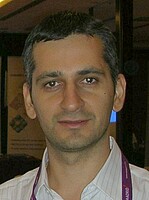
Kyprianos Papadimitriou is a Researcher at the Microprocessor and Hardware Laboratory within the School of Electrical and Computer Engineering at the Technical University of Crete . He holds a PhD in Electronic and Computer Engineering (2012) and has been involved in teaching laboratory courses such as Logic Design , Computer Architecture , and VLSI/ASIC Circuit Design . Research Areas : His work spans Reconfigurable Systems , Hardware Design , Computer Architecture , RFID Systems , and Real-Time Systems . He has developed innovative approaches in FPGA-based dynamic reconfiguration, MPSoC security, and 3D stereo vision for surveillance. Key Trends : Runtime reconfiguration for FPGAs Security frameworks for NoC-based MPSoCs Low-cost embedded vision systems Optimization of reconfiguration overhead Hardware task scheduling methodologies Genetic algorithm implementations on FPGAs Scientific Contributions : 1 USA patent (2005) Co-author of VLSI-SoC 2013 paper nominated for 1st Prize Active member of scientific committees (FPL, ReConFig) Peer reviewer for IEEE, Elsevier, and Springer journals Session chair at IEEE CNS and HPCC conferences Grants & Projects : Participated in competitive European and national programs, serving as scientific manager, coordinator, and technical coordinator. Developed spin-off company (2003-2005) to commercialize master's thesis research. Laboratory & Teaching : Affiliated with the Microprocessor and Hardware Laboratory , focusing on practical training in digital systems, processor-based systems, and VLSI design.
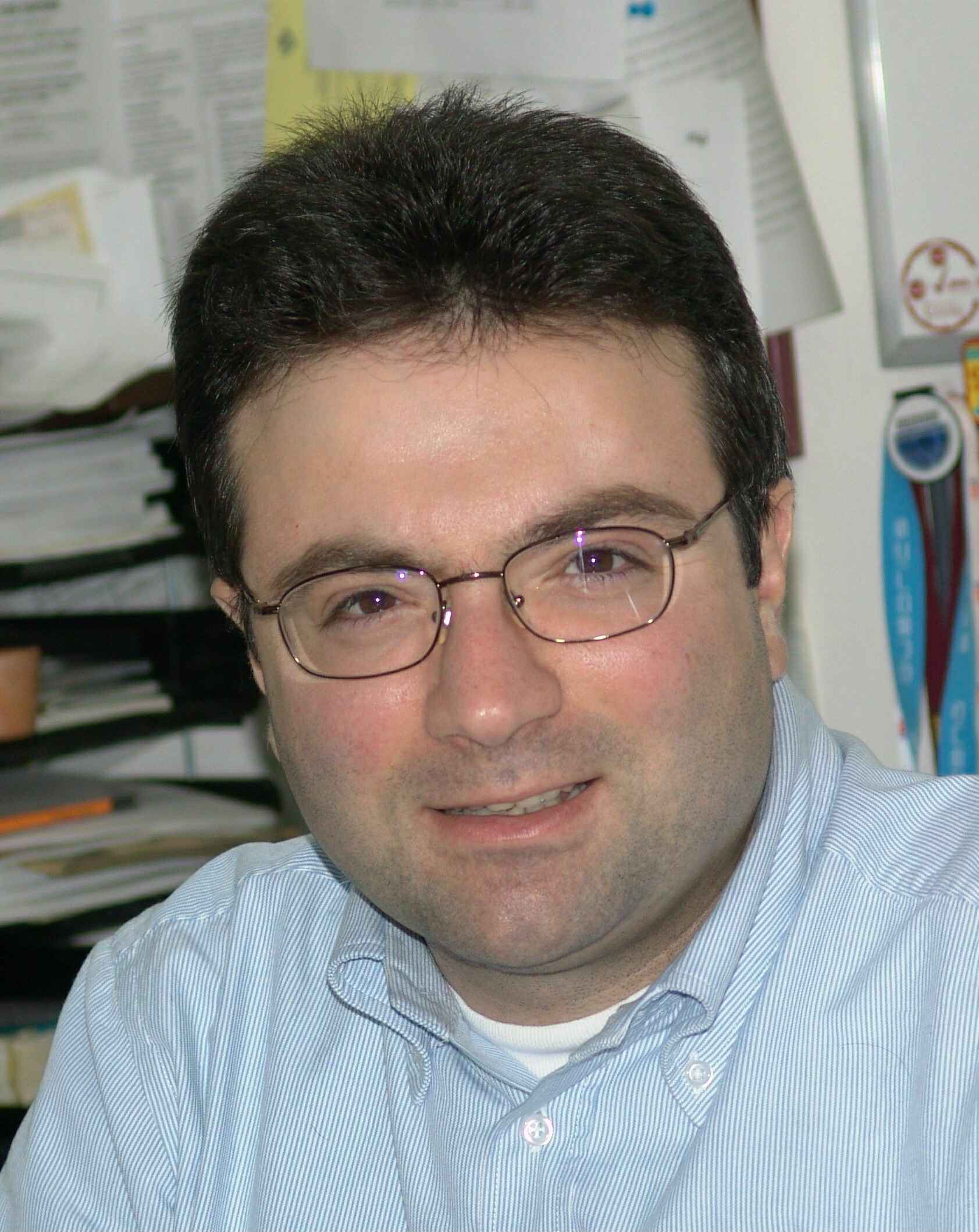
Nectarios Koziris is a Professor at the Department of Computer Science , National Technical University of Athens (NTUA) , and former Dean of the School of Electrical and Computer Engineering . His research focuses on Parallel and Distributed Systems , Computer Architecture , and Cloud Computing . Key Research Themes: Compiler-OS-Architecture Interaction, Datacenter Hyperconvergence, Sparse Matrix Optimization, Quantum Computing, FPGA Virtualization Leadership: Founder of ~okeanos (Europe's largest public Cloud IaaS), Co-founder of GFOSS , Member of IEEE Computer Society Greece, Advisor to Arrikto Inc. His work has led to over 180 publications with 5800+ citations (h-index 33) , including two Best Paper Awards (IPDPS 2001, CCGRID 2013) and Intel Recognition (2015). He has supervised 12 PhD students and participated in 15+ EU projects as coordinator or consortium partner. Scientific Leadership: Program Co-Chair for Europar 2012 , Organizer for IPDPS , ICPP , SC conferences, and active member in Cloud Computing Expert Groups for the European Commission.
Dr. Dimitrios Bakalis is an Assistant Professor at the Department of Physics, University of Patras, specializing in Digital Electronic Circuits and Systems. He joined the faculty in 2004 and focuses on the design and control of digital circuits, emphasizing low-power testing and built-in self-test (BIST) methodologies. His academic roles include teaching courses such as Computer Programming I, Digital Electronics, and Microcomputer Architecture at both undergraduate and postgraduate levels. Education: Diploma in Computer Engineering and Informatics (University of Patras) Master’s Degree in Computer Science and Technology (University of Patras) PhD in Computer Engineering and Informatics (University of Patras) Research Interests: His work revolves around VLSI design, arithmetic circuits, and low-power techniques. Key areas include modulo arithmetic circuits, fault-tolerant systems, and reconfigurable computing architectures. He has published over 50 papers in top-tier journals and conferences, contributing to advancements in digital circuit efficiency and reliability. Teaching: He instructs core courses in digital electronics and computer architecture, integrating cutting-edge research into his pedagogy. His MSc courses focus on FPGA-based digital system design, emphasizing practical applications. Labs/Teams: His research aligns with the Electronics & Computers sector within the Department of Physics, collaborating on projects involving arithmetic core optimization and low-power testing strategies.
Dr. Christos Antonopoulos is an Associate Professor at the Department of Electrical and Computer Engineering, University of Patras. He holds a Diploma and PhD in Electrical Engineering from the University of Patras (2002, 2008) and has participated in over 16 European research projects (FP5, FP6, FP7, Horizon 2020) and 6 national projects. Research Interests: Wireless Networks Cyberphysical Systems Embedded Software Architecture Internet of Things Cross-Layer Protocols Sensor Networks Technical Expertise: His work involves network simulation, power optimization, and reconfigurable computing. He has published >100 journal/conference papers and 13 book chapters with over 1000 citations.
Michael F. P. O'Boyle is a Professor of Computer Science at the University of Edinburgh's School of Informatics. He is a leading researcher in compiler technology, specializing in optimizing compilation, machine learning for compilation, and heterogeneous systems. His work addresses the critical challenges of compiling software for increasingly diverse hardware architectures in the post-Moore's Law era. Professor O'Boyle's research interests focus on: Optimizing compilation techniques Machine learning applications in compilation Heterogeneous computing systems Program synthesis Neural machine translation for code Hardware/software co-design His recent publications demonstrate a strong focus on tensor optimization, compiler infrastructure for heterogeneous systems, and machine learning applications in program analysis and transformation. O'Boyle's work bridges traditional compiler techniques with modern AI-driven approaches to code optimization, addressing the growing complexity of hardware-software interfaces. Professor O'Boyle has received several notable honors and awards: ACM CGO Test of Time award (2017) Senior EPSRC Research Fellow Fellow of the British Computer Society (BCS) He holds significant leadership roles including Director of the ARM Research Centre of Excellence at Edinburgh and Director of the EPSRC Centre for Doctoral Training in Pervasive Parallelism. O'Boyle is also a founding member of HiPEAC, a European network for high-performance and embedded architecture and compilation, and has delivered keynote addresses at major conferences including PPoPP 2019 where he presented his vision for "Rethinking Compilation in a Heterogeneous World."
Manolis G.H. Katevenis is a Professor at the Department of Computer Science, University of Crete, and the founder and Head of the Computer Architecture and VLSI Systems (CARV) Laboratory at the Institute of Computer Science (ICS), Foundation for Research and Technology – Hellas (FORTH) in Heraklion, Crete, Greece. He has held academic positions since 1986 and played a pivotal role in establishing the Computer Science Department at the University of Crete. His research spans computer architecture, interconnection networks, VLSI systems, and high-performance computing, with a strong focus on scalable, low-power, manycore systems and RISC-V. He has led numerous European R&D initiatives, including serving as Coordinator of the ExaNeSt project. PhD in Computer Science, University of California, Berkeley (1983) MSc in Electrical Engineering and Computer Science, University of California, Berkeley (1980) Diploma of Electrical Engineering, National Technical University of Athens (1978) Manolis Katevenis's research focuses on advancing scalable system architectures for high-performance and big data computing. His work in computer architecture includes RISC-V, exascale computing, and manycore systems. He has made foundational contributions to interprocessor communication, particularly through remote-write, remote-DMA, and remote-enqueue mechanisms, and has pioneered innovations in interconnection networks and low-latency network interfaces. His research integrates hardware and software co-design to optimize performance, energy efficiency, and scalability in large-scale computing systems. The recent publications highlight a strong trend in exascale computing, interconnection networks, and FPGA-based prototyping of manycore systems. His work emphasizes scalable, low-power architectures, with recurring themes in congestion management, fair scheduling, crossbar design, and hardware-software integration for HPC. The articles span high-impact journals such as IEEE/ACM Transactions on Networking, IEEE Micro, and Computer Networks, reflecting sustained contributions to computer architecture and networking. ACM Doctoral Dissertation Award (1984) David J. Sakrison Memorial Prize (1983) IBM PhD Fellowship (1981–1983) Greek State Fellowship (1973–1978) Stelios Pichoridis Award for Outstanding University Teaching (2015) Member of Academia Europaea (elected 2012) Award by the Secretary General of the Region of Crete (2003) IEEE Milestone recognition for the RISC Project (2015) Manolis Katevenis has supervised over 50 graduate theses and mentored many prominent Greek computer architects, including recipients of the ACM Maurice Wilkes Award. He has served as Principal Investigator or co-PI in over 30 R&D projects with a total budget exceeding 18 million euros, including major European initiatives such as ExaNeSt (which he coordinated), EuroEXA, EcoScale, SARC, ENCORE, and multiple HiPEAC Network of Excellence projects. His leadership extends to project coordination, architectural design, FPGA prototyping, and systems software development. Katevenis founded and leads the CARV Laboratory at FORTH-ICS, a major research team with 80–100 members focused on computer architecture and VLSI systems. The lab has spun off the Distributed Computing Systems (DCS) Laboratory and is central to European exascale computing efforts, including participation in the European Processor Initiative. CARV has developed large-scale prototypes such as the 768-core ExaNeSt system and the Formic FPGA platform for manycore research.
Alexandros Dimopoulos is an Assistant Professor at the Department of Informatics and Telematics, Harokopio University of Athens, with expertise in reliable embedded systems, FPGA design, and bioinformatics applications. He graduated from the National Technical University of Athens (NTUA) in 2004 with a degree in Electrical and Computer Engineering and earned his PhD in 2009 in intelligent embedded systems. Current academic roles: Assistant Professor at Harokopio University (since 2012), Lecturer at the Naval Academy (2020–2025). Collaboration: Alexander Fleming Biomedical Sciences Research Center (since 2012). His research focuses on: Reliable embedded systems for biomedical applications FPGA-based solutions in bioinformatics Machine learning for RNA-Seq data analysis Internet of Things (IoT) architecture Energy systems fault detection via pattern recognition His publications demonstrate interdisciplinary work bridging computer engineering, bioinformatics, and electrical systems. He coordinates the Greek national hub ELIXIR-GR and has extensive teaching experience in both undergraduate and postgraduate programs, with a focus on course modernization.
Adrian Sampson is an Associate Professor in the Department of Computer Science at Cornell University, where he is part of the Computer Systems Laboratory and the programming languages group. He joined Cornell in 2016 as an Assistant Professor and was promoted to Associate Professor in 2022. Prior to Cornell, he was a Visiting Researcher at Microsoft Research (2015-2016). He received his Ph.D. from the University of Washington in 2015 under advisors Luis Ceze and Dan Grossman, with a dissertation on Hardware and Software for Approximate Computing. His research focuses on breaking down abstraction barriers and rethinking the hardware-software interface. He is particularly known for his work on approximate computing, which explores how computers can be more efficient by allowing them to make controlled mistakes. He leads the Capra research group at Cornell, which investigates programming languages and computer architecture. Sampson's recent publications demonstrate a strong focus on hardware acceleration, FPGA programming, compiler design, and programming language theory. His work often bridges the gap between high-level programming abstractions and low-level hardware implementation, with particular attention to predictability, verification, and energy efficiency. He has made significant contributions to geometry types for graphics programming, timeline types for modular hardware design, and virtual machines for FPGA programming. Among his notable recognitions are the IEEE TCCA Young Computer Architect Award (2021), NSF CAREER award (2019), and multiple Distinguished Artifact Awards at major conferences. He has advised numerous Ph.D. students who have gone on to positions at institutions like Wellesley College, Northwestern University, and Amazon. Sampson is actively involved in academic service, serving on program committees for major conferences including PLDI, ASPLOS, and ISCA. He has also held leadership roles such as ACM SIGARCH Board of Directors (2023-2025) and SIGPLAN Information Director. His teaching at Cornell includes courses on computer systems, programming languages, and advanced compilers.
Prof. Nikolaos Voros is a Professor at the Department of Computer and Electrical Engineering, University of the Peloponnese. He holds a PhD (2001) and Diploma (1996) in Computer and Informatics Engineering from the University of Patras. He leads the Embedded Systems Laboratory , an official Digital Innovation Hub of the European Commission. His research focuses on embedded/cyber-physical systems, including specification techniques, hardware-software co-design, formal refinement, and IoT platforms. He has coordinated over 30 EU-funded projects, including Horizon 2020 initiatives like ARGO and RADIO. He serves as an associate editor for journals like IEEE Transactions on Nanotechnology and has authored multiple books on system-level design and reconfigurable systems. He directs the Master's program 'Smart ICT Services & Infrastructures' and organizes international conferences like ISVLSI and ARC. Education: Diploma in Computer and Informatics Engineering (1996), University of Patras PhD in Computer and Informatics Engineering (2001), University of Patras Research Interests: Embedded systems, cyber-physical systems, hardware-software co-design, formal methods, IoT, and AI-driven assistive technologies. His work emphasizes safety-critical systems, real-time applications, and EU-funded innovations. Grants & Projects: Scientific coordinator of Horizon 2020 projects ARGO and RADIO. Managed FP7 projects ALMA and ARMOR. Over 30 EU-funded initiatives in embedded systems and cyber-physical systems. Labs & Teams: Leads the Embedded Systems and Applications Design Laboratory , a European Commission-recognized hub for innovation in embedded systems and IoT platforms.
Dionysios Pneumatikatos is a Professor at the School of Electrical and Computer Engineering of the National Technical University of Athens (NTUA) since September 2019. Previously, he served as a Professor and Chair of the Department of Electronic and Computing Engineering at the Technical University of Crete (2000–2019) and is an Associate Researcher at the Foundation for Research and Technology (FORTH) since 1997. His primary affiliations include the Computing Systems Laboratory (CSLab) at NTUA and the Computer Architecture and VLSI Systems (CARV) Laboratory at FORTH. Education: B.Sc. in Computer Science, University of Crete (1989) M.Sc. and Ph.D. in Computer Science, University of Wisconsin–Madison (1991, 1995) Research Interests: Computer Architecture Reconfigurable Computing Hardware Acceleration (e.g., FPGA, RISC-V) Energy-Efficient Systems Reliable System Design Application-Specific Architectures His work focuses on heterogeneous parallel systems , bioinformatics accelerators , and virtualization frameworks for reconfigurable platforms . Recent Projects & Contributions: Coordinator of the FASTER (FP7) project Principal Investigator in EDRA (H2020), EXTRA , and dReDBox Key roles in AXIOM , DeSyRe , and VPLANET These projects explore FPGA-based HPC systems , RISC-V ecosystems , and disaggregated data center architectures . Teaching & Mentorship: Teaches courses on Computer Architecture , Parallel Processing , and Logic Design at NTUA and TU Crete Supervised multiple national/EU projects, fostering interdisciplinary research in embedded and high-performance systems Labs & Networks: Active member of the HiPEAC European Network Program Committee roles at ISCA , FPL , and DATE Led the 21st International Conference on Field-Programmable Logic and Applications (FPL)
Giannakopoulos Konstantinos is a Lecturer in the Department of Physics at the University of Patras, specializing in the Electronics and Computers Sector. He also serves as Associated Educational Staff (SEP) for the Informatics Program at the Hellenic Open University (EAP). His academic journey includes a Physics Bachelor's (1991), two Master's in Electronics (1998 and 2014), and a PhD in Electronics (2003), all from the University of Patras. Fluent in English and German, he contributes to IEEE CAS Society since 1997 as a reviewer for journals like International Journal of Electronics and conferences such as NILES and EUSIPCO. Research Interests: Design of nonlinear electronic circuits (chaotic/hyperchaotic oscillators), analog cryptography applications, active filters (OTAs/OTRAs), and microcontroller systems (Arduino/ESP32). He has authored 9 books, 22 peer-reviewed publications, and developed educational materials (webcasts/EDY) for EAP. His work bridges theoretical nonlinear dynamics with practical analog circuit design, emphasizing chaos-based systems and educational technology. Professional Experience:曾担任 Western Greece Technical Institute's Laboratory Associate, Coordinator of the SEE Natural Sciences Project, and Director of Patras' 2nd EPAL. He led projects like MOSTRA (University of Patras Strategic Design) and IRREDER (Erasmus+ curriculum development). His recent focus includes FPAA design and microcontroller-based systems. Current Projects: MOCASTRA – University of Patras Strategic Design (2023) IRREDER: Integrating Recent Electrical Engineering into Curricula (2022) PYTHAGORAS II: Active Filter Design Research (2005–2007)
Psarakis Michael is a Professor at the Department of Informatics, School of Information and Communication Technologies, University of Piraeus. He directs the Embedded Computational Systems Lab and holds a diploma in Computer Engineering from the University of Patras, along with a PhD in Informatics and Telecommunications from National and Kapodistrian University of Athens. Research focuses on embedded systems design, fault tolerance, FPGA radiation effects, and SoC development Managed 10+ research programs funded by national, EU, and private entities Published over 70 papers in reputable journals and conferences Active IEEE/ACM member and program chair for international symposia (DFT 2019/2020)
Christos Kotselidis is an Associate Professor at the University of Manchester's School of Computer Science and serves as Chief Engineer at Pierer Innovation (previously mentioned as KTM Innovation). He leads the TornadoVM project, a groundbreaking Java Virtual Machine for heterogeneous hardware acceleration. His work bridges academia and industry, focusing on hardware/software co-design for virtual machines and embedded systems. His research spans chip design, micro-architecture, compilers, virtual machines, and garbage collection. Dr. Kotselidis has pioneered work in heterogeneous computing, particularly in accelerating Java applications on GPUs, FPGAs, and RISC-V architectures. His team's recent development of GPULlama3.java demonstrates the practical application of his research in bringing LLM inference to pure Java with GPU acceleration. His publications show a consistent focus on bridging hardware capabilities with managed runtime systems. The research trajectory reveals increasing sophistication in handling memory hierarchies, parallelism, and cross-architecture execution. His work has significant implications for high-performance computing, AI acceleration, and sustainable computing practices. Dr. Kotselidis actively contributes to the academic community as a program committee member for conferences like ISMM and as an organizer for workshops including VMIL and MoreVMs. He's also involved in EU-funded projects like AERO and DARE, which focus on European processor initiatives and software ecosystems. As project lead for TornadoVM, he mentors a research team at Manchester including Michalis Papadimitriou, Mary Xekalaki, and Thanos Stratikopoulos. His lab (Beehive Lab) develops open-source tools that are widely used in both academic and industrial settings for heterogeneous computing.
Aristides Efthymiou is an Assistant Professor at the Department of Computer Engineering and Informatics, University of Ioannina. He holds a PhD from the University of Manchester (2002) and has held academic positions at the University of Edinburgh (2004–2011) and research roles at the Institute of Microelectronics, National Center for Scientific Research 'Demokritos,' and Integrated Systems Development SA. His research focuses on microarchitecture, digital systems design, and VLSI circuits. Education: Bachelor's and postgraduate diploma in Computer Science, University of Crete (1993–1995) PhD in Computer Science, University of Manchester (2002) Research interests include approximate computing, visible light communications (VLC), and energy-efficient circuit design. He is a member of the VLSI Systems and Computer Architecture Laboratory (VCAS), contributing to projects like the Artemis Program on supply chain traceability. His work spans over 25 international publications, emphasizing hardware optimization and signal processing in VLC systems. Awards: None explicitly mentioned. Lab and Team: Leads the VCAS lab, collaborating with faculty members like Professors George Tsiatouchas and Chrysovalantis Kavousianos. Supervises doctoral candidates in areas like approximate multipliers and VLC systems.
Maria Sapounaki is a Researcher at the Intelligent Systems Laboratory and a Ph.D. candidate in the Department of Computer Science and Biomedical Informatics at the University of Thessaly. Her academic journey includes a BSc (2019) and MSc (2021) from the same department, focusing on informatics and computational biomedicine. Her research interests revolve around neuromorphic circuits, spiking neural networks, neuroprosthetics, and low-power system design. She has extensive experience with programming languages (Python, MATLAB, VHDL) and hardware platforms like Arduino and FPGA boards. Notable contributions include advancements in neuromorphic astrocyte-neuron circuits, power-efficient neural-glial interaction implementations, and cybersecurity studies in healthcare. She has also served as a lab instructor for courses like Programming I and Numerical Analysis in the Department of Mathematics. Her publications span topics from neuromorphic hardware design to human factors in healthcare security, reflecting interdisciplinary strengths in engineering and neuroscience.