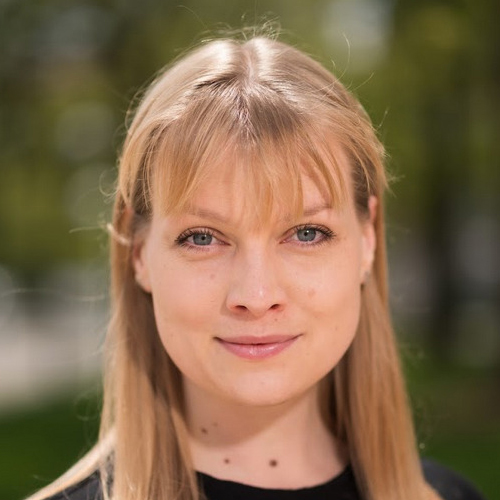
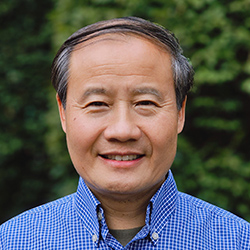
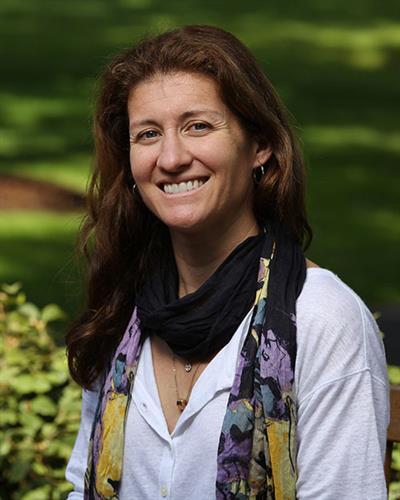
Julia Marshall is an Assistant Professor in the Department of Cognitive and Psychological Sciences at Brown University, leading the Mind & Morality Lab. Her research focuses on the foundations of human moral and social cognition, particularly in childhood. She investigates how moral concepts like fairness and justice develop across cultures, using experimental methods with children aged 4–12 and adult populations. Key areas include third-party punishment, cross-cultural moral development, and the origins of prejudice. Education: BA in Psychology (Emory University, 2015); PhD in Psychology (Yale University, 2020). Postdoctoral work as an NSF fellow at Boston College. Her lab employs developmental science and behavioral economics to study cooperation and moral reasoning. Research Interests: Moral psychology, cross-cultural studies, child development, social cognition. Lab: Mind & Morality Lab at Brown University. Teaching: CLPS 1680H – The Developmental Origins of Cooperation. Publications emphasize themes like third-party punishment, forgiveness, and the impact of cultural and social contexts on moral judgments. Her work bridges developmental and social psychology to address questions about universal vs. culturally specific moral behaviors.
David Haines is a Senior Lecturer in Visual Art at Sydney College of the Arts, University of Sydney. He holds a BA(VA) from UNSW and a PhD from the University of Sydney. His research focuses on interdisciplinary practices blending installation art, sound performance, and aroma chemistry, often exploring unseen energies like cosmic rays and electromagnetic fields. Collaborations with Joyce Hinterding are central to his work, producing immersive installations exhibited globally. Education: BA(VA), UNSW PhD, University of Sydney GradDipProfArtStudies, UNSW Research interests include aroma utilization in art, real-time 3D game engine visuals, and hydrogen alpha solar photography. His work bridges science and art, using technologies like gas chromatographs and thermoelectric modules. Key projects include Energies: Haines & Hinterding (2016) and Pink Steam (2022). Awards: Australia Council for the Arts 2-year Fellowship (2017) Premier of Queensland's National New Media Art Award (2008) Advising and grants: Haines has held academic positions at COFA (UNSW) and University of Western Sydney. His work involves institutional collaborations like the Museum of Contemporary Art and Bundanon Trust. Current research explores VR environments and aroma-based installations. Key affiliations include the Sarah Cottier Gallery and Asialink-Myer Foundation. His work is represented in major collections including the Tate Liverpool and Sao Paulo Biennale.
Apl. Prof. Dr. Ulf Wuggenig is an Adjunct Professor at the Institute of Philosophy and Art History (IPK) of Leuphana University of Lüneburg, where he also serves as a guest scientist. His work focuses on sociological analyses of art fields, cultural globalization, and Pierre Bourdieu’s theories. Wuggenig critically examines topics such as creative industries, art market dynamics, and institutional transformations in universities, particularly through the lens of the Bologna Process. His research interests span philosophy of art, cultural studies, and the intersection of art with societal structures. He has published extensively on art sociology, including studies on Bourdieu’s field theory, globalization’s impact on artistic practices, and the role of creativity in neoliberal contexts. Wuggenig’s work often bridges theoretical frameworks with empirical case studies, such as analyses of art exhibitions (e.g., documenta) and urban transformations in Lüneburg. As part of his academic contributions, Wuggenig has led projects like the African Sniper Project and co-organized conferences on contemporary art’s margins. His teaching integrates critical theory and practical research, reflecting his commitment to interdisciplinary dialogue. Notably, he explores how institutions shape artistic practices and vice versa, with a focus on the tension between autonomy and heteronomy in cultural production. Wuggenig’s publications reflect a deep engagement with global art networks, gender studies (e.g., female bodybuilding’s cultural implications), and the sociology of knowledge. His recent work critiques the commodification of creativity while advocating for critical perspectives in understanding art’s societal role.
Roberto Andreotti serves as a Research Fellow in the Department of Civil, Environmental and Mechanical Engineering at the University of Trento, Italy. His work focuses on advancing seismic resilience through innovative structural systems and experimental validation methodologies. His research spans: Earthquake Engineering Structural Dynamics of Steel/Composite Systems Replaceable Dissipative Components Hybrid Simulation Techniques Seismic Resilience Quantification Specializing in experimental validation of novel structural concepts, he develops repairable systems that maintain functionality post-earthquake through strategically designed replaceable elements. Analysis of his 2022-2025 publications reveals consistent focus on experimental validation of replaceable connection systems for steel/composite structures. His work integrates full-scale hybrid simulations with probabilistic modeling to quantify seismic demand and resilience, emphasizing practical repairability metrics. Key contributions include impact mass damper optimization and high-strength steel applications for coupling beams. Collaborating extensively with Nicola Tondini, Oreste S. Bursi, and Alessio Bonelli, his research demonstrates strong industry-academia integration through real-scale testing protocols. Current projects indicate progression toward AI-enhanced seismic demand modeling and multi-hazard resilience frameworks.
Stanislas Dehaene is a Professor of Experimental Cognitive Psychology at the Collège de France. He holds a doctorate in cognitive psychology from EHESS (1989) and conducted early training in mathematics at École Normale Supérieure (ENS) in 1984. His research focuses on the neural bases of numerical cognition, reading, and consciousness, employing cognitive psychology experiments and advanced neuroimaging techniques. He pioneered studies on the parietal lobe’s role in arithmetic and demonstrated how symbolic systems like language and mathematics evolved from core "neuronal recycling" processes. Education: Bachelor’s in Mathematics, ENS (1984) Master’s in Mathematics, UPMC (1985) PhD in Psychology, EHESS (1989) Research Interests: Dehaene explores the brain’s mechanisms for processing numbers, reading, and conscious thought. His theories include the global neuronal workspace model of consciousness and the neuronal recycling hypothesis explaining how evolution repurposes neural circuits for symbolic thought. He also investigates educational applications of cognitive science, such as improving math and literacy instruction. Key Awards: Chevalier de la Légion d'Honneur (2011) Inserm Grand Prix (2013) Jean Rostand Prize (1997) American McDonnell Foundation Centennial Fellowship Labs/Teams: Leads the Cognitive Neuroimaging Unit (INSERM-CEA) and collaborates with neuroimaging centers like NeuroSpin (Saclay). His work integrates fMRI, MEG, and EEG to study human and primate cognition.
Katherine Fu is an Associate Professor of Mechanical Engineering at the University of Wisconsin-Madison and holds an adjunct role as Adjunct Associate Professor at the Georgia Institute of Technology's Woodruff School of Mechanical Engineering. Her research focuses on design cognition, computational design tools, and fostering innovation through analogy-based methods. She has a Ph.D. in Mechanical Engineering from Carnegie Mellon University (2012), joined Georgia Tech in 2014, and moved to UW-Madison in 2021. Education: Ph.D., Mechanical Engineering, Carnegie Mellon University, 2012 M.S., Mechanical Engineering, Carnegie Mellon University, 2009 B.S., Mechanical Engineering, Brown University, 2007 Research interests emphasize cognitive studies of design processes, computational tools for creativity, and design-by-analogy methodologies. Notable contributions include frameworks for design heuristics extraction, functional analogy search algorithms, and studies on analogical distance effects. Awards include the 2019 GT LGBTQIA Leadership Award, 2018 ASME Reviewer of the Year, and 2015 ASME Early Career Engineer of the Year. Her work bridges engineering education and design science, with a focus on fostering ethical and socially impactful innovation. Labs and Teams: Active leadership in the Design Research Lab (EDRL) and collaborations with institutions like Jet Propulsion Laboratory (JPL). Teaching contributions include curriculum development in GD&T and ethics integration in design education.
Dr. Carla MacLean is a Professor at Kwantlen Polytechnic University 's Department of Psychology, holding a PhD in Experimental Psychology from the University of Victoria and a Post-Doctoral Research Fellowship from Simon Fraser University. Her research merges Forensic Psychology and Occupational Health Psychology , focusing on cognitive bias in professional decision-making during workplace investigations and eyewitness recall. Key research areas: Cognitive bias, Investigative decision-making, Eyewitness memory, Contextual contamination Teaches courses: Introduction to Psychology, Social Psychology, Psychology and Law, Cognitive Ergonomics She supervises Honours students who have won multiple Canadian Psychology Association Research Awards . Her work includes developing the Self-Administered Witness Interview Tool (SAW-IT) to enhance witness recall and studying bias mechanisms in workplace safety inspections. Recent publications examine confirmation bias in organizational justice, expectation congruency effects, and hindsight bias in legal contexts. Collaborations with Dr. Itiel Dror and Dr. Gary Wells highlight her interdisciplinary approach. Contact: carla.maclean@kpu.ca
Jean-Baptiste Bouvenot is a Lecturer at the University of Strasbourg, affiliated with the ICube research unit's 'Civil Engineering-Energy' team. His research focuses on decentralized energy production, micro cogeneration systems, thermal transfers, and geothermal energy solutions for building efficiency. He holds a PhD in Energy Engineering (2015) and has authored books like Heat Transfer by Example (2015) and Climate and Energy Engineering (2019-2024). His work integrates experimental and numerical methods to optimize energy systems, including greywater heat recovery, rainwater geothermal tanks, and clay-based thermal insulation materials. Key research areas include: (1) Micro cogeneration systems coupling with residential buildings, (2) Geothermal and rainwater-based energy storage, (3) Thermal analysis of building materials, and (4) Stochastic modeling of energy demand. His publications span journals like Energy and Buildings and Applied Thermal Engineering , emphasizing experimental validation and numerical simulation. Bouvenot's contributions include developing energy simulation platforms for micro-CHP systems and optimizing hybrid geothermal solutions. His recent work (2020-2025) explores low-energy domestic hot water systems and passive cooling strategies using innovative thermal storage concepts.
Laura Arias Ferrer is an Associate Professor at the Faculty of Education, University of Murcia, specializing in the Didactics of Social Sciences. She holds a Ph.D. from the University of Alicante (2008) with a thesis on Roman monetary circulation in Hispania. Her research focuses on integrating archaeology, material culture, and digital tools into education, particularly in history and heritage education. She is involved in projects like the EU-funded LEthe initiative, aimed at teaching underrepresented historical narratives through material culture. Key areas include object-based learning, historical thinking skills, and the role of technology in museums and classrooms. She has advised on pedagogical strategies for primary and secondary education, emphasizing critical analysis of historical sources and multiperspectival narratives. Education: Ph.D. in History, University of Alicante, 2008 Supervised by Dr. Juan Manuel Abascal Palazón and Dr. Antonino González Blanco Research Interests: Her work bridges archaeology, education, and technology. She explores how material culture (coins, artifacts) and digital platforms can democratize historical understanding. Recent focus includes: - Digital resources for cultural heritage integration - Teacher training in historical methodology - Critical thinking development through historical narratives Publications Trends: Her articles (2021–2025) highlight: - Experimental object-based learning strategies - Analysis of educational policies in temporal/spatial curricula - Cross-country comparisons in archaeology pedagogy - Digital tools evaluation in heritage education Awards: None explicitly mentioned in text. Advising & Grants: Supervised doctoral theses in historical didactics. Active in EU educational projects (e.g., LEthe). No specific grants listed in provided texts. Labs/Teams: Member of research groups: "Antiquity and Christianity Didactics of Social Sciences" "Temporary Laboratory I+D: Heritage, Historical and Civic Education"
Madjid Birouk is a Professor in the Department of Mechanical Engineering at the University of Manitoba (Price Faculty of Engineering). He holds a PhD from the University of Orleans, France (1996), and postdoctoral experience at institutions including the University of Waterloo (Canada) and the University of Maryland/Colorado School of Mines (USA). His research focuses on combustion science, particularly spray formation, alternative fuels, biomass combustion, and dual-fuel combustion in internal combustion engines. Education: PhD, Mechanical Engineering, University of Orleans, France (1996) MSc, Mechanical Engineering, University of Orleans, France (1992) BSc, Mechanical Engineering, University of Constantine, Algeria (1990) Research Interests: Combustion in gas turbines, engines, and furnaces Alternative fuel combustion (e.g., biomass, syngas) Turbulent flame dynamics and stability Droplet vaporization in high-pressure environments Combustion efficiency and emissions reduction Recent Research Trends (2024–2021): Focus on advancing numerical models for biomass combustion, optimizing dual-fuel engine performance, and understanding droplet-turbulence interactions. Key themes include improving combustion efficiency, reducing emissions, and enhancing fuel flexibility in energy systems. Awards and Grants: No specific awards listed in the provided text. Active in securing research grants related to combustion engineering and alternative fuels (details not provided). Advising and Labs: Currently seeking PhD students specializing in two-phase flow. No explicit lab/team details provided, but research collaborations involve institutions like Rolls-Royce University Technology Center and Colorado School of Mines.
Elisa Felsche is a Postdoctoral Researcher at the Max Planck Institute for Evolutionary Anthropology, Department of Comparative Cultural Psychology. She holds a PhD in Psychology from the University of St Andrews (2020), with a thesis on hierarchical Bayesian modeling of imitation and abstraction. Her career includes postdoctoral roles at the University of Michigan and research assistantships at the University of St Andrews. Her research focuses on understanding how humans and primates learn efficiently, particularly in abstract reasoning and cross-species comparisons. She has conducted fieldwork in African sanctuaries and zoos, studying chimpanzee cognition and child development. Education: PhD in Psychology, University of St Andrews (2016-2020) M.Sc. Cognitive-Affective Neuroscience, Dresden University of Technology (2014-2016) B.Sc. Psychology, Dresden University of Technology (2011-2014) Research Interests: Evolution of cognition, comparative psychology, computational modeling, and cross-cultural studies. Experience: 2021: Cross-cultural research in Congo with BaYaka foragers and Bandongo farmers. 2019-2018: Studies on chimpanzee cognition in Uganda, Kenya, and Germany.
Professor Xunming Deng is affiliated with the College of Natural Sciences and Mathematics at the University of Toledo , where he serves in the Physics and Astronomy department. His research focuses on advanced materials and devices for renewable energy applications. Education: Ph.D. in Physics from the University of Chicago (1990) Deng's research interests span photovoltaic technology, amorphous silicon materials, thin film deposition, and photoelectrochemical hydrogen production. He has pioneered methods for high-efficiency solar cells and water-splitting systems using silicon alloys. His publication trends highlight innovations in multijunction solar cell design, phase diagram optimization, and light-trapping mechanisms, alongside contributions to nuclear physics through studies of parity-violating asymmetry in electron-deuteron scattering. Contact details: Email: xunming.deng@utoledo.edu
Jill Weinberg is an Associate Professor of Sociology and the Department Chair at Tufts University. She holds a joint appointment as Associate Professor at Tisch College. Her academic work bridges sociology, law, and social justice issues, with a particular focus on how social processes shape legal frameworks and vice versa. Education PhD in Sociology, Northwestern University (2015) MA in Sociology, Northwestern University (2010) MA in Social Psychology, University of Chicago (2009) JD, Seattle University School of Law (2008) BA in English and BS in Journalism, Boston University (2003) Research Interests Jill Weinberg is a scholar who examines decriminalization through social processes, focusing on how groups use rules, norms, and language of consent and choice. Her research spans several interconnected areas including crime, law, deviance, sports, the body, and research methods. She is particularly interested in how seemingly violent activities become socially acceptable through formalized rules and structures. Her work explores how communities navigate legal boundaries while maintaining legitimacy in the public eye. This includes examining mixed-martial arts and sexual sadomasochism communities, which develop elaborate law-like rules to organize themselves. Her current research extends to assisted death and how terminally ill people, their loved ones, and medical professionals navigate laws regarding aid-in-dying. Another significant research stream is the "Contested Constructions of Discrimination Project," which uses experimental research design and interviews to compare how ordinary people and trial judges define employment discrimination. This work bridges sociology, law, and social psychology to understand how legal concepts are interpreted in real-world contexts. Publication Trends Weinberg's scholarly output demonstrates a consistent focus on the intersection of law, social processes, and embodied experiences. Her publications reveal an evolving trajectory from studying consent in unconventional contexts like sports and sexuality toward examining legal decision-making processes in discrimination cases and end-of-life care. The methodological diversity in her work—from qualitative ethnographic approaches to experimental designs—highlights her commitment to rigorous interdisciplinary research that bridges theoretical insights with empirical evidence. Her publications appear in top sociology and law journals including Sociological Science, Sociological Methods & Research, and Law & Social Inquiry. She also engages with broader audiences through popular media outlets like the Huffington Post and the Society Pages, demonstrating her commitment to public sociology. Scientific Awards Neubauer Faculty Fellowship, Tufts University (2016-2017) Marion & Jasper Whiting Foundation award for "Conceptualizing Justice" (2017-2018) Advising and Grants As Department Chair and Associate Professor, Weinberg actively mentors students through honors theses and independent research projects. Her teaching portfolio includes courses on Law and Society, Body Culture & Society, Sports Sociology, and Quantitative Research Methods, reflecting her interdisciplinary approach. Beyond direct student supervision, she serves on various committees including the Undergraduate Student Article Prize Committee for the Sociology of Law Section of the American Sociological Association. Her research has been supported by significant funding, including the Marion & Jasper Whiting Foundation grant for her "Conceptualizing Justice" project. She is also an affiliated scholar at the American Bar Foundation, where her "Contested Constructions of Discrimination Project" has advanced understanding of how legal concepts are interpreted across different social contexts. Professional Activities Weinberg maintains an active role in the legal sociology community through presentations at major conferences including the Annual Meetings of the Law and Society Association and the American Anthropological Association. She has served as an expert consultant in multiple court cases, including State v. Baldwin, State v. Hoffman, and U.S. v. Christensen, demonstrating how her academic expertise translates to real-world legal contexts. Her editorial work for Law and Social Inquiry further establishes her as a key contributor to scholarly discourse at the intersection of law and society.
Florian Krautkrämer is Professor at the Lucerne University of Applied Sciences and Arts – School of Design, Film and Art since 2018, where he serves as Head of the +Colabor-Module. His academic journey includes a visiting professorship in Film Studies at Johannes Gutenberg-Universität Mainz (2017/2018) and prior work as a research assistant in Media Studies at HBK Braunschweig (2005-2016). He completed his PhD in 2011 with the dissertation 'Schrift im Film' (Writing in Film). His research spans multiple dimensions of contemporary film practice and theory. Krautkrämer focuses on author film, experimental film, and documentary film, with special attention to mobile media and portable technologies. His work examines discourses, theories and aesthetics of digital film, media industries & production cultures, and post-cinematographic film reception and distribution. He has developed significant expertise in film history, theory and aesthetics, film funding mechanisms, and media paratexts. Recently, his research has expanded into interactive documentary forms, camera studies, and sustainable film production practices. Krautkrämer's recent publications reveal a trajectory moving from traditional film studies toward emerging media forms and production practices. His work shows increasing focus on participatory filmmaking, camera technology's impact on aesthetics, and the transformation of documentary practices in the digital age. The emergence of interactive documentary as a research focus since 2021 represents a significant shift in his scholarly attention, alongside continued engagement with historical film forms and zombie film studies as cultural critique. As principal investigator, Krautkrämer leads multiple significant research projects including an SNSF-funded project on Interactive Documentary Film (since September 2021) and a newer SNSF-funded project researching analog film equipment from private Swiss collections. He co-directs the DFG network 'Camera Studies' with Prof. Winfried Gerling, launching in April 2024. Additionally, since 2023 he has been offering Switzerland's first certified Green Consultant training for Film and Media Productions in Lucerne.
Ghislain Fourny is a Lecturer and senior scientist in the Department of Computer Science at ETH Zurich. His research spans quantum foundations, game theory, and database systems. He develops deterministic models merging game theory into quantum physics, proposing non-Nashian solution concepts to address quantum paradoxes. He co-designed the JSONiq query language and leads the RumbleDB project for large-scale data querying. A recipient of multiple teaching awards including the Golden Owl and ETH Medal, he advises numerous students on topics ranging from quantum theory to database systems. His work bridges theoretical physics, computer science, and mathematics, aiming to reconcile determinism with quantum mechanics through game-theoretic models. Education : Holds a Master's in Quantum Information (2007) and a PhD in Computer Science (2011). His early career included pioneering work on XBRL standards and XQuery implementations. Research Themes : Non-Nashian game theory: Fixpoint equilibria avoiding Grandfather paradoxes, Pareto optimality. Quantum foundations: Deterministic models challenging free-choice assumption, spacetime games integrating special relativity. Database systems: JSONiq language design, RumbleDB for scalable querying of heterogeneous data. Teaching Contributions : Courses include Big Data for Engineers, Information Retrieval, and Information Systems for Engineers. His open-access Big Data textbook is widely used in universities. Recognition : Over 20 awards including the 2023 VIS Teaching Award, ETH Medal (2000), and multiple top ranks in international mathematics competitions since 1993.