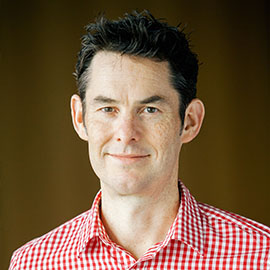
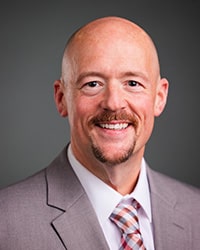
Blaine Long is a faculty member at the School of Rehabilitation & Medical Sciences, focusing on athletic training and therapeutic modalities. He holds a PhD and has extensive experience in sports injury rehabilitation and athletic performance optimization. Education: BS from Millikin University, MS from Indiana State University, PhD from Brigham Young University Research interests: Therapeutic modalities for pain management, joint neuromechanics, and athletic training pedagogy Teaching: Courses include Therapeutic Modalities (ATR 681), Manual Therapy (ATR 687), and Pharmacology (ATR 794) His scholarly work explores the efficacy of cryotherapy, moist heat, myofascial release, and kinesio taping in musculoskeletal recovery. Recent studies (2020-2025) analyze temperature-based interventions, muscle cramp prevention, and electrotherapy techniques. 2023: Outstanding Educator Award, Great Lakes Athletic Trainers' Association 2023-2024: Multiple service awards from Michigan/National Athletic Trainers' organizations As Interim Associate Dean of Health Professions, he contributes to academic leadership while maintaining active research and clinical practice.
Magnus Lindwall is a **Professor of Sports Science** with specialization in Sports and Health Psychology at the University of Gothenburg (Department of Psychology) and holds a **Guest Professor** position at the Swedish School of Sport and Health Sciences (GIH). He is affiliated with GIH's Department of Physical Activity and Health, Section of Health Sciences. His research focuses on health psychology, exercise psychology, motivation, and self-esteem. Lindwall's work bridges theoretical and applied aspects of psychology in physical activity contexts. Employment: Professor at University of Gothenburg (since 2017) Guest Professor at GIH (since 2019) Recent Research Trends: Lindwall’s publications in 2024 highlight themes such as youth sport selection biases, cancer risk linked to cardiorespiratory fitness, and equity in occupational health assessments. His work integrates behavioral science with public health outcomes. Labs/Teams: Affiliated with interdisciplinary teams at both institutions focusing on health promotion, exercise psychology, and applied behavioral research.
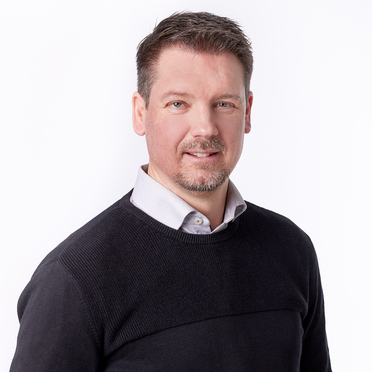
Dr Garcia Ashdown-Franks is a University Research Fellow at York St John University's Institute for Health and Care Improvement (IHCI) within the School of Science, Technology and Health. Their research focuses on the complex relationships between physical activity, mental health, body image, and weight stigma, with a commitment to fostering inclusive physical activity spaces for individuals of all body shapes, sizes, and weights. Dr Ashdown-Franks earned a BSc in Kinesiology in 2015 and an MSc in Exercise Sciences in 2018 from the University of Toronto, followed by a PhD in Exercise Sciences in 2022 from the same institution. They also spent time as a Visiting Researcher at King's College London, where their research focused on parkrun, mental health, and social inclusion. Prior to joining York St John University in 2024, they held an externally funded postdoctoral research position at Brunel University London. Dr Ashdown-Franks employs both qualitative (interviews, ethnography) and quantitative research methods, drawing from critical health studies, fat studies, exercise science, psychology, and sociology. Their work takes a critical stance toward health and weight studies, challenging traditional paradigms and advocating for more inclusive approaches to physical activity and mental health. Their research often explores how community-based physical activities like parkrun can serve as therapeutic landscapes for mental health recovery while acknowledging that these spaces may not be equally accessible or beneficial for all individuals. Analysis of Dr Ashdown-Franks' recent publications reveals a strong focus on community-based physical activity interventions, particularly parkrun, as mechanisms for improving mental health and fostering social inclusion. Their work spans multiple disciplines including sports sociology, mental health research, critical weight studies, and health geography. A notable trend is their examination of how physical activity spaces can be both therapeutic and exclusionary, with particular attention to marginalized populations including individuals with mental health conditions, fat individuals, and Black women. Dr Ashdown-Franks contributes to teaching in the areas of Sport and Exercise Psychology, Psychology of Body Image, and Research Methods. They also provide research-specific training and CPD sessions for staff and postgraduate students, helping to develop research capacity within the university community.
Professor Paul Hodges is a leading academic and researcher in motor control, pain, and rehabilitation at The University of Queensland (UQ). He holds the title of NHMRC Leadership Fellow (Level 3) and serves as Director of the Centre for Innovation in Pain and Health Research (CIPHeR). His interdisciplinary work spans molecular biology to human function, with a focus on understanding pain mechanisms and developing evidence-based treatments. Hodges is a Fellow of the Australian Academy of Science and multiple professional bodies, reflecting his significant contributions to musculoskeletal and clinical science. Education: Doctor of Philosophy (The University of Queensland) Doctor of Philosophy (Karolinska Mediko Kirurgiska Institutet) Doctoral Diploma of Science (Advanced, UQ) Honorary Doctorate in Medicine (Ghent University) Research Interests: Pain mechanisms and targeted therapies Motor control adaptations in musculoskeletal disorders Rehabilitation strategies for chronic pain Pelvic floor dysfunction and continence Low back pain pathophysiology and flares Neuroimmune interactions in chronic pain Awards & Leadership: Five-time ISSLS Prize recipient (Basic and Clinical Science) Fellowships from the Australian Academy of Science and Health and Medical Science Chair of international task forces (e.g., IASP Terminology Task Force) Recipient of national awards including Young Australian of the Year (1997) Research Impact: Hodges' work has transformed understanding of pain-induced motor adaptations, leading to clinical innovations in back pain management, pelvic floor rehabilitation, and continence treatments. His research integrates biomechanical, neurophysiological, and molecular approaches to bridge basic science and clinical practice.
Kerry Stephen Seiler is a Professor at the University of Agder in Norway, specifically within the Department of Sport Science and Physical Education under the Faculty of Health and Sport. He has been actively involved in research and consultation since the late 1990s, including roles as a research consultant for the Sorlandet Regional Hospital and the Norwegian Olympic Federation. Masters in Exercise Science (1987), University of Arkansas PhD in Kinesiology (Exercise Physiology and Biochemistry, 1995), University of Texas His research focuses on Exercise Physiology , particularly the interaction between brain and body during physical exertion and how cardiovascular systems adapt to training . He developed the SPADE research group (Sports Performance and Athlete Development Environments) and is a leading voice in 80/20 endurance training principles. Recent publications emphasize training intensity distribution , low-intensity endurance strategies , and polarized training models . His work often intersects with practical applications in professional cycling and endurance sports. Fellow, European College of Sport Science Fellow, American College of Sports Medicine He has contributed extensively to media platforms like Fast Talk Laboratories , The Roadman Cycling Podcast , and Podcast Feel Better Live More , discussing topics ranging from Zone 2 training to exercise as a longevity tool .
Dr. Ahmed Al-Jaishi is an Adjunct Professor in the Department of Epidemiology and Biostatistics and a Research Scientist at the Schulich School of Medicine & Dentistry at Western University. He also holds positions as an Adjunct Scientist with ICES and Senior Epidemiologist at the Public Health Agency of Canada. Education: Ph.D. in Health Research Methodology, McMaster University (2021) M.Sc. in Epidemiology and Biostatistics, Western University (2013) B.Sc. in Biological Sciences, University of Guelph (2010) His research focuses on methodologies for pragmatic randomized controlled trials, with specialization in cluster-randomized designs. Primary research domains include: Clinical trial design and registry-based methodologies Health services research in nephrology (particularly hemodialysis) Population-based epidemiological studies Statistical methods for cluster trials Recent publications demonstrate strong thematic focus on hemodialysis care innovations, COVID-19 impacts on vulnerable populations, autism spectrum disorder epidemiology, and advanced statistical methodologies. Articles frequently utilize registry data, cluster-randomized designs, and health administrative databases across Canadian and international contexts. Dr. Al-Jaishi is actively engaged in training future epidemiologists and biostatisticians through hands-on mentorship in advanced research methodologies.
Bina Ramamurthy is a Professor of Teaching in the Department of Computer Science and Engineering at the University at Buffalo, affiliated with the School of Engineering and Applied Sciences. With over three decades of experience in STEM education and research, her work focuses on blockchain technology, data-intensive computing, and decentralized systems. PhD in Electrical Engineering, University at Buffalo (1997) Her research centers on blockchain application development, smart contracts, and decentralized finance (DeFi). She directs the Blockchain ThinkLab at UB and developed the SUNY-approved certificate program in Data-Intensive Computing. Her Coursera MOOC specialization on Blockchain (launched 2018) has enrolled over 400,000 learners globally. Selected for prestigious recognition: SUNY Chancellor’s Award for Excellence in Teaching (2019) UB President's Circle Award (2017) She has secured multiple NSF grants, including as Principal Investigator on four HDR/IIS-CISE grants, and co-led six SUNY Instructional Technology grants. Her teaching emphasizes hands-on learning, with in-person lectures and practical exercises in courses like CSE4/506 and CSE4/526.
Dr. Brett M. Frye is an Assistant Professor of Biology at Emory & Henry College, specializing in aging biology and environmental influences on health. His research focuses on nonhuman primate models to study Alzheimer's-related neuropathology, diet effects on physiology, and social behavior impacts on aging. He holds a PhD from Clemson University and completed a postdoctoral fellowship at Wake Forest School of Medicine. Education: BS in Biology & Chemistry from Emory & Henry College MS in Biology from Winthrop University PhD in Biological Sciences from Clemson University Postdoctoral Research Fellowship at Wake Forest School of Medicine His research explores three core areas: 1) Environmental factors promoting Alzheimer's-like neuropathology, 2) Links between aging declines and Alzheimer's pathology in vervets, and 3) Sibling interactions' effects on primate health. He also studies canine aging mechanisms. His work integrates neuroimaging (PET), cognitive testing, and physiological measurements to uncover aging mechanisms. Recent studies emphasize Mediterranean/Western diet comparisons in primates, showing diet's impact on brain structure, inflammation, and social behavior. Professional activities include leadership roles in the American Society of Primatologists and Alzheimer's Association ISTAART. His research has advanced understanding of diet-stress interactions, ovarian function in midlife, and white matter pathology in primate models. Current efforts focus on translating nonhuman primate findings to human aging interventions.
Alex Borgella is an Associate Professor of Psychology at Fort Lewis College in Durango, Colorado, where he also leads the Social Perception Experimentation (SPEx) Lab. He holds a Ph.D. in Social Psychology from Tufts University (2017), an M.A. from James Madison University, and a B.A. from the University of West Florida. Prior to joining Fort Lewis College in 2019, he served as a Visiting Assistant Professor at Bates College. Ph.D., Social Psychology, Tufts University, 2017 M.A., Psychological Sciences, James Madison University, 2012 B.A., Psychology, University of West Florida, 2010 Dr. Borgella's research centers on social psychological mechanisms of stereotyping, prejudice, and discrimination. His work explores intergroup interactions, implicit bias, within-group racial bias, and stereotype threat, particularly in understudied populations such as Indigenous communities, people with multiple stigmatized identities, and in contexts like combat sports and social media. He investigates how identity-related humor can reduce intergroup anxiety and how generative AI representations affect psychosocial well-being. His research has been published in journals including the Journal of Experimental Social Psychology , Psychology of Sport and Exercise , and Humor: International Journal of Humor Research , and has been featured in NPR, Psychology Today, VICE, and Gizmodo. His most recent publications show a strong trend in examining subtle forms of bias in dynamic settings—such as UFC refereeing and social media—and in exploring how stereotype threat manifests across diverse identities, including White individuals in rhythmic performance. His 2024 Mamie Phipps Clark Faculty Research Award supports groundbreaking work on text-to-image AI and racial representation. 2024 Mamie Phipps Clark Faculty Research Award (APA and Psi Chi) Featured Scholar, Fort Lewis College Alice Admire Outstanding Teaching Award Ginny Hutchins Teaching Award for New Faculty Best Educator in Durango FLC Achievement Award Dr. Borgella is a dedicated mentor, supervising numerous undergraduate research projects through the SPEx Lab. Many of his students have presented at national conferences and pursued graduate studies. He teaches core courses such as Research Methods, Social Psychology, and the Senior Research Capstone. He is currently securing funding and mentoring students on projects related to AI, social media bias, and intergroup dynamics. His lab, originally founded at Bates College, is now based at Fort Lewis College and actively recruits undergraduates.
Lauren Margulieux serves as Associate Professor in the Department of Learning Sciences within Georgia State University's College of Education & Human Development. She founded and directs the Snap Inc. Center for Computer & Teacher Education, where she coordinates statewide teacher preparation programs to integrate computing across all disciplines. Her academic credentials include a Ph.D. and M.S. in Engineering Psychology from Georgia Institute of Technology and a B.A. in Psychology from Southwestern University. Her research focuses on computer science education for programming novices, computational literacy development, and instructional design for teacher training. Key initiatives include creating Georgia's computer science endorsement program for in-service teachers and developing models for computational thinking integration in K-12 education. Her work bridges cognitive science principles with practical classroom applications, particularly examining spatial skills, failure resilience, and self-efficacy in programming contexts. Current scholarly trends reveal deep engagement with generative AI integration in teacher education, computational activity design across disciplines, and neurocognitive aspects of learning from failure. Her publications consistently address equity in computer science pathways while developing robust assessment instruments for programming self-efficacy and spatial ability impacts. Margulieux leads significant outreach through the Snap Inc. Center, establishing partnerships with school districts to broaden participation in computer science education. Her work emphasizes practical implementation frameworks for teacher educators and develops resources for urban school contexts, particularly focusing on marginalized student populations. The center serves as both research hub and professional development engine for Georgia's teaching workforce.
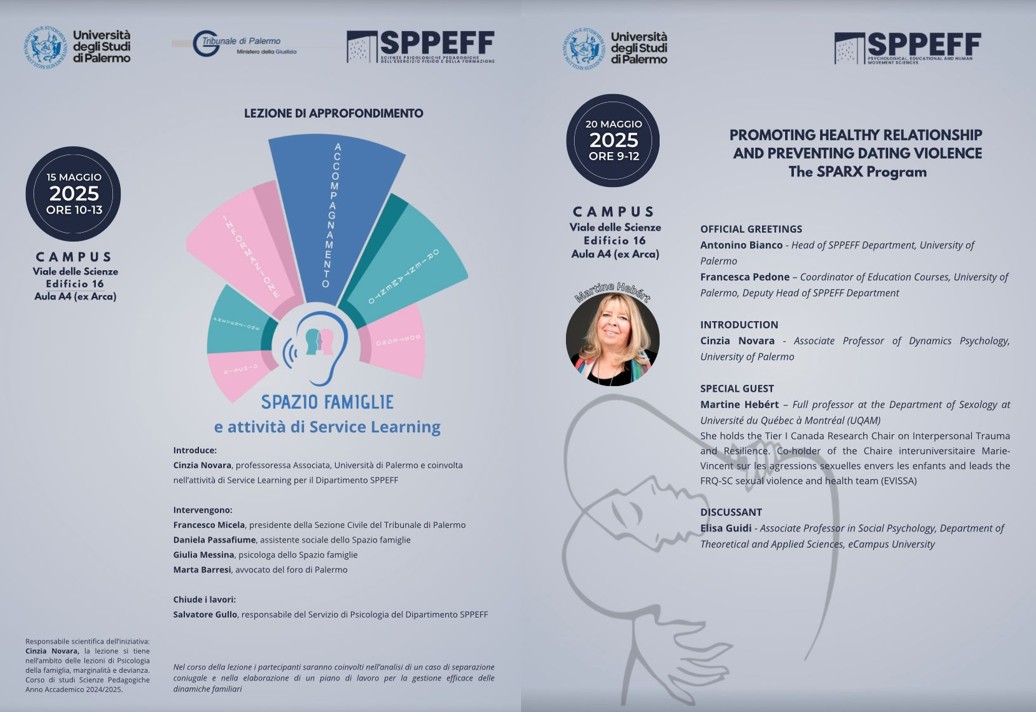
Cinzia Novara is an Associate Professor in the Department of Psychological, Pedagogical, Physical Exercise and Training Sciences at the University of Palermo. She is actively engaged in teaching and research, focusing on community psychology, family dynamics, intercultural education, and youth mental health. Her teaching includes courses such as Family Psychology, Marginality and Deviance, and Network Interventions in Community Work. Her research interests center on community wellbeing, migration, school inclusion, and the psychological impact of digital technologies. She explores how social support, school climate, and intercultural dynamics influence the lives of adolescents, migrants, adopted children, and LGBTQ+ individuals. Her work often integrates participatory methods and service learning to foster social transformation. Her recent publications (2023–2025) show a strong focus on emotional intelligence, vulnerable narcissism, social media use, and the psychological effects of the pandemic on university students. The research consistently emphasizes community resilience, inclusion, and the role of educational environments in shaping psychological outcomes. Themes such as sense of community, coping strategies, and identity in multicultural families recur across her work. Scientific Projects: PRIN 2022 - CURA: Children as vulnerable users of IoT and AI-based technologies T@les at home - Multilingual Families Erasmus K2 Project “CARE” CORI 2017 & 2019: Civic engagement and migrant acculturation Micropolis: Community welfare model Prevention of pathological addictions among university students Work Addiction and Community Psychology Family Space and Service Learning She supervises internships and thesis work, advising students through direct engagement and institutional portals. She leads initiatives under the Third Mission of Unipa, including the UNIPA Parents' Service and Family Space, promoting community-based learning and social inclusion. Her projects often involve cross-cultural collaboration, particularly with Spain, and focus on building inclusive educational cultures.
Lei Zhang is a Professor (Research) and Head of the Artificial Intelligence and Modelling in Epidemiology Program at the School of Translational Medicine, Monash University, Australia. He holds adjunct roles at institutions like Tsinghua University and is a consultant to the WHO Western Pacific Region. His expertise spans HIV/STI epidemiology, mathematical modelling, and AI-driven healthcare solutions. Education: Bachelor of Advanced Science in Mathematics (University of Sydney, 2001) Master of Science in Applied Mathematics (University of Sydney, 2003) PhD in Medicine (UNSW, 2006) Master of Public Health (Hamburg University of Applied Sciences, 2009) Research Interests: Prof. Zhang focuses on cross-disciplinary research in HIV/STI epidemiology, AI applications for disease modeling and diagnostics, health economics, and global health policy. His work integrates mathematical models with clinical data to optimize interventions and inform policy. Key Projects: HOPE: Optimizing HIV Pre-Exposure Prophylaxis (PrEP) in East Asia WHO Collaborations: Supporting global STI programs and policy development China-Australia Joint Research Center for Infectious Diseases Awards: 2021 ASRHA Innovation Award for HIV/STI research contributions Advising & Grants: Supervised 21 students (6 PhD, 15 MSc) and currently co-supervises 24 students (11 PhD, 13 MSc). Leader of 5+ major research grants, including NHMRC-funded projects on STI control and diabetes research. Labs/Teams: Leads the AI & Modelling in Epidemiology Program and collaborates with global networks like UNAIDS, the World Bank, and ministries of health across the Western Pacific region.
Dr Juliana Souza de Oliveira is a Postdoctoral Research Fellow at the Institute for Musculoskeletal Health , a partnership between the University of Sydney and Sydney Local Health District. She holds an Adjunct Senior Lecturer position at the Sydney School of Public Health , Faculty of Medicine and Health. Her research focuses on physical activity interventions to promote healthy ageing and prevent falls in older populations, particularly through yoga and digital health (teleyoga) programs. Primary Affiliation: University of Sydney Sub-Affiliation: Sydney School of Public Health Research Partners: Sydney Local Health District, WHO, NHMRC Research Themes include fall prevention , healthy ageing , digital health interventions , and physical activity promotion . Her work spans clinical trials, systematic reviews, and meta-analyses, with a focus on community-dwelling older adults. Recent Publications (2024-2015) address topics such as fall risk factors , yoga-based interventions , sarcopenia in chronic kidney disease , cost-effectiveness of exercise programs , and teleyoga adoption during pandemics . These studies employ methodologies like randomised controlled trials , systematic reviews , and realist evaluations . Scientific Awards and Grants include funding from the Physiotherapy Research Foundation , NHMRC , and AHRA Women's Health Research Network . Her work also intersects with organisations like the Australian Association of Gerontology and International Society of Behavioral Nutrition & Physical Activity (ISBNPA) . Advisory and Collaborative Efforts extend to Charlotte KILMARTIN and Ima STRKLJEVIC , with whom she explores inpatient fall reduction and physiotherapist-led activity promotion . She collaborates extensively on NHMRC-funded trials and WHO guideline development .
Kaylena Ehgoetz Martens serves as an Associate Professor in the Department of Kinesiology and Health Sciences at the University of Waterloo, where she directs the Neurocognition and Mobility Lab. Her research program integrates movement kinematics, functional neuroimaging, psychophysiology, and cognitive neuroscience to investigate the neural basis of gait control and its disruption in neurodegenerative conditions, with particular emphasis on Parkinson's disease, dementia with Lewy bodies, and isolated REM sleep behavior disorder. She focuses on the complex interplay between cognition, emotion, and motor function to develop translational approaches for early diagnosis and intervention in mobility disorders. Dr. Martens' academic training includes a BSc in Kinesiology & Physical Education from Wilfrid Laurier University, an MA in Psychology from the University of Waterloo, a PhD in Cognitive Neuroscience from the University of Waterloo, and postdoctoral training at the Medicine, Brain and Mind Centre, University of Sydney, Australia. Her educational background established the foundation for her multidisciplinary approach to movement neuroscience. Her research program centers on three interconnected aims: (1) investigating cognitive-emotional interactions in gait and balance control; (2) leveraging gait complexity to identify subclinical predictors of neurodegeneration; and (3) developing technology-enhanced diagnostic and intervention tools using virtual reality and mobile recording devices. This work addresses critical gaps in understanding how anxiety, threat processing, and autonomic dysfunction contribute to movement impairments in aging and neurodegenerative diseases. Analysis of her recent publications (2023-2025) reveals a strong trajectory in subtype-specific characterization of freezing of gait, identification of sex-specific neurodegeneration patterns, and development of AI-driven detection methods. Her work increasingly incorporates machine learning for gait analysis while maintaining clinical relevance through biomarker discovery and therapeutic innovation, particularly in the prodromal phases of synucleinopathies. Scientific Awards: No specific awards were documented in the provided source material. Dr. Martens actively supervises graduate students across all levels including undergraduate theses, MSc, PhD, and postdoctoral fellows within her Neurocognition and Mobility Lab. She provides research opportunities for volunteers, coursework interns, and research coordinators, with a focus on translating laboratory findings to clinical applications. While specific grant details weren't provided, her extensive use of advanced neuroimaging, wearable sensors, and virtual reality technologies indicates substantial research funding supporting her program. The Neurocognition and Mobility Lab operates as a collaborative hub bridging basic neuroscience with clinical practice, working closely with healthcare providers to develop practical tools for early mobility impairment detection. Current projects emphasize translating gait complexity metrics into clinical biomarkers and developing anxiety-targeted interventions to prevent falls in neurodegenerative populations, with particular attention to preserving functional independence throughout the lifespan.
Hermann Schwameder is a full Professor and Head of the Department of Sport and Exercise Science at the University of Salzburg, where he also leads the Biomechanics Working Group. His research focuses on biomechanical modeling, human movement analysis, and workload measurement in sports. Key projects include directing the FFG-funded DiMo-Next initiative and the Running Laboratory PLUS. His research explores kinematic patterns in trail running, locomotor-respiratory synchronization via mobile technology, and clinical shoulder mobility assessments. Schwameder holds leadership roles in scientific societies, including former presidency of the Austrian Society of Sports Science (2018-2022) and the International Society of Biomechanics in Sports (2005-2007). He obtained his doctorate in Sports Science from the University of Salzburg (1994) and completed habilitation in Human Movement Science (2003). Current responsibilities include chairing the Department Council and overseeing graduate curricula in Sport and Exercise Science.

/prod01/yorksjacuk/media/content-assets/staff-profile-images/Garcia-Ashdown-Franks.jpg)