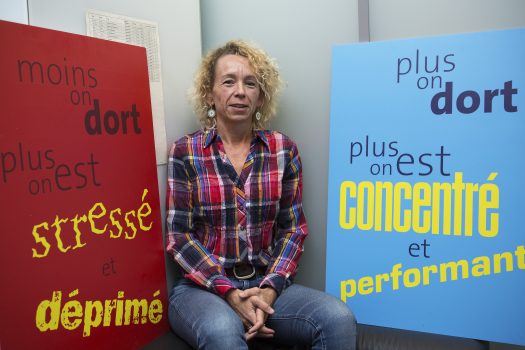
Scott Fraundorf is an Associate Professor in the Department of Psychology at the University of Pittsburgh , where he leads the MAPLE (Memory And Psycholinguistics in Learning & Education) Lab . He combines cognitive science and data science to study human behavior prediction, educational program evaluation, and psycholinguistics . His research focuses on student learning and metacognition language processing and educational technology interventions statistical modeling using regression , machine learning , and mixed-effects models as well as open-source tool development for cognitive science. Key technical skills include Python , R , and SQL programming, with 3 patents for intelligent tutoring systems in English grammar. He has mentored over 70 graduate students and faculty in quantitative methods.
Prof. Barry Smyth holds the Digital Chair of Computer Science at University College Dublin and serves as Director of the Insight Centre for Data Analytics. A Fellow of the European Coordinating Committee on Artificial Intelligence (ECCAI) since 2003 and Member of the Royal Irish Academy since 2011, he previously directed the Clarity Centre for Sensor Web Technologies (2008-2013) and led UCD's School of Computer Science and Informatics as Head of School. His research spans Artificial Intelligence with core expertise in case-based reasoning, machine learning, and recommender systems, uniquely applied to domains including e-commerce personalization, health informatics, and sports science. Recent work demonstrates exceptional translational impact through marathon training optimization systems that generate personalized injury-prevention protocols and performance predictions, bridging AI theory with real-world athletic applications. Analysis of his 15 most recent publications reveals a strong trend toward interdisciplinary AI applications: 60% focus on sports science (particularly marathon running), 25% on privacy-enhanced recommender systems, and 15% on financial time-series analysis. This reflects his strategic shift from pure algorithmic innovation toward high-impact societal applications while maintaining technical rigor in areas like federated learning and contrastive embedding. Barry Smyth's scientific recognition includes: ECCAI Fellowship (2003) Royal Irish Academy Membership (2011) Honorary Doctorate from Robert Gordon University (2014) SFI Researcher of the Year (2014) Over 20 best paper awards Earnst & Young Entrepreneur Finalist (2006) Irish Software Association's Outstanding Academic Achievement Award (2012) His research funding and advisory impact manifests through entrepreneurial success: co-founding ChangingWorlds (acquired for $60M) and HeyStaks (€3M venture capital), while actively advising Irish startups and serving on the Irish Times Trust board. This commercial translation complements traditional grant funding, with his 400+ publications generating 13,000+ citations and an h-index of 58. Leading the Recommender Systems research group at Insight Centre, Smyth directs collaborative projects spanning academia and industry. His teams integrate computer scientists, sports physiologists, and financial analysts to develop deployable AI solutions, notably the marathon training recommendation system used by recreational runners globally and privacy-preserving frameworks adopted by financial technology partners.
Univ.-Prof. Dr. Michaela Sambanis is a Professor of English Didactics at the Institute of English Philology within the Department of Philosophy and Humanities at Freie Universität Berlin. She has held this position since 2011 and previously served as the managing director of the Institute from Winter semester 2017/2018 to October 2019. Her academic journey includes research work at the Transfer Center for Neuroscience and Learning at the University of Ulm (2008-2011), completion of her habilitation in 2006, and her promotion in 2001. Professor Sambanis's research centers on the innovative intersection of educational neuroscience and language teaching methodology. Her work pioneers the field of Positive Foreign Language Didactics, connecting positive psychology with language education. She investigates embodied cognition approaches, particularly movement-based learning, and explores theater methods and arts integration in language instruction. Her research also addresses teacher well-being and health, multilingualism in educational settings, and the application of neuroscience findings to practical classroom situations. The k2teach project represents her current focus on teaching-learning labs in English teacher education. Her scholarly output demonstrates a consistent trajectory toward integrating neuroscience with language pedagogy, with recent publications increasingly addressing mental health, digital transformation in education, and positive psychology applications. The evolution of her work shows a progression from practical teaching methods to increasingly sophisticated neurodidactic frameworks that bridge scientific evidence with classroom practice. Professor Sambanis serves on multiple scientific advisory boards including the Goethe Institut in Munich, the Transfer Center for Neuroscience and Learning at the University of Ulm, and the Schlözer Program for Teacher Education. She is also the founding chair of the cross-state E&M Berlin-Brandenburg section and a member of the German Society for Foreign Language Research (DGFF). Her editorial work includes the SELT book series on English Language Teaching. Her teaching responsibilities include supervising master's theses in English teaching, and she has developed numerous teaching-learning laboratories that connect theoretical knowledge with practical application in teacher education. Her work demonstrates a strong commitment to evidence-based foreign language didactics that incorporates insights from neuroscience, psychology, and educational research.
Dr. Jan Keller serves as a Visiting Professor and Head of the AMBER Junior Research Group 'Active Mobility to Promote Health and Environmental Protection' at the Department of Health Psychology, Freie Universität Berlin. With extensive experience in health psychology research and teaching, Dr. Keller leads innovative projects at the intersection of behavioral science, environmental sustainability, and digital health interventions. Dr. Keller earned both Bachelor of Science (2007-2010) and Master of Science (2010-2013) degrees in Psychology from Freie Universität Berlin, followed by doctoral studies in the same institution from 2013-2018. Research interests center on social exchange processes in health promotion, particularly dyadic planning approaches, self-regulatory strategies for health behavior change, habit formation processes, and the critical intersection between environmental sustainability and health. Recent work explores digital interventions for smartphone usage, active commuting behaviors, and climate change education. Dr. Keller's research demonstrates how environmental health psychology can address both individual well-being and planetary health challenges through innovative behavioral approaches. Analysis of recent publications reveals strong thematic trends in digital health interventions, climate-health connections, and dyadic approaches to behavior change. The work spans methodological approaches from randomized controlled trials to longitudinal studies and systematic reviews, with increasing emphasis on environmental health psychology as a critical domain for intervention development. Herman Schaalma Award (2019) from European Health Psychology Society for dissertation Graduate Student Achievement Award (2018) from International Association of Applied Psychology FUB Climate Challenge funding (2022) through FUturist Program Joint doctoral program funding (2021) between University of Melbourne and Berlin University Alliance Quinn Exchange Fellowship (2017) from University of British Columbia CREATE Tandem Stipendium (2016) from European Health Psychology Society Dr. Keller leads the AMBER Junior Research Group (2023-2028) focused on active mobility, and has secured multiple research grants including the FUB Climate Challenge project. As Consulting Editorial Board member for Applied Psychology: Health and Well-being since 2020, Dr. Keller contributes to advancing the field through scholarly review and mentorship. The research program integrates theoretical frameworks with practical interventions addressing contemporary health challenges. The AMBER Junior Research Group serves as the primary research laboratory, focusing on 'Active Mobility to Promote Health and Environmental Protection.' This initiative operates within the broader context of the Department of Health Psychology's research ecosystem, collaborating with international partners including University of British Columbia and Columbia University. Dr. Keller also participates in the Open Digital Health Initiative and the Special Interest Group 'Equity, Global Health and Sustainability' of the European Health Psychology Society.
Dr. Lucie Kruse is a researcher at the Department of Informatics, University of Hamburg, specializing in Human-Computer Interaction (HCI) and Virtual Reality (VR). Her work focuses on immersive user interfaces for cognitive and physical training, particularly for older adults and those with dementia. She has been an active member of the University of Hamburg's HCI group since 2018 and served on the Ethics Commission since 2023. Her research interests include: Virtual Reality Exergames Serious Games Assistive Technologies Accessibility in VR Mental Health Applications Her publications from 2021-2025 demonstrate expertise in designing VR systems for healthcare, analyzing age-related interaction patterns, and developing inclusive interfaces. She has received multiple awards including the 2024 Honorable Mention for Best Poster at ACM SUI and the 2023 Honorable Mention at ACM CHI. Scientific Awards: Honorable Mention for Best Poster Award at ACM SUI (2024) Runner-Up Prize at Metaverse for the Good (2024) Honorable Mention at ACM CHI'23 Interactive Demo (2023) Honorable Mention at ACM VRST (2021) She has supervised multiple theses on topics like AI agents for mental health, accessibility of chatbots for seniors, and VR exergame design. Her work spans collaborations with institutions like HITLab NZ and Western Sydney University's MARCS Institute.
Fangzhou Jin is an Assistant Professor at the School of Mathematical Sciences, Tongji University. His research focuses on advanced topics in Algebraic Geometry , particularly in Motivic Homotopy Theory , Algebraic K-theory , and Real Algebraic Geometry . He has extensive experience in collaborative mathematical research, having worked with prominent mathematicians such as Frédéric Déglise, Enlin Yang, and Marc Levine. Education : Ph.D. in Mathematics (2016, École Normale Supérieure de Lyon), M.Sc. in Pure Mathematics (2012, Université Paris-Diderot), Diploma of ENS (2013) His work bridges Algebraic Cycles with Étale Cohomology , exploring Weight Structures in mixed motives and Chern Classes in motivic contexts. Jin has contributed to the theory of Trace Maps and Local Terms in motivic homotopy, as well as the study of Flat Cohomology and Real Schemes . Key trends in his publications include: 2025: Cohomology of singular varieties via real cycle class maps 2024: Trace maps and local terms in motivic homotopy 2023: Moving lemmas in homotopy colevel theory 2022: Quadratic conductors, perverse homotopy, and pro-Chern classes 2021: Rational motivic homotopy and Künneth formulas 2020: Gersten complexes and real flat cohomology 2018: Algebraic G-theory in motivic categories 2016: Borel-Moore homology and weight structures Scientific Awards & Grants : Fundamental Research Funds for Central Universities (2021-2025) National Natural Science Foundation of China Grants 12101455 (2022-2024), 12471014 (2025-2028) National Key R&D Program of China 2021YFA1001400 (2022-2026) DFG Priority Programme SPP 1786 & ERC Project QUADAG (2018-2020) Advising & Teaching : Jin has supervised exercise classes and seminars at multiple institutions, including Universität Duisburg-Essen and Tongji University. His teaching spans Algebraic Topology , Étale Cohomology , and Algebraic Geometry . Labs & Collaborations : Active in international collaborations, he is a key member of the Algebraic Geometry and Ramification Seminar at Tongji University and has participated in DFG Research Training Group 2553 during his postdoctoral period.
James Hardy is a Professor in Sport & Exercise Science at Bangor University's School of Psychology and Sport Science , with a career spanning elite sports psychology research and teaching. He holds a BSc (First Class) from the University of Birmingham, and MA/PhD from the University of Western Ontario under Prof. Craig Hall. Key roles: Senior Lecturer, Deputy Head of School, Associate Editor for Journal of Applied Sport Psychology , and editorial board member for multiple journals. Research focuses on self-talk/imagery and group dynamics (team cohesion, leadership), funded by ECB, UK Sport, and Manchester City FC. Recent publications highlight his interdisciplinary approach, examining leadership effects, pressure training protocols, narcissism in teams, and injury risk factors via pattern recognition. Notable work includes Psychosocial Characteristics of Elite Rugby Players and Individualized Talent Development in beach sprint rowing. Scientific contributions include a Bangor University Teaching Fellowship and 30+ peer-reviewed articles . Grants like £80k from ECB and £56k from City Football Services underscore his applied impact.
Jack Peltz, PhD, serves as an Assistant Professor in the Department of Psychology, Philosophy, and Neuroscience Programs at the State University of New York at Brockport. His academic career focuses on the intersection of developmental psychopathology, sleep science, and family systems dynamics, with particular emphasis on adolescent and college-age populations. His educational background includes: PhD in Clinical Psychology (Concentration: Developmental Psychopathology; Certificate: Quantitative Methods), University of Rochester, 2013 MA in Clinical Psychology, University of Rochester, 2010 MA in Child Development (Concentration: Clinical and Developmental Psychology), Tufts University, 2007 BA in Japanese, Middlebury College, 1996 Dr. Peltz's research program centers on developmental psychopathology and sleep regulation , investigating bidirectional relationships between sleep disturbances and family functioning. As a clinical psychologist specializing in behavioral sleep health for children and families, he develops community-based interventions to promote sleep hygiene. His work uniquely bridges quantitative methodology with clinical applications, examining how economic stressors, social media influences, and developmental transitions impact sleep-wake patterns. Analysis of his recent publications (2023-2025) reveals three dominant research trajectories: (1) sleep as a mediator between adverse childhood experiences and psychological outcomes, (2) technology-mediated sleep disruptions (including wearable devices and social media), and (3) developmental transitions (puberty, college entry) affecting sleep-family dynamics. His methodological approach combines longitudinal designs, ambulatory EEG, and mixed-methods analysis to capture real-time sleep-family interactions across diverse populations including youth with visual impairments.
Line Brotnow Decker is a Lecturer in the Child Study Center at Yale School of Medicine. She holds a BS in Psychology from Université de Paris (2011) and an MSc in Developmental Neuroscience and Psychopathology from University College London (2013). Her research focuses on intensive home-based treatments for youth with psychiatric conditions, family systems therapy, maternal mental health, and behavioral motivation measurement. Dr. Decker co-developed the CRAVE Scale for assessing motivation states related to physical activity and has published extensively on interventions targeting high-risk youth, parent-clinician collaboration, and prenatal stress impacts. Key Research Areas: Mentalization-based interventions, family therapy, school absenteeism interventions, and maternal-child health dynamics Notable Contributions: Evaluation of IICAPS home-based program, development of CRAVE Scale, studies on parent-clinician disagreement impacts Her work emphasizes practical clinical strategies for improving family mental health treatment outcomes through enhanced clinician-parent collaboration and tailored behavioral interventions. Dr. Decker collaborates with institutions like the Stephen & Denise Adams Center for Parkinson’s Disease Research on translational child psychiatry initiatives.
Professor Garry Tew serves as the founding Director of the Institute for Health and Care Improvement and holds the position of Professor of Clinical Exercise Science at York St John University's School of Science, Technology and Health. As a BASES Accredited Sport and Exercise Scientist, he leads interdisciplinary research initiatives focused on improving community health through evidence-based practices. He also serves as the Academic Lead of Scarborough Coastal Health and Care Research Collaborative (SHARC), a partnership with York and Scarborough Teaching Hospitals NHS Foundation Trust. Professor Tew's research program centers on the role of physical activity and exercise in preventing, managing, and treating long-term health conditions. He is internationally recognized for his pioneering work on exercise interventions for intermittent claudication and exercise-based prehabilitation to enhance surgical readiness. His research spans mental health contexts, inflammatory bowel disease, peripheral artery disease, and multimorbidity in older adults, with a particular focus on developing accessible interventions for diverse patient populations. His extensive publication record demonstrates significant contributions across multiple health domains, with recent work emphasizing co-produced physical activity programs for severe mental illness, chair-based yoga for older adults with multiple conditions, and digital health coaching for surgical preparation. These publications reflect a consistent trajectory toward developing practical, evidence-based exercise interventions that can be implemented in real-world healthcare settings. Professor Tew actively contributes to the research community as a member of the East Midlands Nottingham One Research Ethics Committee and serves on the Selection Committee for the NIHR Doctoral Fellowship Programme. He regularly reviews grant applications for major funding bodies including the National Institute for Health and Care Research, Medical Research Council, and British Heart Foundation. His teaching expertise encompasses research methods and exercise physiology at both undergraduate and postgraduate levels. He also conducts specialized workshops for staff and postgraduate research students on research-related topics, demonstrating his commitment to developing the next generation of researchers in health and care disciplines.
Dr. Travis Dorsch serves as Associate Professor and Graduate Program Director in the Department of Human Development and Family Studies at Utah State University's Emma Eccles Jones College of Education and Human Services, where he founded and directs the Families in Sport Lab. His academic career bridges human development theory with practical applications in youth sport contexts, examining how family systems and social environments shape athletic experiences. His educational foundation includes a PhD in Kinesiology (Psychology of Sport and Exercise) from Purdue University (2013), preceded by an MS (2007) and BA in Psychology (2003). This interdisciplinary training informs his unique perspective on sport socialization processes. Dr. Dorsch's research program centers on the interplay between family dynamics and youth sport participation , employing mixed-methods approaches to investigate: Parental socialization mechanisms in athletic contexts Sibling influences on sport engagement Socioeconomic barriers to sport access Emotional abuse dynamics in competitive environments Systemic optimization of youth sport structures His work demonstrates how contextual factors from household to national policy levels affect athlete development. Analysis of his 50+ publications reveals three dominant research trajectories : pandemic-era sport disruptions (2020-2023), emotional abuse frameworks in collegiate athletics (2021-2024), and family systems theory applications in youth sport (2013-present). These intersect at the critical nexus of developmental appropriateness in sport programming. His distinguished recognition includes: Multiple Graduate Mentor of the Year awards (2021, 2022) Early Career Distinguished Scholar honor (2020) Research Fellow designation (2021) Consistent departmental and college teaching awards Dr. Dorsch has secured funding from major organizations including the NCAA, Aspen Institute, and TeamSnap to support his Families in Sport Lab. His mentorship extends to 11 graduate students, with research translating into practical tools for coaches, parents, and sport administrators featured in major media outlets like The New York Times and TIME Magazine .
Sanghoon Kim is an Assistant Professor (Fixed-Term) in the Department of Kinesiology at Michigan State University. He holds a Ph.D. from Texas A&M University. His research focuses on understanding sport consumers' interactions with technology-mediated environments such as social media, self-service technology, and virtual/augmented reality (VR/AR). His work emphasizes cognitive, social, and data-driven approaches to analyze consumer experiences and psychological/behavioral responses in digital spaces. Education: Ph.D., Texas A&M University. Research Interests: Kim's studies explore how emerging technologies shape consumer behavior in sports contexts, including VR/AR adoption, esports toxicity, digital ticketing, and art-infusion effects in retail. He examines themes like psychological well-being, social capital, and mediated empathy through virtual experiences. Articles Trends: Recent work highlights VR's role in sports advertising empathy, gamified suspense mechanics, and CSR-linked sponsorship effects. He also investigates paradoxical relationships between esports toxicity and coping strategies, as well as consumer adoption of mobile ticketing and AR in e-commerce. Advising/Grants: No specific grants or advisees listed. His research likely focuses on collaborative projects within MSU's College of Education. Labs/Teams: Affiliated with MSU's Kinesiology department, though specific lab names are not mentioned in the provided data.
Scott Fraundorf is an Associate Professor in the Department of Psychology at the University of Pittsburgh, affiliated with The Dietrich School of Arts & Sciences and the MAPLE Lab at the Learning Research and Development Center (LRDC). His research focuses on psycholinguistics, memory systems, cognitive aging, metacognition, and educational technology. He holds a Ph.D. from the University of Illinois at Urbana-Champaign and has been recognized with an NSF Graduate Research Fellowship (2007-2011) and inclusion in the List of Teachers Ranked as Excellent by Students ("Outstanding"). Key research themes include the role of prosody and disfluency in language processing, cognitive aging effects on memory, and the application of statistical modeling to study decision-making and learning strategies. His work bridges experimental psychology with real-world educational interventions, such as adaptive grammar instruction tools and investigations into digital literacy practices among adolescents. Recent publications emphasize cognitive mechanisms underlying expertise retention in medical professionals and the impact of exercise on memory preservation in older adults. He collaborates on projects analyzing how contrastive linguistic cues (e.g., pitch accent, beat gestures) influence online discourse comprehension and long-term memory encoding. Labs/Teams: MAPLE Lab (Memory, Attention, Processing, Learning, Education) Grants: NSF Graduate Research Fellowship Advising: Advises graduate student Jessica Macaluso
Prof. Sophie Schwartz is a leading neuroscientist at the University of Geneva , where she heads the Sleep & Cognition Lab within the Faculty of Medicine . Her research integrates neuroimaging (fMRI, hd-EEG, MEG) , behavioral testing , and computational modeling to unravel the neural mechanisms underlying memory consolidation , emotion processing , and dreaming during sleep, while also developing clinical interventions to enhance sleep in neurological and psychiatric disorders.
Martin Widdicks is a Teaching Associate Professor of Finance and Director of the MSF Program at the Gies College of Business, University of Illinois at Urbana-Champaign. He holds the Josef and Margot Lakonishok Faculty Fellow distinction and has been recognized as an outstanding teacher repeatedly since 2011. His academic background includes a PhD in Mathematical Finance (University of Manchester, 2002) and a BSc in Mathematics (Manchester, 1999). Research interests focus on mathematical finance, particularly derivative pricing methodologies, singular perturbation theory applications, and executive compensation models. He has developed frameworks for multi-asset option valuation and analyzed incentive structures in equity-based compensation. Recent work includes extracting market crash and bankruptcy signals from options data. Teaching responsibilities span core quantitative finance courses (FIN 502, FIN 503), derivatives (FIN 512), and advanced electives like Complex Derivatives (FIN 514) and Term Structure Models (FIN 516/517). His awards include the Shebik Faculty Fellowship (2021–2022) and Towey Faculty Fellowship (2019–2021). Notable publications include Journal of Futures Markets , Journal of Corporate Finance , and Mathematical Finance . His work bridges theoretical finance with practical applications in risk management and corporate decision-making.






/prod01/yorksjacuk/media/content-assets/staff-profile-images/garry_tew-2.jpg)